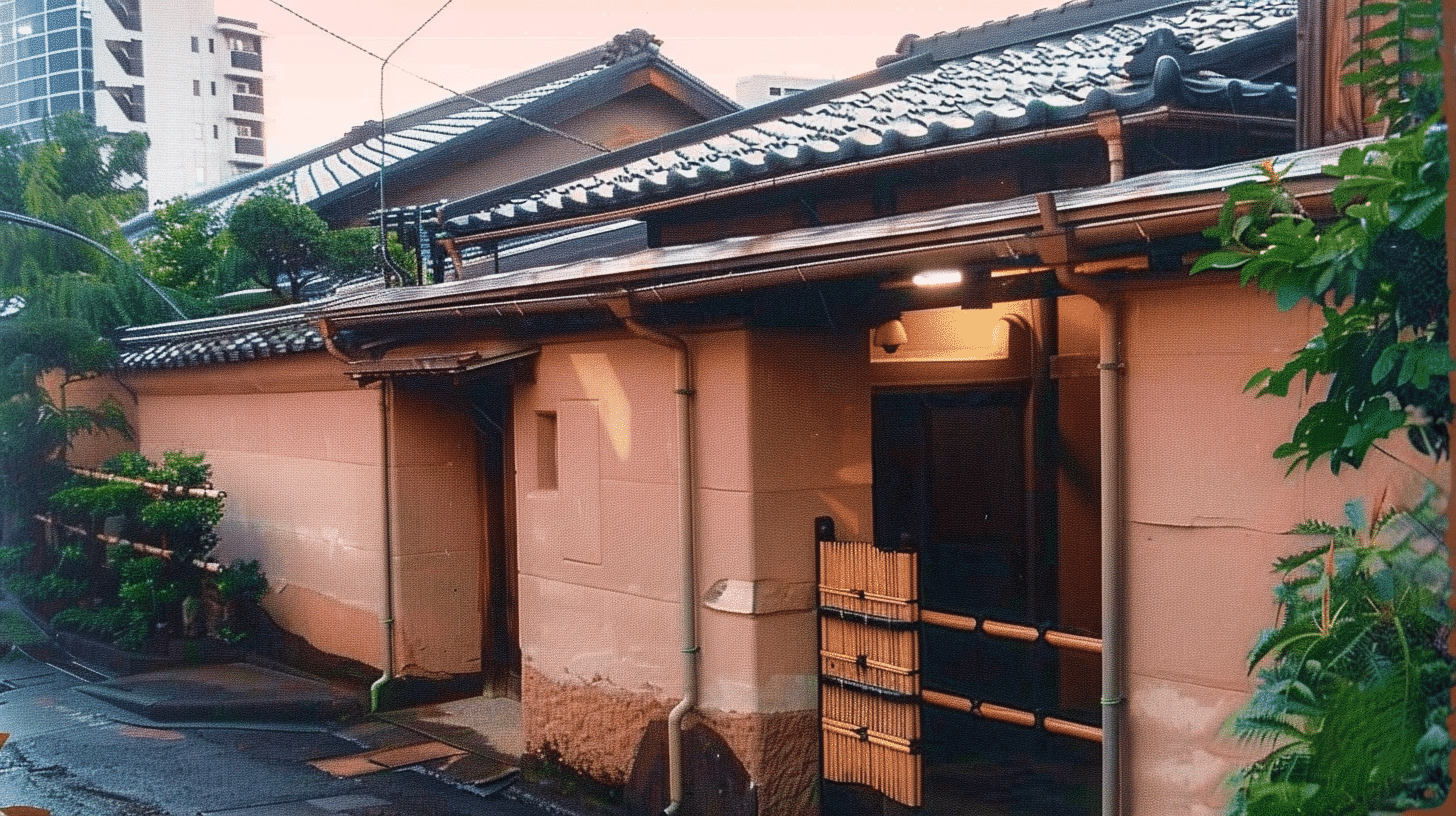
An Urban Mountain Retreat in the Heart of Tokyo

In the bustling business district of Toranomon, just minutes from the towering Azabudai Hills, lies a remarkable sanctuary of traditional Japanese culture. Ohashi Saryo stands as a testament to the enduring beauty of sukiya-style architecture, offering visitors a rare opportunity to experience authentic tea ceremony culture in central Tokyo. This registered cultural property complex, hidden behind earthen walls and traditional gates, creates an atmosphere of profound tranquility that seems worlds away from the surrounding metropolis.

Built in 1948-1949 during the challenging post-war reconstruction period, this extraordinary complex was created by the master carpenter Kimura Seibei from Kyoto, representing one of the finest examples of traditional wooden tea house architecture constructed in the 20th century. The complex consists of five distinct tea houses, each with its own unique character and architectural heritage, along with various gates and connecting structures that together form a cohesive cultural treasure.

The Five Tea Houses: A Journey Through Tea Architecture

The crown jewel of Ohashi Saryo is the Joan-utsusu (如庵写), a faithful replica of the National Treasure Joan tea house originally built by Oda Uraku, younger brother of the famous warlord Oda Nobunaga. This two-and-a-half tatami mat tea room captures the innovative spirit of the original, featuring unique elements like the distinctive Uraku-mado window with its tightly fitted bamboo slats and the famous calendar-papered walls that showcase Uraku's creative approach to tea house design.

The Aoi tea house (葵) follows the design of Urasenke's Totsutotsusai, featuring an eight-tatami and six-tatami room arrangement that exemplifies the Kyoto Urasenke tea ceremony tradition. This building served particular significance as it was used by the 14th generation Urasenke grand master Tantansai when he established this location as the official Tokyo training center for the school.

Shuhin-an (守貧庵) represents the aesthetic preferences of the famous tea master and daimyo Matsudaira Fumai, featuring a six-tatami room with hidden Buddhist altar and carefully designed approach corridors. The Katsura tea house (桂) draws inspiration from the legendary Katsura Imperial Villa, incorporating its sophisticated architectural elements including the distinctive floor arrangements and garden-facing design that creates harmony between interior and exterior spaces.

Finally, Yamabuki (山吹) completes the collection, each tea house connected by covered walkways and gates that create a flowing journey through different expressions of tea architecture and philosophy.

Why This Complex Achieved Cultural Property Status

In 2006, the Agency for Cultural Affairs designated the entire Ohashi Saryo complex as a Registered Tangible Cultural Property, recognizing it as irreplaceable architectural heritage that would be extremely difficult to reproduce with modern techniques and materials. The designation encompasses nine structures including the five tea houses, the main gate (表門), middle gate (中門), Furo gate (不老門), and the connecting walls and fences.

The cultural value lies not only in the exceptional craftsmanship but also in the complex's role in preserving and transmitting tea ceremony culture in Tokyo. As traditional wooden architecture becomes increasingly rare in urban Japan, Ohashi Saryo represents a living museum where the subtle aesthetics of sukiya architecture - with its emphasis on natural materials, refined simplicity, and harmony with nature - continue to be experienced and appreciated.

The historical significance is further enhanced by its connection to the Urasenke tea school, one of the three main schools descended from Sen no Rikyu. For decades, this was where the grand tea master would travel from Kyoto to teach, making it a crucial site in the spread of tea culture throughout eastern Japan.

Experiencing the Magic: Tea Ceremonies and Cultural Activities

Unlike many cultural properties that remain closed to the public, Ohashi Saryo actively welcomes visitors to experience authentic tea ceremonies. The complex offers various levels of engagement, from formal tea gatherings (chaji) that can last several hours to more accessible tea ceremony experiences suitable for international visitors. These sessions provide a rare opportunity to enter and use tea rooms that are themselves cultural treasures.

The morning tea ceremonies (asa-chaji) begin at 10 AM, offering participants the serene experience of tea in the quiet morning atmosphere. Evening ceremonies (yuzari-chaji) start at 3 PM, allowing guests to appreciate the changing light through the paper windows as day transitions to dusk. The special November ceremonies (kuchikiri-chaji) celebrate the opening of the new tea jar, marking an important moment in the tea calendar.

Each ceremony takes place in one of the historic tea rooms, with participants experiencing the full ritual including the meal (kaiseki), the preparation and serving of thick tea (koicha) and thin tea (usucha), and the appreciation of seasonal decorations and tea implements. The intimate scale of the tea rooms - some accommodating just 4-8 guests - ensures a deeply personal and authentic experience.

Architecture That Speaks: Understanding Sukiya Style

The sukiya architectural style embodied at Ohashi Saryo represents the pinnacle of Japanese aesthetic refinement. Unlike the more formal shoin style associated with samurai residences, sukiya architecture embraces deliberate rusticity and apparent simplicity that actually requires the highest level of craftsmanship to achieve. Every element, from the selection of natural wood with its unique grain patterns to the precise fitting of tatami mats, reflects generations of accumulated knowledge.

The use of natural materials is paramount - unfinished wood posts still showing their natural curves, walls of earth mixed with straw, and roofs of cypress bark or ceramic tiles. Windows are covered with translucent paper that softens and diffuses light, creating an ever-changing play of shadows throughout the day. The famous nijiri-guchi (crawling entrance) found in several tea rooms forces all participants, regardless of social status, to humble themselves as they enter the tea space.

What makes Ohashi Saryo exceptional is how it preserves multiple interpretations of this style - from the innovative and somewhat unconventional approach of the Joan replica to the orthodox Urasenke style of Aoi, visitors can appreciate the full spectrum of sukiya architecture in one location.

Surrounding Area: Modern Tokyo Meets Traditional Culture

The location of Ohashi Saryo in Toranomon offers visitors a fascinating study in contrasts. The area has been transformed in recent years with developments like Azabudai Hills and Toranomon Hills creating a new business and cultural center. Yet tucked away on a quiet side street, Ohashi Saryo maintains its atmosphere of seclusion, earning its description as "a mountain retreat in the city" (市中の山居).

Within walking distance, visitors can explore other cultural sites including the historic Atago Shrine, known for its steep stone steps and panoramic views of Tokyo. The nearby Hotel Okura, itself a modernist architectural landmark, offers another perspective on Japanese aesthetics. For those interested in contemporary culture, the teamLab Borderless digital art museum and the shops and restaurants of Roppongi are easily accessible.

The area is well-served by public transportation, with Kamiyacho Station on the Tokyo Metro Hibiya Line just a 5-minute walk away. Toranomon Hills Station and Roppongi-itchome Station provide additional access options. This excellent connectivity makes it easy to combine a visit to Ohashi Saryo with other Tokyo attractions.

Frequently Asked Questions

QCan international visitors participate in tea ceremonies at Ohashi Saryo?
AYes, Ohashi Saryo welcomes international visitors for tea ceremony experiences. While most ceremonies are conducted in Japanese, the visual and sensory aspects of the ceremony transcend language barriers. It's recommended to contact them in advance through their website to arrange a suitable experience. Some special sessions may be available with English explanation.
QWhat is the difference between the various tea houses at Ohashi Saryo?
AEach tea house represents a different school or style of tea architecture. Joan-utsusu replicates a National Treasure, Aoi follows Urasenke tradition, Shuhin-an reflects Fumai style, Katsura takes inspiration from imperial architecture, and Yamabuki offers its own unique character. This diversity allows visitors to experience the full range of Japanese tea house design in one location.
QHow long does a typical tea ceremony experience last?
AA formal tea gathering (chaji) typically lasts 3-4 hours and includes a meal, thick tea, and thin tea service. Shorter tea ceremony experiences of 60-90 minutes focusing on thin tea service are also available. The duration depends on the type of ceremony and the number of participants.
QIs photography allowed inside the tea houses?
APhotography policies vary depending on the type of visit and ceremony. Generally, photography may be restricted during actual tea ceremonies to maintain the meditative atmosphere. It's best to inquire about photography permissions when making your reservation. The gardens and exterior areas typically allow photography.
QWhat should visitors wear to a tea ceremony?
AFormal or smart casual attire is appropriate. Avoid strong perfumes and jewelry that might damage the tatami mats or tea implements. You'll be sitting on tatami mats, so comfortable clothing that allows for sitting in seiza position is recommended. White socks (tabi) are traditionally worn and may be provided.

Basic Information

Name Ohashi Saryo (大橋茶寮)
Location 5-6-6 Toranomon, Minato-ku, Tokyo 105-0001
Access 5-minute walk from Kamiyacho Station (Tokyo Metro Hibiya Line)
Built 1948-1949
Architect/Builder Kimura Seibei (Master Carpenter from Kyoto)
Cultural Status Registered Tangible Cultural Property (2006)
Number of Tea Houses 5 (Joan-utsusu, Aoi, Shuhin-an, Katsura, Yamabuki)
Reservation Required (Contact through official website)
Contact Tel: 03-3431-3450
Website www.ohashi-charyo.co.jp

References

Cultural Heritage Online - Ohashi Saryo Tea House Shuhin-an
https://bunka.nii.ac.jp/heritages/detail/141358
Ohashi Saryo Official Website
https://www.ohashi-charyo.co.jp/
Tankosha Culture School - Tea Ceremonies at Ohashi Saryo
https://www.culture.tankosha.co.jp/shopdetail/000000000462/
Tokyo Registered Tangible Cultural Properties - Wikipedia
https://ja.wikipedia.org/wiki/東京都の登録有形文化財一覧

Nearby heritages
