Introduction: A Window into Japan's Samurai Heritage
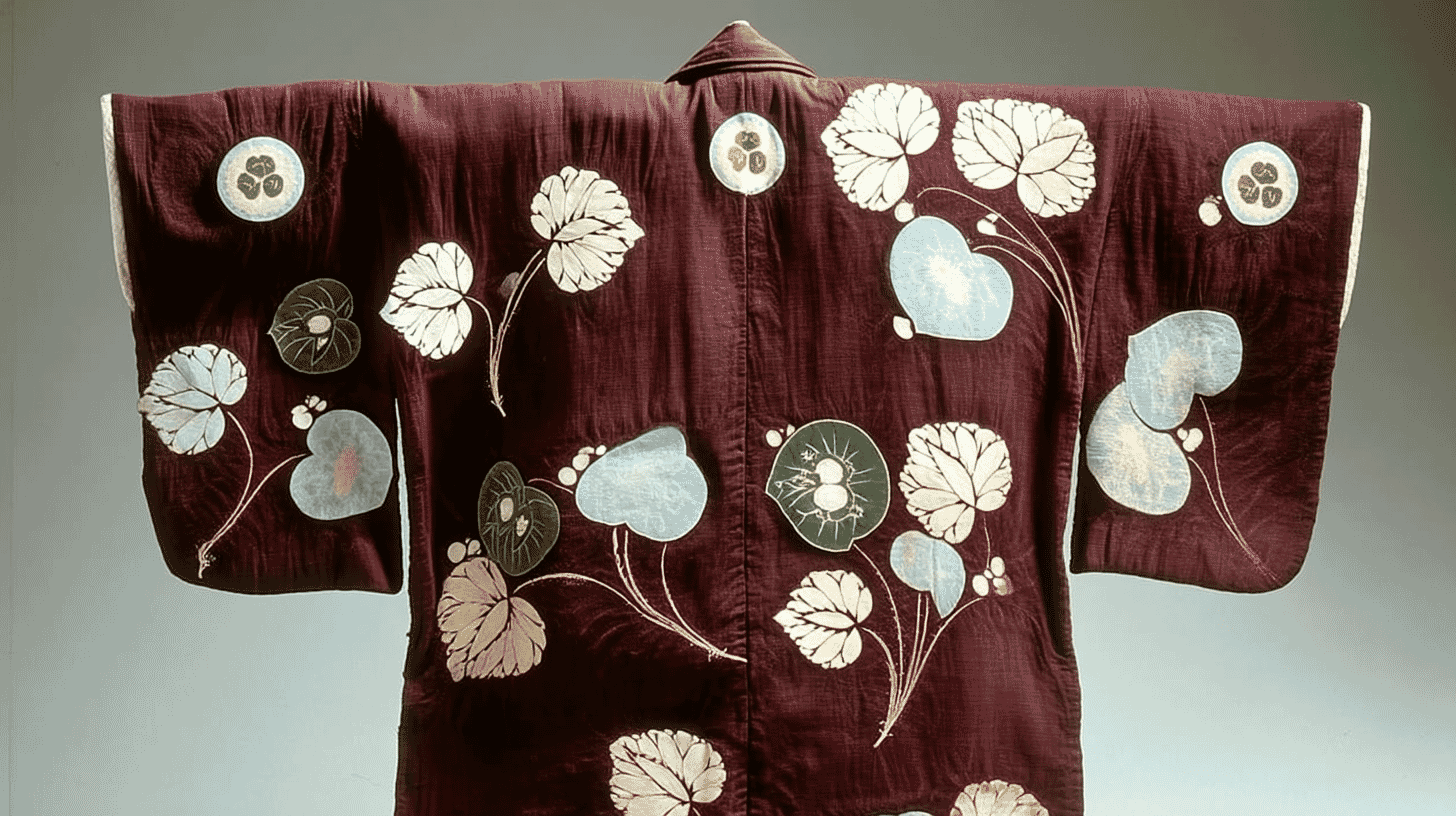
In the treasure troves of Japan's cultural heritage, few garments capture the essence of samurai elegance and lost artistry quite like the Purple Ground Haori with Aoi Mon and Aoi Leaf Pattern in Tsujigahana Dye. Designated as an Important Cultural Property in 2004, this extraordinary textile masterpiece represents not only the pinnacle of Momoyama period craftsmanship but also offers a rare glimpse into the personal wardrobe of Tokugawa Ieyasu, the legendary shogun who unified Japan.
Housed at the Tokugawa Art Museum in Nagoya, this remarkable haori (traditional Japanese jacket) stands as one of the finest surviving examples of tsujigahana dyeing, a mysterious textile technique that flourished briefly during Japan's late medieval period before vanishing into obscurity. For international visitors seeking authentic encounters with Japanese cultural heritage beyond the usual tourist destinations, this textile treasure offers an unparalleled opportunity to witness the intersection of art, history, and technical virtuosity.
What Makes This Haori an Important Cultural Property
The Purple Ground Haori with Aoi Mon earned its designation as an Important Cultural Property due to several exceptional qualities that distinguish it from other historical textiles. First and foremost is its direct connection to Tokugawa Ieyasu, the founding shogun of the Tokugawa Shogunate that ruled Japan for over 260 years. While the garment was officially recorded as belonging to the fourth lord of the Owari Tokugawa family, Yoshimichi (also known as Enkakuin, 1689-1713), scholarly analysis of its construction techniques, proportions, and dyeing methods strongly suggests it originally belonged to Ieyasu himself.
The rarity of tsujigahana textiles cannot be overstated. This sophisticated dyeing technique, which reached its zenith during the late Muromachi and Momoyama periods, produced some of the most beautiful fabrics in Japanese history before mysteriously disappearing in the early Edo period. Surviving examples are extremely scarce, making each preserved piece invaluable for understanding this lost art form. This particular haori is exceptional because both its outer and lining fabrics remain in their original condition with no later repairs or replacements, an almost miraculous preservation given its age of over 400 years.
The technical sophistication displayed in this garment demonstrates why tsujigahana was reserved for the highest echelons of society. The intricate stitch-resist dyeing (nuishime shibori) required exceptional skill and patience, with artisans carefully sewing fine running stitches along pattern outlines using unrefined hemp thread before dyeing. The resulting crisp boundaries between colors and the characteristic white-reserved details showcase a level of craftsmanship that was already becoming rare even in its own time.
Understanding Tsujigahana: The "Phantom Dye" of Medieval Japan
Tsujigahana, literally translated as "flowers at the crossroads," remains one of Japanese textile history's most romantic mysteries. This dyeing technique flourished for approximately 300 years from the Muromachi period through the early Edo period before disappearing so completely that even its precise methods became unclear. The name's origin is debated among scholars, with theories ranging from references to unnamed flowers blooming at intersections to the spiral patterns resembling hair whorls, but its evocative quality perfectly captures the fleeting, ephemeral nature of this artistic tradition.
The tsujigahana technique combined several sophisticated processes to create its distinctive aesthetic. At its core was nuishime shibori (stitch-resist dyeing), where artisans would draw pattern outlines, then sew along these lines with extremely fine stitches, using just two threads of the silk fabric's weave. After stitching, they would pull the threads tight, gathering the fabric to create resist areas that would remain undyed. Multiple rounds of this stitching, gathering, and dyeing process allowed for complex multi-colored designs.
What distinguished tsujigahana from simpler tie-dye techniques was its combination with other decorative methods. Artisans would add hand-painted details with ink, apply gold or silver leaf (surihaku), and sometimes incorporate embroidery to create richly layered compositions. The Purple Ground Haori exemplifies this sophisticated approach, with its large-scale hollyhock leaf designs rendered in white, light blue, and deep green, punctuated by carefully preserved white details representing dew droplets on the leaves.
By the early 17th century, the development of yuzen paste-resist dyeing, which offered more flexibility and efficiency in creating pictorial designs, led to tsujigahana's decline. The technique became so obscure that it wasn't until the 20th century that textile historian Kuki Ryuichi identified and named these textiles, and artist Kubota Itchiku spent decades attempting to recreate the lost methods. Today, authentic tsujigahana textiles from the Momoyama period are treasured as irreplaceable cultural artifacts.
The Aoi Mon: Symbol of the Tokugawa Dynasty
One of the most immediately striking features of this haori is the presence of five triple-hollyhock crests (mitsuba aoi mon) positioned at traditional formal placement points: both breast areas, both rear shoulders, and the center back. This particular crest, featuring three stylized hollyhock leaves arranged in a circular composition, served as the official family emblem of the Tokugawa clan and remains one of Japan's most recognizable heraldic symbols.
The prominence and placement of these crests on the haori communicate both rank and formality. The five-crest configuration (itsutsu mon) represents the highest level of formality in Japanese dress conventions, reserved for the most important occasions and highest-ranking individuals. The crests on this garment are rendered in the same sophisticated tsujigahana technique as the overall design, with the outer rings in light blue, inner areas in white resist, and leaves in graduated greens, all outlined with the characteristic precision of stitch-resist dyeing.
Beyond the formal crests, the entire surface of the haori features large-scale hollyhock leaf designs scattered in artistic arrangements of two to five leaves per grouping. These overscale botanical motifs, rendered in white, light blue, and various shades of green, create a bold, confident design statement entirely appropriate for a powerful military leader. The strategic placement of white-reserved details representing leaf veins and dewdrops adds delicate refinement to the composition, balancing strength with elegance.
Technical Features and Construction
Examining the technical construction of this haori reveals why it's considered an exceptional example of Momoyama period tailoring. The garment is made from purple nerinuki silk (a weave using raw silk warp and degummed silk weft) for the outer layer, lined with light blue plain-weave silk, and constructed with cotton batting between the layers for warmth. This quilted construction (awase) was typical for cold-weather garments worn by the elite.
The proportions and cut of the garment clearly reflect Momoyama period fashion conventions. The body width is notably broad while the sleeve width and sleeve opening are relatively narrow, characteristic of kosode-style construction from this era. The sleeves have no openings (振り, furi) and are rounded by gathering the seam allowances with thread during construction rather than cutting curved patterns. The collar is designed in the tarikubi style, extending the full length to the hem without the front panels (okumi) seen in later kimono construction.
The dimensions of the haori provide tangible evidence of its historical period and probable wearer. With a body length of 112 centimeters, sleeve span (yuki) of 58 centimeters, and relatively compact proportions throughout, these measurements align with both the scale of Momoyama period garments and contemporary accounts of Tokugawa Ieyasu's stature. The preservation of original stitching, fabric, and construction techniques makes this garment invaluable for scholars studying historical Japanese clothing construction.
The Tokugawa Connection: From Ieyasu to the Owari Branch
The provenance of this haori weaves through some of the most important chapters of Japanese history. Historical records from the Gankin'ya merchant house, one of Kyoto's premier textile dealers, include an intriguing entry dated 1602. In the account book titled "Onsome-ji no Cho" (御染地之帳), there's an order from Tokugawa Ieyasu himself for a garment matching this haori's description: "Purple ground with hollyhock leaves scattered in groups of one or two, with the hollyhock centers alternating between light blue, greenish-yellow, and white, with large-scale hollyhock motifs in contrasting sections."
After Ieyasu's death in 1616, his vast collection of personal effects was divided among his heirs in a process called Sunpu Owakemono (駿府御分物), referring to the distribution of items from Sunpu Castle (present-day Shizuoka) where he spent his final years. The first lord of the Owari Tokugawa branch, Tokugawa Yoshinao (Ieyasu's ninth son), received a substantial portion of these items, separate from the garments designated as having been regularly worn by Ieyasu. This haori was among the treasures transmitted to the Owari family, where it was carefully preserved for generations.
A comparable garment exists in the collection of the Tokyo National Museum: the "Water Light-Blue Nerinuki with Ivy Pattern and Triple Hollyhock Crest Tsujigahana Dye Surcoat," said to have been bestowed by Ieyasu to Arai Genzaemon Taketada in the late Momoyama period. The similarities between these two garments in terms of compositional approach, decorative techniques, color palette, and the distinctive rendering of dewdrops on leaves suggest they may have been created by the same workshop or even the same master artisan, providing additional evidence of the Purple Ground Haori's connection to Ieyasu.
Viewing This Masterpiece at the Tokugawa Art Museum
The Tokugawa Art Museum in Nagoya provides the ideal setting for encountering this textile treasure. Established in 1935, the museum was founded specifically to preserve and display the vast collection of heirlooms passed down through the Owari Tokugawa family. As the senior branch (筆頭, hittou) of the Tokugawa clan's three main cadet families, the Owari Tokugawa house possessed unparalleled wealth and status, reflected in the extraordinary quality and diversity of their collection.
The museum houses over 10,000 items, including nine National Treasures and fifty-nine Important Cultural Properties. Beyond the Purple Ground Haori, visitors can explore an exceptional range of samurai armor, Noh costumes and masks, tea ceremony implements, paintings, and the famous illustrated handscrolls of the Tale of Genji. The museum's exhibitions rotate regularly to protect light-sensitive textiles and paintings, so prospective visitors interested in seeing specific items should check the current exhibition schedule on the museum's website before visiting.
For international visitors, the Tokugawa Art Museum offers several advantages. English information materials are available, and the museum's relatively intimate scale allows for focused, contemplative viewing without the overwhelming crowds that can affect more famous destinations. The adjacent Tokugawa Garden, a beautiful Japanese landscape garden, provides an excellent complement to the museum visit, offering a peaceful environment to reflect on the cultural heritage you've encountered. A combined ticket for both the museum and garden represents excellent value.
Planning Your Visit to Nagoya
Nagoya, Japan's fourth-largest city, serves as an excellent base for exploring central Japan while offering its own distinctive cultural attractions. Unlike the more tourist-saturated environments of Kyoto or Tokyo, Nagoya provides international visitors with opportunities for authentic cultural encounters in a more relaxed atmosphere. The Tokugawa Art Museum represents just one highlight among several samurai heritage sites in the city, including Nagoya Castle with its recent historically accurate wooden reconstruction project.
The museum is easily accessible from Nagoya Station by public transportation. The most straightforward route involves taking the JR Chuo Line to Ozone Station (approximately 15 minutes), then walking about 10 minutes south from the station. Alternatively, city buses depart regularly from Nagoya Station, with the Motoyama or Ikeshita routes stopping at "Tokugawa-en Shindeki" bus stop, just a three-minute walk from the museum. For visitors using the Me~guru tourist loop bus, which stops at major attractions around the city, the museum is one of the designated stops.
Nagoya also offers excellent connections to other destinations in central Japan. The city serves as a hub for the Tokaido Shinkansen, providing quick access to Tokyo (100 minutes), Kyoto (35 minutes), and Osaka (50 minutes). This makes it feasible to include the Tokugawa Art Museum as a focused cultural visit within a broader Japan itinerary. The city's position also offers access to the Japanese Alps, Takayama, and the Kiso Valley, allowing travelers to combine samurai cultural heritage with mountain scenery and traditional post towns.
Why This Haori Matters to International Visitors
For travelers seeking to understand Japanese cultural heritage at a deeper level, the Purple Ground Haori offers something rare: a tangible connection to one of history's pivotal figures through an object of extraordinary artistic achievement. Unlike many museum displays of armor or weapons that can feel distant from human experience, this garment was worn, its silk touched skin, and its beauty was appreciated in daily life by someone who fundamentally shaped Japanese history.
The haori also represents a precious window into a lost artistic tradition. While Japanese textile arts continued to evolve and flourish after the tsujigahana period, producing the magnificent yuzen dyeing and elaborately patterned weaves of the Edo period, something unique was lost when tsujigahana disappeared. The technique's combination of restraint and richness, its balance between technical virtuosity and aesthetic refinement, captures a particular moment in Japanese aesthetic sensibility that can never be exactly replicated.
For contemporary visitors, especially those from outside Japan, encountering objects like this haori can provide a more nuanced understanding of Japanese cultural values. The meticulous preservation across centuries speaks to concepts of stewardship and continuity central to Japanese culture. The garment's beauty lies not in ostentation but in subtle sophistication, the kind of refined elegance (shibui) that rewards careful observation. These are aesthetic principles that continue to influence Japanese design and culture today, making this centuries-old garment surprisingly relevant to understanding contemporary Japan.
Q&A
- Is the Purple Ground Haori always on display at the Tokugawa Art Museum?
- Due to the delicate nature of historic textiles, the museum rotates its displays to minimize light exposure and preserve these treasures for future generations. The Purple Ground Haori and other Important Cultural Property textiles are typically displayed during special exhibitions focused on Tokugawa family garments or tsujigahana techniques. We recommend checking the museum's official website or contacting them directly before your visit if you specifically wish to see this item. The museum regularly features other exceptional textiles from the collection, ensuring that visitors will encounter remarkable examples of Japanese textile artistry regardless of the specific exhibition schedule.
- Can I take photographs of the haori when it's on display?
- Photography policies vary depending on the specific exhibition and items on display. Generally, flash photography and tripods are prohibited throughout the museum to protect light-sensitive materials. Some special exhibitions may restrict photography entirely, while permanent collection galleries may allow non-flash photography for personal use. Always look for posted signage in each gallery, or ask museum staff if you're uncertain. The museum shop offers high-quality publications and postcards featuring major collection pieces, providing excellent alternatives for taking memories home.
- Does the museum provide English language support for international visitors?
- The Tokugawa Art Museum provides English information through various means. Major exhibition labels include English translations, and English-language brochures are available at the entrance. The museum also offers an English audio guide that provides detailed explanations of major works and historical context. Museum staff at the information desk can generally provide basic assistance in English. For visitors who want deeper engagement with the collection, consider joining one of the museum's periodic English-language tours led by knowledgeable docents, though these require advance reservation.
- What's the best time of year to visit the Tokugawa Art Museum?
- Each season offers distinct advantages for visiting. Spring (March through May) brings beautiful weather and the opportunity to see the adjacent Tokugawa Garden's spectacular iris collection. The museum's annual display of hina dolls (traditional tiered doll sets) from the Tokugawa family collection, typically held February through April, attracts considerable interest. Autumn (October through November) features comfortable temperatures and gorgeous foliage in the garden. Summer and winter see fewer crowds, making for more intimate viewing experiences. Exhibition schedules change regularly throughout the year, so we recommend choosing your visit based on which special exhibitions interest you most rather than season alone.
- Are there other examples of tsujigahana textiles I can see in Japan?
- Surviving tsujigahana textiles are rare and scattered among several institutions. The Tokyo National Museum houses several important examples, including the piece mentioned in this article that was bestowed by Tokugawa Ieyasu. The Kyoto National Museum occasionally displays tsujigahana fragments in their textile rotations. For visitors interested in learning more about the modern revival of tsujigahana, the Itchiku Kubota Art Museum near Lake Kawaguchi showcases the work of the master who dedicated his life to recreating this lost technique using contemporary materials and methods. Each of these institutions offers a different perspective on this fascinating aspect of Japanese textile history.
Basic Information
| Artifact Name | Purple Ground Haori with Aoi Mon and Aoi Leaf Pattern in Tsujigahana Dye (紫地葵紋付葵葉文様辻が花染羽織) |
|---|---|
| Cultural Designation | Important Cultural Property (designated June 8, 2004) |
| Period | Momoyama period (1601-1700) |
| Technique | Tsujigahana dyeing (stitch-resist shibori, hand painting) |
| Materials | Outer: purple nerinuki silk; Lining: light blue plain-weave silk; Batting: cotton |
| Dimensions | Body length: 112.0 cm; Sleeve span: 58.0 cm; Front width: 36.5 cm; Back width: 36.5 cm; Sleeve length: 51.5 cm |
| Collection | Tokugawa Art Museum, Nagoya (Public Interest Incorporated Foundation Tokugawa Reimeikai) |
| Museum Address | 1017 Tokugawa-cho, Higashi-ku, Nagoya-shi, Aichi 461-0023 |
| Opening Hours | 10:00 AM - 5:00 PM (last admission 4:30 PM) |
| Closed | Mondays (or following day if Monday is a national holiday), year-end period |
| Admission | General: 1,600 yen; University/High School: 800 yen; Elementary/Junior High: 500 yen (combined ticket with Tokugawa Garden available) |
| Access | From JR Nagoya Station: Take Chuo Line to Ozone Station (15 min), then 10-min walk. Or take city bus to "Tokugawa-en Shindeki" stop (20 min), then 3-min walk |
| Website | https://www.tokugawa-art-museum.jp/ |
| Telephone | +81-52-935-6262 |
References
- Purple Ground Haori with Aoi Mon and Aoi Leaf Pattern in Tsujigahana Dye - Cultural Heritage Online
- https://bunka.nii.ac.jp/heritages/detail/135967
- Tokugawa Art Museum Official Website
- https://www.tokugawa-art-museum.jp/
- Tsujigahana - Wikipedia
- https://en.wikipedia.org/wiki/Tsujigahana
- Tsujigahana Technique - The Kubota Collection
- https://thekubotacollection.com/tsujigahana-technique
- Shibori - Wikipedia
- https://en.wikipedia.org/wiki/Shibori
- Nagoya Official Visitors Guide - Tokugawa Art Museum
- https://www.nagoya-info.jp/spot/detail/14/
Nearby heritages
- Tsujigahana Dyed Kosode
- Tokugawa Art Museum, 1017 Tokugawacho, Higashi-ku, Nagoya, Aichi Prefecture
- The Lotus Sutra, the Universal Gate Chapter (the Sutra of
- Tokugawa Art Museum, 1017 Tokugawacho, Higashi-ku, Nagoya, Aichi Prefecture
- The Lotus Sutra (written by Prince Kanenaga)
- Tokugawa Art Museum, 1017 Tokugawacho, Higashi-ku, Nagoya, Aichi Prefecture
- Fujiwara Teika's Handwritten Letter (September 22nd)
- Tokugawa Art Museum, 1017 Tokugawacho, Higashi-ku, Nagoya, Aichi Prefecture
- Fujiwara No Kintsune's Handwritten Paper (poems About
- Tokugawa Art Museum, 1017 Tokugawacho, Higashi-ku, Nagoya, Aichi Prefecture
- Collection of Poems Written by Emperor Fushimi (attached to
- Tokugawa Art Museum, 1017 Tokugawacho, Higashi-ku, Nagoya, Aichi Prefecture
- Tanto (inscribed "Masamune (famous for Its Fudo Masamune"))
- Tokugawa Art Museum, 1017 Tokugawacho, Higashi-ku, Nagoya, Aichi Prefecture
- Tanto (Mumei-Den Masamune (famous Ichian Masamune))
- Tokugawa Art Museum, 1017 Tokugawacho, Higashi-ku, Nagoya, Aichi Prefecture
- Tanto (unsigned Masamune (famous Masamune Knife))
- Tokugawa Art Museum, 1017 Tokugawacho, Higashi-ku, Nagoya, Aichi Prefecture
- Water Jar (Seimi)〈Bizen〉
- Tokugawa Art Museum, 1017 Tokugawacho, Higashi-ku, Nagoya, Aichi Prefecture