
One Scroll, National Treasure since 1955
White Drawing on Paper Rishukyo Sutra (白描絵料紙理趣経, Hakubyoe Ryoshi Rishukyo) is a Kamakura-period sutra scroll at the Gotoh Museum, 3-9-25 Kaminoge, Setagaya Ward, Tokyo, designated a National Treasure on 22 June 1955. The owner is the Gotoh Museum foundation.
The field for designation as an Important Cultural Property is blank in the Agency's database: the scroll went to National Treasure without that earlier step, the twenty-first such case covered here.
By the museum's record it is one scroll, in ink writing and ink drawing on paper, 25.3 centimetres high and 456.3 centimetres long, dated 1193. It is known as the eyeless sutra.
Underdrawings for an Abandoned Scroll, Reused as Sutra Paper
How the scroll came to be is known from its colophon.
The museum records that by the colophon of 1193, a narrative picture scroll that the retired emperor Go-Shirakawa had planned with a certain nun was broken off unfinished at his death, and the underdrawings that remained were turned into paper for copying sutras, to pray for his soul.
A scroll was under way. The person who planned it died, and work stopped. On the paper that remained, a sutra was written.
At Zuiryuji, timber removed in repair was made into an incense container. Material no longer needed becoming something else is the same.
But here the reuse was for the sake of the very person whose death had stopped the work. The paper was not simply left over; it was used for him.
Faces Left Unfinished Gave It Its Name
The by-name is recorded too.
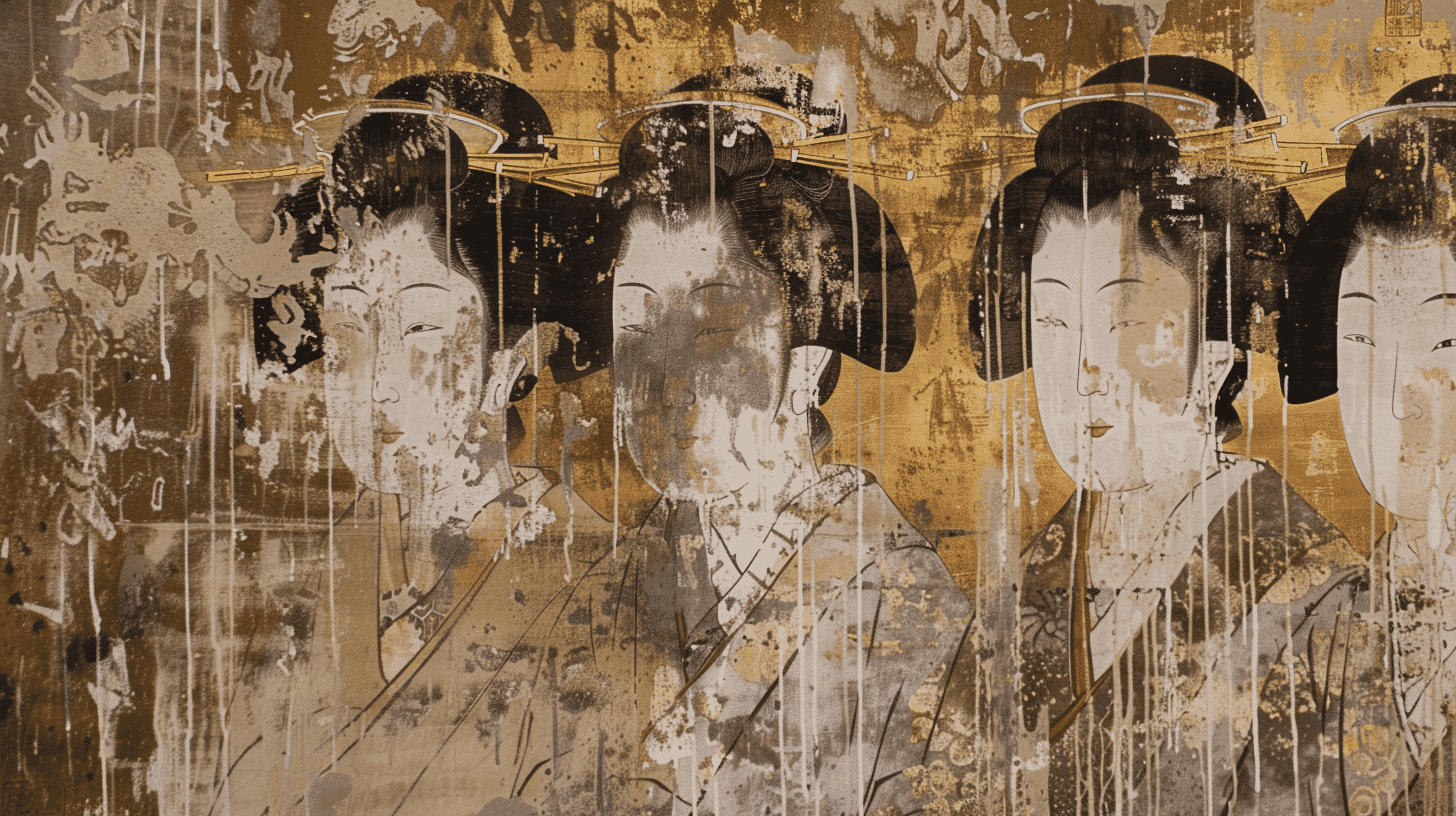
Most of the figures in the underdrawings have no eyes or noses drawn in, and the scroll is called the eyeless sutra for that reason.
The drawings were at an intermediate stage. Work stopped before the features of the faces were put in. That unfinished state became the name.
The Gobu Shinkan scroll writes a missing opening into its title, and a sword inscription carried the words for illegible. Those are ways a record explains a loss.
This is otherwise. Being incomplete is itself the name.
The by-name of the Mikazuki Munechika came from a pattern in the steel. That name came from something present; this one from something absent.
What the Story Was Is Not Known
On what the underdrawings depict, the museum states nothing.
The content of the narrative is unknown.
The pictures survive. Even so, what story they told cannot be said. The text that would have accompanied them was evidently never written before the paper was turned to another use.
The Nezame Monogatari scrolls and the Taima Mandara Engi carried their subjects in their titles. Here the pictures remain and the subject is lost.
The writers are known. The museum records that the sutra was copied by Johen, son of Yorimori and nephew of Taira no Kiyomori, and that the Sanskrit letters are by Joken of Daigoji in Kyoto, grandson of the lay monk Shinzei.
No name is given for whoever drew the pictures. The names of those who wrote the sutra survive; the name of the one who drew the underdrawings does not.
Paper of One Origin, Listed Apart
Other properties carry the same phrase for white-line drawings on the paper.
A Konkomyokyo sutra on such paper, its third scroll, is at the Kyoto National Museum and was designated a National Treasure on 14 November 1953, dated to the Kamakura period and 1192.
A fragment of its second scroll is at a foundation in Ikeda City, Osaka Prefecture, made an Important Cultural Property on 30 April 1935. A fragment of the fourth scroll exists as well.
These too are called the eyeless sutra. Paper of the same character is divided by which sutra and which scroll, with different owners and different categories.
The scroll is at Kaminoge, Setagaya Ward, Tokyo, owned by the Gotoh Museum foundation. It is a museum holding, not kept on permanent display; work on paper is vulnerable to light and shown only briefly. Exhibition plans can change, so check before travelling.
Q&A
- When was the scroll designated?
- On 22 June 1955, at the Gotoh Museum in Setagaya Ward, Tokyo, which owns it. The field for designation as an Important Cultural Property is blank, so it went straight to National Treasure.
- How was it made?
- The museum records that a narrative scroll planned by the retired emperor Go-Shirakawa was broken off at his death, and the underdrawings left over were turned into paper for copying sutras, to pray for his soul. The colophon is dated 1193.
- Why is it called the eyeless sutra?
- Because most of the figures in the underdrawings have no eyes or noses drawn in. The drawings stopped at an intermediate stage, and that unfinished state became the name.
- What story do the drawings tell?
- It is not known. The museum records that the content of the narrative is unknown. The pictures survive, but what they depicted cannot be said.
- Are there similar properties?
- Yes. A Konkomyokyo sutra on the same kind of paper has its third scroll at the Kyoto National Museum as a National Treasure and a fragment of its second scroll at an Osaka foundation as an Important Cultural Property.
Basic Information
| Name | White Drawing on Paper Rishukyo Sutra (白描絵料紙理趣経, Hakubyoe Ryoshi Rishukyo), known as the eyeless sutra |
|---|---|
| Location | 3-9-25 Kaminoge, Setagaya Ward, Tokyo |
| Designation | National Treasure; designated without an earlier listing as an Important Cultural Property |
| Year Designated | 1955 (22 June), National Treasure |
| Quantity | 1 scroll |
| Dimensions | By the museum's record, 25.3 centimetres high and 456.3 centimetres long. Ink writing and ink drawing on paper: a sutra written on paper bearing white-line underdrawings, finished with white pigment and ruled in silver, with cut gold and silver leaf strewn on the reverse. Dated 1193 |
| Owner | The Gotoh Museum foundation |
| Public Access | A museum holding, not on permanent display; work on paper is vulnerable to light and shown only briefly |
References
- Gotoh Museum: the Rishukyo on white-line paper, the eyeless sutra
- https://www.gotoh-museum.or.jp/2020/10/03/24-90-856/
- Cultural Heritage Online: Konkomyokyo on white-line paper, third scroll
- https://bunka.nii.ac.jp/heritages/detail/149681
- Cultural Heritage Online: Konkomyokyo on white-line paper, fragment of the second scroll
- https://bunka.nii.ac.jp/heritages/detail/126854
- Gotoh Museum official site
- https://www.gotoh-museum.or.jp/
Last verified: 2026.09.05