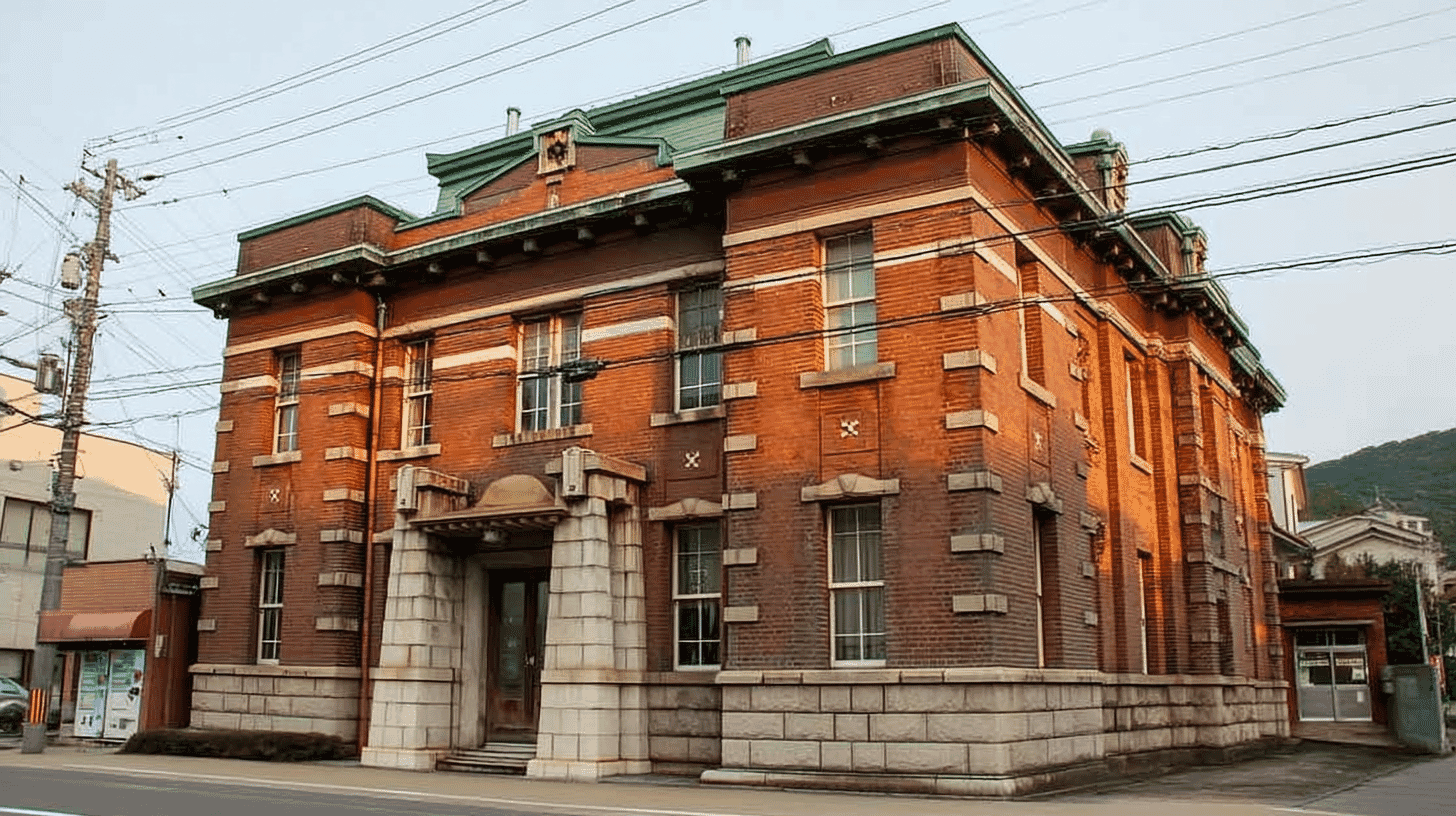
Makita-gumi Headquarters: Where Taisho Elegance Meets Maritime History
Standing quietly along the banks of the Shogawa River in Imizu City, Toyama Prefecture, the Makita-gumi Headquarters (formerly the Minamisima Shoko Main Store) is a remarkable testament to Japan's vibrant maritime trading era. Built in 1915 during the Taisho period, this elegant two-story building seamlessly blends Western Renaissance architectural influences with Japanese craftsmanship, creating a unique structure that continues to captivate visitors over a century later.
Designated as a National Registered Tangible Cultural Property in 2002, this building serves as a living reminder of the prosperity brought by the Kitamae-bune trading ships that once dominated the Sea of Japan. Today, it functions as the headquarters of Makita-gumi, a local construction company, preserving both its architectural beauty and its connection to the region's commercial heritage.
Historical Background: The Golden Age of Kitamae-bune Shipping
To fully appreciate the significance of this building, one must understand the remarkable era of Kitamae-bune shipping that shaped the economy and culture of Japan's Sea of Japan coast. From the 18th century through the Meiji period, these merchant vessels served as "floating trading companies," carrying goods between Osaka and Hokkaido while buying and selling cargo at each port along the way.
The Fushiki Port area, where this building stands, was a crucial hub in this trading network. Located at the mouth of the Shogawa and Oyabe Rivers, the port naturally attracted merchants, goods, and prosperity. Rice from the surrounding Etchu region was shipped to Osaka, while returning ships brought dried herring fertilizer, kelp, and various goods from Hokkaido and other regions.
At its peak, Fushiki boasted approximately 30 shipping agencies, and the wealth generated from this trade transformed the local landscape. The Minamisima Shoko company, which originally commissioned this building, was among these prosperous shipping businesses, and their choice to construct such an impressive Western-style office building reflects the confidence and ambition of the era.
Architectural Features: Renaissance Elegance in a Japanese Port Town
The Makita-gumi Headquarters is a masterful example of early 20th-century Japanese commercial architecture that drew inspiration from European Renaissance traditions. The building's design demonstrates how Japanese builders and architects of the Taisho era skillfully adapted Western styles to create structures that were both modern and suited to local conditions.
The most striking feature is the facade, clad in distinctive reddish-brown bricks that give the building its warm, dignified appearance. These bricks are mounted on a wooden structural frame, a common technique in Japan that combined the aesthetic appeal of brick with the earthquake resilience of traditional wood construction.
Granite stone has been carefully employed for the building's base, corner pilasters, and cornices, creating elegant horizontal lines that are characteristic of Renaissance architecture. The symmetrical arrangement of double-hung sash windows on either side of the central entrance creates a sense of balance and harmony that was highly prized in Western classical design.
Perhaps the most impressive element is the entrance, flanked by heavy stone columns that project forward, lending the building a sense of authority and permanence. This entrance treatment would have immediately conveyed to visitors that they were entering a place of serious business and established reputation.
Why This Building Became a Cultural Property
The Makita-gumi Headquarters was designated as a National Registered Tangible Cultural Property on February 14, 2002, in recognition of its exceptional historical and architectural value. Several factors contributed to this important designation.
First, the building serves as tangible evidence of the modernization of maritime commerce at Fushiki Port during the Taisho era. As steam ships began replacing traditional sailing vessels, shipping companies required modern office facilities that projected an image of reliability and progress. This building perfectly embodies that transitional moment in Japanese commercial history.
Second, the architectural quality of the building is remarkable. The sophisticated combination of brick cladding with granite details, the well-proportioned Renaissance-influenced design, and the overall craftsmanship demonstrate the high level of building skill available in provincial Japan during this period.
Third, the building has been continuously maintained and remains in active use, preserving not only its physical fabric but also its role as a functioning commercial structure. This continuity of use adds immeasurably to its cultural significance.
Highlights and What to See
When visiting the Makita-gumi Headquarters, there are several features that deserve special attention. The symmetrical facade is best appreciated from directly in front of the building, where the careful balance of windows, the strong vertical lines of the corner pilasters, and the horizontal bands of granite can be fully taken in.
The entrance area rewards close examination. The stone columns that frame the doorway are massive and finely finished, while the door surround shows the attention to detail that characterizes the entire building. Notice how the entrance projects slightly forward, creating a sense of welcome while also sheltering visitors from the elements.
The copper plate roof, while perhaps less immediately noticeable, is an important feature that has helped preserve the building for over a century. The green patina that develops on copper over time adds another layer of historical character to the structure.
The building's setting along the riverbank also contributes to its appeal. The contrast between the solid, Western-influenced architecture and the traditional Japanese waterfront landscape creates a uniquely atmospheric scene that speaks to the cultural exchanges of the Taisho era.
Exploring the Surrounding Area
A visit to the Makita-gumi Headquarters can be combined with exploration of the wider Imizu and Fushiki Port area, which offers numerous attractions related to the region's maritime heritage.
The Uchikawa Canal, often called the "Venice of Japan," flows through the nearby Shinminato district. This picturesque waterway is lined with traditional homes and fishing boats, creating scenes that have attracted filmmakers and photographers from across Japan. Walking along the canal's banks, visitors can cross unique bridges and discover charming cafes in renovated historic buildings.
Kaiwo Maru Park features the beautiful tall ship Kaiwo Maru, a four-masted barque that once served as a training vessel for merchant marine cadets. The park offers stunning views of Toyama Bay and the Tateyama mountain range, and the nearby Shinminato Ohashi Bridge provides dramatic vistas of the harbor area.
The Takaoka City Fushiki Kitamae-bune Museum, housed in another historic building from the shipping era, provides detailed exhibits about the Kitamae-bune trade and its impact on local culture. Here, visitors can learn more about the economic system that made buildings like the Makita-gumi Headquarters possible.
For those interested in fresh seafood, the Shinminato Fish Market offers the chance to witness afternoon fish auctions and enjoy local specialties including the region's famous white shrimp and red snow crab at nearby restaurants.
Access and Practical Information
The Makita-gumi Headquarters is located in the Shonishi-machi area of Imizu City, near the confluence of the Shogawa and Oyabe Rivers. While the building continues to serve as a working office, its exterior can be appreciated from the public street.
Visitors traveling by public transportation can take the Manyosen streetcar line from Takaoka Station. This charming tram line, which runs vintage-style cars alongside modern "Doraemon" themed trains, offers an enjoyable journey through the historic port districts. From Nakarokudo Station, the building is within walking distance.
Those arriving by car can access the area via the Hokuriku Expressway. Parking is available in the general area, and the building's location near several other cultural attractions makes it easy to include in a broader exploration of Imizu City.
- 📍 Plan Your Visit to Toyama
- Find tours, activities & transport passes near Makita Gumi Head Office (formerly Minamijima Shoko Head
- [ Kurobe Gorge Train & Tateyama Alpine Route ]
Q&A
- Can visitors enter the Makita-gumi Headquarters building?
- The building currently serves as a working office for Makita-gumi construction company, so the interior is not generally open to the public. However, the exterior architecture can be freely viewed and photographed from the public street, and the facade displays most of the building's distinctive Renaissance-influenced features.
- What is the best time of year to visit this area?
- The area can be enjoyed year-round. Spring (April-May) brings pleasant weather and cherry blossoms. Summer offers opportunities to enjoy fresh seafood and the Shinminato Hikiyama Festival in early October is a spectacular event featuring elaborate floats. Winter provides chances to taste local red snow crab at its freshest.
- How long should I plan for visiting the Makita-gumi Headquarters and surrounding area?
- While the building itself can be viewed in 15-20 minutes, we recommend allowing at least half a day to explore the surrounding attractions including the Uchikawa Canal, Kaiwo Maru Park, and the Kitamae-bune Museum. A full day allows for a more leisurely pace including time for a seafood lunch at Shinminato Fish Market.
- Are there other historic buildings nearby from the same era?
- Yes, the Fushiki Port area and nearby Takaoka City contain several other Registered Cultural Properties from the Meiji and Taisho eras. The Takaoka Chamber of Commerce Fushiki Branch (Former Fushiki Bank), the Former Fushiki Weather Station, and numerous traditional merchant homes along the Uchikawa Canal all date from this prosperous period.
Basic Information
| Name | Makita-gumi Headquarters (Former Minamisima Shoko Main Store) |
|---|---|
| Japanese Name | 牧田組本社(旧南島商行本店) |
| Location | 1-18-33 Shonishi-machi, Imizu City, Toyama Prefecture |
| Year Built | 1915 (Taisho 4) |
| Structure | Wooden 2-story building, copper plate roofing, building area 81㎡ |
| Designation | National Registered Tangible Cultural Property (Buildings) |
| Registration Date | February 14, 2002 |
| Contact | Makita-gumi: 0766-84-5301 |
| Access | Manyosen Line: Walk from Nakarokudo Station or Rokudo-ji Station |
References
- Cultural Heritage Online - Makita-gumi Headquarters
- https://bunka.nii.ac.jp/heritages/detail/149235
- Toyama Cultural Heritage - Makita-gumi Headquarters
- https://toyama-bunkaisan.jp/search/2467/
- Toyama Lifelong Learning Network - Makita-gumi Headquarters
- https://www.tkc.pref.toyama.jp/search/stdydtl.aspx?stdycd=00083602
- Takaoka Tourism Navi - Kitamae-bune Story
- https://www.takaoka.or.jp/feature/detail_55.html
- Imizu City Official Tourism Site
- https://www.imizu-kanko.jp/
Last verified: 2026.01.29
Nearby heritages
- Former Fushiki Port Right Bank No. 3 Quay Horizontal
- 2573 Shonishimachi 2-chome, Imizu City, Toyama Prefecture
- Takaoka Chamber of Commerce and Industry Fushiki Branch
- 7-1 Fushikiminatomachi, Takaoka City, Toyama Prefecture
- Tanada Family Residence and Miso Storehouse
- 14-26 Fushikinishikicho, Takaoka City, Toyama Prefecture
- Tanada Family Main House
- 14-26 Fushikinishikicho, Takaoka City, Toyama Prefecture
- Tanada Family House Tool Storehouse
- 14-26 Fushikinishikicho, Takaoka City, Toyama Prefecture
- Tanada Family Residence Clothing Storehouse
- 14-26 Fushikinishikicho, Takaoka City, Toyama Prefecture
- Former Fushiki Meteorological Observatory Wind Observation
- 12-5 Furukokufu, Takaoka City, Toyama Prefecture
- Former Fushiki Meteorological Observatory Building
- 12-5 Furukokufu, Takaoka City, Toyama Prefecture
- Tanimura Family Residence Main Building
- 1-6 Fushiki Chuocho, Takaoka City, Toyama Prefecture
- Rakuchu and Rakugai in Color on Paper and Gold Background
- 1-1-30 Nakagawa, Takaoka City, Toyama Prefecture