
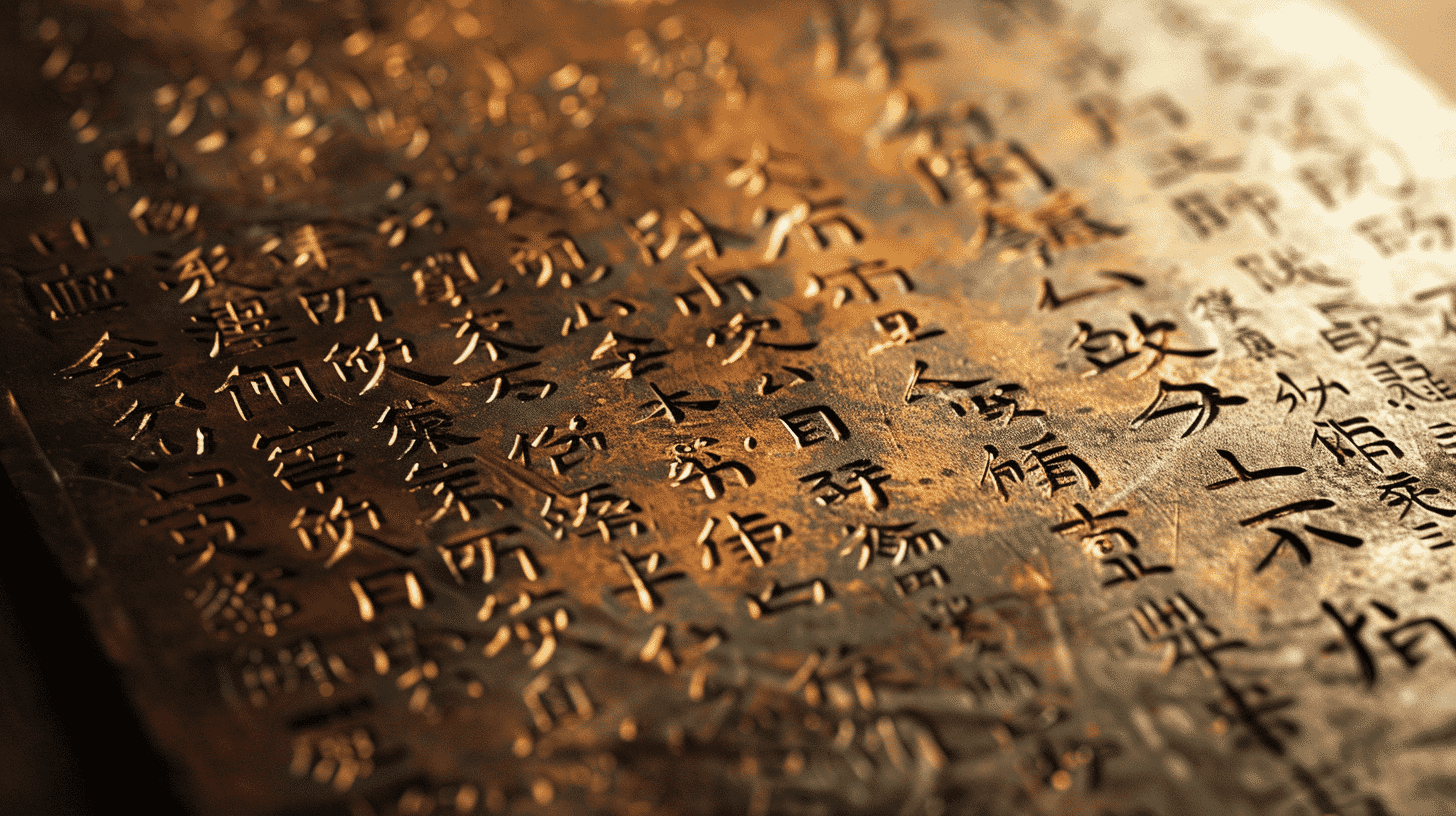
Copper Plates of 1142, National Treasure since 1953
The Copperplate Lotus Sutra (銅板法華経, Doban Hokekyo) is a Heian-period set of inscribed copper plates kept at the Kyushu National Museum, Ishizaka, Dazaifu City, Fukuoka Prefecture, designated a National Treasure in 1953, on 14 November. It had become an Important Cultural Property on 14 April 1906. The designated name includes the inscription recording the completion of the copying and the copper box, so the plates and the box that holds them are designated together.
Fukuoka Prefecture records: copper plates incised on both faces with the Lotus Sutra and with the Heart Sutra in Sanskrit, together with the gilt bronze box that holds them. They were found in the Fugen cave on Mount Kubote in the Muromachi period.
The circumstances of making are known from the inscriptions. From the colophon on the thirty-third plate and the inscription on the underside of the box, it appears that they were made and dedicated in 1142 by the chief promoter Raigon and more than ten others. Year, promoter and the number who took part are all recorded in the inscriptions.
Incised in Copper Rather Than Written on Paper
Sutras are ordinarily copied in ink on paper. These are incised into rectangular copper plates.
Both faces carry text, so each plate serves twice. The Lotus Sutra and the Heart Sutra in Sanskrit are both present, and the inclusion of Sanskrit shows a scheme that is not confined to Chinese translations.
The reason for copper is burial. A sutra mound is a deposit in which scriptures are buried to carry them to later ages, and paper would not survive. Transferring the text to a material that does not decay is the premise of a copper sutra.
The container is gilt bronze. Plates go into the box and the box goes into the ground, so the protection is doubled.
The Images on the Box
What the prefectural record weighs most heavily is not the text but the outer faces of the box.
The images on those faces, Shakyamuni and Prabhutaratna seated side by side and an Amida triad among others, are described as a rare pictorial source of the Heian period. The container holding the scripture is valued as painting.
The two buddhas seated together belong to the chapter of the Lotus Sutra in which a jewelled stupa appears and Shakyamuni sits beside Prabhutaratna within it. The imagery answers to the sutra the box holds.
The Amida triad receives a further comment. The record notes that this image is of particular interest as a case in which the thought of the Pure Land teaching appears in concrete form among buried objects, alongside the belief proper to a sutra mound that scripture is carried down undecayed.
A sutra mound exists to transmit scripture undecayed. That Pure Land thought has entered it as well is what the Amida triad shows.
Found in the Muromachi Period
These plates were buried, forgotten, and found again later.
Fukuoka Prefecture records that they were found in the Fugen cave on Mount Kubote in the Muromachi period. Since the burial was in 1142, some four centuries had passed.
Mount Kubote lies in Buzen City, Fukuoka Prefecture, and is known as a centre of mountain asceticism; the Fugen cave is on that mountain. The place of burial and the present place of keeping, the museum at Dazaifu, are different.
The designated name carries the inscription recording the day on which the copying was finished. The date of completion has become part of the name itself.
Seeing Them
The Kyushu National Museum keeps the plates. The prefectural record states that they are shown for limited periods, not on permanent display.
The museum opens from 9:30 a.m. to 5:00 p.m., with last admission at 4:30, and closes on Mondays, or the following day when a Monday is a public holiday. The cultural exchange exhibition is charged, and special exhibitions carry a separate charge. If the object itself is the purpose of the visit, confirm that it is on show.
Mount Kubote, where they were found, is in Buzen City. The plates are not there, but the mountain and the cave remain.
The museum is about ten minutes on foot from Nishitetsu Dazaifu Station.
Q&A
- When was the Copperplate Lotus Sutra designated?
- It became an Important Cultural Property on 14 April 1906 and a National Treasure in 1953, on 14 November. The designated name includes the inscription and the copper box, so the plates and the box that holds them are designated together.
- Why were the sutras incised in copper?
- For burial in a sutra mound, a deposit in which scriptures are buried to carry them to later ages. Paper would not survive, so the text was transferred to a material that does not decay. The container is gilt bronze, so the protection is doubled.
- When and by whom were they made?
- Fukuoka Prefecture records that the colophon on the thirty-third plate and the inscription on the underside of the box show they were made and dedicated in 1142 by the chief promoter Raigon and more than ten others. Year, promoter and the number who took part are all recorded.
- Why do the images on the box matter?
- The prefectural record describes the images on the outer faces, Shakyamuni and Prabhutaratna seated side by side and an Amida triad among others, as a rare pictorial source of the Heian period. The Amida triad in particular is noted as a case in which Pure Land thought appears in concrete form among buried objects.
- Can they be seen?
- The Kyushu National Museum keeps them, but the prefectural record states that they are shown for limited periods rather than permanently. The museum opens from 9:30 a.m. to 5:00 p.m. and closes on Mondays. Confirm that they are on show before travelling. It is about ten minutes on foot from Nishitetsu Dazaifu Station.
Basic Information
| Name | Copperplate Lotus Sutra (銅板法華経, Doban Hokekyo), designated with its copper box and the inscription recording the completion of the copying |
|---|---|
| Location | 4-7-2 Ishizaka, Dazaifu City, Fukuoka Prefecture (Kyushu National Museum) |
| Designation | National Treasure (archaeological materials) |
| Year Designated | 1906 (14 April), Important Cultural Property; 1953 (14 November), National Treasure |
| Quantity | Plates and box designated together |
| Dimensions | Rectangular copper plates incised on both faces with the Lotus Sutra and the Heart Sutra in Sanskrit. The box is gilt bronze, its outer faces bearing Shakyamuni and Prabhutaratna seated side by side and an Amida triad among other images. Made 1142 |
| Owner | Kept at the Kyushu National Museum |
| Public Access | Shown for limited periods rather than permanently. Closed Mondays. The cultural exchange exhibition is charged. Check the museum for opening hours |
References
- Fukuoka Prefecture cultural properties database: the Copperplate Lotus Sutra and its box
- https://www.fukuoka-bunkazai.jp/frmDetail.aspx?db=1&id=43
- Buzen City: cultural properties
- https://www.city.buzen.lg.jp/kanko/miru/bunkazai/04.html
- Kyushu National Museum official site
- https://www.kyuhaku.jp/
- Agency for Cultural Affairs, National Cultural Properties Database
- https://kunishitei.bunka.go.jp/
Last verified: 2026.09.04