Kanekuma Site: A Window into Japan's Ancient Yayoi Civilization
Nestled on the Tsukiguma Hills in Fukuoka's Hakata Ward, just minutes from Fukuoka Airport, lies one of Japan's most remarkable archaeological treasures. The Kanekuma Site (金隈遺跡) is a nationally designated historic site that offers visitors an extraordinary opportunity to step back 2,000 years and witness the burial practices of Japan's Yayoi period ancestors exactly as archaeologists discovered them.
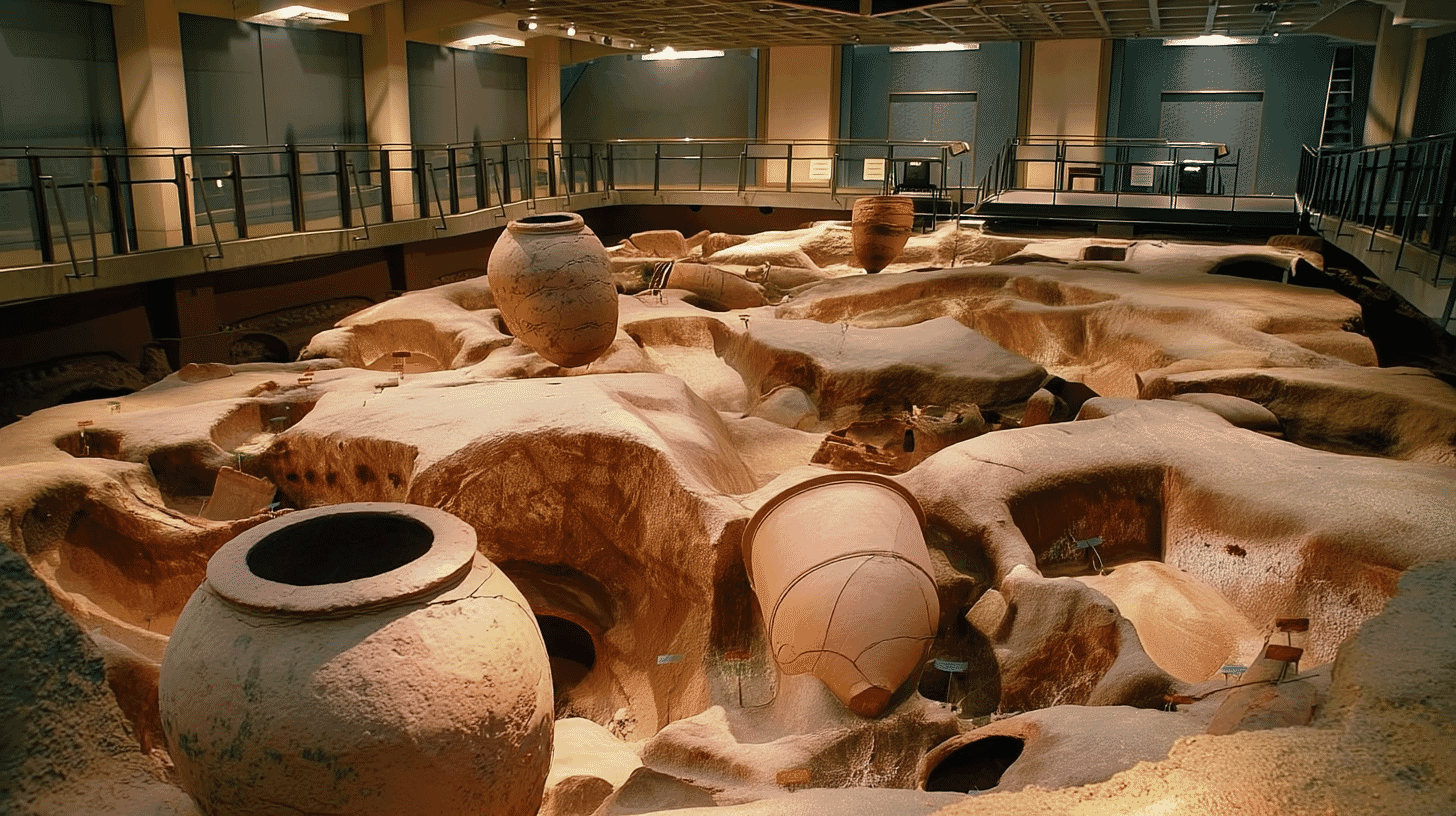
Unlike typical museum displays where artifacts are removed from their original context, the Kanekuma Site Jar Burial Exhibition Hall preserves over 90 jar burials (kamekan) in their excavated positions, allowing visitors to experience the profound presence of an ancient communal cemetery that served a thriving agricultural community for approximately 400 years.
What is the Kanekuma Site?
The Kanekuma Site is a Yayoi period communal cemetery that was continuously used from the middle of the Early Yayoi period (around the 2nd century BCE) through the first half of the Late Yayoi period (2nd century CE). Over these four centuries, the ancient inhabitants of this region buried their deceased family members and community leaders on this hillside overlooking what is now the Fukuoka Plain.
Archaeological excavations have revealed an impressive collection of burials: 348 jar burials (kamekan), 119 pit graves (dokobo), and 2 stone coffin burials (sekkanbo). The chronological analysis of these burials shows a fascinating evolution of burial practices—pit graves were created first, followed by the distinctive jar burials that became the predominant style, and finally stone coffin burials appeared in the latest phase.
In 1972, recognizing the site's exceptional value as a representative example of Yayoi period burial customs, the Japanese government designated the Kanekuma Site as a National Historic Site, ensuring its permanent protection and preservation for future generations.
Why is the Kanekuma Site Culturally Significant?
The Kanekuma Site holds immense archaeological and cultural importance for several compelling reasons:
A Definitive Example of Yayoi Burial Culture
Jar burial (kamekanbo) is a distinctively northern Kyushu burial tradition that emerged during the Yayoi period. Large earthenware vessels, originally designed for storage, were adapted as coffins by joining two jars at their rims to create a sealed burial chamber. The Kanekuma Site preserves one of the most complete and well-documented examples of this practice, showing how the burial custom evolved over four centuries.
Evidence of Continental Connections
The human remains excavated from the jar burials provide remarkable insights into population movements and cultural exchanges during the Yayoi period. Analysis of 136 skeletal remains revealed that the average height was 162.7 cm for males and 151.3 cm for females—significantly taller than the preceding Jomon people, with longer, more elongated facial features. This physical evidence suggests extensive interaction and intermarriage with populations from the Korean Peninsula, demonstrating that the Yayoi period was an era of significant migration and cultural mixing.
Far-Reaching Trade Networks
Among the most fascinating discoveries at the Kanekuma Site are the grave goods that accompanied certain burials. Shell bracelets made from Gohoura (Strombus latissimus), a large conch that only inhabits waters stretching from Tanegashima Island to Australia, were found adorning some burials. The presence of these prized ornaments—crafted from shells that had to be transported over 1,000 kilometers from the southern seas—demonstrates sophisticated long-distance trade networks extending far beyond northern Kyushu. Additional grave goods including stone swords (sekken), stone arrowheads (sekizoku), and ornamental beads for necklaces further reveal connections with continental Asian cultures and southern maritime traditions.
Highlights and What to See
The Jar Burial Exhibition Hall
The centerpiece of any visit is the Kanekuma Site Jar Burial Exhibition Hall (金隈遺跡甕棺展示館), completed in March 1985. The hall was ingeniously constructed by building a roof directly over the excavation site, preserving the burial ground in its discovered state. Within this climate-controlled environment, visitors can observe 91 jar burials, 34 pit graves, and 4 human skeletons exactly as they appeared when archaeologists first uncovered them.
What makes this experience truly special is the opportunity to see actual human remains in their original burial positions—a sight that creates a profound connection to these ancient individuals who lived, loved, and died in this very spot two millennia ago. The museum even allows visitors to touch replicas of the earthenware jars, providing a tangible connection to ancient craftsmanship.
Artifact Displays
The exhibition hall also showcases grave goods excavated from the burials, including the precious shell bracelets, stone weapons, and ornamental beads. Display panels explain the burial customs and what researchers have learned about Yayoi society from studying these remains. A 3D survey video of the exhibition is available on YouTube, created through digital documentation efforts, allowing virtual visitors to preview the site.
The Yayoi Forest (弥生の森)
Surrounding the exhibition hall is a reconstructed Yayoi-period forest environment known as the "Yayoi no Mori." This peaceful parkland allows visitors to stroll through vegetation similar to what would have covered the hillside 2,000 years ago. The walking paths wind through the forested area, offering a contemplative space to reflect on the lives of the ancient people who once gathered here to honor their dead.
Architectural Details
The exhibition hall's exterior features an embedded replica of a Former Han Dynasty mirror from the Tateishi Site in Iizuka City, highlighting the cultural connections between Yayoi-period Japan and continental Asia. This thoughtful design element reinforces the site's narrative of international exchange during ancient times.
Nearby Attractions
The Kanekuma Site is located in an area rich with archaeological heritage. Visitors interested in exploring more of Fukuoka's ancient history can combine their visit with these nearby destinations:
- Fukuoka City Archaeological Center – Houses artifacts from numerous Fukuoka excavations with interactive displays explaining archaeological methods.
- Imasato Fudo Kofun – A late 6th to early 7th century burial mound with an impressive 11.2-meter stone chamber visitors can enter.
- Itazuke Site – One of Japan's oldest rice-farming settlements with reconstructed Yayoi-period paddy fields and pit dwellings.
- Higashihirao Park (Hakata no Mori) – A sprawling sports and recreation park perfect for families, located nearby.
For those interested in a comprehensive Yayoi period experience, consider following the "Yayoi Stamp Rally" route that connects Kanekuma Site, Nokata Site, Itazuke Site, and Yoshitake-Takagi Site—four nationally designated historic sites that together tell the complete story of Yayoi civilization in the Fukuoka region.
- 📍 Plan Your Visit to Fukuoka
- Find tours, activities & transport passes near Kanakuma Ruins
- [ Dazaifu Tenmangu Shrine & Hakata Food Tours ]
Q&A
- Is there an admission fee to visit the Kanekuma Site?
- No, admission to both the outdoor park and the Jar Burial Exhibition Hall is completely free. This makes it an excellent value for history enthusiasts and families alike.
- Is the site accessible for visitors with mobility challenges?
- Yes, the site is managed by Fukuoka City Board of Education and includes barrier-free routes. However, some outdoor paths on the hillside may be challenging, with slopes and areas where fallen leaves and moss can be slippery. The main exhibition hall is accessible.
- Are there English explanations available?
- The exhibition primarily features Japanese explanations, though some visual displays are self-explanatory. Visitors may wish to research the site beforehand or use translation apps. A 3D documentation video is available on YouTube that provides a good visual introduction to the site.
- Can I take photographs inside the exhibition hall?
- Yes, photography for personal use is generally permitted in the exhibition hall. Please be respectful of the sacred nature of the burial site and follow any posted guidelines.
- How long should I plan for a visit?
- A thorough visit to the exhibition hall and a walk through the Yayoi Forest typically takes 45 minutes to 1.5 hours, depending on your level of interest. Those combining the visit with nearby archaeological sites should plan for a half-day excursion.
Basic Information
| Name | Kanekuma Site / Kanekuma Site Jar Burial Exhibition Hall (金隈遺跡・金隈遺跡甕棺展示館) |
|---|---|
| Designation | National Historic Site (Designated 1972) |
| Period | Yayoi Period (c. 2nd century BCE – 2nd century CE) |
| Address | 1-39-52 Kanenokuma, Hakata Ward, Fukuoka City, Fukuoka Prefecture |
| Phone | 092-503-5484 |
| Hours | 9:00 AM – 5:00 PM (Last entry at 4:30 PM) |
| Closed | Mondays (or the following weekday if Monday is a holiday), December 29 – January 3 |
| Admission | Free |
| Access | Nishitetsu Bus Route 43 from "Fukuoka Airport Mae" to "Kanekuma Iseki Mae" stop, then 5-minute walk. By car: approximately 7 minutes from Tsukiguma Exit on Fukuoka Urban Expressway Ring Road (outbound). |
| Owner | Fukuoka City |
References
- 金隈遺跡 | 文化財情報検索 | 福岡市の文化財
- https://bunkazai.city.fukuoka.lg.jp/cultural_properties/detail/431
- 金隈遺跡 | 博多の魅力
- https://hakatanomiryoku.com/spot/%E9%87%91%E9%9A%88%E9%81%BA%E8%B7%A1
- 金隈遺跡(金隈遺跡甕棺展示館) | 福岡市観光情報サイト よかなび
- https://yokanavi.com/spots/26807
- 金隈遺跡甕棺展示館・野方遺跡住居跡展示館がリニューアルオープンします! | 福岡市の文化財
- https://bunkazai.city.fukuoka.lg.jp/sp/news/detail/215
- Yayoi Religion and Burials | Facts and Details
- https://factsanddetails.com/japan/cat16/sub105/entry-5286.html
- Yayoi period - Wikipedia
- https://en.wikipedia.org/wiki/Yayoi_period
- ゴホウラ製貝輪 | 福岡市埋蔵文化財センター収蔵品データベース
- https://bunkazai.city.fukuoka.lg.jp/maibun/collections/detail/cf7ea838-afcc-448b-8722-7bec690850b5
Last verified: 2026.01.14
Nearby heritages
- Kinzan-Inscribed Sword
- 2-1-94 Isoda, Hakata-ku, Fukuoka City, Fukuoka Prefecture
- Excavated Items from the Hakata Ruins in Fukuoka Prefecture
- 2-1-94 Isoda, Hakata-ku, Fukuoka City, Fukuoka Prefecture
- Itazuke Ruins
- Itadake, Hakata Ward, Fukuoka City
- Shurasan Ruins
- Hisayama Town, Kasuya District, Fukuoka Prefecture
- Koshoji Tomb
- Umi Town, Kasuya District
- Tanabataike Tomb
- Shime Town, Kasuya County
- Sukuokamoto Ruins
- Okamoto and Yayoi, Kasuga City
- Copper Hoko Bonsai
- Kasuga City Nakokunooka Historical Museum 3-57 Okamoto, Kasuga City, Fukuoka Prefecture
- Former Shime Mining Company Shaft Tower
- Shime Town, Kasuya District, Fukuoka Prefecture
- Yugata Forest (Kusu) Kinugake Forest (Kusu)
- Umi Town, Kasuya District