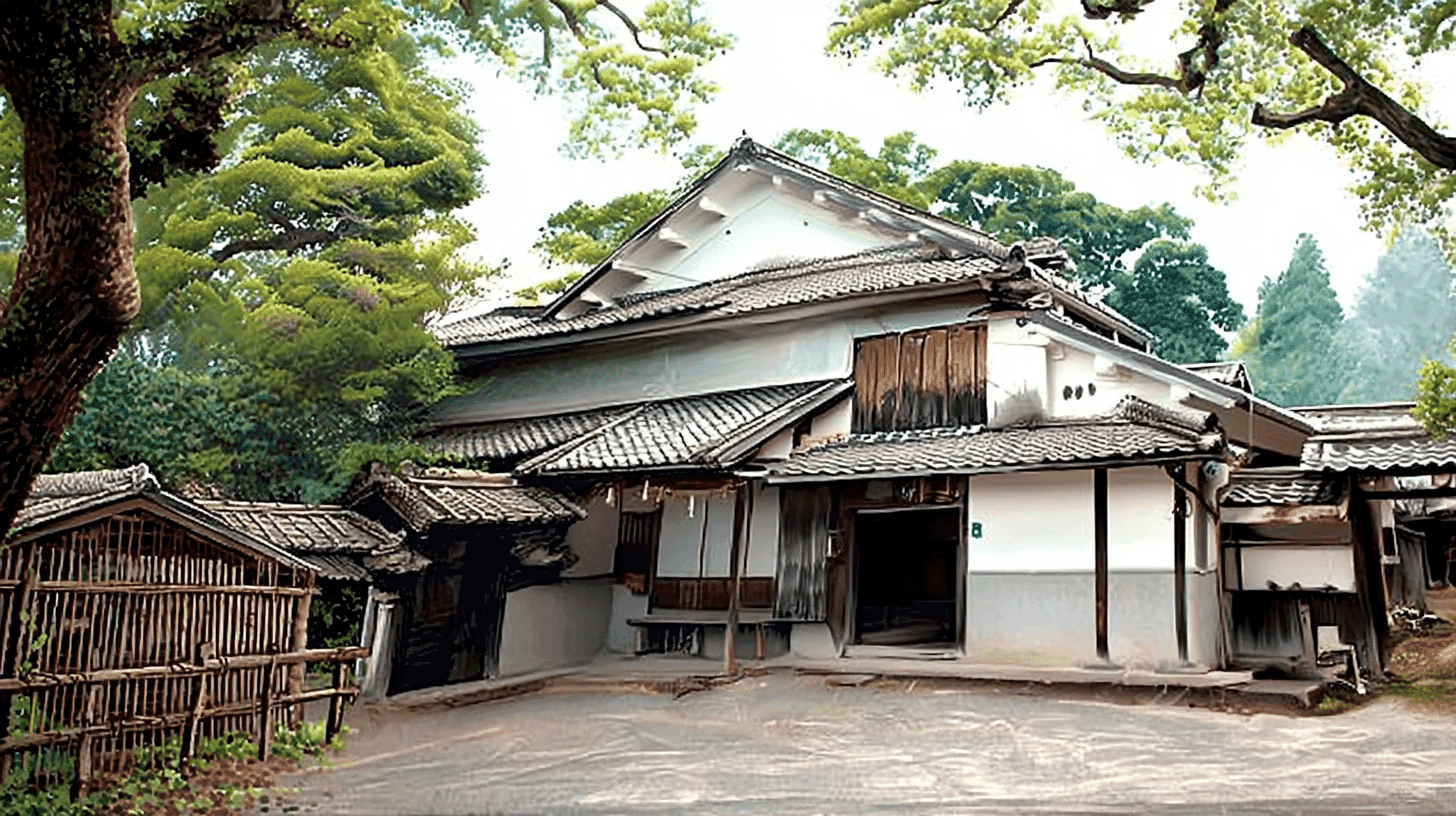
Kusumori Kawakita Residence: An 800-Year-Old Living Heritage in Ukiha, Fukuoka

Discover Kusumori Kawakita Residence, a Nationally Registered Tangible Cultural Property in Ukiha, Fukuoka. This historic estate features 8 traditional buildings dating from the Edo to Taisho periods, preserving 800 years of Japanese heritage including the rare Kabeyui bamboo fence tradition.

Kusumori Kawakita Residence: An 800-Year-Old Living Heritage in Ukiha

Nestled in the serene countryside of Ukiha City, Fukuoka Prefecture, the Kusumori Kawakita Residence (楠森河北家住宅) stands as a remarkable testament to Japan's rural heritage. This extraordinary estate, comprising eight traditional wooden buildings, has been home to the Kawakita family for over 800 years across 36 generations, making it one of Japan's most historically significant private residences still inhabited today.

A National Treasure of Architectural Heritage

In March 2004, the Kusumori Kawakita Residence was designated as a Nationally Registered Tangible Cultural Property (国登録有形文化財) by the Japanese government. The estate encompasses eight distinct structures built between the Edo period (1603-1868) and the Taisho era (1912-1926), each preserving the authentic architectural techniques and lifestyle of their respective periods.

The designation recognizes not merely the buildings themselves, but the complete preservation of a traditional estate compound layout that has become exceedingly rare in modern Japan. The residence demonstrates the lifestyle, social standing, and architectural preferences of wealthy rural families throughout several centuries of Japanese history.

The Eight Historic Buildings

Each building within the complex serves a specific purpose and reflects the architectural styles of different eras.

Main House (主屋) - Built 1881 (Meiji 14)

The centerpiece of the estate is the impressive two-story main house, facing east with a distinctive tsuma-iri (gable-end entrance) design. The roof combines irimoya-zukuri (hip-and-gable) on the east face with kirizuma-zukuri (gable) on the west, covered with traditional sangi-kawara tiles. The building features varying heights of subsidiary roofs (geya) on each side, with angular projections on the south and west faces creating a dynamic, complex exterior. With a total floor area of 254 square meters, the main house exemplifies the grandeur appropriate for an upper-class rural family, showcasing both scale and ceremonial dignity.

Residential Parlor (座敷) - Mid-Meiji Period

Connected to the southwest of the main house, this elegant single-story detached parlor consists of three rooms arranged in an L-shaped floor plan. The building exhibits refined sukiya-style (tea house) design elements throughout, with special decorative touches such as round roof tiles set into the windows beneath the eaves. The entrance features an irimoya-zukuri roof with a projecting yosemune-zukuri section on the southeast corner, demonstrating sophisticated architectural craftsmanship.

New Parlor (新座敷) - Early Taisho Period

This guest reception room is connected to the main house's south side by a corridor. The single-story structure features an irimoya-zukuri roof with surrounding subsidiary roofs. Inside, a single 12.5-tatami room includes an impressive 1.5-ken (approximately 2.7 meters) wide tokonoma alcove. The open design with engawa verandas on all sides creates a bright, welcoming space. High-quality materials and meticulous craftsmanship are evident in the walls, ranma transoms, and other fine details.

Lumber Shed (材木小屋) - Early Meiji Period

This substantial storehouse spans approximately 16 meters in length, featuring traditional dozo-zukuri (earthen storehouse) construction with the Scale Storehouse attached on its west side. The exterior walls are finished in white lime plaster, while the interior is divided into two sections: a two-story western portion and a spacious single-room eastern section with an open ceiling. This is the largest storage facility on the estate.

Scale Storehouse (秤蔵) - Late Meiji Period

A single-story wooden structure approximately 7 meters in length, attached to the west end of the Lumber Shed. While floor timbers bear an inscription dating to 1861 (Man'en 2), historical records indicate the building was moved to its current location and renovated in the late Meiji period. This structure provides valuable evidence of the estate's evolving layout over time.

Charcoal Room (炭部屋) - Circa 1861 (Man'en 2)

Located northwest of the main house and connected to the Rice Storehouse on its west side, this two-story building served as charcoal storage. The exterior features white lime plaster walls with vertical wooden boards on the lower section and traditional mushiko-mado (insect cage) windows on the upper floor. The ground floor contains three rooms, while the second floor includes living quarters, making this a substantial auxiliary structure.

Rice Storehouse and Utensil Storehouse (米蔵・器蔵) - 1812/1857

This impressive two-story earthen storehouse combines two buildings constructed 45 years apart. The northern Rice Storehouse bears a ridgepole inscription dating to 1812 (Bunka 9), while the southern Utensil Storehouse shows 1857 (Ansei 4) on its pillars. The differences in window placement, eave construction, and overall appearance clearly reveal the distinct construction periods. The exterior features white lime plaster with vertical wooden boards at the base.

Miso Room (味噌部屋) - Early Meiji with Taisho Addition

Positioned west of the main house, this single-story building served for miso (fermented soybean paste) production and storage. The exterior walls are finished in rough plaster extending to the roof eaves, with vertical wooden boards at the base and mushiko-mado windows on east and west faces. The southern extension was added during the Taisho period, contributing to the composition of the back garden space northwest of the main house.

Why This Residence Is Culturally Significant

The Kusumori Kawakita Residence holds exceptional cultural value for several interconnected reasons. First, it represents one of the few surviving examples of a complete upper-class rural estate compound in Japan. While individual historic buildings can be found throughout the country, the preservation of an entire residential complex with all its support structures intact is extraordinarily rare.

Second, the estate demonstrates continuous habitation and maintenance by the same family for over 800 years. The Kawakita family traces its ancestry to Okura Nagasue, a legendary figure renowned as the god of sumo wrestling. This heritage is reflected in the family's unique crest, which depicts a sumo wrestler—an extremely rare design in Japanese heraldry.

Third, the residence preserves traditional customs and ceremonies that have largely disappeared elsewhere in Japan. Most significantly, the Kabeyui (壁結) bamboo fence repair ceremony continues to be performed, maintaining a tradition over 300 years old.

The estate is also notable as the birthplace of Kawakita Michiaki (河北倫明), a pioneering scholar of modern Japanese art history and renowned art critic who significantly influenced the field during the 20th century.

The Kabeyui Tradition: A 300-Year-Old Living Ceremony

Perhaps the most remarkable aspect of the Kusumori Kawakita Residence is the continuing practice of Kabeyui (壁結), a traditional bamboo fence repair ceremony that has been performed for over 300 years. Originally held on the 20th day of the first lunar month (now typically in early March), this event brings together community volunteers to maintain the bamboo fencing that surrounds the estate.

The process involves inserting new bamboo at the front of the fence, removing deteriorated bamboo from behind, and replacing the four horizontal strips of moso bamboo on a four-year rotation cycle. The oldest strip at the bottom is removed while a new one is added at the top. The bamboo is then bound to the backing using traditional straw rope techniques that require no nails or modern fasteners.

During medieval times, this type of fence maintenance was common at lord's mansions and samurai residences throughout Japan. However, as traditional bamboo fencing has become increasingly rare, the Kawakita estate is now the only place in northern Kyushu—and one of very few in all of Japan—where this practice continues. Local volunteers sustain this tradition with the sincere hope of preserving it for future generations.

Kusumoridou: Heritage Tea from the Estate

The Kusumori Kawakita family has cultivated tea on this land for approximately 200 years, beginning in the late Edo period. Today, the family operates Kusumoridou (楠森堂), producing rare zairai-cha (在来茶)—traditional seed-grown Japanese tea.

Unlike the vast majority of modern Japanese tea gardens that use cloned "improved varieties" (which comprise 99% of Japan's tea production), Kusumoridou cultivates heirloom tea bushes over 100 years old. These zairai (native) tea plants are grown from seed rather than cuttings, resulting in deep taproots and exceptional longevity. Each plant develops unique characteristics, creating a naturally blended tea with complex, robust flavors that represent the authentic taste of Japanese tea as it was enjoyed for over a thousand years.

The tea is processed using traditional methods and aged in the estate's 200-year-old storehouse, producing a mellow, rich flavor unavailable from modern cultivars. Visitors interested in purchasing this exceptional tea should contact the estate in advance, as direct sales are available by appointment.

Seasonal Highlights and Natural Beauty

The estate grounds offer different attractions throughout the year. In early summer, the water channels running through the property become home to dancing fireflies—a magical sight increasingly rare in modern Japan. The name "Kusumori" (楠森), the family's traditional house name, means "camphor forest," and the estate remains surrounded by ancient camphor trees that create a cool, shaded atmosphere even during hot summer months.

The property evokes what Japanese people often describe as furusato no fukei (故郷の風景)—the nostalgic landscape of one's homeland. With its traditional architecture, bamboo fencing, water channels, and surrounding forest, the estate offers visitors an authentic glimpse into rural Japan as it existed for centuries.

Exploring Ukiha: A Destination for Cultural Discovery

Ukiha City offers numerous attractions that complement a visit to the Kusumori Kawakita Residence. The Chikugo Yoshii district features remarkably preserved white-walled townhouses designated as a National Important Preservation District for Groups of Traditional Buildings. The Ukiha Inari Shrine has become famous for its photogenic corridor of 91 red torii gates climbing 300 stone steps up the hillside, offering panoramic views of the Chikugo Plain.

Known as the "Fruit Kingdom," Ukiha produces exceptional peaches, grapes, persimmons, pears, and strawberries throughout the year. Many orchards welcome visitors for fruit picking experiences. The Tsuzura Terraced Rice Fields, selected as one of Japan's 100 Best Terraced Rice Paddies, display spectacular autumn colors when approximately 500,000 red spider lilies bloom along the stone walls in mid-September.

For relaxation, the Chikugo River Onsen area offers natural hot spring facilities designated as a National Health Resort, perfect for unwinding after a day of cultural exploration.

📍 Plan Your Visit to Fukuoka
Find tours, activities & transport passes near Kusumori Kahoku Family Residence Main Building
[ Dazaifu Tenmangu Shrine & Hakata Food Tours ]

Q&A

QCan visitors tour the inside of the Kusumori Kawakita Residence?
AAs the residence remains a private home, interior tours are not regularly available. However, visitors may view the exterior and the distinctive bamboo fencing from outside the estate. For special inquiries, contact Kusumoridou in advance at 0943-77-4019.
QWhen is the best time to visit?
AEarly summer (June) offers the magical experience of fireflies dancing in the estate's water channels. The Kabeyui bamboo fence ceremony is typically held in early March. Autumn brings beautiful foliage, and the nearby Tsuzura Terraced Rice Fields are spectacular in mid-September during the spider lily bloom.
QHow can I purchase Kusumoridou's traditional tea?
AKusumoridou operates an online shop at kusumoridou.shop where their rare zairai-cha can be purchased. For direct purchases at the estate, advance contact is required as production schedules may affect availability.
QWhat is the significance of the family crest showing a sumo wrestler?
AThe Kawakita family traces its lineage to Okura Nagasue, a legendary figure revered as the god of sumo wrestling. The family crest depicting a sumo wrestler is extremely rare in Japanese heraldry and reflects this distinguished ancestry spanning over 800 years.
QIs there English language support available?
AThe official Kusumoridou website has an English version available. While on-site English guidance may be limited, the visual beauty of the architecture and grounds can be appreciated by all visitors regardless of language.

Basic Information

Name Kusumori Kawakita Residence (楠森河北家住宅)
Cultural Property Designation Nationally Registered Tangible Cultural Property (Registered March 2, 2004)
Number of Buildings 8 structures (Main House, Residential Parlor, New Parlor, Lumber Shed, Scale Storehouse, Charcoal Room, Rice/Utensil Storehouse, Miso Room)
Construction Period Edo period (1812) to Taisho period (early 20th century)
Address 2056 Yamakita, Ukiha-machi, Ukiha City, Fukuoka Prefecture 839-1408, Japan
Access by Car Approximately 1 hour 5 minutes from Hakata Station (about 60 km)
Access by Train JR Kyudai Main Line to Ukiha Station (approximately 1 hour 42 minutes from Hakata), then 2.1 km from the station
Contact Kusumoridou: TEL/FAX 0943-77-4019
Cultural Property Inquiries Ukiha City Board of Education, Cultural Properties Section: 0943-75-3343
Official Website https://kusumoridou.com/

References

楠森堂 福岡うきはで二百年【在来種のお茶】 | 国登録有形文化財「楠森河北家住宅」
https://kusumoridou.com/about/kawakitake/
楠森河北家住宅(国の登録有形文化財)| うきは市
https://www.city.ukiha.fukuoka.jp/kiji0035114/index.html
楠森河北家住宅主屋 | 文化遺産オンライン
https://bunka.nii.ac.jp/heritages/detail/141351
うきは市観光ガイド【筑後エリア】| クロスロードふくおか
https://www.crossroadfukuoka.jp/areaguide/ukiha-shi
楠森堂 福岡うきはで二百年【在来種のお茶】 | アクセス
https://kusumoridou.com/about/access/
うきは観光サイト : Enjoy your trip to UKIHA!
https://ukihalove.jp/

Last verified: 2026.01.29

Nearby heritages
