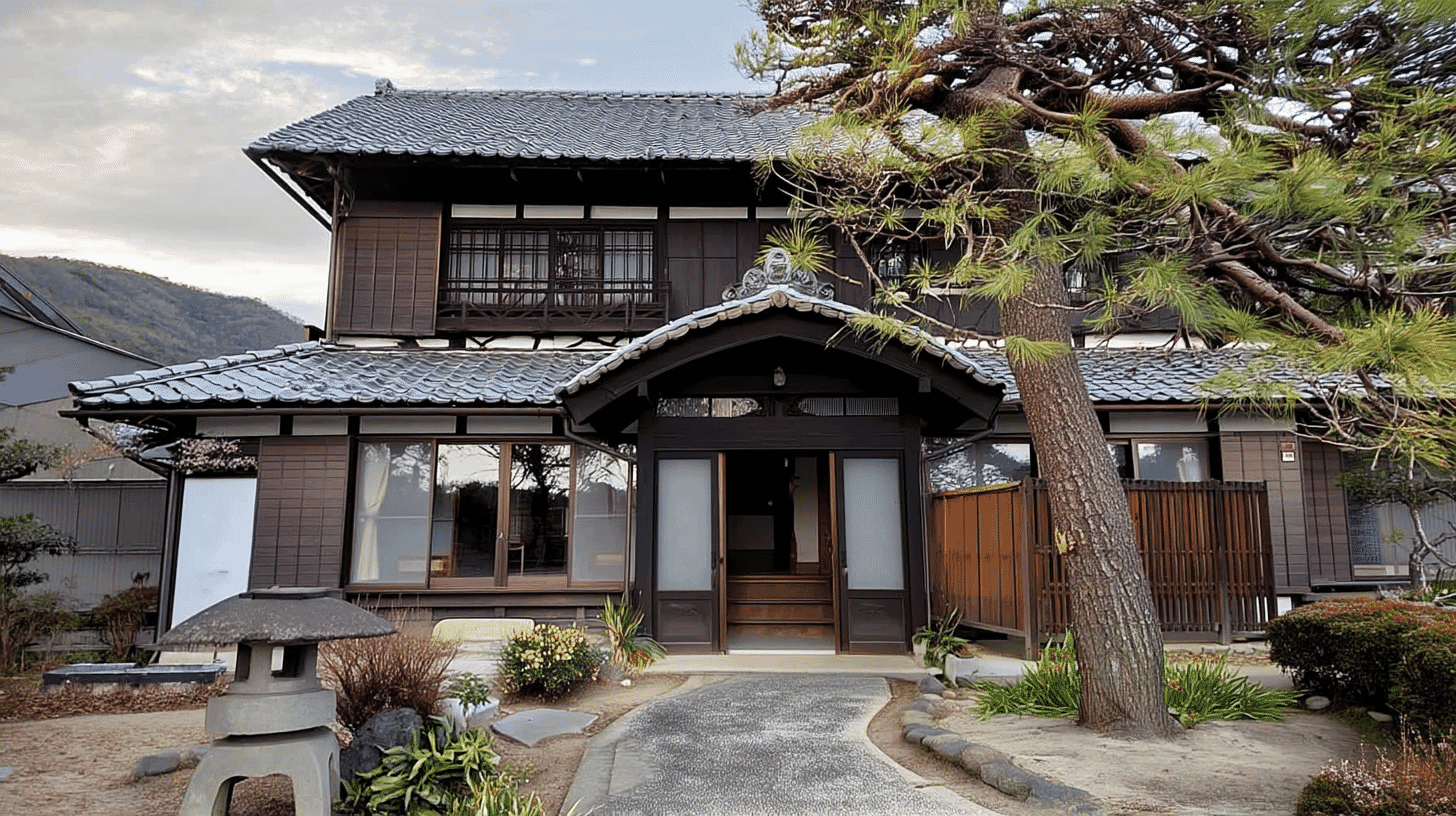
Shigeta House: A Hidden Meiji-Era Doctor's Residence and Registered Cultural Property in Gunma, Japan

Discover Shigeta House in Tamamura, Gunma - a 300-year-old physician's estate with 7 nationally registered cultural properties. Experience Meiji-era architecture, traditional medicine history, and free doctor costume activities. Open Wed-Fri, free admission.

Shigeta House: A Hidden Meiji-Era Doctor's Residence in Gunma

Tucked away near the banks of the Tone River in Tamamura Town, Gunma Prefecture, the Shigeta House (重田家住宅) stands as a remarkable testament to Japan's medical heritage and Meiji-era architecture. This expansive estate, featuring seven nationally registered tangible cultural properties, offers visitors an authentic glimpse into the life of a prestigious physician family whose healing tradition dates back some 300 years.

A Legacy of Healing: The Shigeta Family History

The Shigeta family has been one of Gunma's most distinguished medical lineages since the mid-Edo period. According to family records, the founding patriarch, Shigeta Saburobei Hidenobu, was originally a personal physician to the lord of Himeji Castle in present-day Hyogo Prefecture. His wife was reportedly a princess from the castle itself. When the family relocated to the Koizumi district of Tamamura approximately 300 years ago, they established a medical practice that would flourish for generations.

At its peak, the Shigeta family was counted among the "Three Great Medical Houses of Gunma." Their reputation for healing became legendary in the region. The family's traditional medicines were so renowned for their efficacy that local people would say, "Just passing through the gates of the Koizumi Shigeta house is enough to cure your illness." The clinic operated continuously until March 1950, serving the community for centuries.

The Main House: Heart of the Medical Practice

The main house (主屋), constructed in 1883 during the Meiji era, serves as the centerpiece of this historic complex. This impressive two-story wooden structure spans approximately 207 square meters and features a classic gabled roof covered with Japanese san-gawara tiles.

The building's layout reveals its dual purpose as both residence and medical clinic. The ground floor follows a traditional six-room arrangement, a layout associated with wealthy farming families, though the entrance hall was made deliberately smaller to accommodate the medical practice. Adjacent to the patient entrance, visitors would find the waiting room and pharmacy, while the front parlor (オモテザシキ) served as the examination room.

One of the most distinctive features is the ceremonial entrance (式台玄関) positioned at the center of the facade. This formal entryway, typically reserved for households of significant social standing, clearly demonstrates the prestige and status the Shigeta family held in the community. The southern and western sides of the building feature covered verandas extending from the lower roof, creating shaded corridors that connect the various spaces.

The Seven Registered Cultural Properties

On November 20, 2001, the Japanese government officially registered seven structures within the Shigeta House complex as nationally registered tangible cultural properties. Each building plays a vital role in the estate's historical narrative:

Main House (主屋) - 1883

The two-story wooden residence and clinic measures eight ken by five ken (approximately 14.5 by 9 meters). The building preserves many original features including the six-room layout, though some modifications were made to the entrance area and rear extensions over the years. The second floor now houses a reconstructed medical examination room from the original first floor, where visitors can experience what it was like to visit a traditional Japanese doctor.

Well Shelter (井戸屋形) - Early Taisho Period

Located east of the main house, this elegant structure sits atop a three-meter square foundation of tortoiseshell-pattern stone masonry. Four slightly inclined pillars support a gabled roof of san-gawara tiles through an ingenious system of penetrating tie beams and angled braces. More than just functional, this well shelter demonstrates the family's attention to aesthetic detail in even utilitarian structures.

Front Gate and Fence (表門及び塀) - Gate: 1890, Fence: c.1892

The impressive yakuimon-style gate, approximately three meters wide, features a single passage with subsidiary openings on each side. The attached fence stretches 80 meters along the southern boundary of the property, consisting of tiled board fencing set upon a stone foundation. Together with the main house, storehouses, and mature trees visible beyond, they create a stately "village headman's residence" appearance that speaks to the family's prominent position in the community. The current fence is a faithful 2011 reconstruction based on the original Meiji-era design.

Grain Storehouse (穀蔵) - c.1898

Positioned northeast of the main house behind the kitchen area, this single-story earthen-walled storehouse measures four ken by two and a half ken. The gabled structure features metal plate roofing and a south-facing entrance protected by an eave. The minimal fenestration—just a window on the north side—reflects its purpose of securely storing grain harvests. This building represents an essential component of the estate's agricultural character.

West Storehouse (西の蔵) - c.1927

Standing west of the main house, this two-story earthen-walled structure measures four ken by two and a half ken with an east-west ridge orientation. The exterior features a refined mortar wash finish. A covered corridor on the north side connects it to the northwest corner of the main house. Notably, the ground floor's eastern section contains a six-tatami-mat zashiki room, indicating its use as living quarters—likely as retirement rooms for elderly family members, a common practice in traditional Japanese households.

East Storehouse (東の蔵) - c.1928

This compact single-story earthen storehouse measures just two ken by one and a half ken, making it the smallest of the registered buildings at only 9.9 square meters. Despite its modest size, it served a critical function as the medicine ingredient storehouse. The matching mortar wash exterior connects it visually to the West Storehouse. For a medical practice relying on traditional herbal compounds, this dedicated storage for medicinal materials was indispensable.

Outdoor Toilet (外便所) - c.1926

Located in the garden southeast of the main house, this small independent structure was built specifically for patients visiting the clinic. Though occupying less than two tsubo (approximately 5.8 square meters), the building displays surprisingly refined construction with a hipped roof of san-gawara tiles and exposed timber frame (shinkabeizukuri) exterior walls. This attention to quality in a humble facility reflects the Shigeta family's consideration for their patients' comfort and dignity. It stands as a valuable example of how medical practices were integrated into traditional residential architecture.

Why the Shigeta House Became a Cultural Property

The Shigeta House complex earned its registered tangible cultural property designation for several significant reasons. First, the main house and its associated buildings represent an exceptionally well-preserved example of a Meiji-era physician's residence and clinic. The layout clearly illustrates how medical practice was integrated into traditional Japanese domestic architecture, with waiting rooms, examination spaces, and medicine storage arranged within a residential compound.

Second, the complete ensemble of structures—from the imposing front gate to the small patient toilet—provides a comprehensive picture of how a prosperous medical household functioned. Each building serves the larger whole, demonstrating traditional Japanese concepts of spatial hierarchy and functional organization.

Third, the buildings showcase construction techniques and architectural styles spanning the late Meiji to early Showa periods, offering valuable insights into the evolution of rural architecture in the Kanto region.

Experiencing the Shigeta House Today

In July 2021, the Shigeta family generously donated the historic buildings, grounds, and surrounding farmland to Tamamura Town. Since then, the municipality has been actively working to share this cultural treasure with the public.

The second floor of the main house features a recreated Meiji-era medical examination room where visitors can try on white coats and use stethoscopes for an authentic "doctor experience" (free for children and students). Interactive human anatomy model puzzles provide educational entertainment for all ages. Throughout the building, original period furniture, telephones, and medical instruments transport visitors back to an earlier era of Japanese medicine.

The town regularly hosts diverse events at the Shigeta House including markets, film screenings, illumination displays, health lectures, and even ghost story gatherings. Traditional kimono and hakama costume experiences are available by reservation (500 yen per session) on the fourth Saturday of each month and during special events.

The gardens display beautiful seasonal flowers throughout the year, and the adjacent Tobu Sports Plaza Park offers opportunities for recreation and leisurely walks.

Nearby Attractions

Visitors to the Shigeta House can easily combine their trip with other Tamamura Town highlights:

  • Tamamura Hachimangu Shrine: Founded by Minamoto no Yoritomo in 1195, this Important Cultural Property features a stunning main hall and the increasingly popular hanatemizu (flower-decorated water basin). Located about 3 kilometers from Shigeta House.
  • Michi-no-Eki Tamamura-juku: A roadside station connected to the Kan-Etsu Expressway's Takasaki-Tamamura Smart IC, offering local produce, specialty meats (Tamamura is known as "Meat Wonderland"), prepared foods, and souvenirs.
  • Tamamura History Museum: Located in the Tamamura Cultural Center, this museum explores the town's history as a post station on the Nikko Reiheishi Kaido road during the Edo period.
  • Kawazu Cherry Blossom Avenue: In early spring, approximately 200 early-blooming cherry trees line National Route 354, creating a spectacular pink corridor.
📍 Plan Your Visit to Gunma
Find tours, activities & transport passes near Shigeta Family Residence Main Building
[ Kusatsu Onsen & Tomioka Silk Mill Heritage Tours ]

Q&A

QIs English guidance available at the Shigeta House?
ACurrently, guided tours are primarily conducted in Japanese. However, many exhibits include visual elements that transcend language barriers, and the staff welcomes international visitors. Consider using a translation app for detailed explanations, or contact the Tamamura Town Lifelong Learning Division in advance to inquire about English-speaking volunteer guides.
QHow do I get to the Shigeta House from Tokyo?
AThe most convenient route is to take the JR Takasaki Line to Shinmachi Station, then board a bus bound for Tamamura Town Hall and alight at Koizumi or a nearby stop. The total journey takes approximately 90-120 minutes. If driving, the property is accessible from the Kan-Etsu Expressway via the Takasaki-Tamamura Smart IC. Free parking is available for approximately 40 vehicles.
QIs the Shigeta House suitable for children?
AYes! Children particularly enjoy the "doctor experience" on the second floor, where they can wear white coats and use stethoscopes. The interactive human anatomy puzzle is also a popular educational activity. The grounds provide ample space for exploration, and the nearby Tobu Sports Plaza Park offers additional recreational opportunities.
QWhat is the best time of year to visit?
AEach season offers unique charms. Spring brings cherry blossoms to the nearby avenue, while the gardens display seasonal flowers throughout the year. Special evening illumination events occasionally transform the property after dark. Check the town's official website for current event schedules and special programs.
QCan I take photographs at the Shigeta House?
APhotography for personal use is generally permitted throughout the property. The traditional buildings and gardens provide excellent subjects for capturing Japan's historical atmosphere. Professional photography and film shoots require advance coordination with the town office. The property is increasingly popular as a location for period dramas and historical productions.

Basic Information

Official Name Shigeta-ke Jutaku (Shigeta House / 重田家住宅)
Cultural Property Status Nationally Registered Tangible Cultural Property (7 structures, registered November 20, 2001)
Main House Construction 1883 (Meiji 16)
Address 42 Koizumi, Tamamura-machi, Sawa-gun, Gunma Prefecture 370-1144, Japan
Contact Tamamura Town Lifelong Learning Division, Cultural Properties Section
TEL: 0270-30-6180
Opening Hours 10:00-16:00 (last entry 15:30)
Open Days Wednesday, Thursday, Friday, and 4th Saturday of each month (3rd Saturday in December). Also open during special events.
Closed Monday, Tuesday, most Saturdays and Sundays, national holidays, year-end and New Year period
Admission Free
Parking Available (approximately 40 spaces, free)
Access By train: JR Takasaki Line to Shinmachi Station, then bus to Tamamura Town area
By car: Kan-Etsu Expressway Takasaki-Tamamura Smart IC

References

国登録有形文化財「重田家住宅」公開・活用情報 - 玉村町
https://www.town.tamamura.lg.jp/docs/2022042600015/
重田家住宅 - 玉村町魅力発信機構
https://www.tama-miryoku.com/spot/spot-2211
重田家住宅主屋 - 文化遺産オンライン
https://bunka.nii.ac.jp/heritages/detail/167822
重田家住宅西の蔵 - 文化遺産オンライン
https://bunka.nii.ac.jp/heritages/detail/115394
重田家住宅東の蔵 - 文化遺産オンライン
https://bunka.nii.ac.jp/heritages/detail/178736
重田家住宅外便所 - 文化遺産オンライン
https://bunka.nii.ac.jp/heritages/detail/149125
重田家住宅表門及び塀 - 文化遺産オンライン
https://bunka.nii.ac.jp/heritages/detail/138288
重田家住宅穀蔵 - 文化遺産オンライン
https://bunka.nii.ac.jp/heritages/detail/182423
重田家住宅井戸屋形 - 文化遺産オンライン
https://bunka.nii.ac.jp/heritages/detail/115597
国登録有形文化財 重田家住宅 - 朝日ぐんま
https://www.asahigunma.com/kyodonootakara_38/

Last verified: 2026.01.27

Nearby heritages