Discovering Jodo-ji Main Hall: A National Treasure in Onomichi
Perched on the hillside overlooking the Seto Inland Sea, Jodo-ji Temple's Main Hall stands as one of Japan's most significant medieval Buddhist structures. This National Treasure, built in 1327, represents a remarkable fusion of architectural styles that shaped Japanese temple design for centuries. As you explore the historic port city of Onomichi, this 14th-century masterpiece offers not just architectural wonder, but also a window into Japan's rich spiritual and cultural heritage.
The temple's strategic location has made it a witness to pivotal moments in Japanese history. From its legendary founding by Prince Shotoku in 616 to its role as a prayer site for samurai warlords, Jodo-ji has been at the heart of Onomichi's spiritual life for over 1,400 years. Today, it welcomes visitors from around the world who come to experience its unique architectural beauty and the breathtaking views of the island-dotted Seto Inland Sea.
The Architectural Marvel: Understanding the Eclectic Style
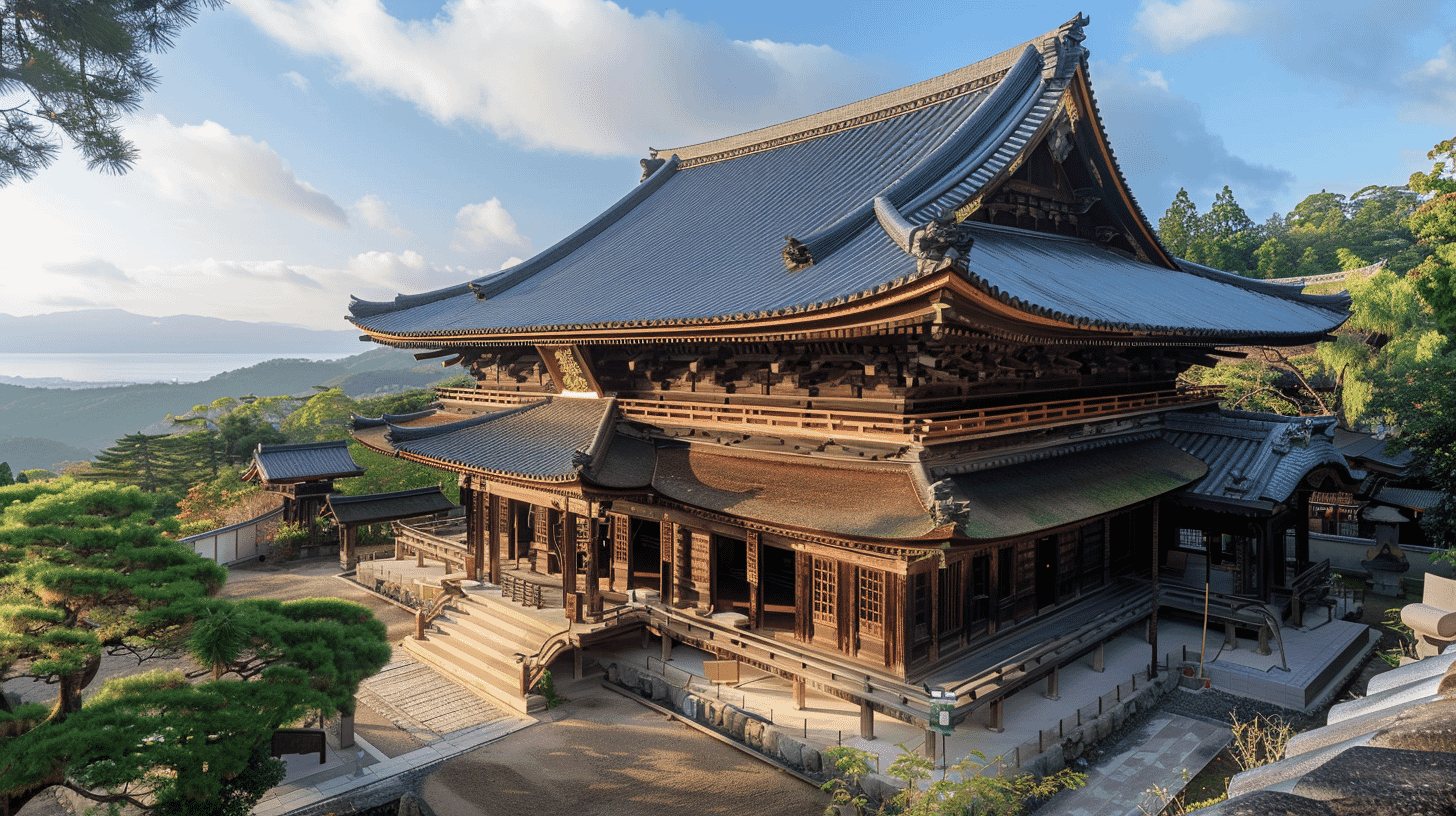
What makes Jodo-ji Main Hall truly exceptional is its pioneering eclectic architectural style, known as "setchu-yo" (折衷様). This innovative approach harmoniously blends three distinct Buddhist architectural traditions: the Japanese wayo style, the Chinese karayo (Tang dynasty) style, and the Indian tenjikuyo style. Built in 1327 after a fire destroyed the original structure, the current hall represents one of the earliest and finest examples of this synthetic architectural approach.
The building's wayo foundation is evident in its traditional tile roofing and parallel rafters, while the karayo influence appears in decorative elements like the ornate brackets and paneled doors. The tenjikuyo style contributes structural innovations that create the hall's distinctive spatial qualities. This architectural fusion wasn't merely aesthetic—it represented a philosophical synthesis of Buddhist traditions from across Asia, making the building a physical manifestation of Buddhism's international journey to Japan.
The main hall measures five bays by five bays with a hip-and-gable roof and a front worship area. The interior houses the temple's principal deity, an Eleven-faced Kannon (Goddess of Mercy), known as the "Migawari Kannon" or substitute deity who protects worshippers from harm. The sophisticated carpentry techniques and proportions create a sense of both grandeur and intimacy that has inspired architects and spiritual seekers for nearly 700 years.
Why It Became a National Treasure
The designation of Jodo-ji Main Hall as a National Treasure in 1953 recognizes its exceptional historical and artistic value to Japanese culture. As one of the oldest dated examples of eclectic Buddhist architecture, it provides crucial evidence of how Japanese builders creatively adapted continental Asian architectural traditions to local conditions and spiritual needs.
Beyond its architectural significance, the building's remarkably intact medieval structure offers invaluable insights into 14th-century construction techniques. The original wooden framework, despite weathering centuries of typhoons, earthquakes, and the humid coastal climate, demonstrates the exceptional skill of medieval Japanese carpenters. In 1994, the temple grounds themselves were also designated as a National Treasure, recognizing that the building and its setting form an integrated cultural landscape.
The hall's importance extends beyond architecture to encompass Japan's religious and political history. Its association with powerful historical figures, particularly the shogun Ashikaga Takauji who prayed here before his decisive victories, adds layers of historical significance that elevate it beyond a mere religious structure to a monument of national importance.
Historical Significance: From Prince Shotoku to the Ashikaga Shoguns
According to temple tradition, Jodo-ji was founded in 616 by Prince Shotoku, the legendary patron of Buddhism in Japan. While the current buildings date from much later, archaeological evidence confirms the site's ancient religious significance. The temple fell into disrepair during the early Kamakura period but was revitalized in 1306 by the monk Josho, a disciple of the famous priest Eison.
The temple's most famous historical connection is with Ashikaga Takauji, founder of the Ashikaga shogunate. In 1336, while fleeing to Kyushu, Takauji stopped at Jodo-ji to pray for victory. After his successful campaigns, he returned to offer gratitude and donated several estates to the temple. Legend tells that a white dove guided him to the temple, and to this day, the temple uses the Ashikaga family crest of "two parallel lines" as its symbol, and white doves are considered sacred messengers here.
Throughout the medieval period, Jodo-ji served as a crucial spiritual and political center. Various military leaders, including members of the powerful Mori clan, sought the temple's spiritual protection. This patronage by Japan's warrior elite ensured the temple's prosperity and the preservation of its remarkable buildings through centuries of warfare and social upheaval.
Highlights and Must-See Features
When visiting Jodo-ji Main Hall, several features deserve special attention. The building itself, with its perfect proportions and elegant roofline, is best appreciated from the temple courtyard where you can observe how it harmonizes with the surrounding landscape. The interior, accessible through guided tours, reveals the sophisticated joinery and the sacred space where the hidden principal image resides.
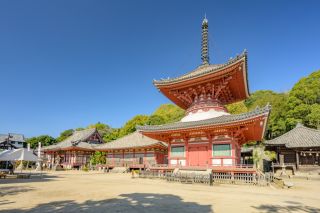
Don't miss the two-story Tahoto Pagoda, another National Treasure dating from 1328. This elegant structure, one of the oldest of its type in western Japan, complements the main hall and creates a remarkable architectural ensemble. The pagoda's interior paintings of the Eight Patriarchs of Shingon Buddhism, though only occasionally visible to the public, represent medieval Japanese religious art at its finest.
The temple's treasure hall houses numerous Important Cultural Properties, including Kamakura-period sculptures of Prince Shotoku and a remarkable 10th-century illuminated sutra. The karesansui (dry landscape) garden, though created much later in the Edo period, provides a contemplative space that enhances the spiritual atmosphere. For the adventurous, the trail up Mount Jodo-ji behind the temple leads to the Okunoin (inner sanctuary) and a spectacular observation deck offering panoramic views over Onomichi and the Seto Inland Sea.
The Temple Walk Experience: Part of Onomichi's Spiritual Circuit
Jodo-ji forms an essential stop on the famous Onomichi Temple Walk, a 2.5-kilometer route connecting 25 temples across the hillside city. It also serves as the fifth temple on the Onomichi Shichibutsu Meguri (Seven Buddha Pilgrimage), where it's associated with victory and success—a connection stemming from Ashikaga Takauji's battlefield prayers.
Visitors participating in the pilgrimage can collect a special red tiger's eye stone at Jodo-ji, believed to enhance judgment and lead to success in various endeavors. The temple offers unique hands-on experiences, including the opportunity to create your own omamori (protective amulet) by selecting from over 200 colorful fabric patterns—a meditative activity that connects modern visitors with centuries-old spiritual traditions.
The temple walk from Jodo-ji leads through atmospheric narrow lanes lined with traditional houses, small shrines, and glimpses of daily life in this historic port city. Whether you're completing the full temple circuit or simply visiting Jodo-ji as a standalone destination, the journey through Onomichi's temple district offers insights into how Buddhism continues to shape community life in contemporary Japan.
Practical Visitor Information
Jodo-ji is located in eastern Onomichi, about 25 minutes' walk from JR Onomichi Station or a 7-minute bus ride to the "Jodoji-shita" bus stop. The temple grounds are open daily from 8:00 AM to 5:00 PM, with free access to the outer precincts where you can admire the National Treasure buildings from outside.
For a deeper experience, consider the guided interior tours available for 300-800 yen depending on the areas accessed. The special guided tour (800 yen) includes entry to the main hall's inner sanctuary, normally closed to visitors, where you can see important Buddhist statuary and architectural details up close. The treasure museum, housing the temple's collection of Important Cultural Properties, requires an additional 400 yen admission.
The best times to visit are spring for cherry blossoms and autumn for maple colors, though the temple offers beauty in all seasons. Early mornings provide the best lighting for photography and fewer crowds. Note that special religious ceremonies may occasionally restrict access to certain areas, so checking ahead is advisable for those planning extensive interior visits.
Exploring the Surrounding Area
Onomichi itself is a treasure trove of cultural and natural attractions. The city serves as the Honshu starting point for the Shimanami Kaido, a 70-kilometer cycling route across the Seto Inland Sea that's become world-famous among cycling enthusiasts. Even if you're not cycling the full route, renting a bike for a short ride to nearby islands offers spectacular views and a unique perspective on the region.
Food lovers should not miss Onomichi ramen, the local specialty characterized by a soy sauce-based broth with pork back fat and fresh seafood from the Seto Inland Sea. The historic Onomichi Hondori shopping arcade, stretching 1.2 kilometers from the station, preserves a nostalgic atmosphere with shops that have operated for over a century.
For art enthusiasts, the Onomichi City Museum of Art, designed by renowned architect Ando Tadao, sits within Senkoji Park and features rotating exhibitions. The quirky Maneki-neko Museum celebrates Japan's lucky cat culture, while Onomichi U2, a renovated warehouse complex, offers stylish accommodation, restaurants, and bicycle rentals in a beautifully designed waterfront setting. The city's narrow lanes, known as the "Cat Alley," are home to numerous felines and have inspired countless photographers and artists.
Frequently Asked Questions
- What makes Jodo-ji Main Hall architecturally unique?
- The main hall is a pioneering example of "eclectic style" (setchu-yo) architecture, seamlessly blending Japanese wayo, Chinese karayo, and Indian tenjikuyo Buddhist architectural traditions. Built in 1327, it's one of the oldest dated examples of this synthetic style and influenced temple architecture throughout the Seto Inland Sea region.
- Can visitors enter the Main Hall?
- Yes, while the temple grounds are free to explore, interior access to the National Treasure Main Hall is available through guided tours (300-800 yen). The special tour includes the inner sanctuary with its Important Cultural Property statues and offers detailed explanations of the architectural features, though tours are primarily in Japanese.
- How long should I plan for a visit to Jodo-ji?
- A basic visit viewing the exterior of the buildings takes 30-45 minutes. Add another hour for the guided interior tour and treasure hall. If you plan to hike to the Okunoin observation point or participate in omamori-making activities, allow 2-3 hours total. Combining Jodo-ji with the full Onomichi Temple Walk makes for an excellent full-day itinerary.
- What's the best way to reach Jodo-ji from major cities?
- From Hiroshima, take the JR Sanyo Line to Onomichi Station (90 minutes). From Osaka or Kyoto, take the Shinkansen to Fukuyama, then transfer to the JR Sanyo Line to Onomichi. Once in Onomichi, walk 25 minutes, take a bus to "Jodoji-shita" stop (7 minutes), or take a taxi (about 1000 yen).
- Are there any special events or best times to visit?
- Spring cherry blossoms (late March-early April) and autumn colors (November) are spectacular. The temple hosts special events including the Star Festival on February 3rd, Spring Kannon Festival on the third Sunday of April, and the Onomichi Takigi Noh performances in mid-May. Early morning visits offer the best light and smallest crowds year-round.
Basic Information
| Name | Jodo-ji Main Hall (浄土寺本堂) |
|---|---|
| Designation | National Treasure (March 31, 1953) |
| Location | 20-28 Higashi Kubo-cho, Onomichi, Hiroshima 722-0043 |
| Built | 1327 (Karyaku 2) |
| Architectural Style | Eclectic style (wayo, karayo, and tenjikuyo blend) |
| Structure | 5×5 bays, single story with hip-and-gable roof |
| Temple Hours | 8:00 - 17:00 daily |
| Admission | Grounds: Free; Interior tours: 300-800 yen; Treasure hall: 400 yen |
| Contact | Tel: 0848-37-2361 |
| Access | 25 min walk from JR Onomichi Station; 7 min by bus to Jodoji-shita stop |
References
- Cultural Heritage Online - Jodo-ji Main Hall
- https://bunka.nii.ac.jp/heritages/detail/176362
- Onomichi Tourism Association
- https://www.ononavi.jp/sightseeing/temple/detail.html?detail_id=25
- Onomichi Shichibutsu Meguri (Seven Buddha Pilgrimage)
- https://shichibutsu.jp/temple/joudoji.php
- Japan Heritage Onomichi City
- https://nihonisan-onomichi.jp/en/bunkazai04_jodoji/
- Jodo-ji Temple Official Website
- http://www.ermjp.com/j/temple/
Nearby heritages
- Jodo-Ji Temple Amida Hall
- Higashikubocho, Onomichi City, Hiroshima Prefecture
- Wooden Standing Statue of Prince Shotoku (statue of Prince
- 20-28 Higashikubocho, Onomichi City, Hiroshima Prefecture
- Wooden Standing Statue of Prince Shotoku (enshrined in the
- 20-28 Higashikubocho, Onomichi City, Hiroshima Prefecture
- Wooden Standing Statue of Prince Shotoku (enshrined in the
- 20-28 Higashikubocho, Onomichi City, Hiroshima Prefecture
- Jodo-Ji Temple Gate
- Higashikubocho, Onomichi City, Hiroshima Prefecture
- Jodo-Ji Temple Pagoda
- Higashikubocho, Onomichi City, Hiroshima Prefecture
- Jodo-Ji Temple Garden
- Higashikubocho, Onomichi City
- Jodo Temple
- Higashikubocho, Onomichi City, Hiroshima Prefecture
- Jodo-Ji Temple Pagoda
- Higashikubocho, Onomichi City, Hiroshima Prefecture
- Jodo-Ji Temple Pagoda
- Higashikubocho, Onomichi City, Hiroshima Prefecture