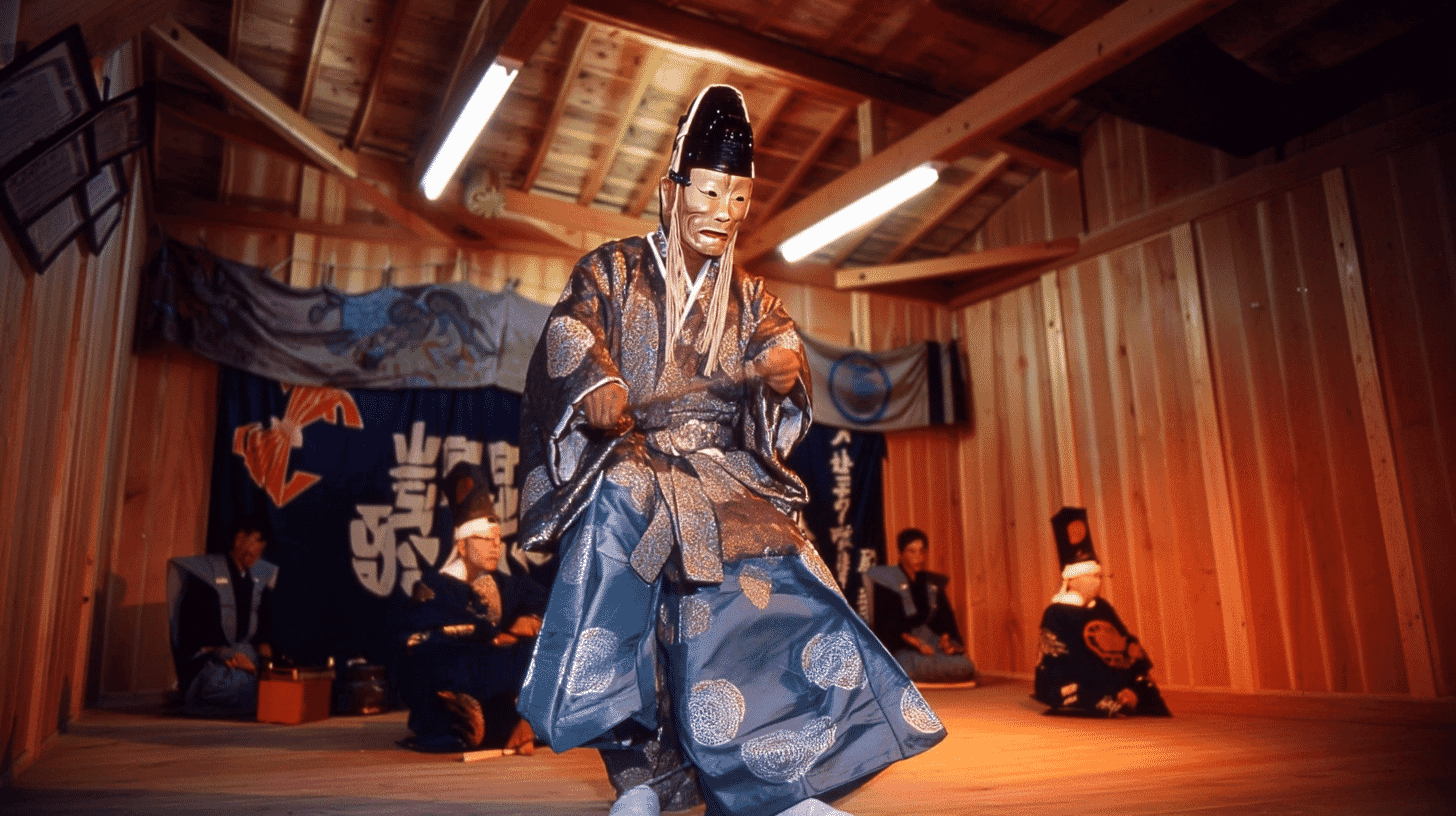
Introduction: A Living Window into Japan's Ritual Past
Hidden in the mountain village of Sawano in Tamba City, Hyogo Prefecture, lies one of Japan's most precious links to the ancient world of ritual performing arts. The Aogaki Okina Sanbasō is not merely a cultural performance—it is a sacred ceremony that has been passed down for over five centuries, preserving elements of shamanic ritual that predate even the formalization of Noh theater.
Unlike the polished performances of professional Noh theaters in major cities, this folk tradition remains rooted in its original purpose: to invoke divine blessing for peace and prosperity. Designated as a nationally selected intangible folk cultural property in 1970, the Aogaki Okina Sanbasō offers visitors a rare opportunity to witness living history—a tradition that has continued unbroken since the late Muromachi period.
What is Okina Sanbasō?
Sanbasō, meaning "third old man," is a ritual dance form that lies at the heart of Japanese performing arts. While most people associate Japan's traditional theater with Noh and Kabuki, the Sanbasō tradition actually predates these art forms, representing a direct connection to ancient agricultural rituals and shamanistic practices.
The performance is part of a larger ritual framework called "Shiki Sanban" (literally "formal three numbers"), which features three distinct characters: Senzai (a youthful figure), Okina (the venerable old man), and Sanbasō. Each figure embodies different aspects of blessing—the Okina prays for world peace and national stability, while the Sanbasō invokes abundant harvests and agricultural prosperity.
What makes the Aogaki version particularly significant is its preservation of archaic elements that were eventually refined away in the professional Noh tradition. The vigorous foot-stamping, the rhythmic bell-ringing, and certain dance movements retain characteristics of ancient earth-awakening rituals designed to rouse the soil from winter dormancy and summon fertility to the fields.
Why Was It Designated a Cultural Property?
The Aogaki Okina Sanbasō received its designation as a nationally selected intangible folk cultural property on March 30, 1970, due to several exceptional characteristics that set it apart from other regional Sanbasō traditions.
First and foremost, scholars have identified elements within the performance that appear to predate the establishment of formal Noh Sanbasō. The ritual contains traces of ancient shamanic performing arts and shows clear connections to the historical Tanba Sarugaku tradition—a regional form of early theatrical entertainment that flourished in this area before the systemization of Noh.
The performance structure itself is notably archaic. It includes the rarely-seen "Chichi-no-jō" (Father Elder) dance, which was eliminated from most other Sanbasō traditions centuries ago. The interaction patterns between performers, the distinctive chanting style, and certain gestural elements all point to a time before professional Noh masters standardized the art form.
Additionally, the Aogaki tradition preserves the practice of "bekka" (separate fire)—a purification ritual where performers live in spiritual isolation, using separate cooking fires, in the days leading up to the performance. This connection between purification and performance echoes ancient Japanese beliefs about ritual purity and the sacred nature of ceremonial dance.
The Performance: Structure and Highlights
The Aogaki Okina Sanbasō is performed annually during the autumn festival of Hachiman Shrine in Sawano, typically on the weekend closest to October 9th and 10th. The performance takes place on a special stage called the "Maidō" (dance hall), a traditional platform for regional theatrical performances.
The performance unfolds in a carefully prescribed sequence:
- Purification: Before the performance begins, all participants proceed to the main shrine building to receive formal purification rites.
- Senzai Dance: A young boy performs the opening dance, representing youthful vitality and serving as a ritual "sweeping" of the performance space.
- Okina Dance: A young man performs the dignified dance of the venerable elder, praying for world peace and prosperity.
- Chichi-no-jō Dance: The rare "Father Elder" dance, preserved here but lost in most other traditions.
- Sanbasō Momi-no-Dan: The vigorous "kneading" section, performed without a mask, featuring powerful foot-stamping to awaken the earth.
- Sanbasō Suzu-no-Dan: The climactic "bell" section, performed with the black elder mask (Kuro-shiki-jō), where the dancer shakes sacred bells in movements suggesting the sowing of seeds.
The musical accompaniment consists of a flute and two small hand drums (kotsuzumi), with the drummers also serving as the chorus. A distinctive feature is the "kage-utai" (shadow singing), where the opening sacred chant "tōtō tarari" is performed from behind the curtain rather than on stage.
Throughout the performance, the sharp clacking of wooden clappers punctuates the action, adding to the ritualistic atmosphere. The entire sequence creates a hypnotic, otherworldly experience that transports viewers back to an era when performance and prayer were inseparable.
Historical Background
The origins of the Aogaki Okina Sanbasō stretch back to the late Muromachi period (roughly the 15th-16th centuries), when villagers gathered to perform sacred dances praying for peace and abundant harvests. Local tradition, however, traces the shrine's history even further back.
According to legend, during the early Kamakura period, Adachi Tōnobu—the second son of Adachi Tōmasa, a warrior who had settled in the Saji Manor area—established a branch shrine of the Yamagaki Hachiman Shrine at this location. The performing tradition is believed to have developed from this foundation, gradually incorporating elements from traveling performers and evolving into its current form over the centuries.
The Tanba region, where Aogaki is located, was historically an important center for early performing arts. The area was home to Tanba Sarugaku troupes—wandering performers who traveled between villages offering their sacred entertainment. Some scholars believe that the Aogaki tradition preserves performance elements from these early Sarugaku masters, who eventually evolved into the professional Noh performers of later centuries.
Despite the social upheavals of Japan's tumultuous history—including the warring states period and the modernization of the Meiji era—the local community has maintained this tradition without interruption, passing the sacred dances from generation to generation.
Experiencing the Performance
For visitors seeking to witness this remarkable tradition, the annual performance offers a unique window into rural Japan's living heritage. The festival typically begins with evening performances on Saturday (around 8 PM) and continues with morning performances on Sunday (around 9 AM).
The atmosphere is distinctly different from attending a professional Noh performance in Tokyo or Kyoto. Here, you are not a passive audience member but a participant in a community celebration. Local families gather at the shrine, children run between the festival stalls, and the smell of traditional festival foods fills the autumn air.
The intimate setting of the village shrine allows viewers to observe the performance from remarkably close range. You can see the concentration on the young performers' faces, hear the subtle variations in the drumming, and feel the power of the foot-stamping that is meant to awaken the earth itself.
For photography enthusiasts, the combination of traditional costumes, ancient masks, and the rustic shrine setting offers countless opportunities for compelling images. The evening performances, lit by traditional lanterns, create an especially atmospheric scene.
Surrounding Area: Making the Most of Your Visit
The Aogaki area offers numerous attractions that complement a visit to the Okina Sanbasō festival. Consider extending your stay to explore the rich cultural and natural heritage of this beautiful mountain region.
Kōgenji Temple: One of the most famous autumn foliage destinations in the Kansai region, Kōgenji Temple is home to hundreds of "Tenmoku Maple" trees brought from China by the temple's founder in the 13th century. Located just a short drive from Sawano, the temple's crimson canopy in November is a sight not to be missed.
Aogaki Ikimono Fureai no Sato: This nature observation center offers approximately 3.5 kilometers of walking trails through pristine mountain forest. The visitor center displays local freshwater fish and provides information about the region's diverse flora and fauna.
Tanba Cloth (Tanba-fu) Center: Discover the traditional hand-woven textiles of the region at this museum and workshop. The distinctive striped patterns of Tanba cloth have been produced here since the Edo period using natural dyes and traditional techniques.
Michi-no-Eki Aogaki: This roadside station serves as an excellent base for exploring the area, offering local specialty products including Tanba black soybeans, chestnuts, and yam—ingredients that have made Tanba famous throughout Japan.
Paragliding: Aogaki is known as one of Hyogo Prefecture's premier paragliding destinations. The mountainous terrain and favorable wind conditions have made it a popular spot for both beginners and experienced pilots.
Practical Information for Visitors
Access: Aogaki is most easily reached by car. From the Kitakinki-Toyooka Expressway, take the Aogaki IC exit and follow Route 427. The Sawano Hachiman Shrine is located in the Sawano district of Aogaki-cho, Tamba City.
For those traveling by public transportation, take the JR Fukuchiyama Line to Ishō Station or Kaibara Station in Tamba City. From there, local buses serve the Aogaki area, though service may be limited on weekends and holidays. Taxi or rental car is recommended for convenient access to the shrine and surrounding attractions.
Best Time to Visit: The Okina Sanbasō performance is held annually in early October. Combining this with a visit during the autumn foliage season (late October to mid-November) allows you to experience both the living tradition and the spectacular natural beauty of the Tanba mountains.
Accommodation: While Aogaki itself has limited accommodation options, the broader Tamba area offers various choices ranging from traditional Japanese inns (ryokan) to modern glamping facilities. The nearby hot spring town of Kinosaki Onsen is also within reasonable driving distance for those seeking a more comprehensive onsen experience.
- 📍 Plan Your Visit to Hyogo
- Find tours, activities & transport passes near Aogaki No Okina Sanbaso
- [ Himeji Castle & Kobe Night View Cruise ]
Q&A
- When is the Aogaki Okina Sanbasō performed?
- The performance is held annually during the autumn festival of Hachiman Shrine, typically on the weekend closest to October 9th and 10th. Saturday evening performances begin around 8 PM, while Sunday performances start around 9 AM. Please check with the Tamba City Tourism Association for exact dates each year.
- Is there an admission fee to watch the performance?
- The performance is part of the shrine's annual festival and is typically free to observe. This is a community celebration, and visitors are welcome to attend. However, as this is a sacred ritual, visitors should be respectful and follow any instructions from shrine staff.
- What makes the Aogaki Sanbasō different from Noh theater Sanbasō?
- The Aogaki version preserves archaic elements that were refined away in professional Noh theater. It includes the rare "Chichi-no-jō" (Father Elder) dance and maintains performance elements connected to ancient Tanba Sarugaku traditions. Additionally, it retains ritual practices like "bekka" (purification through separate fire) that link it to pre-theatrical religious ceremonies.
- Is the performance suitable for visitors who don't understand Japanese?
- Yes, the performance is highly visual and ritualistic, making it accessible to international visitors regardless of language ability. The masked dances, traditional costumes, and ceremonial atmosphere communicate powerfully without words. Understanding the basic structure beforehand (as described in this article) will enhance your appreciation.
- Can I take photographs during the performance?
- Photography is generally permitted during the festival, but flash photography may be restricted during the sacred performances. Always be considerate of other viewers and follow any specific guidelines provided by shrine officials. The intimate setting offers excellent opportunities for photography without flash.
Basic Information
| Name | Aogaki Okina Sanbasō (青垣翁三番叟) |
|---|---|
| Cultural Designation | Nationally Selected Intangible Folk Cultural Property (March 30, 1970) |
| Preservation Group | Aogaki Okina Sanbasō Hozonkai (青垣翁三番叟保存会) |
| Performance Venue | Hachiman Shrine, Sawano, Aogaki-cho, Tamba City, Hyogo Prefecture |
| Annual Performance Date | Weekend closest to October 9-10 (Saturday evening ~8PM, Sunday morning ~9AM) |
| Origin Period | Late Muromachi Period (15th-16th century) |
| Performers | Senzai (boy), Okina (young man), Sanbasō (high school student) |
| Musical Accompaniment | Flute (fue), two small hand drums (kotsuzumi), chorus (jiutai) |
| Contact | Tamba City Board of Education, Cultural Properties Division (Tel: 0795-70-0819) |
References
- 青垣翁三番叟|丹波市ホームページ
- https://www.city.tamba.lg.jp/soshiki/shakaikyoikubunkazaika/gyomuannai/7/1/2945.html
- 青垣の翁三番叟|文化遺産オンライン
- https://bunka.nii.ac.jp/heritages/detail/136967
- 青垣翁三番叟|丹波市観光協会
- https://www.tambacity-kankou.jp/spot/spot-3794/
- 三番叟|Wikipedia
- https://ja.wikipedia.org/wiki/三番叟
- 狂言・能楽の歴史|文化デジタルライブラリー
- https://www2.ntj.jac.go.jp/dglib/contents/learn/edc12/enmoku/sanbasou.html