
The Historic Outer Wall of Kuroda Seiemon Shoten: A Living Legacy of Japan's Hardware Heritage
In the heart of Miki City, Hyogo Prefecture, where the scent of forged metal has filled the air for centuries, stands a remarkable testament to Japan's merchant heritage. The outer wall (sotobei) of Kuroda Seiemon Shoten is not merely a boundary—it is a bridge between eras, connecting visitors to the prosperous days when this region forged its identity as Japan's premier hardware-producing town.
A Gateway to Merchant Prosperity
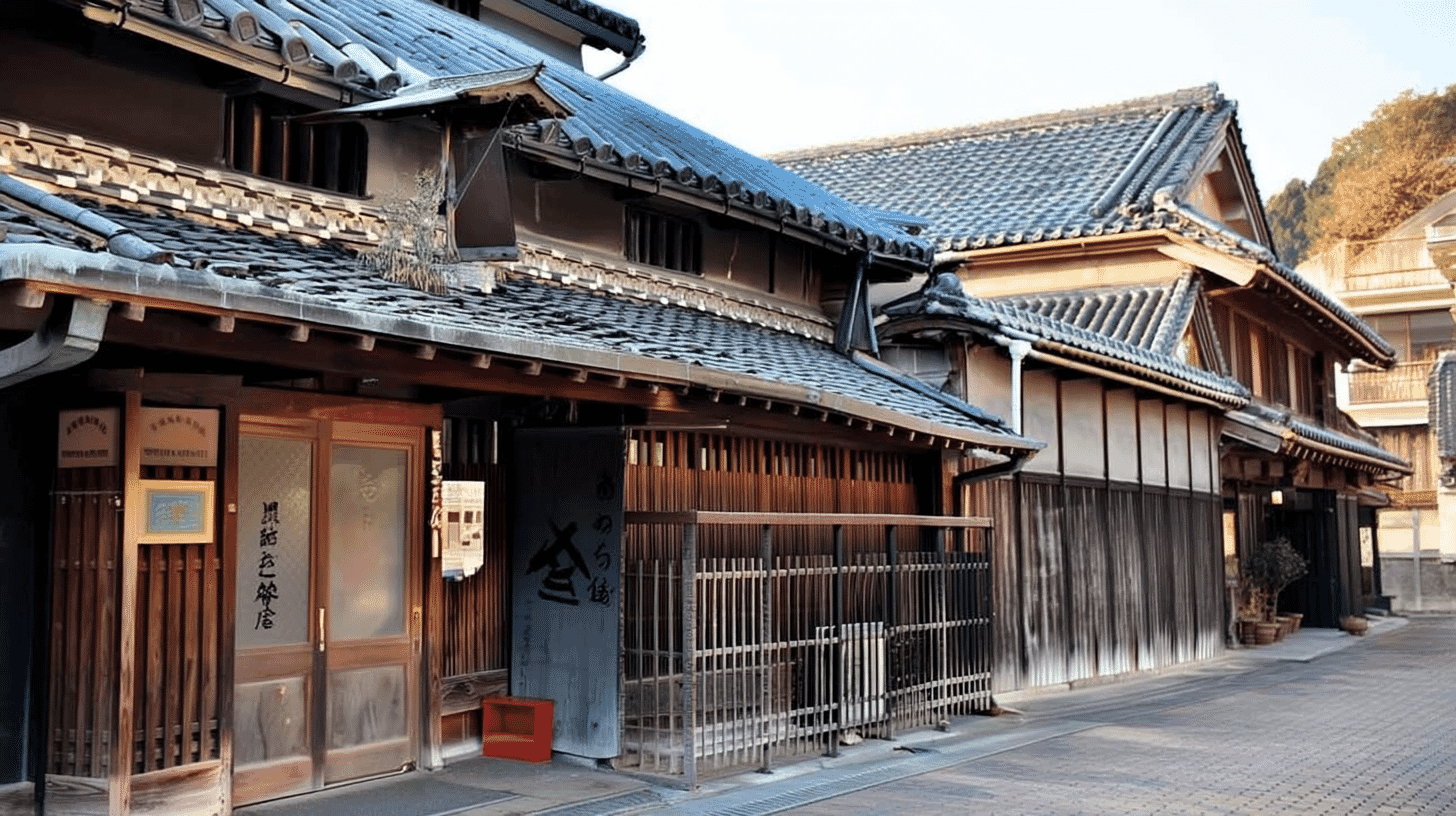
The Kuroda Seiemon Shoten outer wall stretches approximately 6.5 meters along the northern edge of the property, facing the historic Yunoyama Kaido—the ancient road connecting Himeji to Arima Onsen hot springs. Standing at roughly 3.3 meters tall, this elegant barrier separates the street from the property's exquisite front garden (senzai), creating a harmonious composition alongside the main store building and inner storehouse.
Constructed with traditional tsuchikabe (earthen wall) techniques and finished with lustrous black lacquer plaster (kuro-shikkui) on its lower cedar wood panels, the wall exemplifies the refined aesthetic sensibilities of prosperous Edo-period merchants. The roof features san-kawara tiles with an extended copper-plated eave projecting over half a meter on the garden side, supported by elegant wooden brackets and metal fittings.
Why This Wall Earned National Recognition
On December 5, 2019, the outer wall of Kuroda Seiemon Shoten was officially registered as a Nationally Registered Tangible Cultural Property (Kuni Toroku Bunkazai), part of a comprehensive registration that included eleven structures across the merchant compound. The wall received this distinction for several compelling reasons.
The outer wall plays a crucial role in forming the "omote-gamae" (front facade) of the merchant complex, working in concert with the store building and inner storehouse to present a unified and dignified streetscape along the Yunoyama Kaido. Miki's historic district features few properties with such generous street frontage, making the Kuroda property's presentation particularly valuable for preserving the area's historical character.
Additionally, the wall represents sophisticated construction techniques characteristic of early Showa-period (estimated 1927) craftsmanship while maintaining visual continuity with older structures. Historical photographs from the Meiji period show an earlier, lower wall in the same location, demonstrating the family's ongoing commitment to maintaining their property's distinguished appearance.
The Kuroda Legacy: Three Centuries of Hardware Trade
The Kuroda family traces its merchant lineage to the early Edo period. The family was granted the privilege of using a surname (a rare honor for commoners) and when Miki came under the domain of Lord Kuroda Naokuni of Shimodate in 1707, three brothers of the family established separate houses under the trade names Masuya, Sakuya, and Matsuya.
The first Sakuya Seiemon (1735-1793) founded the hardware wholesale business in 1765 when he branched off from the main family. He became instrumental in forming the Miki Hardware Buyers' Association, and by the second generation, the shop had established direct trading relationships with Edo (modern-day Tokyo). This connection proved pivotal in spreading the reputation of Miki hardware throughout Japan.
The family's influence extended beyond commerce. As prominent townspeople, the Kuroda family served as soyori (town elders) in Miki's uniquely autonomous municipal government. The seventh-generation Kuroda Seiemon (1885-1964) served as Miki Town Council member, Mino County Council member, Mayor of Miki, and Hyogo Prefectural Assembly member, dedicating himself to regional development.
Architectural Treasures Beyond the Wall
While the outer wall serves as an impressive introduction, the Kuroda Seiemon Shoten compound contains numerous architectural treasures worth noting. The main store and residence, built in the late Edo period, features a distinctive three-tiered roofline with traditional hon-kawara tiles and mushiko-mado (insect cage windows). The iconic large saw (oga) signboard mounted on the eaves has become a beloved symbol of Miki's hardware heritage.
The compound includes multiple storehouses (kura) built during the Meiji period, arranged in a U-shape around the property's southern boundary. These structures stored merchandise, household goods, and valuable documents. The detached building (hanare), constructed in 1927 during the seventh-generation proprietor's tenure as mayor, served as a guest house for important visitors, featuring a two-story reception area and a single-story study.
Experiencing the Historic Streetscape
Visiting the Kuroda Seiemon Shoten outer wall offers more than architectural appreciation—it provides a sensory journey into Japan's merchant past. The property sits along Yunoyama Kaido, the historic road used by daimyo processions and travelers seeking the therapeutic waters of Arima Onsen since the Edo period.
As you approach from the east along the gently curving street, the white-plastered inner storehouse (uchigura) comes into view as a natural visual focal point, with the elegant black outer wall extending to connect it with the main store. This carefully composed streetscape demonstrates the sophisticated urban planning consciousness of Miki's historic merchant community.
Note that while the property remains a working business and private residence, visitors can appreciate the exterior architecture from the public street. The harmonious blend of black lacquer walls, white storehouse plaster, traditional tile roofs, and copper eaves creates a photogenic scene that captures the essence of Japan's traditional commercial architecture.
Miki: Japan's Hardware Capital
Understanding Kuroda Seiemon Shoten requires appreciation of Miki's unique industrial heritage. The city's connection to metalworking dates back approximately 1,500 years when Korean blacksmiths settled in the region. However, the modern hardware industry truly flourished following the devastating Miki Campaign of 1578-1580.
After the siege by Toyotomi Hideyoshi left the castle town in ruins, reconstruction efforts attracted skilled carpenters and blacksmiths who settled permanently. The tools they brought gained fame as word spread, and by the 18th century, Miki had established itself as Japan's leading producer of professional-grade carpenter tools including saws (nokogiri), planes (kanna), chisels (nomi), and other implements.
Today, Miki hardware maintains its reputation for exceptional quality, with the Banshu Miki Uchihamono (forged blades) designated as a Traditional Craft of Japan. The Kuroda family's continuous operation since 1765 makes them a living connection to this rich industrial heritage.
Nearby Attractions
Combine your visit to Kuroda Seiemon Shoten with exploration of Miki's other historical treasures. The Miki Castle Ruins, a national historic site, stand just minutes away. This dramatic clifftop fortress was the site of the famous "Miki Siege" where Lord Bessho Nagaharu and his followers endured a brutal two-year blockade before their tragic end in 1580.
The Miki City Museum of History, housed in the castle's former Ninomaru (secondary citadel), offers excellent context on both the castle's history and Miki's development as a hardware town. Admission is free, and the museum provides English information.
For hands-on experiences, visit the Miki City Hardware Museum, where you can observe traditional forging demonstrations on the first Sunday of each month. The adjacent Michi-no-Eki (Roadside Station) Miki features a hardware exhibition hall selling products from over 70 local manufacturers—perfect for finding unique souvenirs.
- 📍 Plan Your Visit to Hyogo
- Find tours, activities & transport passes near Kuroda Seiemon Shoten Outer Wall
- [ Himeji Castle & Kobe Night View Cruise ]
Q&A
- Can visitors enter the Kuroda Seiemon Shoten property?
- The property remains a private residence and working business (hardware wholesaler), so interior access is not generally available to the public. However, the registered cultural property—the outer wall, main building facade, and storehouse exteriors—can be fully appreciated from the public street along Yunoyama Kaido.
- What is the best time to visit for photography?
- Early morning provides excellent soft lighting on the north-facing facades. The black lacquer walls and white storehouse plaster create beautiful contrast in the gentle morning light. Autumn and spring offer pleasant weather for strolling the historic district.
- How do I combine this with other Miki attractions?
- The Kuroda property is located in central Miki, within walking distance of Miki Castle Ruins, the Miki History Museum, and the historic Yunoyama Kaido streetscape. A half-day itinerary could include all these sites plus the Hardware Museum near Miki-Uenomaru Station.
- Is there English signage or information available?
- English signage at the property itself is limited. However, the Miki City Tourism Association offers volunteer guide services (reservation required two weeks in advance) and the Miki History Museum provides some English materials. Consider downloading translation apps before your visit.
- What makes Miki hardware special?
- Miki hardware, particularly carpenter's tools, has been crafted here for over 400 years. The forged blades (uchihamono) are designated a Traditional Craft of Japan, known for their exceptional sharpness and durability. Professional carpenters and woodworkers worldwide prize Miki-made planes, chisels, and saws.
Basic Information
| Name | Kuroda Seiemon Shoten Sotobei (Outer Wall) |
|---|---|
| Cultural Property Status | Nationally Registered Tangible Cultural Property |
| Registration Date | December 5, 2019 |
| Construction Period | Early Showa Period (estimated 1927) |
| Dimensions | Length: approximately 6.5m, Height: approximately 3.3m |
| Structure | Wooden frame, tile and copper plate roofing |
| Owner | Kuroda Seiemon Shoten Co., Ltd. |
| Address | 2-chome 980, 1121 Honmachi, Miki City, Hyogo Prefecture |
| Access | Approximately 10 minutes walk from Shintetsu Miki Station or Miki-Uenomaru Station (Kobe Electric Railway Ao Line) |
| Parking | No dedicated parking; use nearby public parking or Miki History Museum parking (limited spaces) |
References
- 黒田清右衛門商店(国登録文化財) - 三木市ホームページ
- https://www.city.miki.lg.jp/site/mikirekishishiryokan/19137.html
- 黒田清右衛門商店が国登録有形文化財に - アトリエCINQplus
- https://at-cinq.com/plus/kuroda-01/
- 三木金物の歴史 - 三木工業協同組合
- https://www.miki-japan.com/history
- 三木市立金物資料館 - おでかけ三木
- https://www.mikishi-kankou.com/culture/555/
- 三木城跡 - ハートにぐっと北播磨
- https://kita-harima.jp/spot/85/
- 三木市内 史跡めぐり - 道の駅みき
- https://mikiyama.co.jp/sightseeing/shiseki
Last verified: 2026.01.13