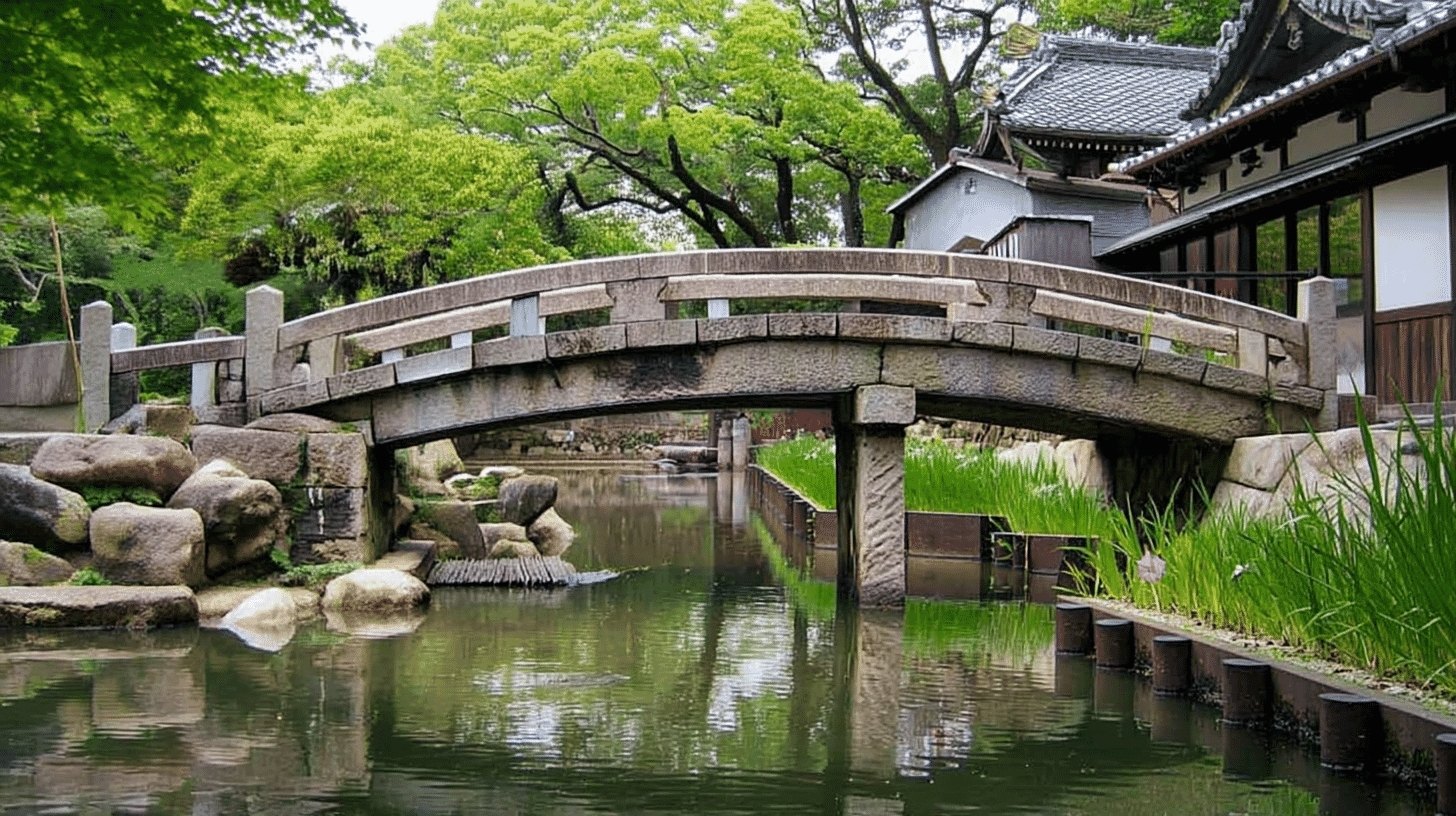
Nishinomiya Shrine Kaei Bridge: A Testament to Japan's Sake Brewing Heritage
In the heart of Nada Gogo, Japan's most celebrated sake-producing region, stands a remarkable stone bridge that tells the story of the deep connection between sake brewers and their spiritual guardians. The Kaei Bridge at Nishinomiya Shrine, designated as a Registered Tangible Cultural Property, represents not merely an architectural achievement but a profound expression of gratitude from the sake brewing community to the deities that watched over their craft.
A Bridge Born from Sake Brewers' Faith
Constructed in 1848 (Kaei 1) during the final years of the Edo period, the Kaei Bridge was commissioned and funded collectively by the sake brewers of Nishinomiya-go, one of the five districts that compose the legendary Nada Gogo sake region. This collective effort demonstrates the prosperity and community spirit that characterized the sake brewing industry during this golden era.
The bridge serves a sacred purpose: providing passage over the shrine's divine pond to Matsuo Shrine, dedicated to Oyamaakui-no-Kami, the patron deity of sake brewing. The Matsuo Shrine at Nishinomiya was established in 1790 (Kansei 2) by the sake brewers of Nishinomiya, inviting the deity from Matsuo Taisha in Kyoto. The construction of the Kaei Bridge nearly 60 years later reflects the continued devotion of sake brewers to their craft and their spiritual traditions.
Architectural Excellence in Stone
The Kaei Bridge showcases the refined craftsmanship of mid-19th century Japanese stonemasons. Measuring 6.0 meters in length and 1.8 meters in width, this pedestrian girder bridge was constructed entirely from granite quarried from Mount Rokko, locally known as mikage-ishi (Mikage stone), renowned for its durability and beautiful appearance.
The bridge features elegantly crafted stone railings mounted on the paved walkway, combining functionality with aesthetic grace. As the oldest surviving bridge within the Nishinomiya Shrine precincts, it stands as a vital component of the shrine's historical landscape, offering visitors a tangible connection to the region's sake brewing heritage.
Why the Kaei Bridge Earned Cultural Property Status
The Kaei Bridge received designation as a Registered Tangible Cultural Property in 2013, recognizing its exceptional value in multiple dimensions. First, it represents a rare surviving example of mid-Edo period bridge construction techniques using local materials. The bridge's association with the sake brewing industry adds another layer of significance, as it physically embodies the relationship between commerce, faith, and craftsmanship that defined the Nada region's prosperity.
Moreover, the bridge contributes significantly to the historical ambiance of Nishinomiya Shrine, which already houses other important cultural properties including the National Important Cultural Property Omote-Daimon gate and Oneri-Bei walls. The Kaei Bridge works in harmony with another registered cultural property bridge, the Zuiho Bridge, to create a landscape that transports visitors back to the golden age of sake brewing.
Understanding Nishinomiya Shrine: The Spiritual Heart of Sake Country
To fully appreciate the Kaei Bridge, one must understand its context within Nishinomiya Shrine, the head shrine of approximately 3,500 Ebisu shrines throughout Japan. Nishinomiya Shrine, affectionately known as "Nishinomiya no Ebbessan," has been revered as the deity of commerce and prosperity since ancient times. The shrine's famous Toka Ebisu festival in January attracts over one million visitors, with the spectacular "Fukuotoko selection" dash from the main gate to the inner shrine broadcast nationwide.
The shrine's deep connection with the sake industry is evident throughout its grounds, where sake barrels donated by breweries create a distinctive atmosphere. This relationship between shrine and sake continues today, with the annual "Ebbessan no Sake Brewing Prayer Festival" held each October, where sake brewers pray for successful production.
Nada Gogo: Japan's Premier Sake-Producing Region
The significance of the Kaei Bridge extends beyond the shrine grounds to encompass the broader story of Nada Gogo. This region, stretching along the coast from Kobe's Nada Ward to Nishinomiya City, produces approximately 25% of Japan's sake. The area's five districts—Nishigo, Mikage-go, Uozaki-go, Nishinomiya-go, and Imazu-go—have been synonymous with quality sake since the Muromachi period.
The secret to Nada's sake excellence lies in the region's blessed natural resources: miyamizu (shrine water) with its unique mineral composition, superior brewing rice, cold winter winds from Mount Rokko ideal for fermentation, and convenient access to Edo (Tokyo) via maritime routes. These advantages, combined with exceptional brewing techniques, established Nada as the undisputed center of Japanese sake production.
Exploring the Kaei Bridge and Its Surroundings
When visiting the Kaei Bridge, take time to appreciate the tranquil beauty of the shrine's sacred pond. The bridge offers a peaceful moment of contemplation as you cross toward Matsuo Shrine, where you can pay respects to the deity of sake brewing. The view from the bridge, particularly during cherry blossom season or autumn foliage, provides excellent photographic opportunities.
The bridge is located centrally within the shrine's western pond area, easily accessible from the main worship halls. Along with the nearby Zuiho Bridge (donated by the Tatsuma family, founders of Hakutaka sake brewery), these structures create a harmonious historical landscape that evokes the era when sake brewing was the lifeblood of the community.
Planning Your Visit: Sake Brewery Tours and Cultural Experiences
A visit to Nishinomiya Shrine and the Kaei Bridge pairs perfectly with exploration of the surrounding sake brewery district. The Nishinomiya-go and Imazu-go areas feature numerous sake museums and tasting facilities where you can learn about traditional brewing methods and sample locally produced sake.
Notable nearby attractions include the Hakushika Memorial Sake Museum (Sakura Museum), which preserves traditional brewing implements as Important Folk Cultural Properties, and Hakutaka Rokusui-en, which recreates the lifestyle of sake brewing families from the late Edo to early Showa periods. Many breweries offer tours and tastings, providing insight into how the traditions honored at the Kaei Bridge continue in modern sake production.
Seasonal Highlights and Special Events
The Kaei Bridge and Nishinomiya Shrine offer different charms throughout the year. The New Year period (especially January 9-11) brings the famous Toka Ebisu festival, though crowds can be overwhelming. Spring offers serene beauty with cherry blossoms reflecting in the pond around the bridge, while autumn provides spectacular foliage.
In October, the Miyamizu Festival and Sake Brewing Prayer Festival celebrate the beginning of the sake-brewing season, with sake brewers dressed in traditional costumes participating in ceremonies at the shrine. The West Nishinomiya Sake Warehouse Renaissance and Food Fair, held on the shrine grounds, offers opportunities to taste sake from local breweries and enjoy regional cuisine.
Access and Practical Information
Nishinomiya Shrine is conveniently located in the Kansai region, accessible from both Osaka and Kobe. The shrine is just a 5-minute walk from Nishinomiya Station on the Hanshin Main Line, or about 10-20 minutes from JR Sakura-Shukugawa Station or Hankyu Shukugawa Station. This central location makes it easy to combine your visit with other Kansai attractions.
The shrine grounds are open from approximately 5:00 AM to 6:00 PM (hours vary seasonally), and admission is free. While the Kaei Bridge itself is always accessible during shrine hours, visitors should be respectful of worship activities and ceremonies. The bridge's stone surface can be slippery when wet, so exercise caution during rainy weather.
- 📍 Plan Your Visit to Hyogo
- Find tours, activities & transport passes near Nishinomiya Shrine Kaei Bridge
- [ Himeji Castle & Kobe Night View Cruise ]
Q&A
- What makes the Kaei Bridge culturally significant?
- The Kaei Bridge is a Registered Tangible Cultural Property built in 1848 by sake brewers as a pathway to Matsuo Shrine, the deity of sake brewing. It represents the deep connection between the sake industry and spiritual devotion in Japan's premier sake-producing region. As the oldest bridge remaining within Nishinomiya Shrine's precincts, it provides invaluable historical testimony to the golden age of Nada's sake brewing culture.
- Can visitors walk across the Kaei Bridge?
- Yes, visitors can walk across the Kaei Bridge during shrine visiting hours. The bridge remains an active pathway to Matsuo Shrine and offers beautiful views of the sacred pond. Please be respectful and careful, especially in wet conditions when the stone surface may be slippery. The bridge provides an authentic experience of following the same path that sake brewers have used for over 170 years.
- Are there sake-related activities near Nishinomiya Shrine?
- Absolutely! The surrounding Nishinomiya-go and Imazu-go areas feature numerous sake breweries with museums and tasting rooms. Notable facilities include Hakushika Memorial Sake Museum, Hakutaka Rokusui-en, Nihonsakari's Sake Brewery Street Brick Building, and Ozeki's Kanjuan. Many offer tours, tastings, and educational exhibits about traditional sake brewing. The annual Sake Brewery Renaissance festival in October is particularly recommended for sake enthusiasts.
- What is the best time to visit the Kaei Bridge?
- While the bridge is beautiful year-round, spring (cherry blossom season) and autumn (foliage season) offer particularly stunning views with colorful reflections in the pond. October is special for sake lovers, as it coincides with the Sake Brewing Prayer Festival and related events. For a quieter experience, visit on weekday mornings. Avoid the extremely crowded New Year period (January 9-11) unless you specifically want to experience the Toka Ebisu festival atmosphere.
Basic Information
| Name | Nishinomiya Shrine Kaei Bridge (西宮神社嘉永橋) |
|---|---|
| Designation | Registered Tangible Cultural Property (Building) |
| Construction Year | 1848 (Kaei 1) |
| Structure | Stone girder bridge, Length: 6.0m, Width: 1.8m, with stone railings |
| Material | Granite from Mount Rokko (Mikage stone) |
| Commissioned By | Sake brewers of Nishinomiya-go |
| Location | Nishinomiya Shrine precincts, 1-17 Shakechi-cho, Nishinomiya City, Hyogo Prefecture |
| Access | 5 min walk from Hanshin Nishinomiya Station / 10 min walk from JR Sakura-Shukugawa Station / 20 min walk from Hankyu Shukugawa Station |
| Visiting Hours | Approximately 5:00-18:00 (varies by season) |
| Admission | Free |
| Parking | Available at shrine (limited during festivals) |
| Registration Date | March 29, 2013 |
References
- Nishinomiya Shrine Kaei Bridge - Cultural Heritage Online
- https://bunka.nii.ac.jp/heritages/detail/258632
- Nishinomiya Shrine Kaei Bridge - Japan Heritage Portal Site
- https://japan-heritage.bunka.go.jp/ja/culturalproperties/result/5206/
- Ebisu Shrine Head Shrine Nishinomiya Shrine Official Site
- https://nishinomiya-ebisu.com/
- Nada Gogo Sake Brewing Association
- https://www.nadagogo.ne.jp/
- Nishinomiya Tourism Association Official Site
- https://nishinomiya-kanko.jp/
Last verified: 2025.11.12
Nearby heritages
- Nishinomiya Shrine Zuiho Bridge
- 11 Shakamachi, Nishinomiya City, Hyogo Prefecture
- Nishinomiya Shrine Bronze Bell Building (former Lantern
- 11 Shakamachi, Nishinomiya City, Hyogo Prefecture
- Nishinomiya Shrine Worship Hall
- 11 Shakamachi, Nishinomiya City, Hyogo Prefecture
- Nishinomiya Shrine Chozuya
- 11 Shakamachi, Nishinomiya City, Hyogo Prefecture
- Nishinomiya Shrine West Wing
- 11 Shakamachi, Nishinomiya City, Hyogo Prefecture
- Nishinomiya Shrine East Wing
- 11 Shakamachi, Nishinomiya City, Hyogo Prefecture
- Nishinomiya Shrine Main Hall
- 11 Shakamachi, Nishinomiya City, Hyogo Prefecture
- Nishinomiya Shrine Large Wall
- Shakemachi, Nishinomiya City, Hyogo Prefecture
- Nishinomiya Shrine Large Wall
- Shakemachi, Nishinomiya City, Hyogo Prefecture
- Nishinomiya Shrine Main Gate
- Shakemachi, Nishinomiya City, Hyogo Prefecture
