
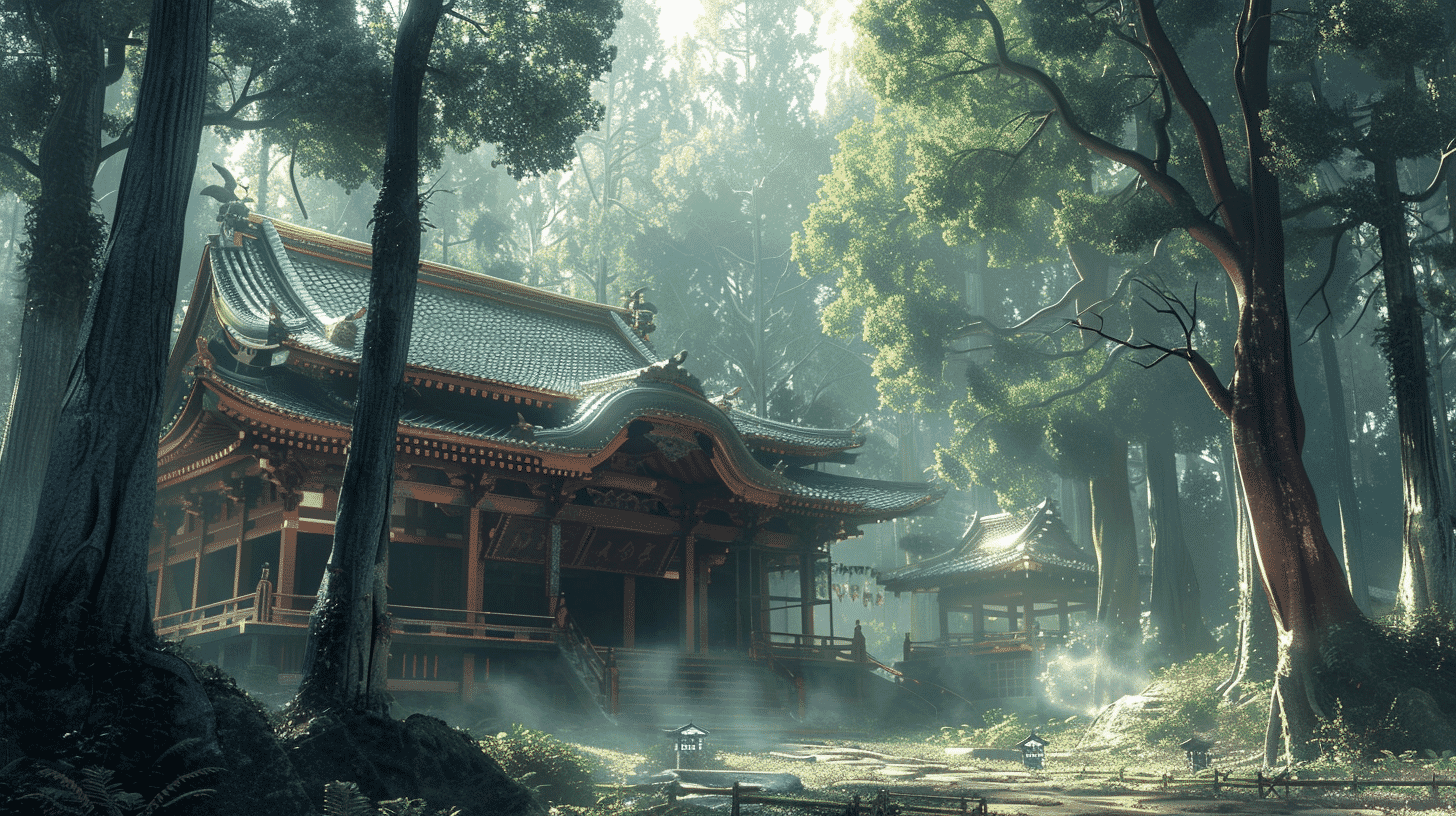
One Hall, National Treasure since 1955
Taisanji Temple Main Hall (太山寺本堂, Taisanji Hondo) is a late Kamakura structure at Ikawadani-cho, Nishi Ward, Kobe City, Hyogo Prefecture, made an Important Cultural Property on 14 April 1913 and designated a National Treasure on 22 June 1955. The quantity is one building and the owner the temple.
The hall is seven bays by six bays, single-storeyed, with a hip-and-gable roof of copper sheet. The date field gives 1285.
22 June 1955 is the day the Seihakuji Buddha hall was also designated.
A Hall of the Same Name in Ehime, Also a National Treasure
This is not the only National Treasure called Taisanji Hondo.
Another stands at Taisanji-cho, Matsuyama City, Ehime Prefecture, made an Important Cultural Property on 29 August 1904 and designated a National Treasure on 28 June 1956.
The names match exactly. So do the readings, the owner's name, the period given as late Kamakura, and the width of seven bays.
With the Saibara-fu, one title covered a National Treasure in Saga and an Important Cultural Property in Tokyo. With the chrysanthemum waist sword, one title covered a National Treasure and a separate property. At Himeji Castle, buildings of nearly one name differed in category.
Here name, owner's name and period all agree, and both are National Treasures. This is the most confusable pairing met so far.
This article treats the hall at Kobe.
Roof and Depth Tell the Two Apart
What separates them lies in the structural field.
The Kobe hall is seven bays by six, hip-and-gable, roofed in copper sheet. The Ehime hall is seven bays by nine, hip-and-gable, roofed in plain tile.
Both are seven bays across. The depth differs, six against nine, and the roofing differs, copper against tile.
The dates differ too: 1285 at Kobe against 1305 at Matsuyama, twenty years apart.
So do the listings. As Important Cultural Properties, Matsuyama came in 1904 and Kobe in 1913, nine years apart; as National Treasures, Kobe on 22 June 1955 and Matsuyama on 28 June 1956, about a year apart.
The Myooin and Jodoji main halls had identical structural entries and stood at different temples. These two share a name and differ in structure.
Era Year and Western Year Are One Apart
The commentary's dating does not hold together.
It states that the hall was rebuilt soon after a fire in the eighth year of the Koan era, giving 1284 in brackets.
The eighth year of Koan corresponds to 1285. The bracketed 1284 is the seventh. Era year and western year are one apart.
The date field gives 1285, which agrees with the era year.
At the Kanshinji golden hall, two records differed by a year through the conversion of a southern court era. That was a matter of how the conversion is made.
Here era year and bracketed year disagree within one record. Whether the fire fell in 1284 or 1285 cannot be settled from the record, and this article reproduces both as they stand.
Visiting
The hall stands at Ikawadani-cho, Nishi Ward, Kobe City, Hyogo Prefecture, owned by the temple. It stands in the precinct and its exterior can be seen on a visit.
The assessment calls it large in scale and a fine example of an esoteric main hall. Scale forms part of the value.
Osasahara Shrine Main Hall conceded that it was a small building before praising its detail. Here the size itself is named.
The same temple has a gate listed as an Important Cultural Property. A gate at the Ehime temple is recorded separately under a closely similar name, so the gates too are easily confused.
Access to the interior follows the temple's own arrangements. Check before travelling.
Q&A
- When was the hall designated?
- It became an Important Cultural Property on 14 April 1913 and a National Treasure on 22 June 1955. The quantity is one building, at Ikawadani-cho, Nishi Ward, Kobe City, owned by the temple.
- Is there another National Treasure of the same name?
- Yes. A hall of the same name at Matsuyama City, Ehime Prefecture, was designated on 28 June 1956. Name, reading, owner's name and period all match, and both are National Treasures.
- How are the two told apart?
- By structure. The Kobe hall is six bays deep and roofed in copper sheet; the Ehime hall is nine bays deep and roofed in plain tile. Both are seven bays across, and their dates are 1285 and 1305.
- Is there an error in the commentary's date?
- Era year and western year do not agree. The commentary gives the eighth year of the Koan era with 1284 in brackets, but that era year corresponds to 1285, which is what the date field gives.
- What is valued in it?
- The Agency calls it large in scale and a fine example of an esoteric main hall, rebuilt soon after the fire. Scale forms part of the assessment.
Basic Information
| Name | Taisanji Temple Main Hall (太山寺本堂, Taisanji Hondo); a hall of the same name at Matsuyama City, Ehime Prefecture, is a separate National Treasure |
|---|---|
| Location | Ikawadani-cho, Nishi Ward, Kobe City, Hyogo Prefecture |
| Designation | National Treasure (structure, religious architecture); the temple's gate is an Important Cultural Property |
| Year Designated | 1913 (14 April), Important Cultural Property; 1955 (22 June), National Treasure |
| Quantity | 1 building |
| Dimensions | 7 bays by 6 bays, single-storeyed, hip-and-gable roof of copper sheet. The date field gives 1285, and the commentary a rebuilding soon after a fire in the eighth year of the Koan era; the western year in its brackets is 1284, one apart from the era year. The period is the late Kamakura |
| Owner | Taisanji |
| Public Access | Standing in the precinct; the exterior can be seen on a visit, while the interior follows the temple's own arrangements |
References
- Cultural Heritage Online: the Taisanji main hall at Kobe
- https://bunka.nii.ac.jp/heritages/detail/145948
- Cultural Heritage Online: the Taisanji main hall at Matsuyama
- https://bunka.nii.ac.jp/heritages/detail/157845
- Cultural Heritage Online: the Taisanji gate
- https://bunka.nii.ac.jp/heritages/detail/201179
- Agency for Cultural Affairs, National Cultural Properties Database
- https://kunishitei.bunka.go.jp/
Last verified: 2026.09.06