
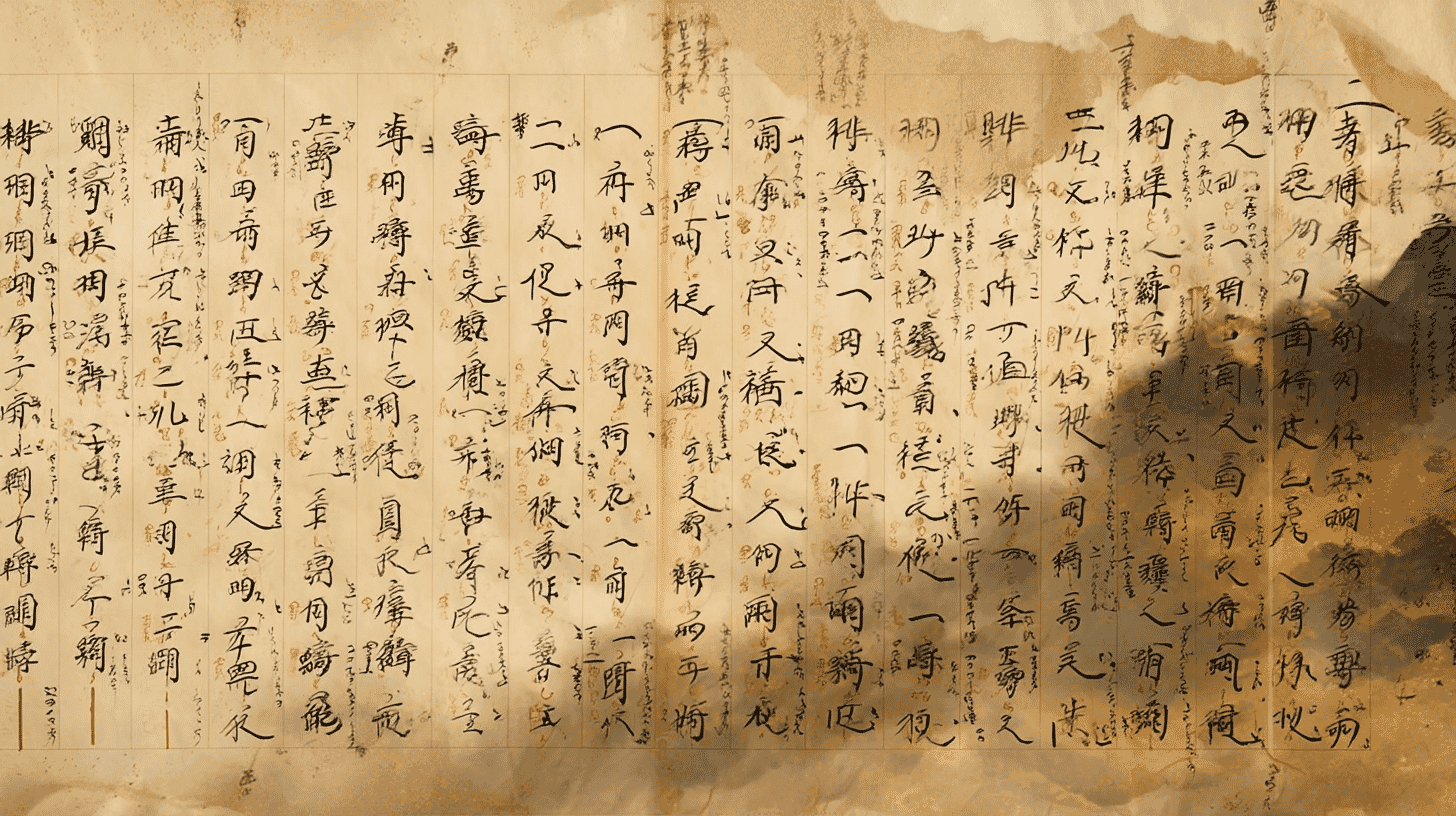
Two Volumes, an Important Cultural Property since 1944
Nihon Shoki: the Age of the Gods, in Two Volumes (日本書紀神代巻, Nihon Shoki Jindaikan) is held at 1-1215-1 Migawa, Mito City, Ibaraki Prefecture, listed as an Important Cultural Property on 5 September 1944. The listing is as an Important Cultural Property, not a National Treasure.
The owner is the Tokugawa Museum foundation, which holds the records of the Mito branch of the Tokugawa house.
This site's record gives two prefectures, Ibaraki and Tokyo. The tsujigahana haori likewise carried two, Tokyo and Aichi.
A Serious Correction: The Old Article Described a Different Manuscript
The article previously published here was written about another property.
It took as its subject a National Treasure manuscript held at the Kyoto National Museum. The name of that museum appeared fourteen times in the text and the phrase National Treasure twenty-three times.
This property is an Important Cultural Property owned by the Tokugawa Museum in Mito, Ibaraki Prefecture. Owner, location and category of designation all differ.
With the rhinoceros-horn knife, a Shosoin treasure had been described instead; with the black-laced domaru, a property of the same name at Kasuga Taisha; with the cherry-laced armour, the text of the knife article had simply been copied in.
This is the fourth such case, and the first to cross the line between National Treasure and Important Cultural Property.
The present article has been rewritten in full from the Agency's records.
The Angle Brackets Show How the Work Divides
The name ends with a bracketed note of its parts.
The name reads: the Age of the Gods volumes, then angle brackets enclosing the words for upper and lower.
The Age of the Gods volumes are the part of the Nihon Shoki that treats the age of the gods. Here that part comes in two.
Angle brackets have appeared before. With the cherry-laced armour they marked a helmet and sleeves as included; with the sword by Mitsuyo, a signature; with the black-laced domaru, included pieces again.
Here they mark the division of the work itself. One mark serves three purposes: inclusion, signature and division.
With the ring-pommel sword, curly brackets held two objects separated by a slash. The use of these marks is not fixed.
Listed in 1944, under the Older System
The year of listing falls in an unusual period.
The listing as an Important Cultural Property is dated 5 September 1944.
Among properties covered here, that follows the lacquered dais of 1924 and the lion-motif sword of 1941 as an early listing.
Most listings met here come after the war. This one falls during it.
The many designations of 1952 and 1953 followed the cultural properties law of 1950.
This property was listed under the system that preceded it, carried through the postwar change, and remains an Important Cultural Property. It did not become a National Treasure.
Seeing It
The manuscript is at 1-1215-1 Migawa, Mito City, Ibaraki Prefecture, owned by the Tokugawa Museum foundation.
With the Gekimosho, the Tenri library held it and the university owned it; with the tsujigahana haori, the Tokugawa Art Museum held it and a foundation owned it.
Here the foundation runs the museum, so the two are one. The gilded mirror at the Gotoh Museum takes the same form.
The Tokugawa Museum keeps the records of the Mito branch of the house together in one place.
It is a museum holding, not kept on permanent display. Exhibition plans can change, so check before travelling.
Q&A
- When was the manuscript listed?
- On 5 September 1944, as an Important Cultural Property rather than a National Treasure. The owner is the Tokugawa Museum foundation.
- Is this the National Treasure at the Kyoto National Museum?
- No. That is a separate property. This one is an Important Cultural Property owned by the Tokugawa Museum in Mito, Ibaraki Prefecture.
- What do the angle brackets mean?
- They show how the work divides. The Age of the Gods section of the Nihon Shoki comes here in two volumes, upper and lower.
- Why are two prefectures recorded?
- This site's record gives both Ibaraki and Tokyo. The tsujigahana haori likewise carries two prefectures in its record.
- Is the year of listing unusual?
- It falls in 1944, during the war. Most listings met here follow the cultural properties law of 1950, while this one precedes it.
Basic Information
| Name | Nihon Shoki: the Age of the Gods, in Two Volumes (日本書紀神代巻); the angle brackets show how the work divides |
|---|---|
| Location | 1-1215-1 Migawa, Mito City, Ibaraki Prefecture (the Tokugawa Museum); this site's record names 2 prefectures, Ibaraki and Tokyo |
| Designation | Important Cultural Property; not a National Treasure |
| Year Designated | 1944 (5 September), Important Cultural Property |
| Quantity | 2 volumes, upper and lower |
| Dimensions | The Agency's fields for dimensions and for form carry nothing. The angle brackets in the name show the division into 2 volumes |
| Owner | The Tokugawa Museum foundation |
| Public Access | A museum holding, not on permanent display |
References
- The Tokugawa Museum
- https://tokugawa.gr.jp/
- Agency for Cultural Affairs, National Cultural Properties Database
- https://kunishitei.bunka.go.jp/
- Cultural Heritage Online
- https://bunka.nii.ac.jp/
- Mito City: cultural properties
- https://www.city.mito.lg.jp/
Last verified: 2026.09.06