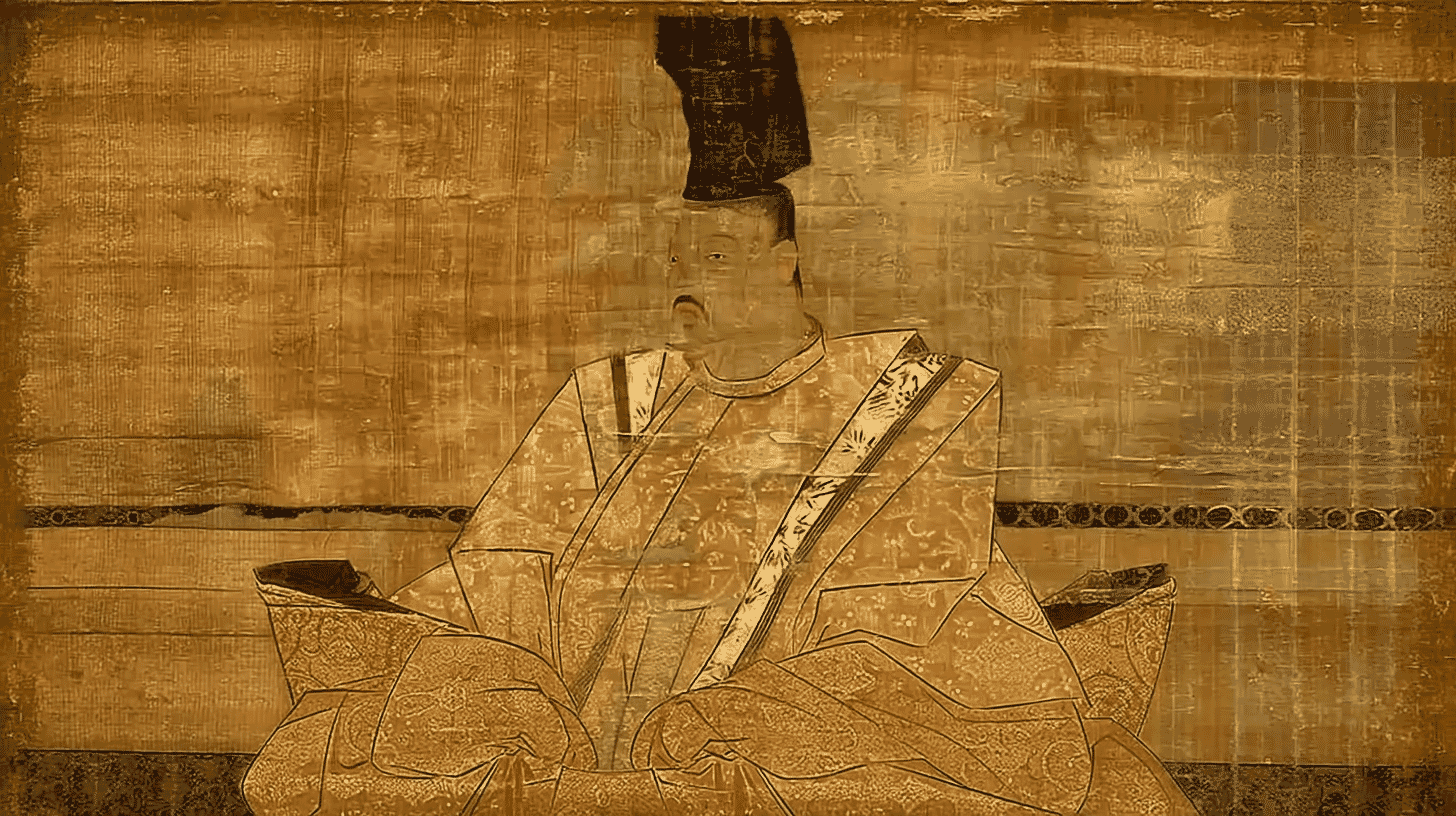
National Treasure: Silk Portrait of Kanazawa Sadaaki — A Window into the Kamakura Warrior Elite

Tucked away in the quiet residential streets of Yokohama's Kanazawa Ward, far from the tourist crowds of nearby Kamakura, lies one of Japan's most remarkable artistic legacies. The Kenpon Chakushoku Kanazawa Sadaaki-zō (絹本著色金沢貞顕像) — the silk portrait of Kanazawa Sadaaki — is a National Treasure that offers an extraordinarily intimate glimpse into the face of a man who once held the fate of Japan's medieval government in his hands.

This portrait is part of a rare set known as the "Four Generals" (Shishō-zō), depicting four successive leaders of the Kanazawa branch of the Hōjō clan. Together, they form one of the finest collections of Kamakura-period portraiture in existence, and they have been treasured at Shōmyōji Temple for over seven centuries.

Who Was Kanazawa Sadaaki?

Kanazawa Sadaaki (also known by his formal name Hōjō Sadaaki, 1278–1333) was one of the most influential political figures of late Kamakura-period Japan. He was the grandson of Hōjō Sanetoki, the visionary founder of the Kanazawa Bunko — Japan's oldest surviving warrior-class library — and the son of Hōjō Akitoki.

Sadaaki's career was distinguished and varied. He served twice as Rokuhara Tandai, the Shogunate's chief representative in Kyoto responsible for overseeing the Imperial Court. During his years in the capital, he immersed himself in courtly culture, befriending aristocrats and Buddhist monks, and amassing a remarkable collection of Chinese and Japanese manuscripts that greatly enriched the Kanazawa Bunko.

In 1315, he was appointed Rensho (Vice-Regent) of the Kamakura Shogunate, and in 1326, he briefly ascended to the position of 15th Shikken (Regent) — the highest executive office of the government. However, internal political rivalries forced his resignation after just ten days, and he retired into monastic life. When the Kamakura Shogunate fell to Nitta Yoshisada's forces in 1333, Sadaaki chose to share the fate of the Hōjō clan, taking his own life alongside them at Tōshōji Temple in Kamakura.

Beyond politics, Sadaaki was also the patron who transformed Shōmyōji Temple into a magnificent complex, complete with the Pure Land–style garden that still enchants visitors today. Over 640 of his personal letters survive in the Kanazawa Bunko archives, providing an invaluable window into the daily life, anxieties, and personal warmth of a medieval Japanese statesman.

The Portrait: Artistry and Significance

The portrait of Kanazawa Sadaaki is painted on silk using mineral pigments and ink — a technique designated kenpon chakushoku (color painting on silk). It depicts Sadaaki wearing an eboshi (a tall black court cap) and kariginu (a hunting garment favored by the warrior aristocracy), reflecting his status as an active political leader at the time the portrait was made.

The painting belongs to the nise-e (似絵, "likeness picture") tradition, a distinctive school of Japanese portraiture that flourished during the Kamakura period (1185–1333). Before the emergence of nise-e, Japanese portraiture was almost exclusively religious in character. Nise-e artists broke new ground by creating realistic depictions of secular individuals — courtiers, warriors, and poets — seeking to capture the unique personality and essence of each subject through refined, delicate brushwork.

What makes this portrait particularly valuable is that it was created during or very close to Sadaaki's own lifetime, making it a near-contemporary likeness rather than a posthumous idealization. The subtle rendering of the facial features conveys a sense of the individual behind the formal attire — a thoughtful, cultured man bearing the weight of governance.

The Four Generals: A Dynasty in Portraits

The portrait of Sadaaki does not stand alone. It is part of a remarkable set of four portraits known as the Shishō-zō (Four Generals), each depicting a successive head of the Kanazawa Hōjō clan:

  • Hōjō Sanetoki (1224–1276) — the founder of the Kanazawa Bunko, depicted in the tonsured robes of a Buddhist monk
  • Hōjō Akitoki (1248–1301) — Sanetoki's son, also shown in priestly garb after his retirement from public life
  • Kanazawa Sadaaki (1278–1333) — shown in secular court dress, in his role as active statesman
  • Kanazawa Sadamasa (1302–1333) — Sadaaki's son, likewise in court dress, who perished alongside his father in the fall of Kamakura

An additional portrait of Kenben, Sadaaki's elder half-brother who served as the head priest of Tsurugaoka Hachimangū Shrine and attained the rank of Sōjō (Archbishop), is designated as a supplementary National Treasure (tsuke-tari).

The contrast between the monastic and secular portrayals within the set tells the story of a family's evolving relationship with power and faith across four generations. Together, these portraits constitute an unparalleled visual record of a single warrior family over the span of a century.

Why Was This Designated a National Treasure?

The silk portrait of Kanazawa Sadaaki, along with the other three portraits in the set, was first designated an Important Cultural Property in 1900 and elevated to National Treasure status on June 11, 1966. Several factors contributed to this exceptional recognition:

  • Historical authenticity: All four portraits were created during or very close to the lifetimes of their subjects, making them among the most reliable visual records of Kamakura-period leaders.
  • Artistic excellence: The nise-e technique is executed with remarkable refinement, representing the highest standards of medieval Japanese portraiture.
  • Cultural significance: As portraits of four successive heads of a historically prominent warrior clan, they form a unique multigenerational visual document without parallel in Japanese art history.
  • Provenance: Having been preserved continuously at Shōmyōji Temple — the very temple founded and cherished by the subjects themselves — since the Kamakura period, the portraits carry an unbroken chain of custodianship spanning over seven hundred years.

Where to See It: Kanagawa Prefectural Kanazawa Bunko Museum

The portrait and the other treasures of Shōmyōji Temple are entrusted to the Kanagawa Prefectural Kanazawa Bunko, a museum dedicated to the cultural heritage of the Kamakura period. The museum is directly connected to Shōmyōji Temple via a pedestrian tunnel that evokes the medieval passageway that once linked the temple to the original Kanazawa Bunko library.

It is important to note that the Four Generals portraits are not on permanent display. Due to the extreme fragility of silk paintings over 700 years old, they are exhibited only on special occasions — typically during major exhibitions organized by the museum. Visitors planning to see the portraits should check the museum's exhibition schedule in advance.

Even when the portraits are not on view, the museum regularly displays other National Treasures and Important Cultural Properties from the Shōmyōji collection, including ancient manuscripts, Buddhist paintings, and historical documents that bring the Kamakura period vividly to life.

Shōmyōji Temple: The Portraits' Spiritual Home

No visit to the Kanazawa Bunko Museum is complete without exploring Shōmyōji Temple itself. Founded around 1258 by Hōjō Sanetoki, the temple reached its zenith under Sadaaki's patronage in the early 14th century, when he commissioned a grand Pure Land–style garden, multiple halls, and even a three-story pagoda.

Today, the temple's restored Jōdo-shiki teien (Pure Land garden) centers on Ajigaike Pond, with two striking vermilion bridges — a flat bridge (hirahashi) and an arched bridge (sorihashi) — symbolizing the passage from the world of suffering to the Buddhist paradise. The garden was meticulously reconstructed in 1987 based on archaeological research and a medieval illustrated map of the temple grounds.

Cherry blossoms in spring, yellow irises in early summer, and fiery maples in autumn transform the garden into one of Yokohama's most breathtaking — yet still remarkably uncrowded — seasonal landscapes. Ginkgo trees estimated to be over 800 years old stand as silent witnesses to the centuries that have passed since Sadaaki himself walked these grounds.

Surrounding Attractions

The Kanazawa area offers a rich tapestry of historical and recreational destinations to complement a cultural visit:

  • Kanazawa Bunko Museum grounds: The museum features a reconstruction of Shōmyōji's Golden Hall interior, complete with a gilded replica of the Maitreya Buddha and vivid restorations of medieval wall paintings depicting the Pure Land.
  • Shōmyōji Citizen's Forest: The hills behind the temple offer gentle hiking trails leading to the octagonal pavilion atop Mt. Kanazawa, with panoramic views of the coast, Hakkeijima Island, and the Bōsō Peninsula.
  • Umi no Kōen (Seaside Park): A ten-minute walk from the temple brings you to a beautiful public beach park, popular for clamming in spring and summer relaxation.
  • Yokohama Hakkeijima Sea Paradise: One of Japan's premier aquarium and amusement complexes, about 30 minutes' walk along the coast.
  • Former Itō Hirobumi Kanazawa Villa: The restored seaside retreat of Japan's first Prime Minister, offering a glimpse into Meiji-era elegance.
  • Kamakura: The ancient capital is just 20–30 minutes away by train, offering temples, shrines, and the Great Buddha for those wishing to deepen their Kamakura-period experience.
📍 Plan Your Visit to Kanagawa
Find tours, activities & transport passes near Portrait of Kanazawa Sadaaki, Colored on Silk
[ Kamakura Buddha Hakone Onsen & Yokohama Tours ]

Q&A

QCan I see the portrait of Kanazawa Sadaaki at any time?
ANo. Due to the extreme fragility of silk paintings over 700 years old, the Four Generals portraits are shown only during special exhibitions at the Kanagawa Prefectural Kanazawa Bunko Museum. Please check the museum's official website or contact them directly before your visit to confirm the current exhibition schedule.
QIs there English-language support at the museum and temple?
AThe museum has some English signage and printed guides, though the majority of detailed explanations are in Japanese. The temple grounds and garden can be freely enjoyed without language support. Bringing a translation app or guidebook is recommended for a more in-depth experience.
QHow do I get to Kanazawa Bunko Museum from central Tokyo?
ATake the Keikyū Line from Shinagawa Station (approximately 33 minutes by express train) or from Yokohama Station (approximately 16 minutes) to Kanazawa-Bunko Station. From the east exit of the station, it is about a 12-minute walk to the museum and temple. Alternatively, take the Seaside Line from JR Shinsugita Station to Umi-no-Kōen-Minamiguchi Station, from which the museum is about a 10-minute walk.
QWhat is nise-e, and why is it important?
ANise-e (似絵), meaning "likeness pictures," was a revolutionary style of portraiture that emerged in Japan during the Kamakura period (1185–1333). Before nise-e, Japanese art was almost exclusively religious. Nise-e artists pioneered the realistic depiction of secular individuals — courtiers, warriors, and poets — capturing their unique personalities through delicate, expressive brushwork. The portrait of Kanazawa Sadaaki is a superb example of this tradition.
QCan I visit Shōmyōji Temple for free?
AYes. The temple grounds, including the restored Pure Land garden with its beautiful vermilion bridges and Ajigaike Pond, are open to visitors free of charge (generally 9:00–16:30). There is no admission fee for the temple itself. The adjacent Kanazawa Bunko Museum charges a separate admission fee (250 yen for adults for regular exhibitions).

Basic Information

Designation National Treasure (Painting)
Official Name 絹本著色金沢貞顕像 (Kenpon Chakushoku Kanazawa Sadaaki-zō)
Part of Four Generals Portraits of the Kanazawa Hōjō Clan (Shishō-zō)
Period Kamakura period (13th–14th century)
Format 1 hanging scroll; color on silk
Important Cultural Property Designation April 7, 1900
National Treasure Designation June 11, 1966
Owner Shōmyōji Temple (称名寺)
Custodian Kanagawa Prefectural Kanazawa Bunko Museum
Museum Address 142 Kanazawa-chō, Kanazawa-ku, Yokohama, Kanagawa 236-0015, Japan
Museum Hours 9:00–16:30 (last admission 16:00)
Museum Closed Mondays (or next day if Monday is a holiday); year-end/New Year (Dec 28–Jan 4)
Admission (Regular Exhibition) Adults: 250 yen / Under 20 & students: 150 yen / 65+ & high school: 100 yen / Junior high & under: free
Access 12-min walk from Kanazawa-Bunko Station (Keikyū Line) east exit; 10-min walk from Umi-no-Kōen-Minamiguchi Station (Seaside Line)

References

文化遺産データベース — 絹本著色金沢貞顕像
https://bunka.nii.ac.jp/db/heritages/detail/148238
WANDER 国宝 — 国宝-絵画|金沢北条氏四将像[称名寺/神奈川]
https://wanderkokuho.com/201-00149/
横浜市金沢区 — 金沢北条氏と鎌倉時代の繁栄
https://www.city.yokohama.lg.jp/kanazawa/shokai/rekishi/ikizuku/jinbutsu/houjou.html
Wikipedia — 北条貞顕
https://ja.wikipedia.org/wiki/%E5%8C%97%E6%9D%A1%E8%B2%9E%E9%A1%95
Wikipedia — 称名寺 (横浜市)
https://ja.wikipedia.org/wiki/%E7%A7%B0%E5%90%8D%E5%AF%BA_(%E6%A8%AA%E6%B5%9C%E5%B8%82)
Wikipedia — Nise-e
https://en.wikipedia.org/wiki/Nise-e
Britannica — Nise-e
https://www.britannica.com/art/nise-e
The Metropolitan Museum of Art — Yamato-e Painting
https://www.metmuseum.org/toah/hd/yama/hd_yama.htm
横浜金沢観光協会 — 称名寺
https://yokohama-kanazawakanko.com/spot/institution/tera/tera001/
神奈川県立金沢文庫 — 利用案内
https://www.planet.pref.kanagawa.jp/city/bunko/riyouannai.html
横浜市金沢区 — 称名寺と金沢文庫
https://www.city.yokohama.lg.jp/kanazawa/shokai/rekishi/ikizuku/shisan/shomyo-kanazawa.html

Last verified: 2026.02.17