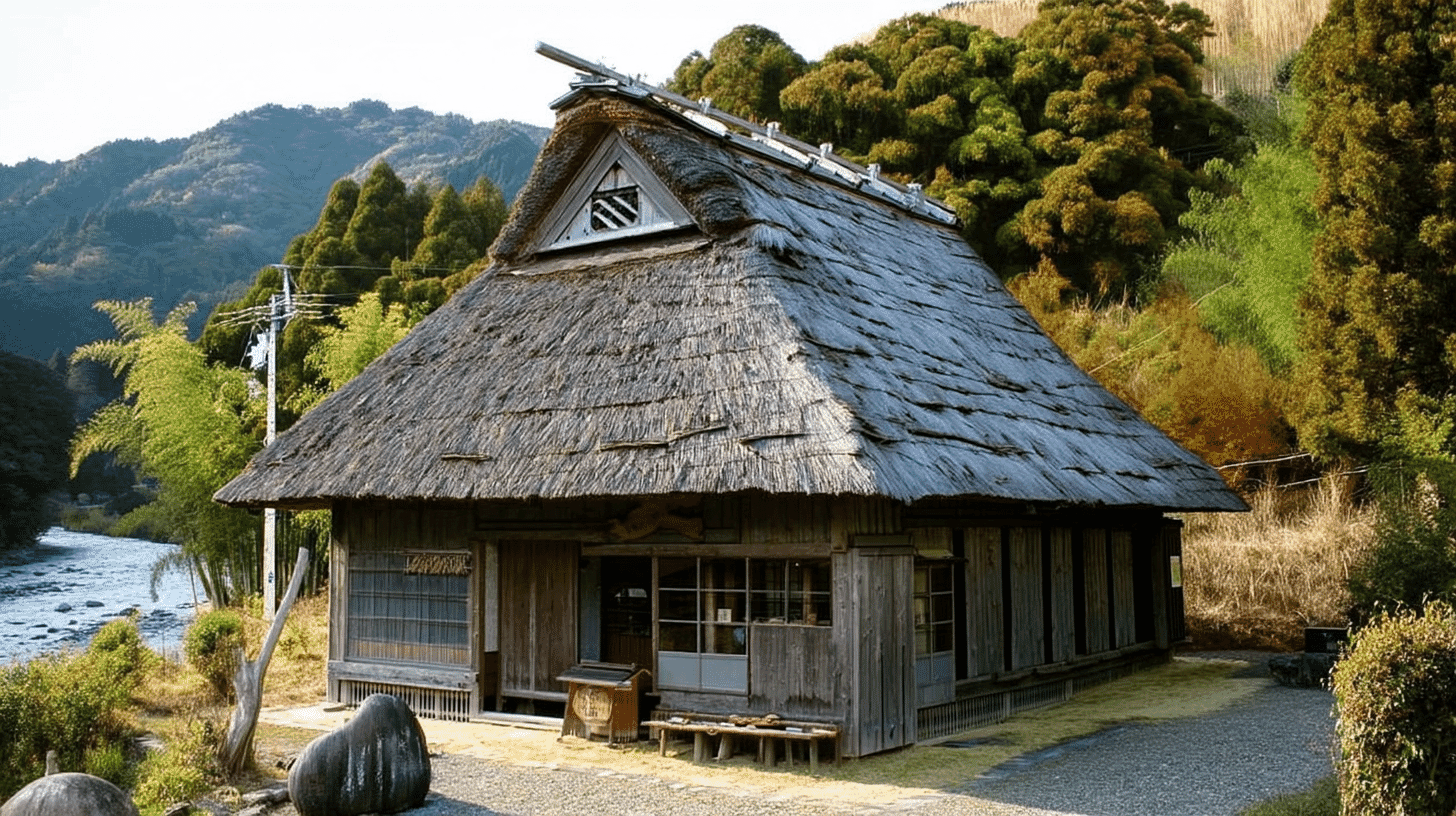
Former Kadowaki Family Residence: A Thatched-Roof Treasure Along Japan's Last Clear Stream

Discover the Former Kadowaki Family Residence, a nationally registered cultural property in Shimanto Town. This beautifully preserved 1875 thatched-roof farmhouse showcases traditional mountain village architecture along the pristine Shimanto River. Free admission.

A Living Legacy of Mountain Village Life

Nestled in the heart of Shimanto Town, Kochi Prefecture, the Former Kadowaki Family Residence (Kyū Kadowaki-ke Jūtaku Shuoku) stands as a remarkable testament to the traditional way of life in Japan's mountain villages. This beautifully preserved thatched-roof farmhouse, originally built in 1875 during the early Meiji period, offers visitors an authentic glimpse into the architectural heritage that once defined rural communities along the legendary Shimanto River.

Unlike the crowded tourist destinations of major cities, this hidden gem invites you to step back in time and experience the serene beauty of traditional Japanese countryside architecture. The residence was carefully relocated to its current location adjacent to the Shimanto Town Local Museum in 1990, ensuring its preservation for future generations to appreciate and learn from.

Why This Residence Became a Registered Cultural Property

The Former Kadowaki Family Residence was designated as a Nationally Registered Tangible Cultural Property on March 7, 2008. This recognition was granted because the building exemplifies the distinctive characteristics of mountain village farmhouses in the Shimanto River basin region.

The residence features an irimoya-style thatched roof, a design considered one of the most prestigious roof forms in traditional Japanese architecture. The irimoya style combines elements of both the gabled (kirizuma) roof at the top and the hipped (yosemune) roof at the bottom, creating an elegant silhouette that demonstrates sophisticated construction techniques passed down through generations of local craftsmen.

Originally located in the remote Shimotui settlement deep in the mountains, this farmhouse preserves the authentic spatial organization and construction methods that evolved over centuries to suit the challenging mountain environment. The building represents invaluable documentation of regional building traditions that are rapidly disappearing from the Japanese countryside.

Architectural Features and Layout

The residence is a single-story wooden structure with a building area of approximately 62 square meters. The floor plan follows the traditional three-part division along the beam direction, a layout characteristic of mountain village dwellings in this region.

The interior is organized into distinct functional zones. On the right side, you will find a ten-tatami-mat room featuring a tokonoma alcove, traditionally used as the formal reception space for honored guests. The central section contains smaller rooms of two and three tatami mats arranged front to back, serving various daily living functions.

The left portion of the house encompasses the entrance area with its packed-earth floor (doma) and the irori hearth room. The earthen-floored entrance space, typical of traditional farmhouses, served multiple purposes including food preparation, storage of farming tools, and protection from the elements. The irori hearth was the heart of family life, providing warmth, light, and a central gathering place for meals and conversation.

The building measures five ken (approximately 9 meters) in width and three and a half ken (approximately 6.3 meters) in depth. The south-facing orientation maximizes natural light and warmth, a practical consideration essential for comfortable living in the mountain climate.

Highlights and Attractions

The thatched kayabuki roof is undoubtedly the most striking feature of the residence. Made from carefully bundled miscanthus grass, this traditional roofing method provides excellent insulation and has been used in Japan for thousands of years. The warm golden-brown color of the thatch creates a beautiful contrast against the surrounding greenery.

Inside, visitors can observe the exposed wooden beam structure that reveals the sophisticated joinery techniques of Meiji-era craftsmen. The absence of nails in the main structural elements demonstrates the remarkable skill required to construct buildings designed to last for centuries.

The residence holds special significance as the birthplace of the Shimanto Street Hina Matsuri (Doll Festival), an annual spring event that has grown to encompass seven municipalities across Kochi and Ehime Prefectures. During the festival period from February to early April, the farmhouse is adorned with beautiful hina dolls, including some dating back to the Edo period, creating a magical atmosphere that blends historical architecture with traditional celebration.

Adjacent to the residence, the Shimanto Town Local Museum displays an extensive collection of folk artifacts, farming implements, forestry tools, and river fishing equipment that illuminate the daily life of people who lived along the Shimanto River. Archaeological artifacts including Jomon-period stone tools and pottery fragments provide evidence of human habitation in this region spanning thousands of years.

Surrounding Area and Combined Attractions

The Former Kadowaki Family Residence is located within the Todoroki Park complex, which offers several additional attractions worth exploring. The park features the iconic Stone Wind Turbine, a massive 18.5-ton sculpture that has become a symbol of the Taisho district. Field athletic equipment and an outdoor stage make this an excellent destination for families.

Directly across the road, the Michi-no-Eki Shimanto Taisho (Roadside Station) provides local specialty products, fresh vegetables, and regional cuisine. The restaurant's signature dish, stone-grilled mixed rice with Shimanto eel, is a must-try experience that showcases the famous freshwater eels of the Shimanto River.

The area is blessed with proximity to Japan's last major undammed river, the Shimanto River. Known as the "last clear stream," this 196-kilometer waterway offers opportunities for river cruises, canoeing, and fishing. The famous chinkabashi (submersible bridges) that dot the river provide iconic photo opportunities and a unique river-crossing experience.

For architecture enthusiasts, the nearby Megane Bridge (Spectacles Bridge) is a fascinating historical structure. Built in 1944 as a tramway bridge for timber transportation, this moss-covered stone bridge reflects off the reservoir waters to create the appearance of spectacles, earning its beloved nickname.

Best Times to Visit

Spring, particularly from late February through early April, offers the unique opportunity to experience the Shimanto Street Hina Matsuri festival. The ancient farmhouse filled with elaborate doll displays creates an unforgettable scene that combines architectural heritage with living tradition.

Mid-April brings approximately 2,000 blooming azaleas to Todoroki Park, transforming the hillside into a vibrant carpet of color. The contrast between the bright flowers and the rustic thatched roof is particularly photogenic.

Summer visitors can enjoy the cool mountain breezes and observe the traditional architecture designed to maximize natural ventilation. The nearby Shimanto River offers refreshing activities including swimming and river cruises.

Autumn brings spectacular foliage to the surrounding mountains, while the harvest season fills local markets with fresh produce and mushrooms. Winter offers peaceful solitude and the opportunity to experience the residence as its original inhabitants would have, gathered around the warm irori hearth.

📍 Plan Your Visit to Kochi
Find tours, activities & transport passes near Former Kadowaki Family Residence, Main Building
[ Katsurahama Beach & Kochi Castle Ryoma Tour ]

Q&A

QIs there an admission fee to visit the Former Kadowaki Family Residence?
ANo, admission to both the Former Kadowaki Family Residence and the adjacent Shimanto Town Local Museum is free of charge. This makes it an excellent value for travelers seeking authentic cultural experiences without straining their budget.
QHow can I reach the Former Kadowaki Family Residence by public transportation?
ATake the JR Yodo Line to Tosa-Taisho Station, then walk approximately 20 minutes or take a short taxi ride (about 3 minutes) to the site. The scenic train journey along the Shimanto River is itself a memorable experience.
QCan I go inside the thatched-roof building?
AYes, visitors can enter the residence and explore the interior spaces. During the Hina Matsuri festival period, the interior is decorated with beautiful doll displays. Please remove your shoes before entering the tatami areas.
QWhat are the opening hours and closure days?
AThe facility is typically open from 10:00 AM to 3:00 PM. It is closed on Mondays (or the following Tuesday if Monday is a national holiday). Please contact the Shimanto Town Local Museum at 0880-27-0100 to confirm current hours before your visit.
QIs there parking available?
AYes, free parking is available at the Shimanto Town Local Museum and nearby Michi-no-Eki Shimanto Taisho roadside station, which has space for approximately 30 regular vehicles and 2 large buses.

Basic Information

Official Name Former Kadowaki Family Residence Main Building (旧門脇家住宅主屋)
Cultural Property Designation Nationally Registered Tangible Cultural Property (Building)
Registration Date March 7, 2008
Year Built 1875 (Meiji 8)
Relocation 1990 (from Shimotui settlement)
Structure Single-story wooden structure with thatched irimoya-style roof
Building Area Approximately 62 square meters
Address 32-1 Taisho, Shimanto-cho, Takaoka-gun, Kochi Prefecture 786-0301, Japan
Contact Shimanto Town Local Museum: 0880-27-0100
Admission Free
Closed Mondays (Tuesday if Monday is a holiday)
Access by Car Approximately 25 minutes from Shimanto-cho Chuo IC on Kochi Expressway
Access by Train 20-minute walk or 3-minute taxi from JR Tosa-Taisho Station (Yodo Line)
Owner Shimanto Town

References

Former Kadowaki Family Residence - Cultural Heritage Online (Agency for Cultural Affairs)
https://bunka.nii.ac.jp/heritages/detail/153555
Shimanto Town Local Museum & Former Kadowaki Residence - Shimanto Town Tourism Association
https://shimanto-town.net/sightseeing_exp/四万十町郷土資料館・旧門脇家/
Shimanto Town Local Museum (Former Kadowaki Residence) - Oku-Shimanto Tourism Guide
https://okushimanto.jp/tourism/0206
Tourist Facilities - Shimanto Town Official Website
https://www.town.shimanto.lg.jp/sisetuinfo/kankoshisetu.php
Shimanto Street Hina Matsuri - Shikoku Tourism
https://shikoku-tourism.com/event/13603
Shimanto Street Hina Matsuri - GAZOO.com
https://gazoo.com/drive/mura/23/02/22/
Michi-no-Eki Shimanto Taisho - National Michi-no-Eki Association
https://www.michi-no-eki.jp/stations/views/19676

Last verified: 2026.01.02

Nearby heritages