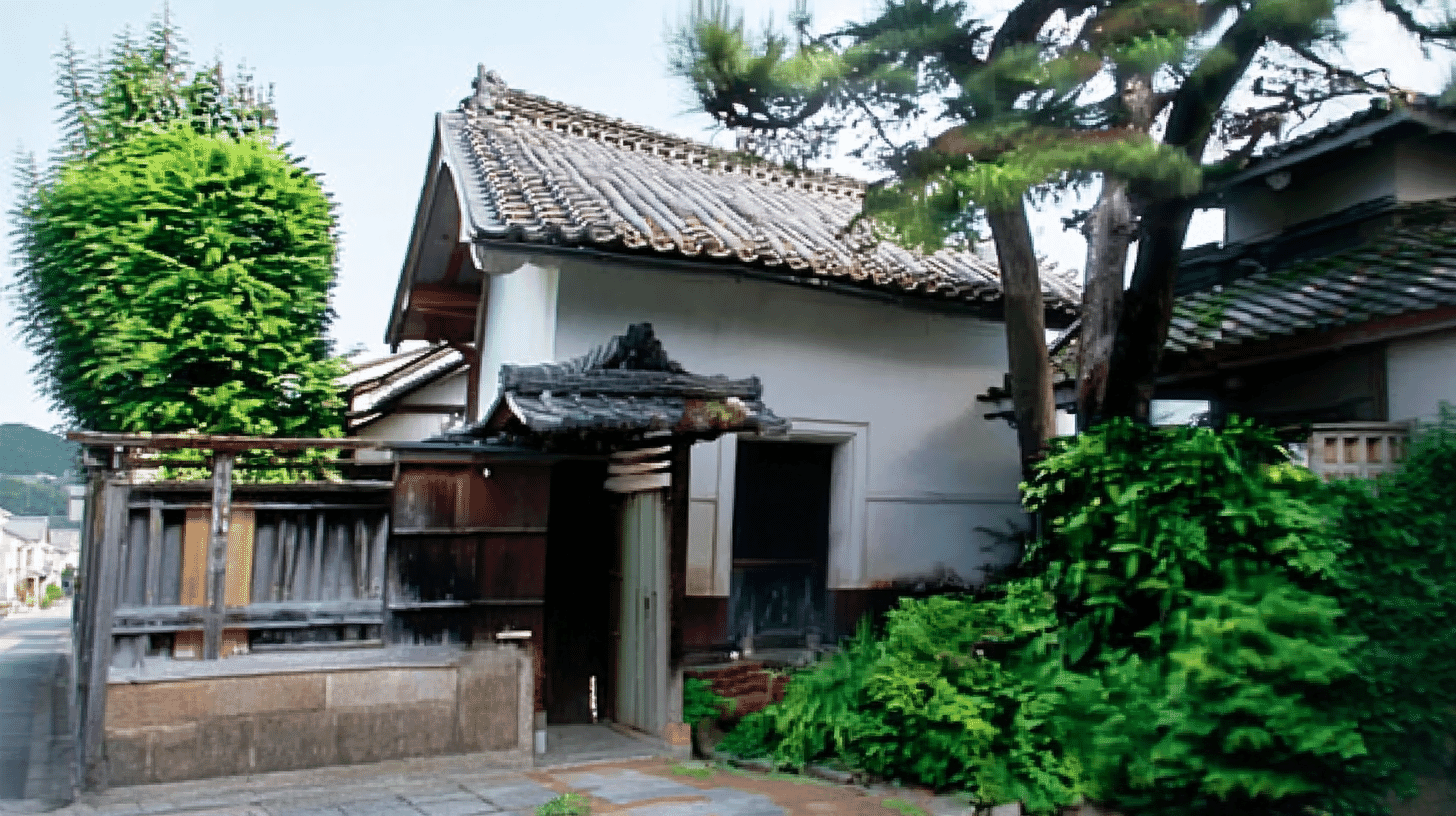
Imabayashi Family Residence Miso Storehouse: A Hidden Gem of Tango Chirimen Heritage in Miyazu, Kyoto

Discover the Imabayashi Family Residence Miso Storehouse, a Registered Tangible Cultural Property in Miyazu, Kyoto. This Meiji-period earthen storehouse reveals the prosperity of silk merchants along the historic Tango Chirimen Corridor. Explore traditional Japanese architecture near Amanohashidate, one of Japan's Three Scenic Views.

Imabayashi Family Residence Miso Storehouse: A Hidden Gem of Tango Chirimen Heritage

Nestled in the historic castle town of Miyazu in northern Kyoto Prefecture, the Imabayashi Family Residence Miso Storehouse (今林家住宅味噌蔵) stands as an authentic witness to Japan's prosperous silk trading era. This charming two-story earthen storehouse, registered as a Tangible Cultural Property, offers visitors a rare glimpse into the daily life and commercial activities of one of Miyazu's most influential merchant families during the Meiji period.

The Legacy of the Imabayashi Family

The Imabayashi family, operating under the trade name "Kanaya," established their presence in Miyazu during the Enkyō period (1744-1748) and quickly rose to prominence as one of the most diversified merchant houses in the region. Their business empire encompassed silk thread trading as their primary activity, but they also engaged in maritime shipping via the famous Kitamaebune routes, warehouse operations, Tango chirimen (silk crepe) trading, rice and sugar commerce, as well as sake brewing and soy sauce manufacturing.

This remarkable diversity of enterprises reflects the entrepreneurial spirit that characterized Miyazu during its golden age as a thriving port town. The Imabayashi residence, with its distinctive white plaster walls and elegant lattice doors, represents one of the finest examples of merchant townhouse architecture in the castle town, earning its place as a constituent cultural property of the Japan Heritage designation "300 Years of Silk: The Tango Chirimen Corridor."

Architectural Features of the Miso Storehouse

The Miso Storehouse occupies the northeastern corner of the Imabayashi property, oriented along an east-west axis. This compact structure, with a building footprint of just 17 square meters, exemplifies the practical yet aesthetically refined design principles of Meiji-period commercial architecture.

The building features traditional dozo-zukuri (earthen storehouse) construction with two stories, crowned by a kirizuma-zukuri (gabled) roof covered with san-gawara (ridge tiles). The entrance follows the hira-iri style, positioned on the longer side of the building. The exterior presents a harmonious composition of white plaster walls above and vertical wooden board cladding along the lower section, creating a simple yet visually engaging facade.

A distinctive architectural element shared with the other three storehouses on the property is the fan-shaped arrangement of rafters (ougi-jō taruki), a structural technique that demonstrates the sophisticated craftsmanship employed by local builders. The gable ends feature symmetrically placed windows on both upper and lower levels, adding both functional ventilation and aesthetic balance to the design.

Why This Storehouse Achieved Cultural Property Status

The Imabayashi Family Residence Miso Storehouse was registered as a Tangible Cultural Property on August 21, 2002, under the criterion of being "difficult to reproduce" (再現することが容易でないもの). This designation recognizes structures that possess historical and cultural significance, utilizing construction techniques or materials that would be challenging to replicate in modern times.

The storehouse forms an integral part of a larger complex of seven registered cultural properties within the Imabayashi residence, including the main house, former shop, silk storehouse, former raw silk storehouse, rice storehouse, and tool storehouse. Together, these buildings provide an invaluable documentation of how a prosperous merchant family organized their commercial and domestic spaces during the transition from the Edo to Meiji periods.

The miso storehouse itself served the essential function of fermenting and storing miso paste, a fundamental ingredient in Japanese cuisine. Its inclusion in the registered property ensemble highlights the self-sufficient nature of traditional merchant households, where food production was an integral part of daily operations.

Highlights and Visitor Experience

While the Imabayashi residence is privately owned and interior visits require prior arrangement, the exterior of the property offers a captivating window into Miyazu's merchant heritage. Walking through the Mantō district, visitors can appreciate the traditional streetscape where the Imabayashi buildings stand alongside other historic structures.

The visual appeal of the miso storehouse lies in its understated elegance. The contrast between the bright white plastered upper walls and the weathered wooden boards below creates a timeless aesthetic that has endured for over a century. The carefully proportioned windows on the gable ends and the distinctive tile roofline demonstrate how functional storage buildings were designed with attention to beauty as well as practicality.

For those interested in traditional Japanese architecture, the fan-shaped rafter arrangement visible at the eaves offers a rare opportunity to observe this specialized construction technique. This feature, consistent across all the storehouses on the property, suggests that a single master craftsman or workshop was responsible for the entire complex.

Exploring the Surrounding Area

The Imabayashi residence is situated within easy walking distance of several other significant cultural sites in Miyazu. The Former Mikami Family Residence (旧三上家住宅), designated as an Important Cultural Property, offers public tours and provides deeper insight into the lives of wealthy merchants during the same era. The Mikami family similarly engaged in sake brewing, shipping, and silk trading, and their meticulously preserved home features exquisite interior craftsmanship and a beautiful garden designated as a Kyoto Prefectural Scenic Site.

Miyazu also serves as an excellent base for visiting Amanohashidate, one of Japan's Three Scenic Views, located just one train station away. This natural wonder, a pine-covered sand bar stretching across Miyazu Bay, has inspired artists and poets for centuries, including the master painter Sesshū, whose ink painting of the scene is now a National Treasure.

Other nearby attractions include Chion-ji Temple, known as the Temple of Wisdom, and Kinbiki Falls, selected as one of Japan's 100 Finest Waterfalls. The city's traditional townscape, including the historic geisha district of Shinhamacho, offers atmospheric strolls through streets that retain the ambiance of centuries past.

The Tango Chirimen Heritage

Understanding the Imabayashi miso storehouse requires appreciating the broader context of Tango chirimen, the silk crepe textile that transformed this region's economy and culture. Developed in the early 18th century, Tango chirimen became renowned throughout Japan for its distinctive "shibo" texture—a fine crimped surface created by weaving with highly twisted silk threads.

The fabric's exceptional draping qualities and ability to hold dyed patterns made it the preferred material for high-quality kimono. Even today, Tango produces approximately 60% of Japan's kimono fabric, maintaining a tradition spanning three centuries. The Imabayashi family's success as silk thread merchants positioned them at the heart of this thriving industry, enabling the wealth that built their impressive residence complex.

In 2017, the cultural landscape shaped by the Tango chirimen industry was recognized as Japan Heritage, celebrating the interconnected stories of weavers, merchants, port towns, and traditional festivals that emerged from this textile tradition. The Imabayashi residence stands as one of the designated cultural properties within this narrative.

📍 Plan Your Visit to Kyoto
Find tours, activities & transport passes near Imabayashi Family Residence Miso Storehouse
[ Kinkakuji Fushimi Inari & Kimono Rental ]

Q&A

QCan visitors enter the Imabayashi Family Residence?
AThe Imabayashi residence is a private property, and interior visits generally require prior arrangement with the owners. However, the exterior of the buildings can be appreciated from the public street, and the nearby Former Mikami Family Residence (Important Cultural Property) offers regular public tours for those wishing to experience a similar merchant residence interior.
QHow do I get to Miyazu from Kyoto?
AFrom JR Kyoto Station, take the JR Hashidate limited express train to Miyazu Station via Fukuchiyama. The journey takes approximately 2 hours. Alternatively, direct highway buses operate between Kyoto and Miyazu, taking about 2 hours and 10 minutes. From Miyazu Station, the Imabayashi residence is approximately a 15-20 minute walk.
QWhat is the best season to visit?
AMiyazu can be enjoyed year-round. Spring offers pleasant weather and cherry blossoms, while autumn provides beautiful foliage. Summer is ideal for combining the visit with beach activities at nearby Amanohashidate. Winter, though colder, offers the charm of snow-dusted traditional architecture and excellent local seafood, including renowned Tango yellowtail and crab.
QWhat other cultural properties are nearby?
AWithin Miyazu city, visitors can explore the Former Mikami Family Residence (Important Cultural Property), Seikiro historic inn (Registered Tangible Cultural Property), and Charoku Honkan ryokan (Registered Tangible Cultural Property). These properties, along with the Imabayashi residence, form part of the Japan Heritage "Tango Chirimen Corridor" and showcase the region's rich merchant culture.
QIs there an entrance fee?
AAs a private residence, the Imabayashi property does not charge an entrance fee for viewing the exterior from the street. For those wishing to visit the neighboring Former Mikami Family Residence, which is open to the public, the admission fee is 350 yen for adults.

Basic Information

Official Name Imabayashi Family Residence Miso Storehouse (今林家住宅味噌蔵)
Reading Imabayashi-ke Jūtaku Miso-gura
Registration Number 26-0139
Cultural Property Designation Registered Tangible Cultural Property (Building)
Registration Date August 21, 2002
Construction Period Meiji Period (1868-1911)
Structure Dozo-zukuri (earthen storehouse), 2 stories, tile roof, 17㎡ building area
Location 604-1 Mantō, Miyazu City, Kyoto Prefecture 626-0017, Japan
Access Approximately 15-20 minutes walk from Kyoto Tango Railway Miyazu Station
Public Access Exterior viewing from street; interior visits require prior arrangement
Japan Heritage Constituent property of "300 Years of Silk: The Tango Chirimen Corridor"

References

今林家住宅味噌蔵 - Weblio辞書
https://www.weblio.jp/content/%E4%BB%8A%E6%9E%97%E5%AE%B6%E4%BD%8F%E5%AE%85%E5%91%B3%E5%99%8C%E8%94%B5
今林家住宅糸蔵 - 文化遺産オンライン
https://bunka.nii.ac.jp/heritages/detail/116027
今林家住宅 - 日本遺産ポータルサイト
https://japan-heritage.bunka.go.jp/ja/culturalproperties/result/3063/
300年を紡ぐ絹が織り成す丹後ちりめん回廊 - 日本遺産ポータルサイト
https://japan-heritage.bunka.go.jp/ja/stories/story043/index.html
今林家住宅 | 宮津市観光スポット | 海の京都観光圏
https://uminokyoto.jp/spot/detail.php?sid=254
宮津市 – 京都登文会
https://www.kyoto-tobunkai.org/catalogue/ccat/miyazu
宮津へようこそ、宮津の繁栄時代の歴史ある建造物
https://www.3780session.com/haneimachinami

Last verified: 2026.01.27

Nearby heritages
