Tobayama Cave: Japan's Hidden Archaeological Treasure Revealing Ancient Burial Mysteries in Nagano

Discover Tobayama Cave, a National Historic Site in Ueda City, Nagano Prefecture. This remarkable archaeological site preserves rare "bakusō" exposure burial practices from the 5th century Kofun period, offering insights into ancient seafaring cultures that migrated to inland Japan. Explore the cave, learn about its mysterious artifacts, and plan your visit to this hidden treasure near Kakeyu Onsen.

Tobayama Cave: A Window into Ancient Japanese Burial Practices

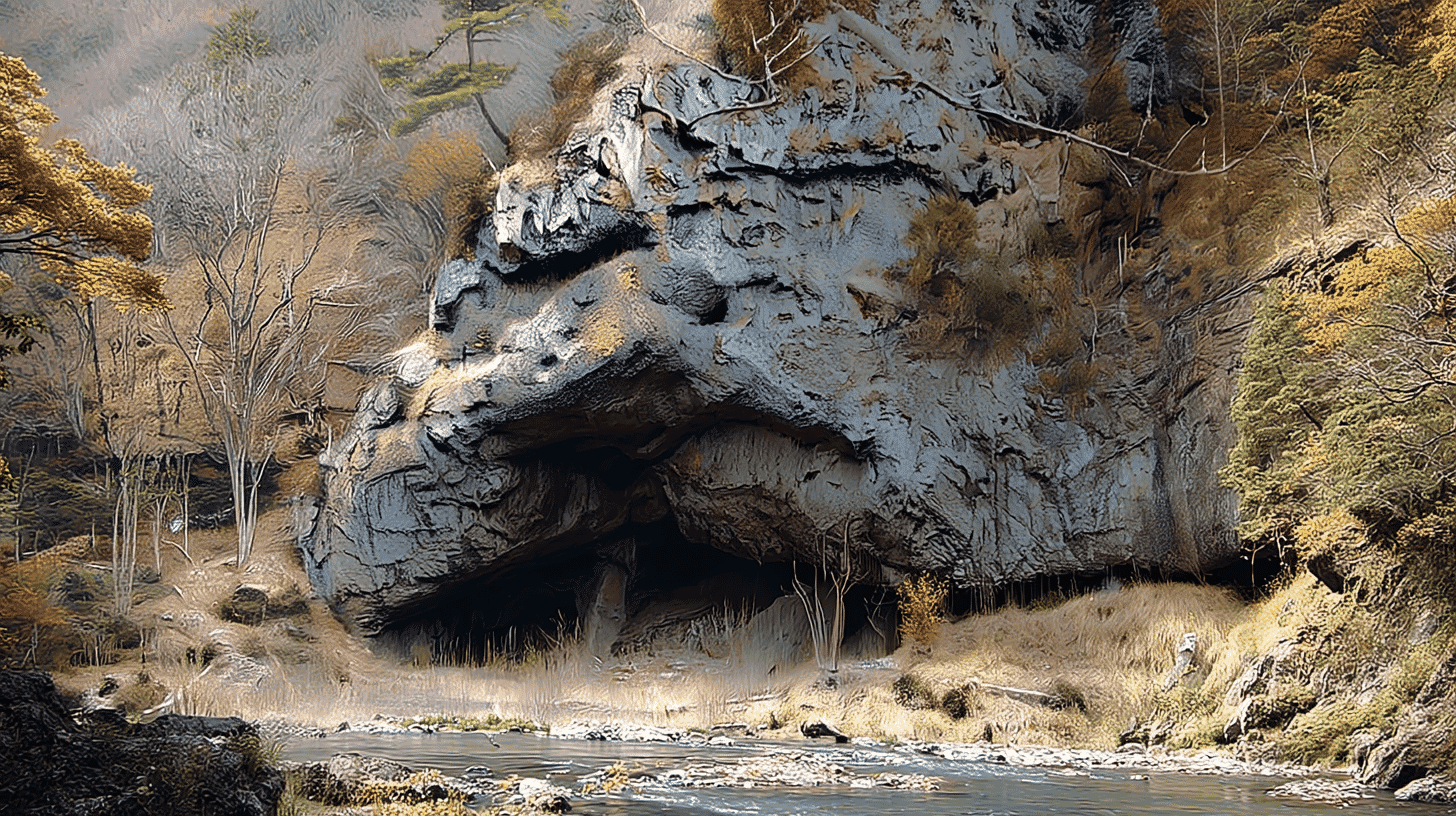
Perched dramatically on a cliff face overlooking the crystal-clear waters of the Yoda River in Ueda City, Nagano Prefecture, Tobayama Cave stands as one of Japan's most fascinating yet overlooked archaeological treasures. This National Historic Site offers visitors a rare glimpse into mysterious burial practices that challenge our understanding of ancient Japanese society and its connections to distant seafaring cultures.

What is Tobayama Cave?

Tobayama Cave (鳥羽山洞窟) is a remarkable cave site located on the western slope of Mount Tobayama, approximately 15 meters above the Yoda River bed. The cave opens westward in an exposed shale conglomerate rock formation, measuring approximately 25 meters wide and 15 meters deep. Local residents have long called this impressive natural formation "Katteiwa" (勝手岩), reflecting its centuries-long presence in local folklore and tradition.

What makes Tobayama Cave extraordinary is not merely its dramatic natural setting, but the wealth of archaeological discoveries made within its sheltered interior. Excavations have revealed that this cave served as a multi-period site, with evidence of human activity spanning from the Jomon period through the Yayoi period, into the Kofun period, and even into early modern times during the Edo period.

Why Tobayama Cave Became a National Historic Site

In 1978, the Japanese government designated Tobayama Cave as a National Historic Site, recognizing its exceptional archaeological and historical value. This designation came just six years after its initial protection as a Nagano Prefectural Historic Site in 1972. The reasons for this elevated status are compelling and multifaceted.

The cave's primary significance lies in its extraordinary Kofun period (5th century) burial remains. Unlike typical burial practices of the era, where deceased clan leaders were interred in earthen mound tombs (kofun), the people who used Tobayama Cave practiced a unique form of burial known as "bakusō" (曝葬) or exposure burial. This practice, where bodies were placed on stone platforms and left to naturally decompose rather than being buried underground, was virtually unknown in inland Japan during this period.

The discovery of this burial practice in Nagano Prefecture—far from any ocean—suggests remarkable cultural connections between inland communities and coastal seafaring peoples. Similar burial practices have been documented at seaside cave sites in Wakayama, Kanagawa, and Chiba prefectures, leading researchers to propose that groups with maritime cultural traditions may have migrated to this mountainous inland region during the Kofun period.

Archaeological Discoveries and Treasures

The systematic excavations conducted between 1966 and 1968 by a joint team from Maruko Municipal Board of Education, Kokugakuin University, and Nihon University revealed a wealth of archaeological evidence. Led by local teacher Seki Koichi and Professor Nagamine Koichi of Kokugakuin University, these excavations transformed our understanding of Kofun period burial practices.

The most striking discovery was the elaborate stone pavement structure that covers much of the cave floor. River stones from the nearby Yoda River were carefully arranged in a fan-shaped pattern across four terraced levels constructed on the sloping cave floor. On these stone-paved surfaces, the ancient community placed their deceased, along with various grave goods.

Three distinct types of remains were identified: bodies placed directly on the stone surfaces or within stone enclosures, collections of bones (primarily leg bones bundled together), and cremated bone fragments. This variety suggests complex and evolving funeral practices over time.

The grave goods recovered from the site demonstrate the high status of those buried here. Artifacts include Sue ware and Haji ware ceramics, including rare double-spouted vessels (二重𤭯); iron implements such as weapons, horse gear, and tools; ornamental items including soapstone beads, glass beads, and bronze and stone bracelets (釧); and distinctive koto-bridge shaped stone objects. Of particular note are the deliberately bent iron swords, a ritual practice suggesting ceremonial "killing" of objects for the afterlife.

The Mystery of Seafaring People in the Mountains

Perhaps the most intriguing aspect of Tobayama Cave is what it suggests about ancient population movements and cultural exchange in Japan. The burial practices observed here closely parallel those found at coastal cave sites used by "Ama" (海人) or seafaring peoples along Japan's Pacific coast.

Among the grave goods, researchers found clamshells (Hamaguri) that must have been transported considerable distances from the sea. This, combined with the distinctive burial practices, has led some scholars to propose that maritime peoples may have migrated up the rivers into this mountainous region, bringing their unique cultural traditions with them.

This theory challenges conventional understanding of ancient Japanese society, which typically views coastal and mountain communities as distinct populations. Tobayama Cave suggests a more complex picture of cultural interaction and migration during the formative centuries of Japanese civilization.

Visiting Tobayama Cave

Tobayama Cave is located in the Koshigoe district of Ueda City, near where the Takeishi River joins the Yoda River at a scenic spot known as "Tobiyuo" (飛魚, meaning "flying fish"). The dramatic river scenery and surrounding mountain landscape make the visit worthwhile even beyond the archaeological significance.

The cave is visible from the opposite bank of the Yoda River, where visitors can observe its impressive entrance carved into the cliff face. Due to the cave's position high on the cliff and the need to preserve this precious site, direct access to the cave interior is limited. However, the site can be appreciated from various viewpoints along the river.

For those interested in viewing the artifacts excavated from the cave, the Ueda City Maruko Local History Museum (上田市立丸子郷土博物館) displays many of the grave goods and provides detailed information about the excavations and burial practices discovered at the site. The museum offers an excellent complement to any visit to the cave itself.

Nearby Attractions

A visit to Tobayama Cave can easily be combined with exploration of the Maruko area's other attractions. The region is blessed with multiple hot spring towns that have welcomed visitors for centuries.

Kakeyu Onsen (鹿教湯温泉), located approximately 10 kilometers from the cave, offers traditional hot spring hospitality in a peaceful mountain setting. Legend has it that a deer transformed from the Bodhisattva Monju led a devout hunter to these healing waters, giving the town its name meaning "deer-taught hot spring." The therapeutic waters have been renowned since the Edo period for treating various ailments, and the area now features modern health facilities alongside traditional inns.

Bessho Onsen, considered Nagano's oldest hot spring, lies within reasonable distance and features the distinctive three public bathhouses and several important cultural properties including temples and historical buildings. The Maruko area also boasts connections to Kiso Yoshinaka, the famous samurai who features in the NHK historical drama "The 13 Lords of the Shogun," and offers insights into the region's silk industry heritage that once made "Maruko silk" famous worldwide.

Seasonal Considerations

The cave site can be visited year-round, though spring through autumn offers the most pleasant conditions for exploring the riverside area. The autumn foliage season transforms the surrounding mountains into spectacular displays of color, while spring brings fresh greenery to the dramatic cliff faces. Winter visits are possible but may be challenging due to snow and cold temperatures typical of mountainous Nagano.

The Maruko Local History Museum maintains regular hours throughout the year, making it a reliable destination for viewing the cave's archaeological treasures regardless of season.

📍 Plan Your Visit to Nagano
Find tours, activities & transport passes near Tobayama Cave
[ Matsumoto Castle & Kamikochi Hiking Tours ]

Q&A

QWhat is special about the burial practices at Tobayama Cave?
ATobayama Cave features "bakusō" or exposure burial, where bodies were placed on stone platforms rather than buried underground. This practice was extremely rare in inland Japan during the Kofun period (5th century) and resembles burial customs of coastal seafaring peoples, suggesting possible migration of maritime cultures into this mountainous region.
QCan visitors enter the cave?
ADirect access to the cave interior is restricted to protect this National Historic Site. Visitors can view the impressive cave entrance from the opposite bank of the Yoda River. To see the excavated artifacts, visit the Ueda City Maruko Local History Museum, which displays grave goods and provides detailed information about the site.
QHow do I get to Tobayama Cave?
AFrom JR Ueda Station on the Hokuriku Shinkansen, take the Chikuma Bus bound for Kakeyu Onsen. Get off at the "Tobiyuo" bus stop, which is approximately a 3-minute walk to the viewing area. By car, the cave is accessible from the Joshinetsu Expressway Tobu-Yunomaru IC, approximately 50 minutes drive.
QWhat artifacts were discovered at Tobayama Cave?
AExcavations revealed diverse grave goods including Sue ware and Haji ware ceramics, iron weapons and tools, horse equipment, soapstone and glass beads, bronze and stone bracelets, and deliberately bent iron swords. Notably, clamshells found at the site suggest connections with coastal communities far from this mountain location.
QWhat other attractions are near Tobayama Cave?
ANearby attractions include Kakeyu Onsen (about 10 km away), known for its healing waters; Bessho Onsen, Nagano's oldest hot spring; the Maruko Local History Museum; and the scenic "Tobiyuo" area along the Yoda River. The region also offers connections to silk industry heritage and samurai history.

Basic Information

Official Name Tobayama Cave (鳥羽山洞窟)
Designation National Historic Site (designated January 27, 1978)
Location 429 Koshigoe Tobayama, Ueda City, Nagano Prefecture 386-0403, Japan
Cave Dimensions Width: approx. 25m, Depth: approx. 15m, Height above river: approx. 15m
Geological Formation Shale conglomerate (opening faces west)
Historical Periods Jomon, Yayoi, Kofun (5th century primary use), Edo periods
Excavation Years 1966, 1967, 1968
Admission Free (external viewing only)
Nearest Bus Stop Tobiyuo (飛魚) - approximately 3-minute walk
Related Museum Ueda City Maruko Local History Museum

References

鳥羽山洞窟 - Cultural Heritage Online (Agency for Cultural Affairs)
https://bunka.nii.ac.jp/heritages/detail/210200
鳥羽山洞窟 - Ueda City Cultural Properties
https://museum.umic.jp/bunkazai/document/dot111.php
史跡鳥羽山洞窟遺跡の曝葬 - Ueda City Maruko Local History Museum
https://museum.umic.jp/maruko/archaeology/story6.html
鳥羽山洞窟 - Wikipedia
https://ja.wikipedia.org/wiki/%E9%B3%A5%E7%BE%BD%E5%B1%B1%E6%B4%9E%E7%AA%9F

Last verified: 2026.01.28

Nearby heritages