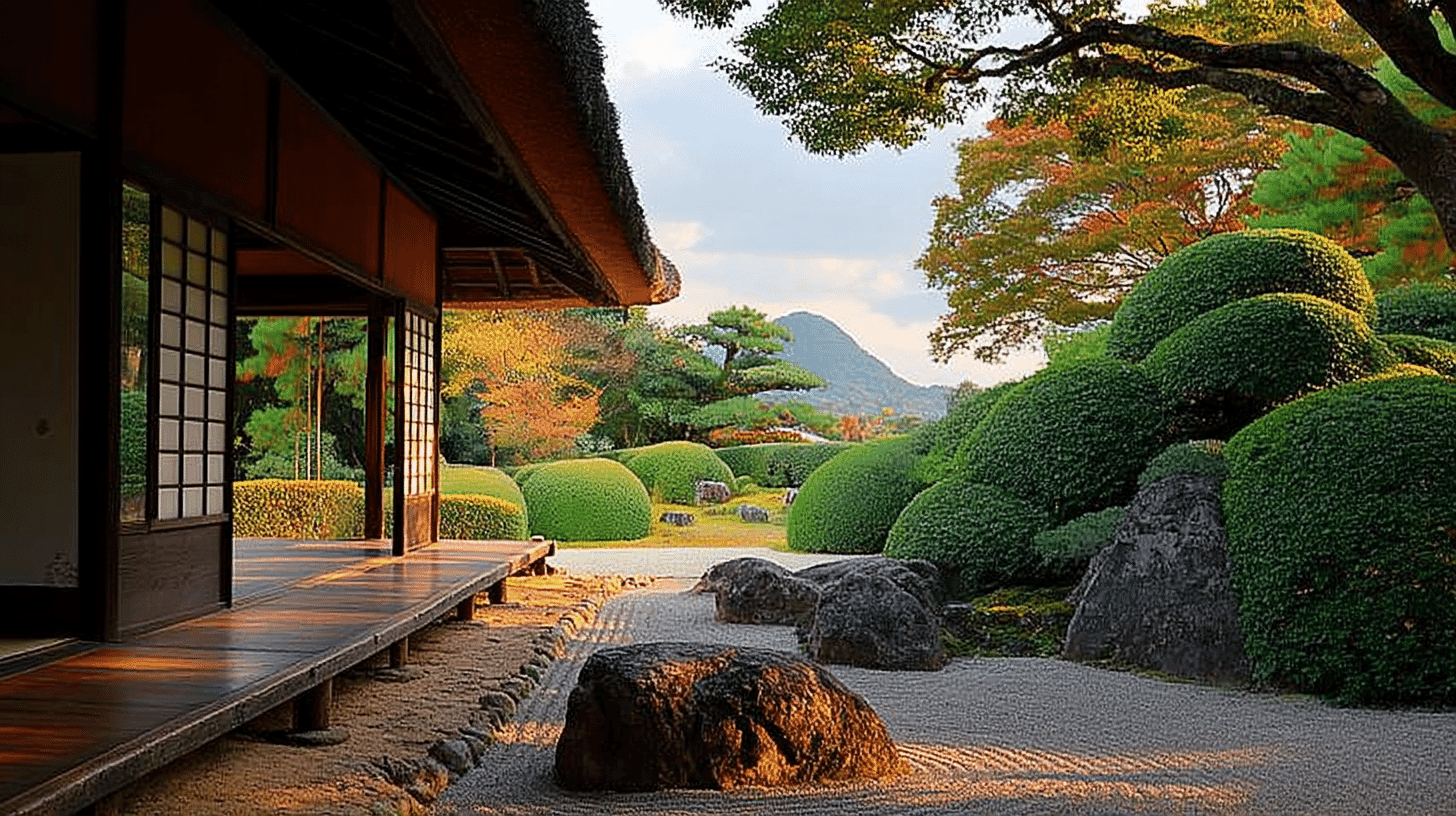
Jikoin Temple Garden: Experience 360 Years of Tea Ceremony Heritage in Nara's Hidden Sanctuary

Discover Jikoin Temple Garden, a nationally designated Place of Scenic Beauty in Nara. Created by tea master Katagiri Sekishu in 1663, this remarkable temple treats visitors to matcha tea while overlooking a stunning borrowed landscape garden. One of Nara's Three Great Gardens.

A Temple Where the Entire Grounds Become One Tea Room

Perched on a quiet hilltop in Yamatokoriyama City, Nara Prefecture, Jikoin Temple offers visitors a rare opportunity to step back in time over 360 years. Unlike typical temples, Jikoin was conceived as something extraordinary: a complete sanctuary where every element—from the entrance gate to the pathways, gardens, and tea rooms—functions together as one unified tea ceremony experience.

Created in 1663 by Katagiri Sekishu, the founder of the Sekishu school of tea ceremony and tea instructor to the fourth Tokugawa shogun Ietsuna, this tranquil retreat embodies the refined aesthetics of samurai tea culture. The garden has been designated a National Place of Scenic Beauty and Historic Site since 1934, while the shoin (study hall), tea rooms, and even a stone water basin have earned Important Cultural Property status.

The Legacy of Katagiri Sekishu: Tea Master to the Shogunate

To understand Jikoin is to understand its creator. Katagiri Sadamasa, known by his artistic name Sekishu, was born in 1605 as the son of a feudal lord. He studied tea ceremony under Kuwayama Sosen, a disciple in the lineage of the legendary Sen no Rikyu. When Sekishu became tea instructor to Shogun Tokugawa Ietsuna in 1665, the Sekishu style of tea (buke-cha or warrior tea) became the official ceremonial form of the Tokugawa shogunate.

In 1663, Sekishu built Jikoin Temple to honor his deceased father, Katagiri Sadataka, whose Buddhist name "Jikoin-den Settei Soryu Koji" gave the temple its name. Sekishu invited the 185th abbot of Daitokuji Temple in Kyoto as the founding priest, establishing Jikoin as a Zen temple of the Rinzai school Daitokuji branch.

What makes Jikoin unique is Sekishu's revolutionary concept: rather than building a temple with tea facilities, he designed the entire temple grounds as one grand tea ceremony setting. Every visitor essentially becomes an honored guest at Sekishu's tea gathering, following the same journey that guests would have experienced over three and a half centuries ago.

Why the Garden Earned National Recognition

Jikoin Garden was designated a National Place of Scenic Beauty and Historic Site in 1934, recognizing its exceptional cultural and artistic value. The garden represents a masterpiece of karesansui (dry landscape) design with shakkei (borrowed scenery) technique, notable for its distinctive approach that differs from typical Zen temple gardens.

Rather than relying on elaborate rock arrangements common in Zen gardens, Sekishu created his garden using massive sculptural hedges called o-karikomi. These rounded bushes—composed of azaleas, camellias, sasaki (Japanese cleyera), and other shrubs—create a living landscape that transforms with the seasons. Over 60 varieties of shrubs and ground covers have been identified within the garden, creating a tapestry of subtle colors and textures throughout the year.

The garden's greatest achievement lies in its integration with the surrounding landscape. Looking east from the shoin, visitors gaze across the garden's white sand and sculptural hedges to the Nara Basin (Yamato Plain) spreading below, with the ancient mountains known as Yamato Aogaki framing the distant horizon. According to temple tradition, eight famous scenic views can be observed from the shoin, including "Mikasa New Moon," "Twin Pagodas Through Pines," "White Clouds Over Katsuragi," and "Spring Snow on Omine."

A Journey Through the Temple: From Gate to Tea

The experience of Jikoin begins the moment you pass through the front gate. The cobblestone path (arare pavement) winding through dense woodland serves as the roji—the approach to a tea room designed to transition guests from the mundane world to the contemplative space of tea ceremony. Elevated tree roots line the path, and the forest canopy filters the light, creating an atmosphere of entering another realm.

The striking double-roofed gate called Ibarakijo Romon stands at the entrance to the main compound. This distinctive gate with its thatched upper and lower roofs was originally the tower gate of Ibaraki Castle in Settsu Province (present-day Osaka Prefecture). When the castle was demolished following the Tokugawa shogunate's "one castle per domain" edict, Sekishu rescued the gate and transformed it by replacing the original tile roof with thatch to match his rustic aesthetic.

Emerging from the gate, visitors encounter the garden and shoin. The shoin building, with its farmhouse-style thatched hipped roof, appears humble yet possesses quiet dignity. Sekishu deliberately designed the ceilings and lintels lower than typical buildings so that seated guests would feel a sense of calm and intimacy while overlooking the vast landscape.

Important Cultural Properties: The Tea Rooms and Shoin

The shoin and two tea rooms at Jikoin—Korinin and Kan-chashitsu—are designated Important Cultural Properties, having first received National Treasure status in 1944 under the old preservation law.

The main shoin consists of three rooms: the upper room (13 tatami mats), middle room, and lower room. The upper room features a tokonoma (alcove) and tsuke-shoin (attached writing desk) but notably omits the nageshi (horizontal decorative beam) typically found in formal Japanese architecture. This creates a simpler, lighter atmosphere appropriate for the spirit of tea ceremony.

Korinin tea room, located at one corner of the shoin, is an intimate two-tatami-plus-daime space (approximately two and three-quarter tatami mats). It features the teishu-doko arrangement where the host prepares tea with the alcove positioned behind, and a distinctive middle pillar made from oak with bark still attached. Multiple windows provide natural illumination, creating a surprisingly open feeling despite the small space.

In contrast, Kan-chashitsu (Quiet Tea Room) is a three-tatami space with fewer windows, resulting in a subdued, contemplative atmosphere. It uses the reverse "gyakugatte" layout where guests sit on the opposite side from usual—a deliberate design choice by Sekishu to create counterpoint with Korinin. Unlike many tea rooms, Kan-chashitsu lacks the small crawl-through entrance (nijiriguchi), giving it a distinctly different character.

One of Nara's Three Great Gardens

Jikoin Garden holds the distinguished honor of being counted among the "Yamato Sanmeien" (Three Great Gardens of Nara/Yamato), alongside Taimadera Nakanobo Garden (also designed by Sekishu) and Chikurinin Gunpoen in Yoshino (attributed to Sen no Rikyu). This recognition places Jikoin among the finest examples of Japanese garden artistry in the ancient Yamato region.

The garden exemplifies the Sekishu aesthetic—refined simplicity with deep appreciation for natural materials. The sculptural hedges flow across the landscape like gentle waves, while white gravel creates clean negative space. A shichigozan (seven-five-three) stone arrangement near the north side of the garden references traditional Buddhist numerology, using odd numbers considered auspicious in Japanese culture.

Visitors can not only admire the garden from the shoin but also walk among the hedges. Stone steps lead up onto the planted mounds, offering different perspectives of both the garden and the sweeping views beyond. This accessibility was intentional—Sekishu wanted guests to experience the garden from multiple vantage points.

The Matcha Experience: Hospitality Preserved for 360 Years

What sets Jikoin apart from many historic sites is its living tradition of hospitality. When you visit, the admission fee includes matcha tea and traditional Japanese sweets, served in the Important Cultural Property shoin. You sit on red felt cushions on the tatami floor, just as Sekishu's guests would have centuries ago, gazing out at the same garden and distant mountains.

The tea is prepared in the Sekishu style by temple staff. The accompanying sweets often feature the Katagiri family crest design. This is not a staged demonstration but a genuine continuation of the temple's founding purpose—to provide visitors with the essence of tea ceremony hospitality in an incomparable setting.

The resident priest sometimes offers talks about tea ceremony philosophy, the temple's history, and the concept of ichi-go ichi-e (one time, one meeting)—the idea that each gathering is unique and can never be repeated, encouraging full presence in the moment. Even without understanding Japanese, the setting itself communicates Sekishu's vision of mindful hospitality.

Seasonal Highlights and Best Times to Visit

Jikoin Garden offers distinct beauty throughout the year. In spring (April-May), the azalea and satsuki hedge plantings burst into bloom, transforming the sculptural shapes with pink, white, and red flowers. This coincides with the iconic cherry blossom season elsewhere in Nara, making it possible to combine visits.

Summer brings lush green foliage and dramatic clouds over the Yamato Plain. The shoin's design allows breezes to flow through, providing natural cooling on hot days. Autumn colors appear in October and November as the mixed plantings reveal various shades of gold and red.

Winter offers serene, contemplative beauty with occasional frost highlighting the garden's structural forms. The naked branches of deciduous trees reveal the underlying architecture of the landscape.

A special annual event is the Kangetsu-kai (Moon Viewing Gathering) held during the autumn full moon, when hundreds of visitors gather to observe the moon rising between the distant mountains while enjoying Sekishu-style tea ceremony. This event connects directly to the "Eight Famous Views" originally conceived for the garden.

Nearby Attractions

Jikoin's location makes it an ideal complement to several other significant sites in the area. The temple sits just 15 minutes by car from Horyuji Temple, Japan's first UNESCO World Heritage Site and home to the world's oldest wooden buildings. Combining these two sites offers a journey through different aspects of Japanese cultural heritage—ancient Buddhist architecture and refined tea culture.

Yamatokoriyama City itself is famous as the "City of Goldfish," with a 300-year tradition of goldfish breeding. The Yanagimachi Shopping Street (nicknamed "Goldfish Street") features over 200 goldfish swimming in shop-front tanks, and the city hosts the annual National Goldfish Scooping Championship each August. Koriyama Castle ruins and the charming old townscape provide additional exploration opportunities.

The nearby Ikaruga area contains additional treasures including Horinji Temple and Hokiji Temple, both featuring ancient pagodas. Nara city center with Todaiji Temple and the famous deer park is accessible within 30 minutes.

Practical Tips for Visitors

Jikoin welcomes visitors throughout the year with no reservation required for regular admission. However, the experience is best enjoyed at a leisurely pace, so allow at least 40-60 minutes to fully appreciate the garden, architecture, and tea service.

The temple occasionally offers special experiences for international visitors that may include English explanations of tea ceremony principles. For groups or those seeking deeper engagement, advance inquiries about special programs are recommended.

Visitors should note that the traditional tatami rooms require removing shoes and sitting on the floor. The low ceilings and intimate spaces are intentional design features, not limitations. Photography is generally permitted of the garden and exterior but check regarding interior spaces.

The temple also serves Sekishu-men (stone-ground noodles) and Jion soba as optional meals. With advance reservation, visitors can experience Zen vegetarian cuisine (shojin ryori) in the inner chambers—a rare opportunity to dine in a setting virtually unchanged since the Edo period.

📍 Plan Your Visit to Nara
Find tours, activities & transport passes near Jikoin Garden
[ Todaiji Great Buddha & Nara Park Deer Experience ]

Q&A

QIs English available at Jikoin Temple?
AWhile most explanations are in Japanese, the temple welcomes international visitors warmly. The official website has basic English information. The visual and experiential aspects—the garden, architecture, and tea service—communicate across language barriers. Special programs with English explanations may be available for arranged visits.
QDo I need to know tea ceremony etiquette?
ANo prior knowledge is required. The tea service at Jikoin is designed to be welcoming for all visitors. Simply sit comfortably, receive your tea and sweet gracefully, and enjoy. The staff will guide you if needed. The spirit of tea ceremony emphasizes making guests feel at ease rather than enforcing rigid rules.
QHow accessible is Jikoin for visitors with mobility concerns?
AThe temple presents accessibility challenges due to its historic nature. The approach involves uneven stone paths and steps. The shoin requires sitting on tatami floors. While the garden can be viewed from the veranda without walking through it, visitors with significant mobility limitations should contact the temple in advance to discuss possible accommodations.
QWhat is the best season to visit?
AEach season offers unique beauty. Spring (late April-May) features flowering azaleas. Summer offers lush greenery. Autumn (November) brings colorful foliage. Winter provides serene, contemplative scenery. The garden was designed to be appreciated year-round, with the borrowed landscape of distant mountains adding constant grandeur. Weekdays tend to be quieter than weekends.
QCan I combine Jikoin with Horyuji Temple in one day?
AYes, this makes an excellent day trip. Jikoin is approximately 15 minutes by car or 30 minutes by public transportation from Horyuji. A recommended itinerary would be to visit the larger Horyuji complex in the morning, then enjoy a peaceful afternoon at Jikoin with tea and garden contemplation. Allow 2-3 hours for Horyuji and 1-1.5 hours for Jikoin.

Basic Information

Name Jikoin Temple (慈光院)
Mountain Name Entsuzan (円通山)
Religious Affiliation Rinzai Zen Buddhism, Daitokuji Branch
Founder Katagiri Sekishu (Katagiri Sadamasa), 1663
Principal Image Seated Shakyamuni Buddha
Cultural Designations Garden: National Place of Scenic Beauty and Historic Site (1934); Shoin, Tea Rooms, Stone Basin: Important Cultural Properties
Address 865 Koizumicho, Yamatokoriyama City, Nara Prefecture 639-1042
Hours 9:00–17:00 (year-round, no regular closing days)
Admission ¥1,000 (includes matcha tea and sweet); Group rate (30+): ¥950; Children under 6: Free
Access (Train) 15-minute walk from JR Yamato-Koizumi Station (Yamatoji Line)
Access (Bus) From Kintetsu Koriyama Station, take Nara Kotsu bus to "Jikoin" stop (5-minute walk)
Parking Free parking available (approximately 25 cars)
Telephone 0743-53-3004
Website http://www1.kcn.ne.jp/~jikoin/

References

Last verified: 2025.12.04

Nearby heritages