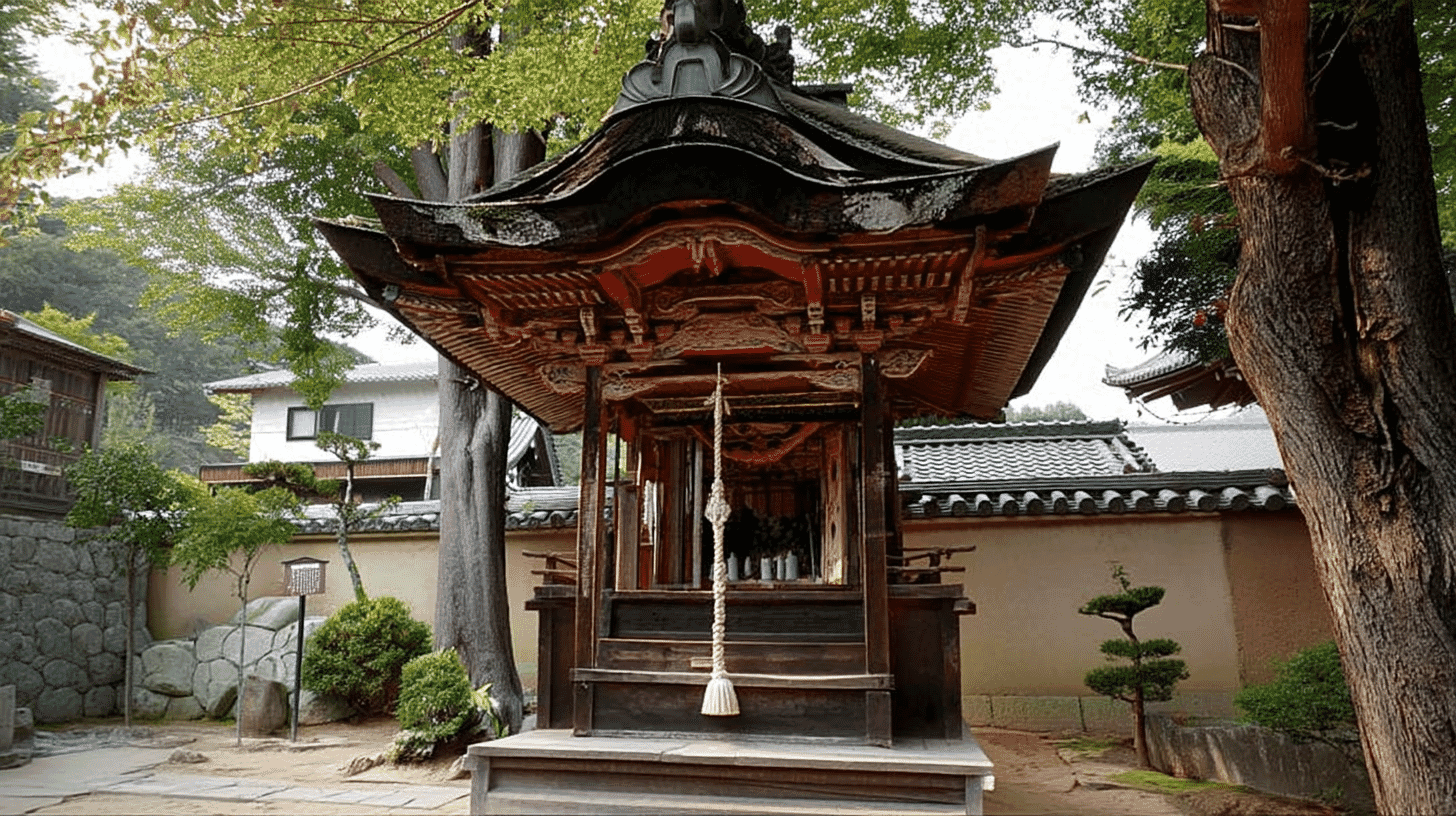
Nakanobō Inari Shrine: Where Ancient Worship Meets Edo Craftsmanship
Tucked away in the northwestern corner of Nakanobō, the oldest sub-temple within the historic Taimadera complex, lies a remarkable treasure that most visitors overlook. The Nakanobō Inari Shrine (中之坊稲荷社) stands as a testament to the extraordinary craftsmanship of Edo-period artisans and preserves a connection to Japan's ancient spiritual traditions that stretches back over a millennium.
Registered as a National Tangible Cultural Property in February 2022, this miniature shrine may measure barely 1.4 square meters, yet it embodies a level of artistic sophistication and historical significance that rivals structures many times its size. For international visitors seeking authentic Japanese cultural experiences beyond the well-trodden tourist paths, the Nakanobō Inari Shrine offers an intimate encounter with the intersection of Shinto spirituality, Buddhist temple culture, and traditional architecture.
The Ancient Deity of the Katsuragi Clan
The shrine enshrines Toyouke Ōkami (豊受大神), a deity whose worship in this region predates even the founding of Taimadera Temple. Before the powerful Katsuragi clan fell to Emperor Yūryaku in the 5th century, they venerated Toyouke Ōkami in the ancient province of Tanba. This deity, now widely known as the guardian of food and industry at Ise Grand Shrine's Outer Shrine (Gekū), was brought to Ise by imperial command following the Katsuragi clan's demise.
However, at Nakanobō, the tradition of worshipping Toyouke Ōkami continued unbroken. When Taimadera was established during the Hakuhō period (late 7th century), the sub-temple Nakanobō was founded by En no Gyōja, the legendary founder of Shugendō mountain asceticism. The monks preserved this ancient faith by establishing the Inari Shrine as the chinju (鎮守)—the protective guardian deity—of their sacred grounds.
Why It Became a Registered Cultural Property
The designation as a Registered Tangible Cultural Property recognizes the shrine's exceptional architectural and artistic value. Several distinctive features contributed to this prestigious recognition.
The shrine exemplifies the ichikensha irimoya-zukuri (一間社入母屋造) architectural style—a single-bay structure with a hip-and-gable roof facing forward. The roof is covered with hiwadabuki (檜皮葺), traditional Japanese cypress bark thatching, which represents one of Japan's most refined roofing techniques. The complex roof structure incorporates a chidori-hafu (千鳥破風) decorative gable on the front facade and a karahafu (唐破風) curved Chinese-style gable over the worship approach.
The bracket system employs futate-saki (二手先) double-stepped bracketing with sasaguri (笹繰) decorative carvings on the elbow braces. The builders also incorporated sumi-odaruki (隅尾垂木) corner tail rafters and shaped the rainbow beam nose pieces of the worship approach into elegant wave patterns. Perhaps most striking is the polychrome painting that adorns the entire structural framework, transforming this small building into what experts describe as closer to a work of decorative art than a mere architectural structure.
Architectural Highlights and Viewing Tips
Despite its compact dimensions, the Nakanobō Inari Shrine rewards careful observation. Begin by appreciating the layered complexity of the cypress bark roof from a distance. The natural material creates subtle variations in color and texture that change with the seasons and lighting conditions. In morning light, the bark takes on warm golden tones, while overcast skies reveal the silver-gray patina of aged cypress.
Move closer to examine the carved bracket work beneath the eaves. The double-stepped brackets demonstrate the sophisticated joinery techniques that Japanese carpenters perfected over centuries. Notice how the decorative sasaguri carvings add visual interest without compromising structural integrity.
The colorful painted decorations covering the wooden framework tell their own story of artistic evolution. Though the original shrine dates from the late Edo period (1830-1868), the current decorative scheme reflects multiple restoration campaigns that enhanced its ornamental character over time. The vibrant pigments stand in beautiful contrast to the natural tones of the bark roof and surrounding garden.
Experiencing Nakanobō and Taimadera
The Inari Shrine sits adjacent to the Ryūō Shrine (龍王社), which enshrines a dragon deity that En no Gyōja summoned from Kumano. Together, these two small shrines represent the syncretic blend of Shinto and Buddhist practices that characterized Japanese spirituality for over a millennium before the Meiji-era separation of religions.
A visit to see the Inari Shrine naturally combines with exploration of Nakanobō's other treasures. The sub-temple boasts the Kōgū-en Garden (香藕園), designated as both a National Historic Site and Place of Scenic Beauty. This stroll garden, refined by the tea master Katagiri Sekishū in the early Edo period, counts among the Three Famous Gardens of Yamato Province and uses the National Treasure East Pagoda as borrowed scenery.
The Shaving Hall (剃髪堂) preserves the memory of Princess Chūjō, a noble woman who became a nun here in the 8th century and according to legend wove the famous Taima Mandala in a single night. The hall enshrines the Michibiki Kannon (導き観音), a protective Eleven-Faced Kannon statue said to have guided the princess to this sacred place.
Seasonal Attractions
Spring brings Taimadera's renowned peony festival, when approximately 1,200 peony bushes at Nakanobō burst into magnificent bloom from late April through early May. The shrine grounds transform into a tapestry of pink, red, white, and purple blossoms, creating an unforgettable backdrop for appreciating the architectural details of the Inari Shrine.
The Hatsuma Festival (初午祭) in February—held on the first Day of the Horse—draws worshippers who come to pray to the Inari deity for prosperity and abundant harvests. This annual observance continues a tradition that has been practiced for centuries.
Autumn offers the best lighting conditions for photography, when the low sun angle illuminates the shrine's elaborate decorations and the surrounding maple trees add splashes of crimson and gold to the scene.
Nearby Attractions
The broader Taimadera temple complex deserves thorough exploration. The Main Hall (曼荼羅堂) houses the legendary Taima Mandala, while the Golden Hall (金堂) contains Japan's oldest clay Buddha statue, a National Treasure Miroku Buddha dating from the Hakuhō period. The twin three-story pagodas—East and West—represent the only surviving pair of ancient pagodas in Japan and both hold National Treasure designation.
Mount Nijō (二上山) rises directly behind the temple, offering hiking trails to twin peaks that have inspired Japanese poets since the Man'yōshū anthology was compiled. The mountain holds special spiritual significance as the burial place of Prince Ōtsu and has been revered since ancient times as the gate to the Western Paradise where the sun sets between its two summits.
The nearby Ishikōji Temple (石光寺) provides another excellent peony viewing destination and houses important Buddhist statuary. The Michi no Eki roadside station offers local produce and serves as a good rest stop for those exploring the region.
- 📍 Plan Your Visit to Nara
- Find tours, activities & transport passes near Nakanobo Inari Shrine
- [ Todaiji Great Buddha & Nara Park Deer Experience ]
Q&A
- Can I enter the Inari Shrine building itself?
- The shrine building is not open for entry as it is a small devotional structure. However, visitors can approach close enough to appreciate its architectural details and offer prayers. Please note that access may be restricted during water memorial services (水子供養).
- Is the Inari Shrine included in the regular Nakanobō admission?
- Yes, viewing the Inari Shrine is included with the standard Nakanobō admission fee (500 yen for adults, 250 yen for elementary school students). The shrine is located in the rear section of the temple grounds along with the Ryūō Shrine.
- What is the best time of year to visit?
- Late April to early May offers the spectacular peony blooms. February features the Hatsuma Festival. Autumn provides beautiful lighting for appreciating the shrine's colorful decorations alongside fall foliage. Winter offers quieter contemplation with fewer crowds.
- Is there English guidance available at Taimadera?
- English signage is limited, but the temple has made efforts to accommodate international visitors. Audio guides in English may be available for the main halls. Bringing a guidebook or researching beforehand will enhance your experience.
- Can I combine a visit with hiking Mount Nijō?
- Absolutely! The trailhead is accessible from the temple area, and the hike to the summit takes approximately 1.5 to 2 hours. The mountain offers panoramic views of both the Nara Basin and Osaka Plain. This makes for an excellent full-day excursion combining cultural and natural attractions.
Basic Information
| Official Name | Nakanobō Inari Shrine (中之坊稲荷社) |
|---|---|
| Cultural Property Designation | Registered Tangible Cultural Property (Building) - Registered February 17, 2022 |
| Construction Period | Late Edo Period (1830-1868) |
| Architectural Style | Ichikensha Irimoya-zukuri (Single-bay hip-and-gable style), Cypress bark thatched roof |
| Building Area | 1.4 square meters |
| Enshrined Deity | Toyouke Ōkami (豊受大神) |
| Location | 1263-11 Taima Mototaima-hō, Katsuragi City, Nara Prefecture |
| Owner | Religious Corporation Nakanobō |
| Nakanobō Hours | 9:00 AM - 5:00 PM |
| Nakanobō Admission | Adults 500 yen / Elementary students 250 yen (additional fees during special exhibitions) |
| Access | 15-minute walk west from Kintetsu Minami-Osaka Line Taima-dera Station |
| Contact | 0745-48-2001 (Nakanobō) |
References
- 中之坊稲荷社 - 文化遺産オンライン
- https://bunka.nii.ac.jp/heritages/detail/554445
- 當麻寺中之坊にある古代葛城氏の鎮守さまの社を守り伝えるために - READYFOR
- https://readyfor.jp/projects/taimadera
- 拝観案内|當麻寺 中之坊と伽藍堂塔
- https://www.taimadera.org/guide/1/index.html
- 當麻寺中之坊|日本遺産ポータルサイト
- https://japan-heritage.bunka.go.jp/ja/culturalproperties/result/5303/
- 當麻寺中之坊|奈良県観光 あをによし なら旅ネット
- http://yamatoji.nara-kankou.or.jp/01shaji/02tera/02west_area/taimaderanakanobo/
- 當麻寺 - Wikipedia
- https://ja.wikipedia.org/wiki/當麻寺
- 當麻寺中之坊庭園「香藕園」修理プロジェクト - エールレール
- https://yell-rail.en-jine.com/projects/taimadera-nakanobou
Last verified: 2026.01.14
Nearby heritages
- Stone Lantern
- 1263 Toma, Toma-cho, Kitakatsuragi-gun, Nara Prefecture
- Taima-Dera Temple Nakanobo Garden
- Touma, Katsuragi City
- Nakanobo Shoin
- Touma, Katsuragi City, Nara Prefecture
- Taimaji Temple Kondo
- Touma, Katsuragi City, Nara Prefecture
- Taimadera Temple Lecture Hall
- Touma, Katsuragi City, Nara Prefecture
- Taima-Dera Temple Main Hall (Mandala Hall)
- Touma, Katsuragi City, Nara Prefecture
- Taimadera Temple East Pagoda
- Touma, Katsuragi City, Nara Prefecture
- Taimadera Temple West Pagoda
- Touma, Katsuragi City, Nara Prefecture
- Taima-Dera Temple Matsumuro-in Guest Hall
- 1263-11 Toumakata, Toumamoto, Katsuragi City, Nara Prefecture
- Taima-Dera Temple Yakushido Hall
- Touma, Katsuragi City, Nara Prefecture