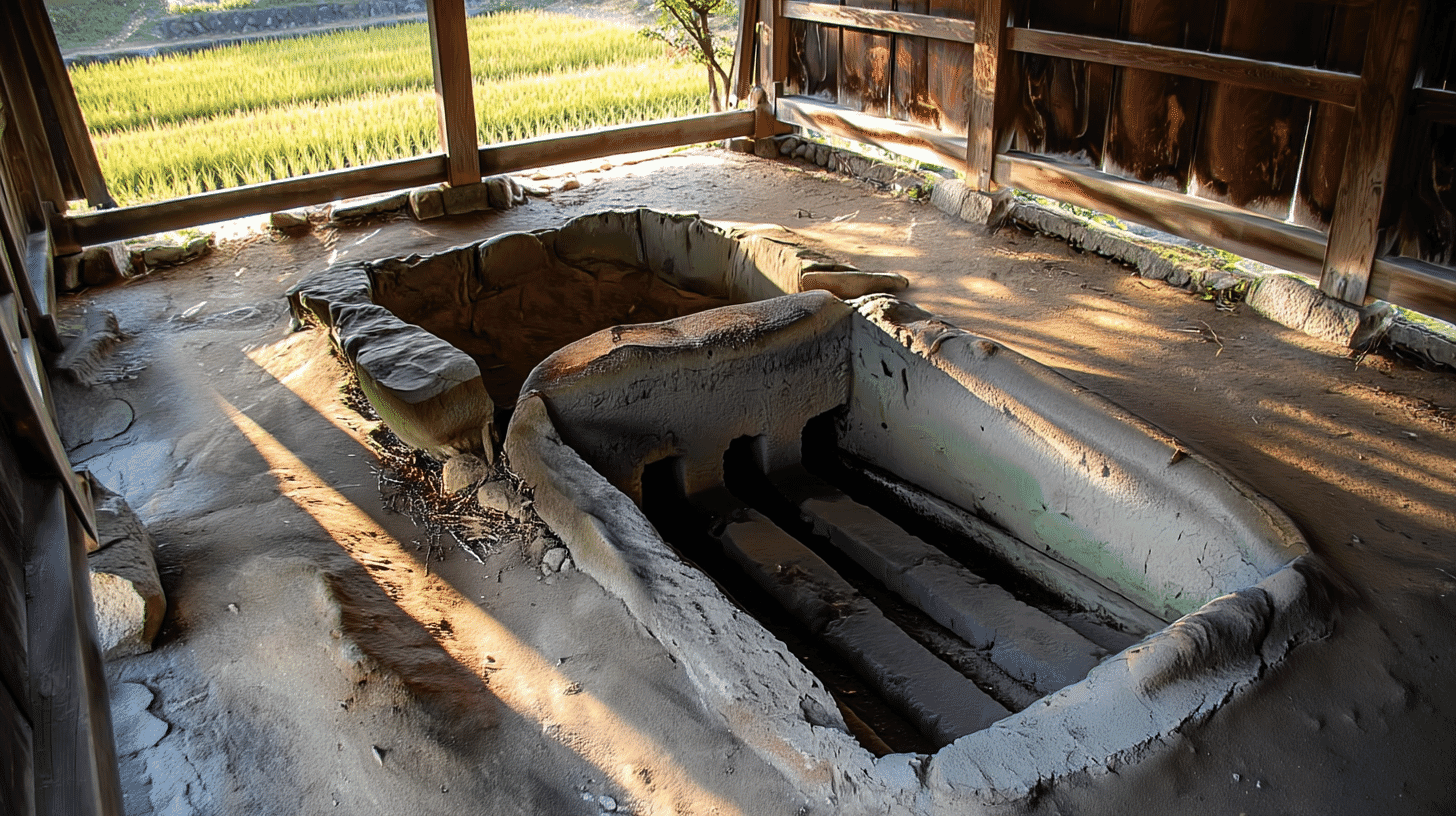
Nukatabe Kiln Site: A Hidden Kamakura-Era Treasure in Nara
Tucked away in the quiet agricultural landscape of Yamatokoriyama City in Nara Prefecture lies one of Japan's most significant medieval archaeological discoveries: the Nukatabe Kiln Site (額田部窯跡). This nationally designated historic site offers visitors a rare glimpse into the craftsmanship and religious devotion of Kamakura-period Japan, when skilled artisans fired roof tiles to restore an ancient temple with connections to Prince Shōtoku himself.
Discovery and Historical Significance
In 1928, during excavation work for an irrigation pond, workers made a remarkable discovery just 30 centimeters below the surface. Three tile kilns arranged in an east-west line emerged from the earth, their structures remarkably well-preserved despite being buried for nearly seven centuries. The fragments of roof tiles found within the kilns confirmed they dated to the Kamakura period (1185-1333), and in 1929, the site was designated a National Historic Site of Japan.
The discovery was particularly significant because of its location: approximately 30 meters west of the Important Cultural Property five-tiered stone pagodas (gorintō) of Gakuan-ji Temple. This proximity suggested a direct connection between the kilns and the temple's restoration during the medieval period.
Why Is This Site Nationally Designated?
The Nukatabe Kiln Site earned its prestigious designation as a National Historic Site for several compelling reasons. First, it represents a rare surviving example of medieval Japanese tile-making technology. The kilns are "rostol-style flat kilns" (ロストル式平窯), featuring elongated ridges on the firing chamber floor that created optimal heat circulation for producing high-quality roof tiles. This sophisticated design demonstrates the advanced technical knowledge of Kamakura-period craftsmen.
Second, the kilns provide tangible evidence of the Buddhist revival movement that swept through Japan during the 13th century. They were constructed specifically to produce tiles for the restoration of Gakuan-ji Temple, led by the renowned monks Eizon and Ninshō from Saidai-ji Temple. Ninshō, in particular, was celebrated for his dedication to social welfare and the restoration of ancient temples, and his remains are partially interred at Gakuan-ji in a five-tiered pagoda now designated as an Important Cultural Property.
Technical Marvel: The Rostol-Style Kiln
The kilns at Nukatabe represent a specialized type known as "rostol-style flat kilns." Each kiln measures approximately 1.5 meters in length and 1 meter in width, relatively compact structures designed for efficient tile production. The firing chamber floor features distinctive elongated ridges (rostols) that elevated the tiles above the flames, allowing hot air to circulate evenly beneath and around each piece.
The combustion chamber lies to the south of each kiln, positioned at a lower level than the firing chamber. This arrangement created natural updraft that drew flames through the rostol gaps and around the tiles before exiting through the top. Such precision engineering ensured consistent firing temperatures essential for producing durable, high-quality roof tiles.
Connection to Gakuan-ji Temple
The story of the Nukatabe Kiln Site cannot be separated from that of Gakuan-ji Temple. According to temple tradition, Gakuan-ji was established on the site where Prince Shōtoku founded the Kumagori Shōja (熊凝精舎), an early Buddhist study hall. The temple was built by the Nukatabe clan, a powerful local family, and flourished during the Nara period.
By the Heian period, however, the temple had fallen into decline. It was not until the late Kamakura period that Eizon and his disciple Ninshō undertook its restoration. Ninshō, born in 1217, was particularly devoted to both Buddhist practice and charitable works, earning the posthumous title "Bosatsu" (Bodhisattva) from Emperor Go-Daigo. When Ninshō died in 1303, his remains were divided among three locations: Gokuraku-ji Temple in Kamakura, Chikurin-ji Temple in Ikoma, and Gakuan-ji in Yamatokoriyama.
The Nukatabe kilns produced the roof tiles needed for this restoration, creating a direct material link between medieval Buddhist revival and traditional craftsmanship.
Visiting the Site Today
Today, the westernmost of the three kilns—the best preserved—is protected beneath a shelter building and can be viewed through prior arrangement with the city's Cultural Properties Division. The other two kilns were reburied for preservation after the initial excavation.
Visiting requires advance contact with the Yamatokoriyama City Machizukuri Strategy Division, as the protective shelter is normally locked. This careful management ensures the delicate archaeological remains are preserved for future generations while still allowing interested visitors to experience this remarkable piece of Japanese history.
The site sits within a peaceful rural setting, surrounded by rice paddies and traditional farmhouses. The quiet atmosphere allows visitors to contemplate the scene much as it might have appeared centuries ago, when smoke from the kilns rose into the sky as artisans crafted tiles for the sacred buildings of Gakuan-ji.
Nearby Attractions
A visit to the Nukatabe Kiln Site can be combined with several other cultural and historical attractions in the Yamatokoriyama area:
- Gakuan-ji Temple: Located just 30 meters east, this temple houses Important Cultural Property Buddhist statues and the five-tiered stone pagodas containing the remains of the monk Ninshō.
- Koriyama Castle Ruins: A National Historic Site and one of Japan's Top 100 Cherry Blossom Viewing Spots, featuring restored gates and turrets from the castle built by Toyotomi Hidenaga.
- Hōryū-ji Temple: The world-famous UNESCO World Heritage Site is located nearby in Ikaruga, featuring the oldest surviving wooden structures in the world.
- Goldfish Heritage: Yamatokoriyama is known as the "City of Goldfish and Castles," producing roughly 60% of Japan's goldfish. The Goldfish Museum showcases rare varieties.
- Jikō-in Temple: A peaceful Zen temple known for its beautiful borrowed-landscape garden with views across the Yamato Plain.
Practical Tips for Visitors
The Nukatabe Kiln Site offers a unique opportunity to connect with Japan's medieval past, but visiting requires some planning. Since the site is locked for preservation, contact the city office in advance to arrange a viewing. The surrounding area is primarily residential and agricultural, with limited tourist facilities, so consider bringing water and snacks.
The best time to visit is during spring or autumn when the weather is pleasant for walking. Combining your visit with nearby Gakuan-ji Temple provides deeper context for understanding the kilns' historical significance. The temple itself requires a modest admission fee and offers a tranquil atmosphere for reflection.
- 📍 Plan Your Visit to Nara
- Find tours, activities & transport passes near Nukatabe Kiln Site
- [ Todaiji Great Buddha & Nara Park Deer Experience ]
Q&A
- What is the Nukatabe Kiln Site?
- The Nukatabe Kiln Site is a nationally designated historic site in Yamatokoriyama, Nara Prefecture. It consists of three Kamakura-period (13th century) tile kilns that were used to produce roof tiles for the restoration of nearby Gakuan-ji Temple. One kiln is preserved under a protective shelter, while the other two remain buried underground.
- Can I visit the kiln site freely?
- The site is protected and normally locked for preservation purposes. Visitors wishing to see the kiln must contact the Yamatokoriyama City Machizukuri Strategy Division in advance to arrange access. Contact number: 0743-53-1151 (ext. 733).
- How do I get to the Nukatabe Kiln Site?
- The site is located approximately 15 minutes on foot from Hirahata Station on the Kintetsu Kashihara Line. There is no dedicated parking, so public transportation is recommended.
- Is there an admission fee?
- There is no admission fee to view the kiln site itself. However, nearby Gakuan-ji Temple charges a modest admission fee (approximately 400 yen for adults) to visit the temple grounds and view its cultural properties.
- What is a "rostol-style flat kiln"?
- A rostol-style flat kiln is a type of kiln with a relatively flat firing chamber featuring elongated ridges (rostols) on the floor. These ridges elevate the tiles being fired, allowing heat to circulate evenly beneath and around them. This design was commonly used for tile production in medieval Japan.
Basic Information
| Name | Nukatabe Kiln Site (額田部窯跡 / Nukatabe Kama-ato) |
|---|---|
| Designation | National Historic Site (designated April 2, 1929) |
| Period | Kamakura Period (13th century) |
| Type | Rostol-style flat kiln (ロストル式平窯) |
| Dimensions | Approximately 1.5m length × 1m width per kiln |
| Location | Nukatabe Kita-machi, Yamatokoriyama City, Nara Prefecture |
| Access | 15 minutes on foot from Kintetsu Hirahata Station |
| Parking | None available |
| Admission | Free (advance reservation required) |
| Contact | Yamatokoriyama City Machizukuri Strategy Division TEL: 0743-53-1151 (ext. 733) FAX: 0743-53-1049 |
References
- 額田部窯跡|金魚とお城のまち やまとこおりやま(大和郡山市観光協会)
- https://www.yk-kankou.jp/spotDetail41.html
- 額田部窯跡|国土交通省近畿地方整備局 大和川河川事務所
- https://www.kkr.mlit.go.jp/yamato/river/past/guidemap/historic/historic_06.html
- 国35 額田部窯跡|大和郡山市
- https://www.city.yamatokoriyama.lg.jp/soshiki/machidukuri_senryaku/rekishi_bunkazai/bunkazai101/j_bunkazai/shiseki/1811.html
- 額田部窯跡 - Wikipedia
- https://ja.wikipedia.org/wiki/額田部窯跡
- 額安寺 - Wikipedia
- https://ja.wikipedia.org/wiki/額安寺
- 忍性 - 奈良国立博物館
- https://www.narahaku.go.jp/exhibition/special/201607_ninshou/
Last verified: 2026.01.14
Nearby heritages
- Gorinto Pagoda at Gakuanji Temple
- Nukatabejicho, Yamatokoriyama City, Nara Prefecture
- Nakaya House (Ando Village, Ikoma District, Nara Prefecture)
- 133 Kubota, Ando-cho, Ikoma-gun, Nara Prefecture
- Five-Ringed Pagoda
- 463 Choanjicho, Yamatokoriyama City, Nara Prefecture
- Shoji Family Residence Rice Storehouse
- 810-1 Nishiando, Ando-cho, Ikoma-gun, Nara Prefecture
- Shoji Family Residence New Room and Rice Barn
- 790 Nishiando, Ando Town, Ikoma District, Nara Prefecture
- Shoji Family Storehouse
- 790 Nishiando, Ando Town, Ikoma District, Nara Prefecture
- Separate Room in the Shoji Family Residence
- 790 Nishiando, Ando Town, Ikoma District, Nara Prefecture
- Built-in Shoji Family Residence
- 790 Nishiando, Ando Town, Ikoma District, Nara Prefecture
- Shoji Family Main House
- 790 Nishiando, Ando Town, Ikoma District, Nara Prefecture
- Shimanoyama Kofun
- Kawanishi Town, Ise County