The Bronze Finial That Tells an Ancient Temple's Story: Japan's Awahara Temple Pagoda Artifact and Early Buddhist Heritage

Discover the 715 CE bronze fukubachi from Awahara Temple, a Japanese National Treasure preserving the precise founding story of an 8th-century Buddhist temple. This remarkable artifact with its 15-line inscription offers visitors insights into early Japanese Buddhism, imperial patronage, and Nara period craftsmanship.

The bronze finial that tells an ancient temple's story

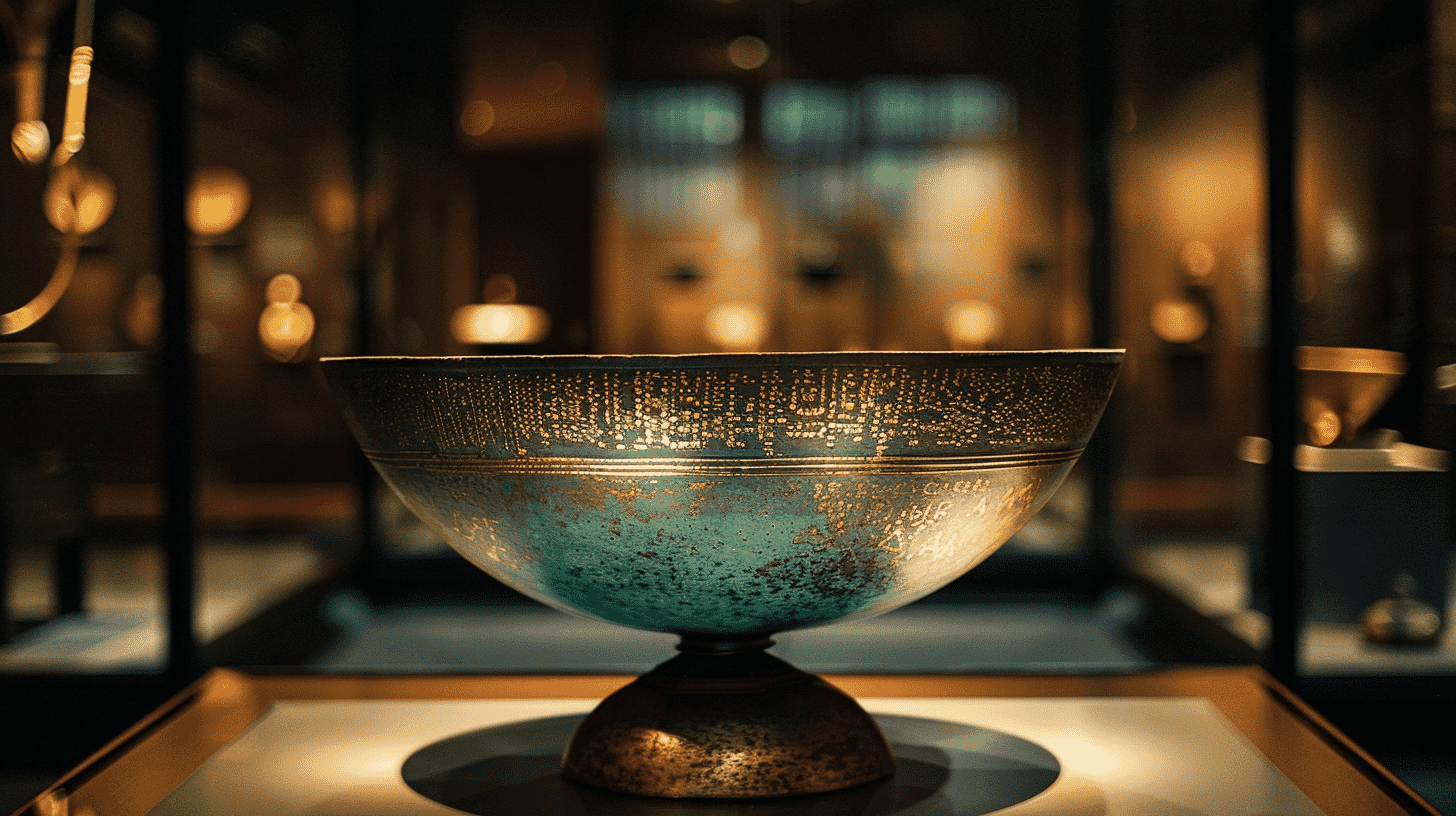
The Yamato Province Awahara Temple Three-Storied Pagoda Fukubachi (大和国粟原寺三重塔伏鉢) is one of Japan's most historically significant Buddhist artifacts, a National Treasure that preserves in bronze and gold the precise founding story of an 8th-century temple. Dating to 715 CE, this inverted bowl-shaped pagoda finial contains a remarkable 15-line inscription documenting the temple's construction to memorialize Prince Kusakabe, providing an exceptionally rare contemporary account of early Japanese Buddhism.

The artifact combines exceptional craftsmanship with invaluable historical documentation, making it essential for understanding Japan's formative Buddhist period. Currently owned by Tanzan Shrine and displayed at Nara National Museum, this 35-centimeter bronze finial with its original gold surface intact offers international visitors a tangible connection to the cultural synthesis that shaped Japanese civilization during the Nara period.

A temple built for a prince who never ruled

Awahara Temple emerged from imperial grief and political aspiration in Japan's ancient capital region. Founded by Nakatomi no Asomi Ōshima in 694 CE to commemorate Prince Kusakabe—son of Emperor Tenmu and heir apparent who died before ascending the throne in 689—the temple represented both personal devotion and political statement.

The construction timeline stretched across 22 years, with Ōshima's death interrupting the project until Hime no Asomi Nukada took over completion. Some scholars intriguingly suggest this Nukada might have been the famous Manyo poet Nukata no Ōkimi in her later years, adding literary significance to the temple's history.

The temple complex originally featured a main hall with a 16-foot Buddha statue and the three-storied pagoda completed in 715 CE, serving as both memorial temple for the deceased prince and regional Buddhist center in Yamato Province. During its peak in the early Nara period (710-784), Awahara Temple flourished alongside the establishment of Japan's first permanent capital at Heijō-kyō (modern Nara) and the Fujiwara clan's political ascendancy.

Reading history through bronze and gold inscriptions

The fukubachi stands approximately 35 centimeters tall, crafted from cast bronze with surface gilding that has remarkably survived over 1,300 years. This inverted bowl-shaped component formed the base of the pagoda's sōrin (finial system), the elaborate bronze spire crowning Japanese pagodas.

The inscription carved into its surface transforms this architectural element into a primary historical document, recording not only the construction date of "Wadō 8th year, 4th month" (715 CE) but also the complete founding narrative of the temple.

The artifact demonstrates sophisticated 8th-century Japanese metalworking capabilities, combining functional architecture with artistic excellence and historical documentation. As the transition element between the pagoda's wooden roof and bronze finial system, the fukubachi provided structural stability while preventing water infiltration, all while carrying deep Buddhist symbolism as an inverted alms bowl representing the cessation of worldly desires.

Japan's oldest precisely dated temple artifact

The Cultural Properties Protection Agency designated this artifact a National Treasure in 1953, elevating it from its earlier Important Cultural Property status granted in 1902. This highest designation recognizes its unique combination of archaeological value, historical documentation, and artistic merit.

The fukubachi provides the only contemporary written account of Awahara Temple's founding, making it irreplaceable for understanding early Japanese Buddhism and the relationship between imperial patronage and religious institutions.

The inscription's detailed information about temple boundaries, construction timeline, and imperial connections has proven invaluable for archaeological research, leading to the designation of Awahara Temple ruins as a National Historic Site in 1927. Among early Japanese pagoda finials, this example stands out for its precise dating, exceptional preservation, and the wealth of historical information it provides.

Foundation stones marking ancient sacred ground

Awahara Temple ruins lie in Sakurai City, Nara Prefecture, approximately 40 kilometers southeast of Kyoto in what was ancient Yamato Province's heartland. The site occupies gently sloping terrain behind the modern Tenman Shrine in Awahara village, where foundation stones from the original three-storied pagoda and main hall remain visible.

The pagoda's heart pillar base stone sits prominently on slightly elevated ground, while various foundation stones scattered throughout the area outline the temple's original layout, though formal archaeological excavation has never been conducted.

Visitors today encounter a rural setting that preserves much of the ancient landscape character, with the temple ruins designated a National Historic Site since 1927. The site remains open for public viewing year-round without admission fees, though facilities are minimal—no visitor center, restrooms, or interpretive displays beyond basic Japanese-language signage.

Museum treasures and mountain shrines

The fukubachi currently resides at the Nara National Museum, Japan's premier institution for Buddhist art, where it forms part of the permanent collection available for public viewing. The museum, located in scenic Nara Park just 15 minutes' walk from Kintetsu Nara Station, displays the artifact with detailed bilingual explanations highlighting its historical significance.

Regular admission costs ¥700 for adults (students ¥350, under 18 free), with the museum open 9:30-17:00 daily except Mondays. The artifact's owner, Tanzan Shrine, sits dramatically on a mountainside about 5 kilometers from the original temple site, famous for housing Japan's only 13-story wooden pagoda and spectacular autumn foliage.

International visitors can efficiently combine these sites in a full-day itinerary: morning at Nara National Museum viewing the fukubachi and other Buddhist treasures, then afternoon travel to Sakurai for the temple ruins and Tanzan Shrine. From major cities, access is straightforward via the Kintetsu railway network—45 minutes from Osaka, 70 minutes from Kyoto, or 25 minutes from central Nara to Sakurai Station.

Beyond the ruins in Yamato's Buddhist heartland

The Awahara Temple area forms part of Nara Prefecture's extraordinary concentration of ancient Buddhist sites, offering numerous possibilities for extended exploration. Hasedera Temple, just 15 minutes from Sakurai Station, features Japan's largest wooden Kannon statue and famous cherry blossoms, while Omiwa Shrine preserves pre-Buddhist Shinto traditions at sacred Mount Miwa.

The broader Asuka region, 30 minutes by car, contains Japan's ancient capital sites with mysterious stone monuments and the country's oldest Buddhist temple site at Asuka-dera. For comprehensive Buddhist heritage touring, visitors should consider the UNESCO World Heritage sites around Nara city—Horyu-ji's ancient wooden buildings, Todai-ji's Great Buddha, and Kofuku-ji's five-story pagoda all provide context for understanding Awahara Temple's place in Japanese Buddhism's development.

Seasonal timing significantly affects the experience: spring brings cherry blossoms to temple grounds, autumn transforms Tanzan Shrine into a photographer's paradise with brilliant maple colors, while winter offers clearest mountain views despite cold temperatures.

Silent stones revealing imperial Buddhism's birth

Despite lacking formal excavation, Awahara Temple's archaeological remains continue yielding insights into early Japanese Buddhism through surface surveys and comparative studies. The visible foundation stones indicate substantial construction following standard Buddhist temple layouts (garan), with the three-storied pagoda and main hall arranged according to continental models adapted for Japanese conditions.

The site's preservation as rice fields and shrine grounds has protected subsurface remains, though also preventing comprehensive investigation that could reveal additional structures, artifacts, and information about daily temple life during the Nara period.

Recent technological advances in non-invasive archaeological methods offer potential for future research without disturbing the historic site. The correlation between the fukubachi's inscriptional evidence and physical remains validates historical accounts while raising questions about other undocumented structures.

Ancient craftsmanship surpassing modern preservation

Comparing the Awahara fukubachi with similar artifacts reveals its exceptional significance within Japanese Buddhist heritage. While Horyu-ji Temple preserves the world's oldest wooden buildings from roughly the same period, its pagoda finials lack the detailed historical inscriptions found on the Awahara example.

Yakushiji Temple's contemporary East Pagoda features a massive 3,000-kilogram bronze finial demonstrating similar technological sophistication, yet provides no documentary evidence about its creation. The Awahara artifact uniquely combines architectural function, artistic excellence, and historical documentation in a single object.

This fukubachi represents the "Tang International Style" that dominated East Asian Buddhist art during the 8th century, when Japanese artisans eagerly absorbed Chinese techniques while developing distinctive local characteristics. The preservation of original gold surface treatment surpasses most contemporary bronze artifacts, likely due to protected storage in temple treasuries and early recognition of its historical value.

Conclusion: A window into Japan's Buddhist transformation

The Yamato Province Awahara Temple Three-Storied Pagoda Fukubachi transcends its modest size to offer profound insights into Japan's cultural transformation during the Nara period. Through its meticulously inscribed surface, this bronze and gold artifact preserves not just dates and names but the human stories of grief, devotion, and political ambition that drove Japan's embrace of Buddhism as state religion.

For international visitors, it provides an accessible entry point to understanding how continental Asian culture transformed Japanese society, creating the distinctive synthesis of foreign influence and local innovation that characterizes Japanese civilization.

The artifact's journey from functional pagoda component to National Treasure mirrors Japan's own evolution in valuing and preserving cultural heritage. Its display at Nara National Museum, combined with the atmospheric temple ruins and dramatic Tanzan Shrine setting, offers multiple perspectives on how material culture connects past and present.

📍 Plan Your Visit to Nara
Find tours, activities & transport passes near Three-Story Pagoda at Awahara-Ji Temple in Yamato Province
[ Todaiji Great Buddha & Nara Park Deer Experience ]

Q&A

QWhere can I see the Awahara Temple Fukubachi?
AThe fukubachi is currently on permanent display at the Nara National Museum, located in Nara Park about 15 minutes' walk from Kintetsu Nara Station. Admission is ¥700 for adults, and the museum is closed on Mondays. While Tanzan Shrine owns the artifact, it is typically kept and displayed at the museum.
QHow do I get to Awahara Temple ruins?
ATake the Nara Kotsu bus from JR/Kintetsu Sakurai Station to the "Awahara" stop, then walk about 10 minutes. Buses are infrequent, so rental cars or taxis are more convenient. The ruins are located behind Tenman Shrine - follow the signs uphill to see the foundation stones. Entry is free and open year-round, though facilities are minimal.
QWhy is this fukubachi designated as a National Treasure?
AIt's one of Japan's oldest temple artifacts with a precisely dated inscription (715 CE), provides the only contemporary written account of Awahara Temple's founding through its 15-line inscription, and maintains exceptional preservation with original gold plating intact after 1,300 years. These factors led to its National Treasure designation in 1953.
QWhat is the connection between Awahara Temple and Tanzan Shrine?
AAwahara Temple was abandoned during the Meiji period's anti-Buddhist movement, and nearby Tanzan Shrine took custody of the temple's artifacts. The fukubachi is now owned by Tanzan Shrine but deposited at Nara National Museum. Tanzan Shrine is located about 5 kilometers from the temple ruins and is famous for its 13-story pagoda.
QWhat does the inscription say?
AThe inscription records that Nakatomi no Asomi Ōshima began temple construction in 694 CE to memorialize Prince Kusakabe, that Hime no Asomi Nukada completed the project after Ōshima's death, that the three-storied pagoda was finished in the 4th month of Wadō 8 (715 CE), and includes details about temple boundaries - providing a complete 22-year construction history.

References

WANDER National Treasure - Yamato Province Awahara Temple Three-Storied Pagoda Fukubachi
https://wanderkokuho.com/201-00844/
Awahara Temple Ruins - Wikipedia
https://ja.wikipedia.org/wiki/粟原寺跡
Tanzan Shrine - Wikipedia
https://en.wikipedia.org/wiki/Tanzan_Shrine
Nara National Museum Official Website
https://www.narahaku.go.jp/english/
Treasures of Tanzan Shrine - Nara National Museum
https://www.narahaku.go.jp/exhibition/special/200412_tanzan/
Awahara Temple Ruins - Sakurai City Tourism Association
https://sakuraikanko.com/remains/粟原寺跡/
Tanzan Shrine Official Website
https://www.tanzan.or.jp/

Basic Information

Name Yamato Province Awahara Temple Three-Storied Pagoda Fukubachi
Japanese Name 大和国粟原寺三重塔伏鉢 (Yamato-no-kuni Awahara-dera Sanjū-no-tō Fukubachi)
Cultural Property Status National Treasure (designated 1953)
Date of Creation 4th month of Wadō 8 (715 CE)
Material Cast bronze with gold plating
Dimensions Height: approximately 35 cm
Owner Tanzan Shrine
Current Location Nara National Museum
Inscription 15 lines documenting temple founding history
Related Figures Prince Kusakabe, Nakatomi no Asomi Ōshima, Hime no Asomi Nukada
Original Temple Location Awahara, Sakurai City, Nara Prefecture (now ruins)
Historic Site Status Awahara Temple Ruins - National Historic Site (designated 1927)

Last verified: 2025.09.25