Shirakawa Gassho-Zukuri House in Osaka: A National Treasure Saved from the Waters

Discover the historic Gassho-zukuri folk house from Shirakawa, now preserved at Japan's first open-air museum in Toyonaka. Learn about this Important Tangible Folk Cultural Property, its dramatic rescue from dam flooding, and traditional mountain life.

A Living Treasure Rescued from Rising Waters

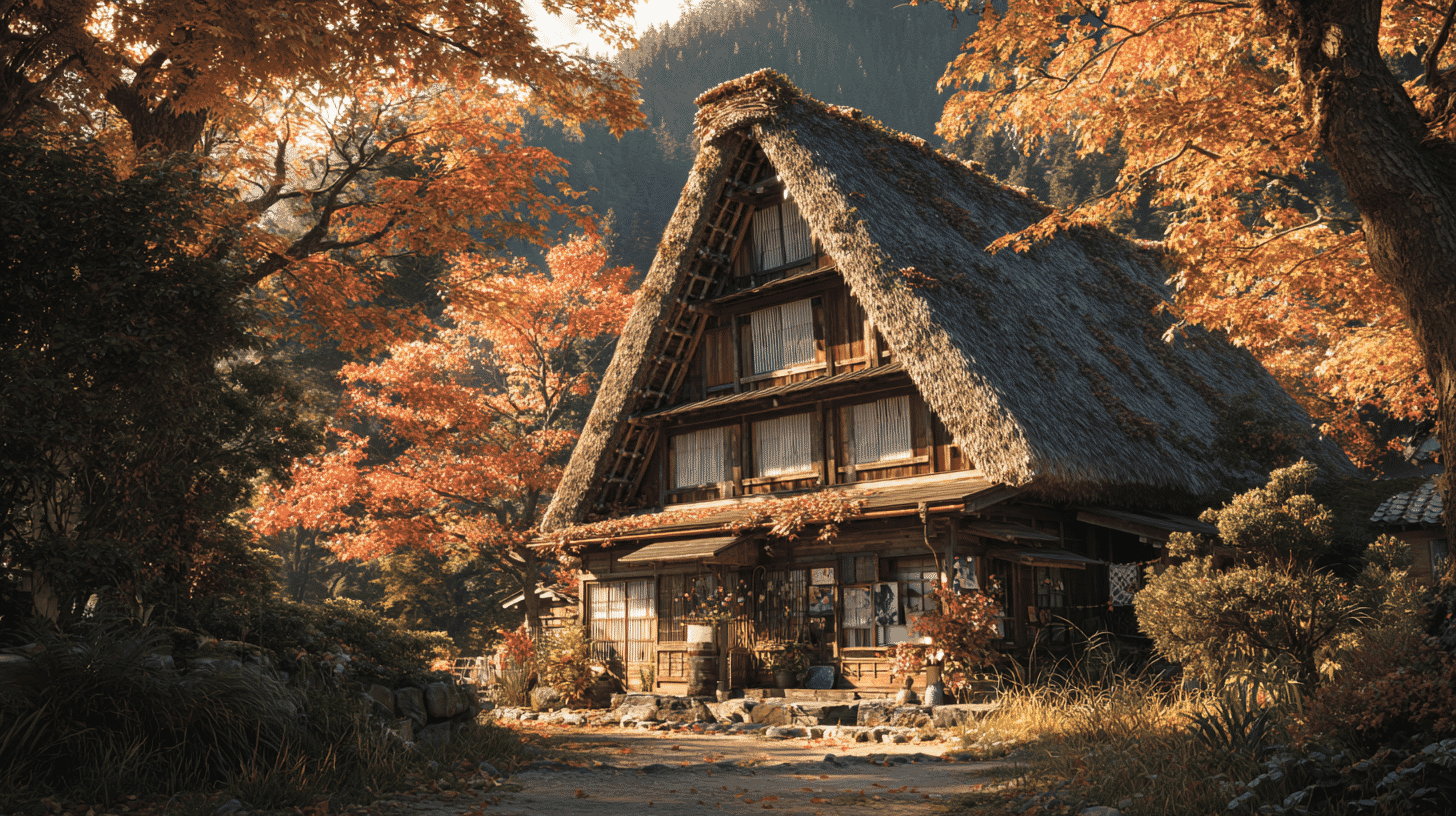
Standing majestically in Osaka's Hattori Ryokuchi Park, a remarkable three-story thatched-roof farmhouse tells an extraordinary story of preservation against all odds. This Gassho-zukuri house, originally from the remote Omaki district of Shirakawa Village in Gifu Prefecture, was saved from submersion when dam construction threatened to swallow its mountain village forever. Today, it stands as one of Japan's most precious folk cultural properties, offering visitors a rare glimpse into the ingenious mountain lifestyle that flourished in one of Japan's heaviest snowfall regions.

What is Gassho-Zukuri Architecture?

The term "Gassho-zukuri" literally means "constructed like hands in prayer," deriving from the way the massive wooden roof beams meet at the apex, resembling hands pressed together in the Buddhist prayer gesture. This distinctive architectural style developed in the mountainous Hida region of central Japan, where winter snowfall can exceed four meters annually.

The steeply pitched roof, typically angled at 50 to 60 degrees, serves multiple purposes. Snow slides off naturally, preventing the dangerous accumulation that could collapse the structure. The thatched roof, made from miscanthus grass, provides excellent insulation against both the bitter cold and summer heat. Perhaps most remarkably, the design creates vast attic spaces spanning two or three stories above the living quarters—spaces that became the foundation of the region's thriving silk industry.

A Story of Survival: The Dam Relocation

In 1956, the quiet mountain village of Omaki faced an existential threat. The construction of the Hatogaya Dam (also known as Omaki Dam) by Kansai Electric Power Company would flood the valley, submerging 22 households that had called this remote area home for generations. Among the structures slated for destruction was this grand Gassho-zukuri farmhouse, believed to have been built approximately 200 years earlier during the Edo period.

Rather than let this architectural treasure disappear beneath the waters, a remarkable preservation effort was undertaken. The house was carefully disassembled, each massive beam and intricately joined timber documented and transported over the mountains to Toyonaka City in Osaka Prefecture. There, it became one of the founding structures of Japan's first open-air folk museum, the Japan Open-Air Folk House Museum, which opened the same year.

This rescue operation represented more than just saving a building—it preserved an entire way of life that had developed over centuries in isolation from mainstream Japanese society.

Why This House is a Designated Cultural Property

On May 6, 1959, this farmhouse was officially designated as an Important Tangible Folk Cultural Property by the Japanese government. Several factors contributed to this significant recognition:

First, its exceptional scale. This is one of the largest surviving Gassho-zukuri houses, standing three stories tall with additional attached structures including a mizuya (water house) and hencha (toilet). Large Gassho-zukuri houses like this one were necessary to accommodate the extended families of 30 to 40 people who traditionally lived together under one roof, a practice designed to prevent the division of precious farmland through inheritance.

Second, its architectural integrity. The house preserves the authentic construction techniques of Edo-period mountain communities, including the distinctive wooden framework assembled entirely without nails, using only rope bindings made from softened mulberry branches called "neso." This flexible construction method allows the structure to sway slightly during earthquakes and heavy winds rather than breaking.

Third, its documentation of the silk industry. The upper floors retain their original configuration as silkworm cultivation spaces, complete with the bamboo lattice flooring that allowed warm air from the ground-floor hearth to rise and heat the rooms where silkworms were raised.

Architectural Highlights and Features

Approaching this remarkable structure, visitors immediately sense its commanding presence. The massive thatched roof, dark and weathered with age, swoops dramatically from a height of nearly three stories down to just above head level at the eaves. Unlike more common "hipped" roof designs, this house features a "kirizuma" or gable roof style, which maximizes interior space in the attic areas.

The ground floor served as the family's living space, centered around the "irori" (sunken hearth) that provided heat, light, and cooking fire. The smoke rising from this hearth was essential—it coated the wooden structure and thatched roof with a protective layer of soot that prevented insect damage and rot, contributing to the building's remarkable longevity.

The second and third floors reveal the house's dual purpose as both home and workplace. Here, racks and platforms supported the shallow trays where silkworms were raised on fresh mulberry leaves. The good ventilation through the gable ends and the warmth rising from below created ideal conditions for silk production, which was the economic lifeline for communities in this agriculturally marginal region.

Adjacent to the main house stand the original mizuya (water house for food storage) and hencha (toilet), providing a complete picture of daily life in a traditional mountain community.

The Importance of "Yui" Community Spirit

Understanding Gassho-zukuri houses requires appreciating the remarkable community cooperation that made them possible. Thatched roofs must be replaced every 30 to 40 years—a massive undertaking requiring thousands of bundles of miscanthus grass and dozens of workers. This work was accomplished through "yui," a system of mutual assistance where entire villages would gather to complete a single roof in just one or two days.

This spirit of cooperation extended to all aspects of mountain life, from snow removal to firefighting. The practice of "yui" was so central to community identity that it became a key factor in the 1995 UNESCO World Heritage designation of the Shirakawa-go and Gokayama villages, recognizing not just the buildings but the living culture that maintains them.

The Japan Open-Air Folk House Museum

The Gassho-zukuri house is the crown jewel of the Japan Open-Air Folk House Museum, but it is far from the only treasure here. Established in 1956 as Japan's first open-air museum, this 36,000-square-meter preserve within Hattori Ryokuchi Park brings together 12 historic buildings from across the Japanese archipelago.

From the curved-roof "magariya" farmhouses of northern Iwate Prefecture to the elevated granaries of subtropical Amami Oshima, each structure represents a unique regional response to Japan's diverse climates and cultures. Three of the buildings, including this Gassho-zukuri house, hold national cultural property designations.

Walking through the museum grounds, visitors travel through centuries of Japanese rural history, experiencing firsthand how geography, climate, and available materials shaped the remarkably varied architectural traditions of this island nation.

Visiting Tips and Seasonal Highlights

The museum offers different charms throughout the seasons. Spring brings plum and cherry blossoms that frame the rustic buildings in delicate pink. Summer's lush greenery and cicada songs transport visitors to an idealized Japanese countryside. Autumn is perhaps the most photogenic season, when maple and ginkgo trees paint the grounds in brilliant red and gold, contrasting beautifully with the dark thatched roofs. Even winter has its appeal, when snow-dusted buildings evoke the mountain villages where these structures originally stood.

The museum regularly hosts cultural events including traditional craft workshops, tea ceremonies, and storytelling sessions. Volunteer guides offer tours and explanations, some available in English, helping international visitors understand the significance of what they're seeing.

For those who cannot travel to the remote UNESCO World Heritage villages of Shirakawa-go, this museum offers an accessible alternative just a short train ride from central Osaka.

Surrounding Area Attractions

Hattori Ryokuchi Park itself is one of Osaka's largest urban green spaces, offering Japanese gardens, walking trails, and seasonal flower displays. The park is particularly beautiful during cherry blossom season in early April and autumn foliage in mid-November.

Nearby attractions include the historic town of Ikeda, home to the Cup Noodles Museum where visitors can create their own instant ramen. The Minoh Waterfall, one of Japan's top 100 waterfalls, is accessible within an hour and offers excellent hiking through forested mountains. For those interested in modern Japanese culture, the Expo '70 Commemorative Park in Suita features the iconic Tower of the Sun sculpture and extensive gardens.

📍 Plan Your Visit to Osaka
Find tours, activities & transport passes near Private House (Gassho-Style House in Shirakawa)
[ USJ Tickets Osaka Castle & Dotonbori Food Tours ]

Q&A

QCan I go inside the Gassho-zukuri house?
AYes, visitors can enter the ground floor and view the traditional irori hearth and living spaces. The upper floors used for silkworm cultivation can be viewed on certain days, typically with guided tours. Check with the museum for the current schedule as access may be limited for preservation purposes.
QIs English information available at the museum?
AThe museum provides English pamphlets and signage for major exhibits. Volunteer guides occasionally offer English tours, though availability varies. The museum's layout is intuitive and the buildings speak for themselves even without detailed explanations.
QHow does this compare to visiting Shirakawa-go itself?
AWhile Shirakawa-go offers a living village experience with over 100 Gassho-zukuri houses in their original mountain setting, the museum provides closer access to individual buildings and comprehensive explanations. Shirakawa-go can be crowded with tourists, whereas the museum offers a more peaceful, educational experience. Ideally, visit both if your schedule allows.
QIs the museum suitable for children?
AAbsolutely! Children enjoy exploring the different houses and imagining life in different eras. The museum occasionally hosts family-friendly events including craft workshops. The spacious grounds allow children to run and play between buildings. A stamp rally encourages kids to visit each structure.
QWhat is the best way to reach the museum from central Osaka?
ATake the Osaka Metro Midosuji Line to Esaka Station, then transfer to the Kita-Osaka Kyuko Railway and ride to Ryokuchi-koen Station. From the west exit, it's about a 15-minute walk through Hattori Ryokuchi Park to the museum entrance.

Basic Information

Official Name Minka (Gassho-zukuri from Shirakawa) / 民家(白川の合掌造)
Former Name Former Ooi Family Residence (旧大井家住宅)
Cultural Designation Important Tangible Folk Cultural Property (Designated May 6, 1959)
Original Location Omaki District, Shirakawa Village, Ono District, Gifu Prefecture
Current Location 1-2 Hattori Ryokuchi, Toyonaka City, Osaka 561-0873
Construction Period Approximately 200 years ago (Late Edo Period)
Relocation Year 1956 (Showa 31)
Structure 3-story Gassho-zukuri, thatched roof, kirizuma (gable) style, hirain (side entrance)
Attached Buildings Mizuya (water house), Hencha (toilet)
Managing Organization Osaka Cultural Properties Center
Museum Hours 9:30 AM - 5:00 PM (Last entry 4:30 PM)
Closed Days Mondays (or following day if Monday is a holiday), December 27 - January 4
Admission Adults: ¥500 / High School: ¥300 / Elementary & Junior High: ¥200
Access 15-minute walk from Ryokuchi-koen Station (Kita-Osaka Kyuko Railway / Osaka Metro Midosuji Line connection)
Phone 06-6862-3137

References

Cultural Heritage Online - Minka (Gassho-zukuri from Shirakawa)
https://bunka.nii.ac.jp/heritages/detail/188662
Japan Open-Air Folk House Museum Official Website
https://www.occh.or.jp/minka/
Hattori Ryokuchi Park - Japan Open-Air Folk House Museum
https://hattori-ryokuchi.com/guide/musium/
Wikipedia - Japan Open-Air Folk House Museum (Japanese)
https://ja.wikipedia.org/wiki/日本民家集落博物館
Wikipedia - Gassho-zukuri
https://ja.wikipedia.org/wiki/合掌造り
Osaka Cultural Property Navi - Japan Open-Air Folk House Museum
https://osaka-bunkazainavi.org/bunkazai/日本民家集落博物館
Wikipedia - Hatogaya Dam (Japanese)
https://ja.wikipedia.org/wiki/鳩谷ダム

Last verified: 2026.01.28

Nearby heritages