Discovering Kangakuin Guest Hall: A Masterpiece of Early Shoin Architecture

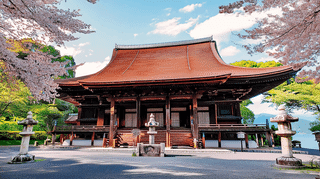
Hidden within the vast temple complex of Miidera (Onjoji Temple) in Otsu City, Shiga Prefecture, the Kangakuin Guest Hall stands as one of Japan's most significant examples of early shoin-style architecture. Designated as a National Treasure, this magnificent structure from 1600 represents the pinnacle of Momoyama period architectural achievement, offering visitors a rare glimpse into the refined aesthetics of Japan's warrior elite and the scholarly traditions of Buddhist monasticism.

Originally established in 1239 as Miidera's center of learning, the Kangakuin earned its reputation as the "Honorable Room of Scholarship" within the Tendai Buddhist tradition. The current building, reconstructed by the powerful daimyo Mori Terumoto at the dawn of the Edo period, preserves not only exceptional architectural features but also houses spectacular barrier paintings by Kano Mitsunobu, making it a treasure trove of Japanese artistic heritage.

The Historical Journey: From Medieval Academy to National Treasure

The Kangakuin's story begins in the Kamakura period when it was founded by the esteemed monk Koson in 1239. As Miidera's dedicated academic institution, it quickly became renowned throughout Japan as a center of Buddhist scholarship. The original buildings served generations of brilliant scholar-monks who contributed to the development of Tendai Buddhist philosophy and practice.

The current structure emerged from a period of destruction and renewal. After Toyotomi Hideyoshi's suppression of Miidera in the late 16th century, the temple faced near extinction. However, in 1600, with Toyotomi Hideyori as patron, the building was magnificently reconstructed through the patronage of Mori Terumoto (1553-1625), one of the Five Elders of the Toyotomi administration. The Mori family's deep connection with Miidera dated back to Terumoto's grandfather, Mori Motonari, and this reconstruction represented both political alliance and religious devotion.

Architectural Significance: The Evolution of Shoin Style

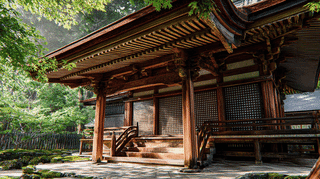
The Kangakuin Guest Hall exemplifies the transition from the medieval shuden-zukuri (main hall style) of warrior residences to the refined shoin-zukuri that would define Japanese residential architecture for centuries. Measuring seven bays by seven bays with a complex hip-and-gable roof covered in traditional kokera-buki (wooden shingles), the building demonstrates sophisticated spatial organization that balances formality with functionality.

The interior layout of three rows comprising nine rooms represents a larger and more complex arrangement than the nearby Kojoin Guest Hall, another National Treasure at Miidera. This spacious design reflects its dual purpose as both a reception hall for distinguished guests and a center for scholarly gatherings. The building preserves authentic Muromachi period warrior residence characteristics while incorporating the aesthetic refinements of the Momoyama period.

Of particular note is the building's international cultural impact. In 1985, the Metropolitan Museum of Art in New York created a faithful reproduction of the Ichi-no-ma (First Room), introducing Western audiences to the sophistication of Japanese architectural traditions and contributing to global appreciation of Japanese culture.

The Artistic Treasures: Kano Mitsunobu's Magnificent Paintings

The Kangakuin's interior houses one of the finest collections of Momoyama period paintings, created primarily by Kano Mitsunobu (1565-1608), eldest son of the legendary Kano Eitoku. These Important Cultural Properties transform the architectural space into an immersive artistic environment that represents the apex of the Kano school's achievement.

The Ichi-no-ma features golden backgrounds adorned with seasonal flowers including plum blossoms and cherry trees, creating a perpetual spring within the room. The Ni-no-ma (Second Room) displays elegant bird-and-flower compositions featuring mountain birds and ducks, showcasing Mitsunobu's distinctive style that favored refinement and grace over his father's bold dynamism. These paintings demonstrate a unique sensitivity to seasonal transitions and natural beauty, expressed through Mitsunobu's characteristically fresh and elegant approach.

Today, the original paintings are preserved in Miidera's Cultural Property Repository for conservation purposes, with high-definition digital reproductions installed in the building. This arrangement allows visitors to experience the spatial impact of the artwork while ensuring the preservation of these irreplaceable cultural treasures for future generations.

The Garden Paradise: A Landscape of Tranquility

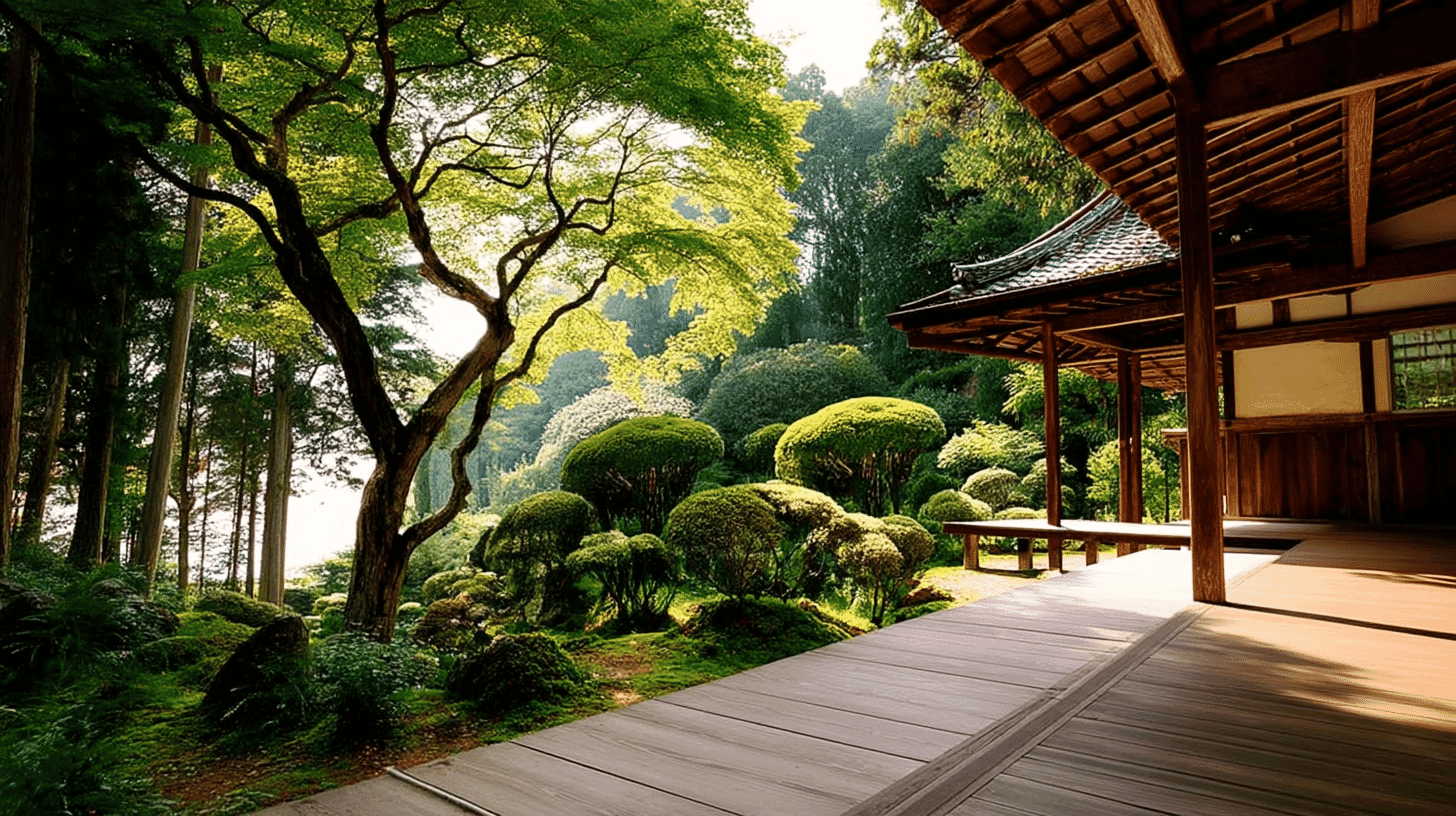
Beyond the interior spaces, the Kangakuin offers visitors a carefully composed garden that exemplifies the Japanese aesthetic of borrowed scenery. From the broad veranda (hiro-en) and the lower veranda (ochi-en), visitors encounter an expansive view that seamlessly integrates architecture with nature. The garden features a long, narrow pond that reflects the changing seasons, surrounded by towering cedars and cypress trees interspersed with azaleas and Japanese andromeda.

A particularly notable feature is the unique triangular-roofed stone pagoda positioned in the western corner of the garden. This Kamakura period treasure, with its unprecedented triangular cap stone, represents a rare example of medieval stone craftsmanship and adds a element of historical depth to the garden composition. The entire landscape creates a contemplative environment that enhances the building's function as a place of learning and spiritual cultivation.

Visiting Kangakuin: Special Access and Practical Information

Unlike many temple buildings that offer regular public access, the Kangakuin Guest Hall requires advance reservation for special viewing. This exclusive arrangement ensures proper preservation while providing visitors with an intimate, guided experience of this National Treasure. Groups of four or more can apply at least one week in advance for special admission, which includes expert guidance from temple staff.

The special viewing fee is 1,000 yen per person, in addition to the general Miidera Temple admission of 600 yen. Tours are available from 9:30 AM to 3:30 PM, though availability depends on temple ceremonies and events. Visitors should note that certain religious occasions may affect access, so confirming availability when making reservations is recommended.

Photography inside the building is restricted to protect the cultural properties, though the exterior and garden areas offer numerous photogenic opportunities. The guided tour provides invaluable context about the building's history, architectural features, and artistic treasures that might otherwise be overlooked by casual visitors.

Access and Transportation: Journey from Kyoto and Beyond

Reaching Miidera Temple and the Kangakuin Guest Hall from Kyoto is surprisingly convenient, making it an ideal day trip destination. The most direct route involves taking the JR Biwako Line from Kyoto Station to Zeze Station (12 minutes, 240 yen), then transferring to the Keihan Ishiyama Sakamoto Line at Keihan-Zeze Station and traveling to Miidera Station. From there, it's a pleasant 10-minute walk through the temple grounds to reach the main complex.

Alternatively, visitors can take the JR Kosei Line from Kyoto Station to Otsukyo Station (11 minutes), then transfer to the Keihan line at Ojiyama Station. For those preferring a more scenic route, the journey via Sanjo Keihan Station using the Tozai Subway Line offers beautiful views along Lake Biwa.

From Osaka, the journey takes approximately 40-50 minutes via the JR Tokaido Line to Otsu Station, followed by local transportation. The temple provides parking facilities for those arriving by car, with easy access from the Meishin Expressway.

Exploring the Surroundings: Lake Biwa and Cultural Treasures

The Kangakuin's location within Miidera Temple places visitors at the heart of one of Japan's most culturally rich regions. The temple complex itself contains over 100 designated cultural properties, including the National Treasure Kondo (Main Hall), the famous "Evening Bell of Mii" immortalized in traditional art, and numerous sub-temples each with their own artistic and historical significance.

Beyond Miidera, the Lake Biwa region offers abundant attractions. The UNESCO World Heritage Site Enryakuji Temple crowns nearby Mount Hiei, accessible via the historic Sakamoto Cable Car. Ishiyamadera Temple, where Lady Murasaki supposedly conceived The Tale of Genji, lies just a few stations away on the Keihan line. The charming temple town of Sakamoto preserves traditional streetscapes and numerous small temples.

Lake Biwa itself provides recreational opportunities from scenic cruises on the Michigan paddle wheeler to lakeside walks through cherry tree-lined paths. The nearby Otsu City Museum of History offers deeper context about the region's cultural development. For those interested in experiencing local culture, the October Otsu Matsuri festival features elaborate floats and mechanical puppet performances dating from the Edo period.

Frequently Asked Questions

QCan I visit Kangakuin Guest Hall without a reservation?
ANo, the Kangakuin Guest Hall requires advance reservation made at least one week before your intended visit. The building is not open for regular public viewing. Groups must consist of at least 4 people, and guided tours are provided by temple staff. You can apply through Miidera Temple's official website or by sending a postcard with your requested date.
QAre the paintings I see during the visit originals or reproductions?
AThe paintings currently displayed in the Kangakuin are high-definition digital reproductions. The original Kano Mitsunobu paintings, designated as Important Cultural Properties, are preserved in Miidera's Cultural Property Repository where they can be viewed separately. This conservation approach ensures the long-term preservation of these irreplaceable artworks while allowing visitors to experience the visual impact of the decorated interior spaces.
QHow much time should I allocate for visiting Kangakuin and Miidera Temple?
AThe special viewing tour of Kangakuin Guest Hall typically takes 30-45 minutes. However, you should allocate at least 2-3 hours for visiting the entire Miidera Temple complex, which includes numerous other cultural properties and gardens. If you plan to visit both Kangakuin and Kojoin Guest Halls (both require reservations), allow 3-4 hours for a comprehensive temple visit.
QWhat is the best season to visit Kangakuin Guest Hall?
AEach season offers unique appeal. Spring (late March to early April) features spectacular cherry blossoms throughout Miidera's grounds with over 1,500 trees. Autumn (mid-November to early December) brings vibrant fall colors to the temple's maple trees. Summer provides lush greenery and cool breezes from Lake Biwa, while winter offers serene, uncrowded viewing conditions. The garden views from Kangakuin's verandas are particularly beautiful during spring and autumn.
QCan I combine my Kangakuin visit with other attractions in one day?
AYes, the Otsu area offers excellent opportunities for a full day of sightseeing. You can easily combine Kangakuin with exploring the rest of Miidera Temple in the morning, then visit nearby Ishiyamadera Temple or take a Lake Biwa cruise in the afternoon. If you're energetic, you could even take the cable car up to Enryakuji Temple on Mount Hiei. The Keihan Ishiyama Sakamoto Line connects all these major sites, making it convenient to visit multiple attractions.

Basic Information

Name Kangakuin Guest Hall (勧学院客殿)
Designation National Treasure (1952)
Construction 1600 (Keicho 5), Momoyama Period
Architectural Style Shoin-zukuri (Shuden-zukuri)
Structure 7 bays × 7 bays, single story, hip-and-gable roof with curved front gable, wooden shingle roofing
Builder Mori Terumoto (1553-1625)
Location 246 Onjoji-cho, Otsu City, Shiga Prefecture
Access 10-minute walk from Keihan Miidera Station
Viewing By advance reservation only (minimum 4 people)
Special Viewing Fee 1,000 yen per person (plus temple admission 600 yen)
Hours 9:30 AM - 3:30 PM (reservation required)
Contact Miidera Temple Office: 077-522-2238

References

Miidera Temple Official Website - Kangakuin
https://miidera1200.jp/kangaku-in/
Miidera Cultural Heritage Museum
https://miidera-museum.jp/cultural-property/contents/14/
Japan National Tourism Organization - Miidera Temple
https://www.japan.travel/en/spot/1063/
Cultural Heritage Guide - Onjoji Temple
https://bunkaisan.exblog.jp/29635727/
Shiga Prefecture Tourism Information
https://www.biwako-visitors.jp/spot/detail/92/

Nearby heritages