Kojoin Guest Hall: A Masterpiece of Shoin-Zukuri Architecture

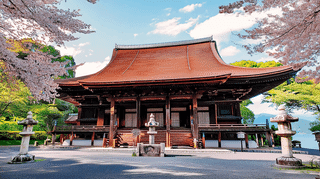
Tucked within the expansive grounds of Miidera Temple (formally known as Onjoji) in Otsu, Shiga Prefecture, the Kojoin Guest Hall (光浄院客殿, Kojoin Kyakuden) stands as one of Japan's most significant National Treasure buildings. Built in 1601 during the Azuchi-Momoyama period, this elegant wooden structure represents one of the finest surviving examples of shoin-zukuri — the architectural style that became the foundation of traditional Japanese residential design. Though normally closed to the public, the hall can be visited through a special advance reservation, offering visitors a rare and intimate encounter with the essence of Japanese architectural culture.

A Brief History of Kojoin

Kojoin (光浄院) is one of the many sub-temples within the vast Miidera complex. Its origins date back to the Muromachi period, when Yamaoka Sukehiro established it on the site of the former Juen-bo within the temple grounds. The current guest hall was constructed in 1601 (Keicho 6), as recorded in the "Kojoin Construction Memorandum" (光浄院建立覚書).

The builder was Yamaoka Doami Kagetomo, a remarkable figure who embodied the dual identity of his era — he was both a Buddhist monk at Miidera and a warrior who served the powerful warlord Toyotomi Hideyoshi as lord of Seta Castle. During the turbulent late 16th century, Miidera suffered greatly when Hideyoshi ordered its dissolution in 1595, stripping the temple of its lands and dispersing its treasures. It was Yamaoka Doami, together with the temple's head priest Dochin, who tirelessly petitioned for the temple's restoration. After Hideyoshi finally granted permission for rebuilding shortly before his death in 1598, the reconstruction of Miidera's great buildings began in earnest. The Kojoin Guest Hall was completed in 1601, one year after the neighboring Kangakuin Guest Hall — both now designated National Treasures.

Why It Is Designated a National Treasure

The Kojoin Guest Hall holds National Treasure status because it preserves an exceptionally complete example of early shoin-zukuri architecture — the style that evolved from aristocratic Heian-period palace design (shinden-zukuri) through the warrior-class residences of the Kamakura and Muromachi periods, ultimately forming the basis for traditional Japanese houses as we know them today.

The building's floorplan closely mirrors a diagram of Ashikaga Yoshimasa's Muromachi-period mountain residence, as recorded in the early Edo-period architectural manual "Shomei" (匠明) compiled by Heinouchi Masanobu, a master carpenter of the Tokugawa Shogunate. This resemblance demonstrates that the Kojoin Guest Hall consciously preserved an older, classical style of formal reception architecture even as newer trends were emerging.

Several distinctive features set the Kojoin Guest Hall apart. Unlike the neighboring Kangakuin Guest Hall, it lacks rooms designated for private living or sleeping — indicating its purely ceremonial reception purpose. It features a unique projecting upper chamber (jodan-no-ma) that extends over the broad veranda, incorporating a built-in study desk (tsuke-shoin) in a configuration found in no other surviving shoin building. Additionally, its integration of the tokonoma alcove and staggered shelves (chigai-dana) within the main structural pillars represents an innovative construction technique for its time.

Architectural Highlights and What to See

The Building's Exterior

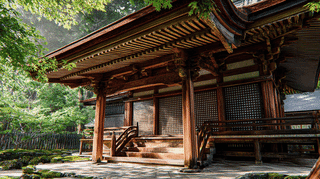
The Kojoin Guest Hall is a single-story structure with a graceful hip-and-gable (irimoya-zukuri) roof covered in thin wooden shingles (kokera-buki). Measuring seven bays in length and six bays in depth, the building presents an understated elegance. The eastern entrance portico (kuruma-yose) features an undulating Chinese-style gable (kara-hafu), while the southern face opens onto a dramatic open veranda (hiro-en) that stretches the full width of the building — a design that deliberately minimizes support pillars to create an unobstructed sense of openness.

The Interior Rooms

The interior is organized in two rows running north to south. The southern row contains the principal reception spaces: an eighteen-mat upper chamber (kamiza-no-ma), an eighteen-mat secondary chamber (tsugi-no-ma), and a six-mat entryway room. The northern row houses smaller service rooms of six, eight, twelve, and four mats. The upper chamber features the full complement of shoin-zukuri decorative elements — a formal alcove (oshi-ita), staggered display shelves (chigai-dana), an ornamental doorway (chodai-gamae), and the distinctive projecting study alcove (tsuke-shoin). The building's asymmetric design reflects a sophisticated understanding of how guests would move through and experience the space.

Kano School Screen Paintings

The sliding screen paintings (fusuma-e) within the guest hall are designated as Important Cultural Properties. The upper chamber features gold-ground paintings of pine trees and waterfalls attributed to Kano Sanraku, a leading painter of the late Momoyama period who was originally from Omi Province and served the Toyotomi family. The adjacent secondary chamber displays colorful depictions of flowers and birds through the four seasons on unprimed paper. Together, these 25 screen paintings represent some of the finest examples of Momoyama-period decorative art, combining power and elegance in the distinctive Kano school manner.

The Garden

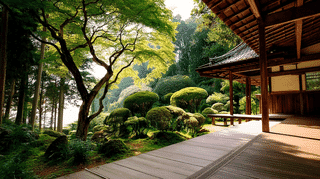
South of the guest hall lies a pond-viewing garden (chisen kansho-shiki teien) dating from the late Muromachi period, designated as both a National Scenic Site and Historic Site. The garden is designed so that the pond's edge extends directly beneath the building's veranda, creating an intimate connection between architecture and landscape reminiscent of "pond-above" architecture. Within the pond, a stone bridge spans a turtle-shaped island, while a dry waterfall arrangement of standing stones graces the hillside. The effect is one of seamless continuity — as though the painted landscapes on the interior screens flow outward into the living garden beyond.

Visiting the Kojoin Guest Hall

The Kojoin Guest Hall is not open for general public viewing but can be experienced through a special guided visit by prior reservation. Applications must be submitted at least one week in advance, and a minimum group size of three or four persons is required. On the day of the visit, a monk or temple staff member provides a personal guided tour of the building and garden. The special admission fee is 1,000 yen per person, with the regular temple entrance fee (600 yen for adults) charged separately.

Reservations can be made through the Miidera Temple website or by contacting the temple directly. When planning your visit, note that certain dates may be unavailable due to religious ceremonies. The guided tour typically takes about 30 to 45 minutes and offers a level of intimacy with the architecture that few cultural experiences in Japan can match.

Miidera Temple: A World of Cultural Treasures

A visit to the Kojoin Guest Hall naturally becomes part of a broader exploration of Miidera Temple, one of Japan's most historically significant Buddhist complexes. Founded in the 7th century and serving as the head temple of the Tendai Jimon sect, Miidera boasts over 100 National Treasures and Important Cultural Properties. Highlights include the National Treasure Kondo (Golden Hall), rebuilt in 1599 with patronage from Toyotomi Hideyoshi's wife Kodaiin; the famous "Evening Bell of Miidera" (Mii no Bansho), one of the Eight Views of Omi; and the Kangakuin Guest Hall, another National Treasure shoin-zukuri building erected in 1600. The temple is also renowned for its more than 1,000 cherry trees in spring and spectacular autumn foliage.

Surrounding Attractions

The area around Miidera offers several compelling destinations that combine well with a temple visit:

  • Lake Biwa Canal (Biwako Sosui): Just north of Keihan Miidera Station, this historic waterway completed in 1890 connects Lake Biwa to Kyoto. During spring, cherry blossoms line its banks, and seasonal sightseeing boat cruises run between Otsu and Kyoto's Keage district, passing through atmospheric tunnels carved through the mountains.
  • Omi Jingu Shrine: Located a short distance north, this shrine dedicated to Emperor Tenji is famous as the setting for competitive karuta (Japanese card game) tournaments. Its tranquil forested grounds offer a peaceful retreat.
  • Lake Biwa Shoreline: The temple sits close to the southern tip of Japan's largest lake. A walk to the lakeshore reveals magnificent views, especially at sunset. The nearby Biwako Hotel offers dining with lake panoramas.
  • Waqoo Miidera Temple Stay: For a deeper immersion, the temple offers overnight accommodation in a beautifully renovated former monks' quarters, complete with Zen meditation, sutra copying, and other Buddhist experience programs.
📍 Plan Your Visit to Shiga
Find tours, activities & transport passes near Kojoin Guest Hall
[ Hikone Castle & Lake Biwa Cruise Experiences ]

Q&A

QCan I visit the Kojoin Guest Hall without a reservation?
ANo. The Kojoin Guest Hall is not open for general public viewing. You must make a reservation at least one week in advance, and the minimum group size is three to four people. Reservations can be made through the Miidera Temple website or by contacting the temple office directly.
QIs English guidance available during the special tour?
AThe guided tour is typically conducted in Japanese by a temple monk or staff member. English-language guidance is not guaranteed, so it is recommended to bring an interpreter or prepare by reading about the building in advance. Some basic English information is available on the temple's website.
QWhat is the best season to visit?
AEvery season offers its own charm. Spring (late March to mid-April) brings over 1,000 cherry trees into bloom across the Miidera grounds. Autumn (mid-November to early December) features brilliant foliage. Summer allows you to appreciate the cool green garden, while winter offers quiet solitude with fewer visitors.
QHow do I get to Miidera Temple from Kyoto?
AFrom Kyoto, take the Kyoto Municipal Subway Tozai Line to Biwako-Hamaotsu Station, then transfer to the Keihan Ishiyama-Sakamoto Line and ride one stop to Miidera Station. The temple gate is about a 7-minute walk from the station. The entire journey takes approximately 30 to 40 minutes.
QIs photography allowed inside the Kojoin Guest Hall?
APhotography policies may vary and are determined by the temple on the day of the visit. Please ask your guide upon arrival. In general, interior photography of National Treasure buildings in Japan is often restricted to protect the delicate screen paintings and cultural artifacts.

Basic Information

Official Name Kojoin Kyakuden (光浄院客殿)
Designation National Treasure (Architecture)
Year Built 1601 (Keicho 6)
Architectural Style Shoin-zukuri (書院造)
Builder Yamaoka Doami Kagetomo (山岡道阿弥景友)
Structure Single-story, hip-and-gable roof (irimoya-zukuri), kokera-buki shingle roofing
Dimensions 7 bays × 6 bays (approximately 15m × 12m)
Location 246 Onjoji-cho, Otsu, Shiga 520-0036, Japan
Owner Onjoji (Miidera Temple)
Temple Hours 9:00–16:30 (last entry 16:00), open year-round
Temple Entrance Fee Adults 600 yen / Jr. & Sr. High 300 yen / Elementary 200 yen
Special Admission (Kojoin) 1,000 yen per person (reservation required, minimum 3–4 people, at least 1 week in advance)
Access 7-minute walk from Keihan Miidera Station; 12-minute walk from Keihan Otsu-shiyakusho-mae Station
Contact TEL: 077-522-2238 / Email: info@shiga-miidera.or.jp
Official Website https://miidera1200.jp/

References

Kojoin Guest Hall | Miidera Temple (Official)
https://miidera1200.jp/kojo-in/
Kojoin Reception Hall | Miidera Temple Cultural Property Museum
https://miidera-museum.jp/en/cultural-property/contents/20/
Kojoin Reception Hall Screen Paintings | Miidera Temple Cultural Property Museum
https://miidera-museum.jp/en/cultural-property/contents/22/
光浄院客殿 — 文化遺産データベース (Cultural Heritage Online)
https://bunka.nii.ac.jp/db/heritages/detail/146531
園城寺 — Wikipedia
https://ja.wikipedia.org/wiki/%E5%9C%92%E5%9F%8E%E5%AF%BA
Shoin-zukuri — Wikipedia
https://en.wikipedia.org/wiki/Shoin-zukuri
Miidera Temple Visitor Information (Official)
https://miidera1200.jp/information
National Treasure Special Admission | Miidera Temple
http://www.shiga-miidera.or.jp/taiken/tokubetsuhaikan/index.html

Last verified: 2026.03.13