One Building, National Treasure since 1953
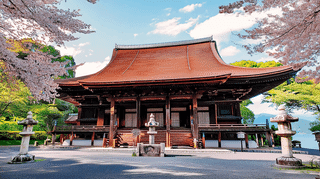
Silla Zenshindo Hall of Onjoji Temple (園城寺新羅善神堂, Onjoji Shinra Zenshindo) is an early Muromachi structure at Onjoji-cho, Otsu City, Shiga Prefecture, made an Important Cultural Property on 27 March 1901 and designated a National Treasure on 31 March 1953. The quantity is one building, the designation number 00110, and the owner the temple.
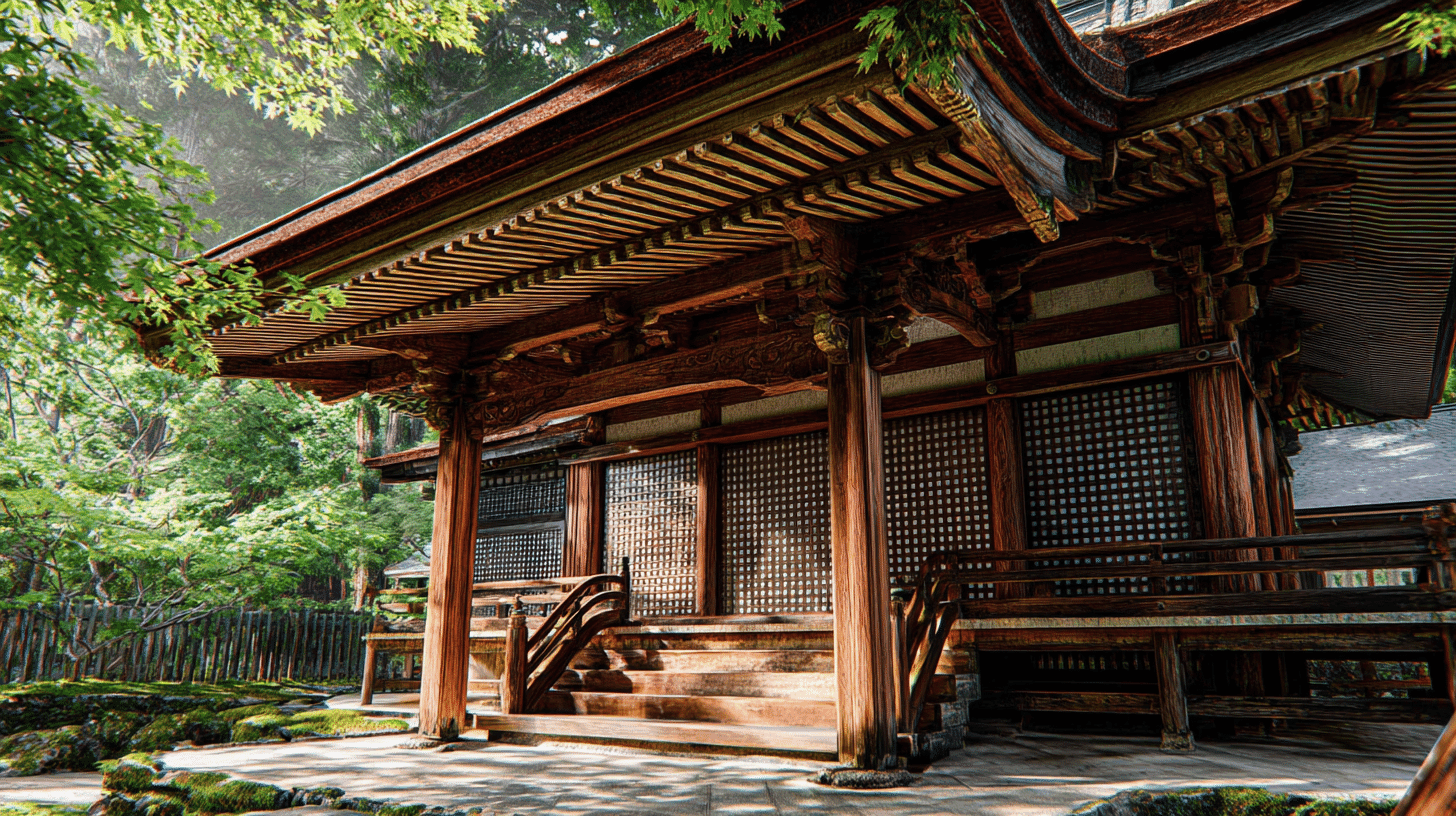
The date is given as the third year of Jowa, 1347. The hall is three bays by three bays, single-storeyed, in the flowing-roof style, with a one-bay porch and a roof of cypress bark.
The listing of 27 March 1901 is the earliest met here. The temple's golden hall follows five years later, on 14 April 1906.
A Temple Building Classed as a Shrine
The category field repays attention.
This building is classed as pre-modern, shrine. The temple's golden hall is classed as pre-modern, temple.
Both belong to the same temple and have the same owner. Yet one is filed under shrines and the other under temples.
The name ends in the word for a hall, which belongs to Buddhist building. The category says shrine.
The temple's own record explains it as one of the shrines that guard the temple, and the central building of its northern precinct: a shrine to the deity who protects the place.
At Aoi Aso Shrine a National Treasure and a registered tangible cultural property stood in one precinct, and at Kankiin three categories did. Those were differences of listing. Here the classification itself splits between temple and shrine.
A National Treasure Inside a National Treasure
Another National Treasure is housed in this building.
The temple records that a plain wood shrine cabinet stands on the altar within, holding a seated image of the Silla deity, itself a National Treasure, connected with the temple's founder.
The building is a National Treasure and so is the image inside it. Two designations nested one within the other.
With the Thirty-Cho Booklet, the contents and the box that held them were each a National Treasure. With the Fumi no Nemaro material, box and jars sat within one lot.
Here two properties of different kinds overlap: a work of fine art inside a National Treasure structure.
The cabinet is described as plain wood, left unlacquered.
Two Empty Commentary Fields in Succession
The commentary field in the national database is empty.
The golden hall, covered immediately before, had an empty commentary field as well. Two buildings of the same temple carry no commentary.
The fields for founding and history and for ridge tablets and ink inscriptions are empty too, exactly as with the golden hall.
The structural field is nonetheless full: bay counts, roof style, porch and roofing material are all recorded, and the date is given by era name and by year alike.
For structures, the character of a building can be read from its structure and date even without a commentary. Set beside the golden hall, this one shares the three-by-three plan but differs in roof, hip-and-gable there against the flowing style here.
Visiting
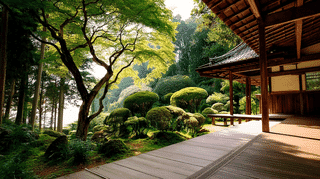
The building stands at Onjoji-cho, Otsu City, Shiga Prefecture, owned by the temple. It stands in the precinct and its exterior can be seen on a visit.
The temple records that the present building was raised again in 1347 by Ashikaga Takauji. The year in the date field is the year of that rebuilding.
It adds that the flowing beauty of the cypress-bark roof makes the building a well-known example of the flowing-roof style.
The same precinct holds Important Cultural Properties: a well house of 1600 and a sutra repository of the middle Muromachi period. Both were listed on 14 April 1906 and are classed as pre-modern, temple.
Access to the interior follows the temple's own arrangements. Check before travelling.
Q&A
- When was the building designated?
- It became an Important Cultural Property on 27 March 1901 and a National Treasure on 31 March 1953. The 1901 listing is the earliest met here, five years before that of the temple's golden hall.
- Why is it classed as a shrine?
- Because it is a shrine that guards the temple. The temple describes it as one of its guardian shrines and the central building of its northern precinct. The owner is the temple, but the category field reads shrine while the golden hall reads temple.
- What is inside?
- The temple records a plain wood shrine cabinet on the altar within, holding a seated image of the Silla deity that is itself a National Treasure. A National Treasure image stands inside a National Treasure building.
- Is there a commentary?
- No. The commentary field in the national database is empty, as is the field for founding and history. The temple's golden hall is the same, so two buildings in succession carry no commentary.
- When was it built?
- The date field gives the third year of Jowa, 1347. The temple records that the present building was raised again in that year by Ashikaga Takauji, so the date is one of rebuilding.
Basic Information
| Name | Silla Zenshindo Hall of Onjoji Temple (園城寺新羅善神堂, Onjoji Shinra Zenshindo) |
|---|---|
| Location | Onjoji-cho, Otsu City, Shiga Prefecture |
| Designation | National Treasure (structure); the category field reads pre-modern, shrine, while the temple's golden hall reads temple. Designation no. 00110 |
| Year Designated | 1901 (27 March), Important Cultural Property; 1953 (31 March), National Treasure |
| Quantity | 1 building |
| Dimensions | 3 bays by 3 bays, single-storeyed, flowing-roof style, 1-bay porch, roofed in cypress bark. The date is Jowa 3, or 1347, and the period the early Muromachi. The fields for commentary and for founding and history are both empty |
| Owner | Onjoji |
| Public Access | Standing in the precinct; the exterior can be seen on a visit, while the interior follows the temple's own arrangements |
References
- Agency for Cultural Affairs, National Cultural Properties Database: the Shinra Zenshindo
- https://kunishitei.bunka.go.jp/heritage/detail/102/1330
- Agency for Cultural Affairs, National Cultural Properties Database: Onjoji golden hall
- https://kunishitei.bunka.go.jp/heritage/detail/102/1333
- Miidera cultural heritage museum: the Shinra Zenshindo
- https://miidera-museum.jp/cultural-property/contents/19/
- Miidera official site
- https://www.shiga-miidera.or.jp/
Last verified: 2026.09.05