
Edo
Shizuoka · 江戸Browse Shizuoka’s cultural heritage from the Edo period (1603 – 1868). Filter by type and keyword, with concise stories, maps, and travel tips.
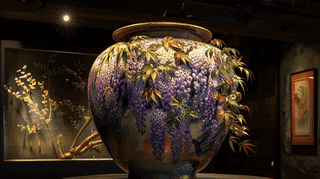
An Edo-period tea jar in Shizuoka Prefecture, its milky glaze painted over with wisteria in five separate colours, with silver and gold set among these.

Built in 1628 as the main gate of Hodai-in, a Tokugawa mortuary temple in Sunpu, this vermilion gate moved to Oshokyoin in 1918 and is now under restoration.
Kakegawa Castle Goten, rebuilt from 1855 to 1861, is one of just four daimyo palaces left on castle grounds in Japan, with halls, quarters and offices nearly intact.
Discover the magnificent Important Cultural Properties of Kunozan Toshogu Shrine in Shizuoka — from the ornate Romon Gate and Karamon Gate to Ieyasu's sacred mausoleum tower, showcasing early Edo-period architectural brilliance.
Rebuilt in bare zelkova after the 1854 Tokai earthquake and carved by the Izu Ozawa school, the linked halls of Mishima Taisha are an Important Cultural Property.
Yusanji's gate was raised in 1659 at Kakegawa Castle and moved here in 1873. Listed as castle architecture, it is the only castle gate of its era left in Shizuoka.
Rinzai-ji's main hall in Shizuoka, a Zen abbot's hall 22.7 meters wide, became an Important Cultural Property in 1983 and once taught the young Tokugawa Ieyasu.
A national historic site in Shimada, Shizuoka, marking where Edo-period travelers crossed the bridgeless Ōi River carried by porters. Toll office and lodges survive.
Discover Taishoen, a rare Edo-period botanical garden in Numazu, Shizuoka. This National Registered Monument was praised by Siebold and visited by shoguns, feudal lords, and imperial family members for over 400 years.
Discover the Kaise Family Residence in Nishiura Kōchi, Numazu — a late Edo-period farmhouse that is the city's oldest surviving home, registered as a National Tangible Cultural Property in 2023, where the Tennō Festival's kagura still echoes in its formal rooms.
The Mishima Koyomishi no Yakata in Mishima, Shizuoka is a museum housed in the former residence of the Kawai family, who produced the Mishima Calendar—Japan's oldest printed kana-script calendar—for fifty generations. The building, a National Registered Tangible Cultural Property reconstructed from a checkpoint station after the 1854 Ansei Earthquake, features exhibits of woodblock plates and calendar artifacts, plus a free hands-on printing experience.
Korin's Red and White Plum Blossoms, a National Treasure at MOA Museum of Art in Atami, sets red and white plums on gold leaf around a blackened silver stream.