
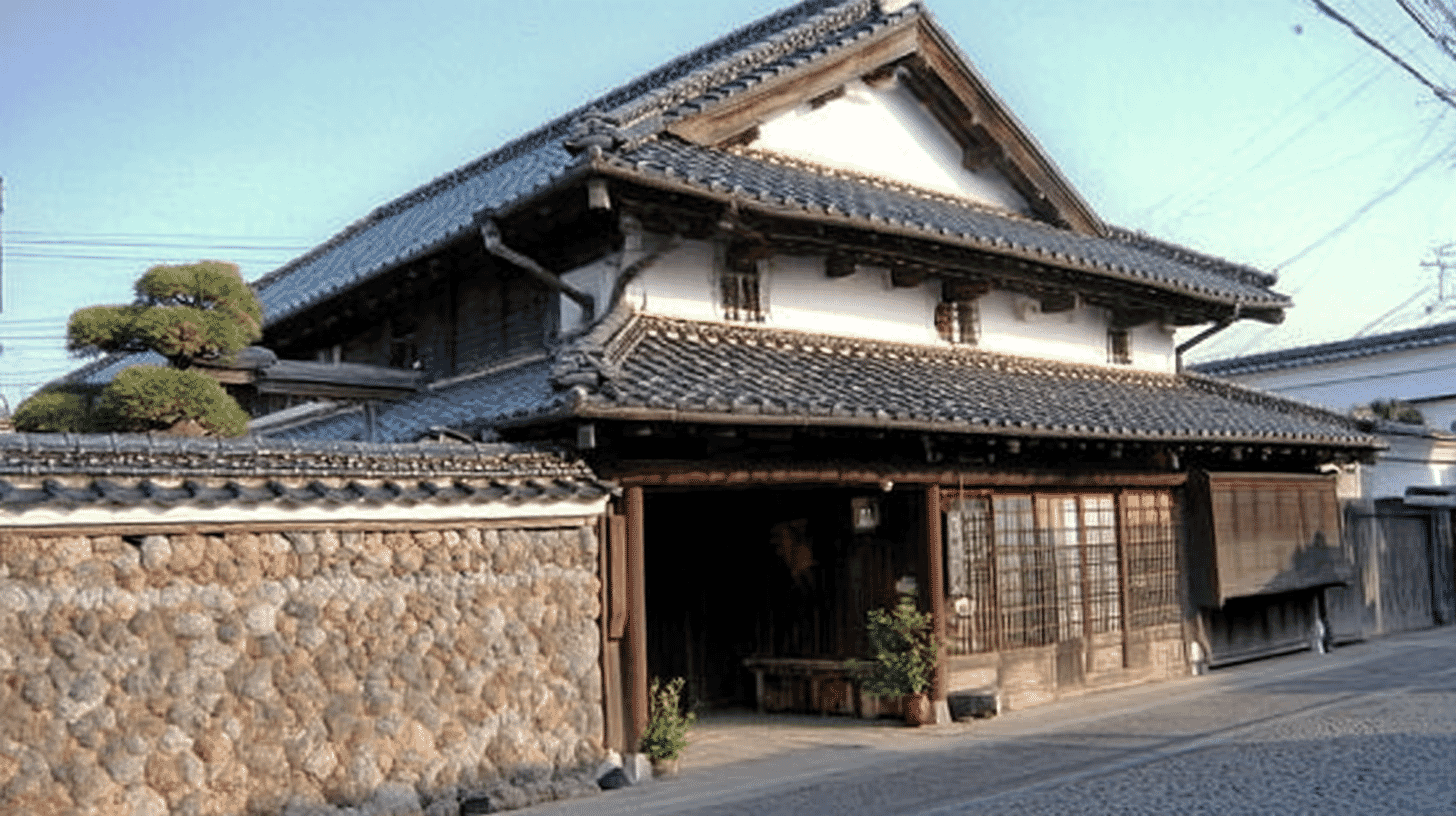
Yuden Miso Higashigura: Discovering Meiji-Era Craftsmanship in Tochigi's Historic Warehouse District
Tucked away in the historic Kaemon-cho district of Tochigi City, the Yuden Miso Higashigura (East Storehouse) stands as a remarkable testament to Japan's Meiji-era architectural heritage. This two-story earthen storehouse, registered as a national tangible cultural property, offers visitors a rare glimpse into the commercial prosperity and masterful craftsmanship that defined this region over a century ago.
A Legacy Born from Oil and Transformed by Miso
The story of Yuden Miso begins in 1781, during the Tenmei era of the Edo period, when the establishment first opened as an oil shop. The second-generation owner recognized the potential of miso production, and by the late Edo period, the business had pivoted to become a renowned miso manufacturer. Today, after more than 240 years of continuous operation, Yuden Miso remains a living piece of Japanese culinary and architectural history.
The Higashigura, or East Storehouse, was constructed during the Meiji period (1868-1911) as part of the expanded facilities needed to support the thriving miso business. What makes this particular storehouse extraordinary is its construction by Mitomi Seibei, a celebrated master craftsman renowned throughout the region for his exceptional dozo (earthen storehouse) construction techniques.
Why Higashigura Earned Cultural Property Status
The Yuden Miso Higashigura received its designation as a Registered Tangible Cultural Property on February 17, 2004. This recognition honors several distinctive architectural features that set it apart from other historic structures in the region.
The storehouse is a two-story dozo construction with a gable roof covered in traditional san-gawara tiles, encompassing a building area of 33 square meters. It sits on an east-west axis to the west of the bunko-gura (document storehouse), with a lean-to structure extending along the southern face and a two-ken (approximately 3.6 meters) wide annex on the northern side.
Perhaps most remarkable is the northern wall of the annex, constructed from local tuff stone (gyokaigan), which seamlessly connects with the outer perimeter wall to the east. This creates a distinctive and characteristic estate appearance that defines the northern boundary of the property—a sophisticated design element that speaks to the wealth and aesthetic sensibilities of the merchant families who built these structures.
Architectural Highlights Worth Discovering
The Higashigura is just one of five buildings on the Yuden Miso property that have been designated as registered tangible cultural properties. Together, they form an exceptional ensemble of Meiji-era commercial architecture. The main shop and residence faces the old Nikko Reiheishi Kaido road, featuring the distinctive design of traditional merchant houses with a tiled gable roof, extended eaves, and a combination of lattice windows and sliding doors that balance privacy with commercial openness.
Visitors can appreciate the three-story bunko-gura (document storehouse), also built by master craftsman Mitomi Seibei in 1885, which features meticulous stone foundations and fire-resistant doors that demonstrate the extraordinary craftsmanship of the era. The detached residence (hanare), originally constructed as a retirement home for the third-generation owner Denbei, showcases refined tatami rooms with both tatami and wooden floors in its 10-mat main chamber.
A Living Cultural Heritage: Taste the Tradition
Unlike many cultural properties that exist only as museum pieces, Yuden Miso Higashigura remains part of an active, thriving business. The adjacent tea house, "Dengaku Abuden," invites visitors to step inside a Meiji-era atmosphere and savor traditional miso dengaku—skewered tofu, taro, and konjac grilled and glazed with the shop's signature miso.
The miso itself continues to be crafted using traditional methods, naturally fermented in wooden barrels dating back to the Meiji era. This additive-free approach produces a depth of flavor that has earned loyal customers for generations. Four varieties of miso are available for purchase, each offering distinct characteristics suited to different culinary applications.
In 2023, Yuden Miso embarked on an ambitious new venture: craft beer production. The "Yuden Bakushu" brewery, housed in a renovated section of the historic miso factory, produces several varieties including "Kura no Machi Lager" and "Kaemon Ale." In a creative nod to their heritage, a small amount of miso is incorporated into the brewing process, adding subtle complexity to the beers.
Kaemon-cho: Japan's First Important Preservation District in Tochigi Prefecture
The Yuden Miso property sits within Kaemon-cho, a district that earned designation as Tochigi Prefecture's first Important Preservation District for Groups of Traditional Buildings in 2012. The area takes its name from Okada Kaemon, who developed this land during the Tensho period (1573-1592).
Walking through Kaemon-cho along the old Nikko Reiheishi Kaido road—the historic route used by imperial envoys traveling from Kyoto to Nikko Toshogu Shrine—visitors encounter an extraordinary concentration of historic buildings spanning from the late Edo period through the early Showa era. The district preserves not only individual buildings but the authentic streetscape of a prosperous post-town, with its gentle curves following the natural terrain and the verdant spaces of former samurai residences providing breathing room amid the merchant houses.
Exploring the "Little Edo" of Northern Kanto
Tochigi City earned its nickname "Little Edo" through its prosperity as a river port along the Uzuma River, which connected the region to Edo (modern Tokyo) via boat transport. The warehouse district that grew around this commerce has been lovingly preserved, with approximately 400 historic warehouses scattered throughout the city center.
Near Yuden Miso, visitors can enjoy a cruise along the Uzuma River aboard traditional boats, with boatmen sharing local history and folk songs. The Yokoyama Folk Museum, housed in a former hemp merchant's residence, offers insights into the wealthy merchant culture of the Meiji period. The Tochigi Dashi Kaikan showcases the elaborate festival floats that parade through the streets during the biennial Tochigi Autumn Festival.
Planning Your Visit
The best times to visit Yuden Miso are during spring and autumn, when the weather is pleasant for strolling through the historic streets. Spring brings the spectacular "Uzuma no Koinobori" festival (March-May), when over 1,100 carp streamers flutter above the Uzuma River. The Tochigi Autumn Festival, held in odd-numbered years, transforms the streets into a celebration of traditional craftsmanship and community spirit.
The dengaku restaurant operates from 11:00 to 15:30 on weekdays and 11:00 to 16:30 on weekends and holidays, with miso and craft beer sales beginning at 10:00. Last orders are accepted 30 minutes before closing. The establishment can accommodate group reservations of up to 30 guests, making it suitable for tour groups interested in experiencing authentic Japanese culinary heritage.
- 📍 Plan Your Visit to Tochigi
- Find tours, activities & transport passes near Yuden Miso Togura
- [ Nikko Toshogu Shrine & Kegon Falls Day Trip ]
Q&A
- Can I see inside the Higashigura storehouse?
- The Higashigura and other historic storehouses are not open for interior viewing, as they remain in use for the miso business. However, visitors can admire the impressive exteriors from the courtyard and enjoy the atmosphere of the property while dining at the Dengaku Abuden restaurant, which occupies a renovated section of the historic buildings.
- Is English support available?
- While staff may have limited English proficiency, the menu features pictures, and the dining experience is straightforward. The miso products and craft beers have clear packaging. For detailed information about the cultural property designation, English resources are available through local tourism offices.
- What dishes should I try?
- The signature dish is the "Dengaku Moriawase" (assorted dengaku set), featuring tofu, taro, and konjac, each prepared with different varieties of the house miso. The "Denbei Mochi" rice cakes are also highly recommended. Pair your meal with a cup of traditional amazake (sweet rice drink) or one of the craft beers for a complete experience.
- How do I get to Yuden Miso from Tokyo?
- Take the Tobu Nikko Line from Asakusa Station to Shin-Tochigi Station (approximately 70 minutes by express). From Shin-Tochigi Station, it's about a 10-minute walk (800 meters). Alternatively, take JR to Tochigi Station and use the circular bus, alighting at the "Abuden-mae" stop.
- Is there parking available?
- Yes, free parking is available on the north side of the shop. For larger groups or during busy periods, additional free public parking can be found at designated tourist parking areas in the Kura no Machi district.
Basic Information
| Property Name | Yuden Miso Higashigura (油伝味噌東蔵) |
|---|---|
| Cultural Property Designation | Registered Tangible Cultural Property (Building) |
| Registration Date | February 17, 2004 |
| Construction Period | Meiji Era (1868-1911) |
| Structure | Two-story dozo (earthen storehouse), tiled roof, 33㎡ |
| Address | 5-26 Kaemon-cho, Tochigi City, Tochigi Prefecture 328-0072 |
| Business Founded | 1781 (Tenmei Era) |
| Restaurant Hours | Weekdays: 11:00-15:30 / Weekends & Holidays: 11:00-16:30 (Sales from 10:00) |
| Access | 10-minute walk from Tobu Shin-Tochigi Station; Circular bus from JR Tochigi Station to "Abuden-mae" stop; 8 minutes by car from Tochigi IC |
| Parking | Available (north side of shop) |
References
- 油伝味噌東蔵 - 文化遺産オンライン
- https://bunka.nii.ac.jp/heritages/detail/180006
- 油伝味噌 – 栃木市観光協会
- https://www.tochigi-kankou.or.jp/spot/abudenmiso
- 栃木市嘉右衛門町伝統的建造物群保存地区 - 栃木市ホームページ
- https://www.city.tochigi.lg.jp/soshiki/5/1568.html
- 油伝味噌文庫蔵 - 文化遺産オンライン
- https://bunka.nii.ac.jp/heritages/detail/150395
- 油伝味噌店舗兼主屋 - 文化遺産オンライン
- https://bunka.nii.ac.jp/heritages/detail/144441
- 油伝味噌 - 栃木市観光資源データベース「蔵ナビ!」
- https://www.tochigi-city-kura-navi.jp/spot/page.php?id=4
- 嘉右衛門町 (栃木市) - Wikipedia
- https://ja.wikipedia.org/wiki/嘉右衛門町_(栃木市)
- 油伝麦酒 - ベリーグッドローカルとちぎ
- https://verygoodlocal-tochigi.jp/wpdir/craftbeer/abuden_beer/
Last verified: 2026.01.14