THE COVE at Gamagori Classic Hotel: A 1916 Sukiya-Style Cultural Treasure Overlooking Mikawa Bay

Discover THE COVE, a registered Tangible Cultural Property from 1916 at Gamagori Classic Hotel. This exquisite sukiya-style annex offers breathtaking Mikawa Bay views, traditional Japanese architecture, and a unique glimpse into Japan's literary heritage near Nagoya, Aichi Prefecture.

THE COVE at Gamagori Classic Hotel: A Journey Through Time in Taisho-Era Architecture

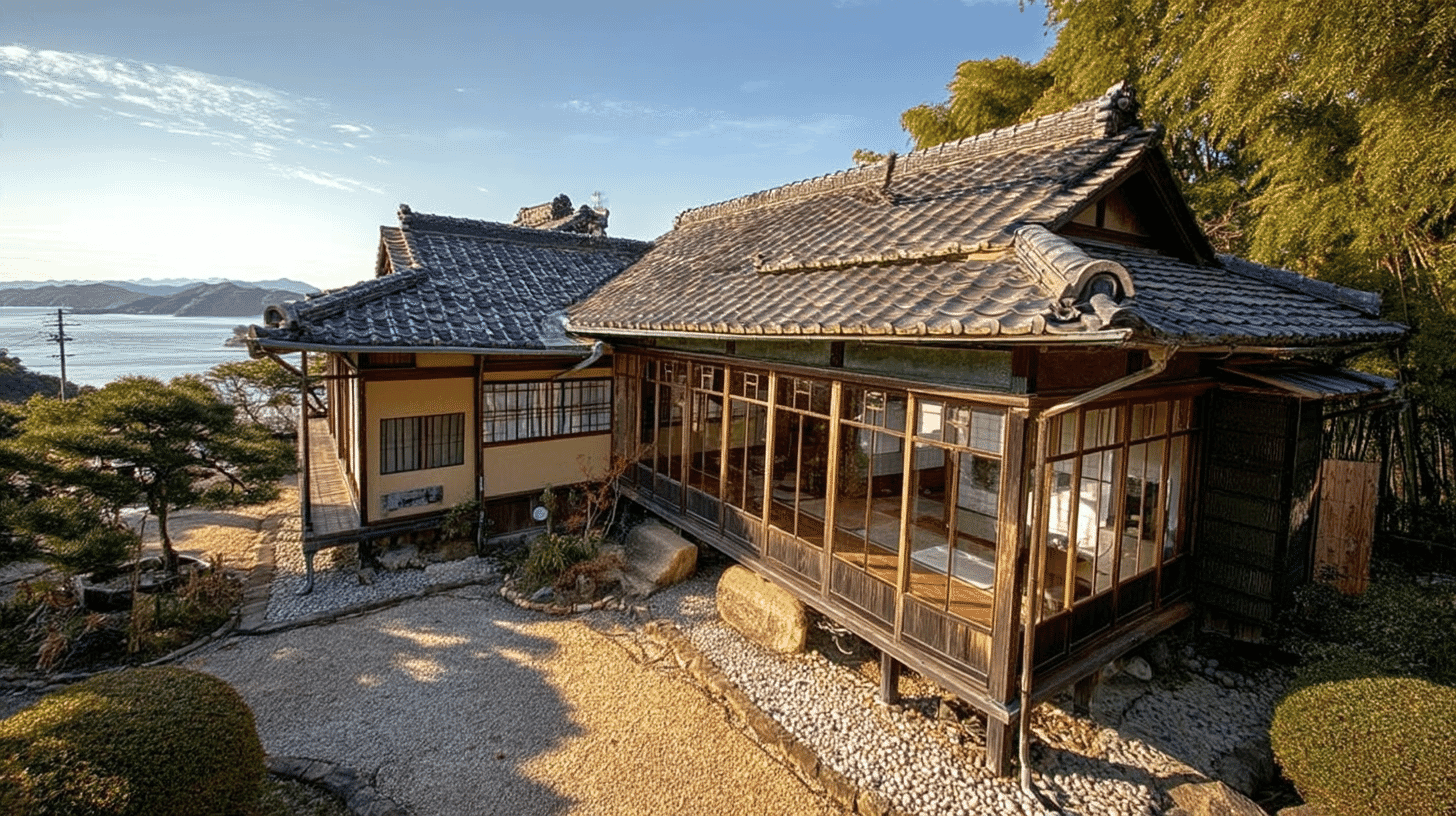
Nestled on a gentle hillside overlooking the serene waters of Mikawa Bay, THE COVE (formerly Ryotei Takeshima, originally Tokiwakan Ume Annex) represents one of Japan's most enchanting registered Tangible Cultural Properties. Built in 1916 during the Taisho period, this single-story wooden structure embodies the refined aesthetics of sukiya-style architecture while offering visitors an intimate connection to Japan's literary heritage and natural beauty.

As part of the prestigious Gamagori Classic Hotel—one of Japan's nine distinguished Classic Hotels—THE COVE has been lovingly preserved and transformed from a traditional ryotei restaurant into an exclusive accommodation facility in 2025. This transformation allows international visitors to experience firsthand the architectural elegance that once hosted Japan's most celebrated writers and cultural luminaries.

A Masterpiece of Sukiya Architecture: What Makes This Building Special

The architectural significance of THE COVE lies in its masterful execution of sukiya-style design—a Japanese aesthetic that emphasizes natural materials, understated elegance, and harmonious integration with the surrounding landscape. The building's distinctive features showcase the craftsmanship of the Taisho era while serving as a testament to Japan's architectural heritage.

The structure is characterized by its irimoya-style tiled roof with complex roof configurations that create a dynamic silhouette against the sky. The single-story layout features true wall construction (shinkabekukuri) with extensive use of bamboo and other natural materials, creating an atmosphere of refined simplicity. The northern entrance projects slightly from the main structure, leading to a welcoming genkan area that flows naturally into two guest rooms arranged to the east.

Perhaps the most celebrated feature of THE COVE is its southeastern guest room, which protrudes gracefully toward Mikawa Bay and features yukimi shoji—specially designed sliding screens that frame panoramic ocean views. These windows were specifically positioned to capture the ever-changing beauty of the bay, from morning mists to golden sunsets, allowing guests to feel intimately connected with nature while enjoying the comfort of traditional Japanese interior space.

Why THE COVE Earned Its Cultural Property Designation

THE COVE's registration as a Tangible Cultural Property recognizes several crucial aspects of its historical and architectural value. First, the building represents an exceptional example of early 20th-century sukiya-style residential architecture in the coastal Aichi region. Its preservation offers valuable insights into the architectural practices and aesthetic sensibilities of the Taisho period.

Second, the structure's connection to the broader history of the Tokiwakan inn and the development of Gamagori as a tourist destination holds significant cultural importance. The Tokiwakan was established in 1912 by Taki Nobushiro, a visionary textile merchant who pioneered what we might today call "cultural tourism marketing." He invited prominent literary figures including Nobel laureate Kawabata Yasunari, Tanizaki Junichiro, and Shiga Naoya to stay at the inn, and their written works featuring Gamagori helped establish the area's reputation as a refined cultural destination.

Third, the building's continuous use and careful preservation through multiple transformations—from inn annex to ryotei restaurant to luxury accommodation—demonstrates the Japanese principle of adaptive reuse while maintaining cultural integrity. This evolution ensures that the structure remains relevant and accessible to contemporary visitors while honoring its historical significance.

The Gamagori Classic Hotel Legacy: Japan's First International Tourist Hotel

To fully appreciate THE COVE, one must understand its context within the larger Gamagori Classic Hotel complex. The main hotel building was constructed in 1934 as Gamagori Hotel and holds the distinction of being designated as Japan's first international tourist hotel by the Ministry of Railways' International Tourism Bureau. This castle-style structure with its Art Deco interiors represented a bold vision of Japan welcoming the world.

The hotel's 90-year history includes hosting Emperor Showa and Empress Kojun in 1957, providing recreation facilities for American military personnel after World War II, and even welcoming Babe Ruth and the American All-Star baseball team in 1934. Today, as a member of the Japan Classic Hotel Association, the property continues to honor its heritage while providing world-class hospitality.

The hotel complex includes four registered Tangible Cultural Properties: the main hotel building (1934), Rokkakudo (formerly Shumido, 1936), Ryotei Takeshima/THE COVE (1916), and Saryo Oshukutei. This concentration of cultural properties makes Gamagori Classic Hotel a rare destination where visitors can immerse themselves in multiple layers of Japanese architectural and cultural history.

Experiencing THE COVE: A Private Retreat in Historic Elegance

Following its transformation in 2025, THE COVE now operates as an exclusive one-building rental accommodation, offering guests unprecedented privacy and luxury within a cultural property. The facility features private hot spring baths, allowing visitors to soak in Gamagori's renowned thermal waters while gazing out at Mikawa Bay. The addition of a hammam-style bathing facility provides a unique wellness experience that complements the traditional Japanese architectural setting.

The guest rooms maintain their original spatial configuration while incorporating modern comforts discreetly. The main bedroom offers sweeping views of the meticulously maintained Japanese garden, while the secondary bedroom provides direct views of Takeshima Island, a national natural monument just offshore. The interior lighting uses warm tones that enhance the natural wood and bamboo elements, creating an atmosphere conducive to relaxation and reflection.

Guests can choose between in-room dining featuring seasonal Mikawa Bay seafood and local specialties, or dining at the hotel's multiple restaurants, including the Main Dining Room for French cuisine featuring Shotaro Ikenami's famous beef cutlet, Rokkakudo for teppanyaki, and other culinary options that showcase the region's rich food culture.

The Magical Setting: Takeshima Island and Mikawa Bay

THE COVE's location provides front-row seats to one of Japan's most picturesque seascapes. Directly across the water sits Takeshima Island, a 680-meter-circumference natural monument connected to the mainland by a 387-meter bridge. The island hosts Yaotomi Shrine, one of Japan's Seven Benzaiten (goddess of fortune and the arts), making it a significant spiritual destination.

The island's 238 species of temperate flora create a lush green canopy that changes with the seasons, while the surrounding bay waters shift from mirror-calm at dawn to golden at sunset. The tides dramatically alter the coastline, revealing tidal flats famous for shellfish gathering—a traditional activity that draws families during spring.

From THE COVE's yukimi shoji windows, guests can observe the daily rhythms of Mikawa Bay: fishing boats departing at dawn, seabirds diving for fish, visitors crossing to Takeshima, and the play of light on water throughout the day. This connection to nature and the passage of time embodies the Japanese aesthetic principle of aware—a deep appreciation for the transient beauty of the natural world.

Literary Heritage: Walking in the Footsteps of Japan's Greatest Writers

The Tokiwakan's literary legacy adds profound cultural depth to a stay at THE COVE. The inn's founder, Taki Nobushiro, pioneered a brilliant marketing strategy: inviting prominent authors to stay for extended periods free of charge in exchange for featuring Gamagori in their works. This early example of content marketing proved remarkably successful.

Authors who stayed at the Tokiwakan and wrote about Gamagori include Kawabata Yasunari (Nobel Prize in Literature, 1968), whose subtle prose captured the area's quiet beauty; Tanizaki Junichiro, master of aesthetic sensuality; Shiga Naoya; and Kikuchi Kan, among many others. Their works helped establish Gamagori's reputation as a refined retreat from urban life—an image the area maintains today.

The nearby Umibe no Bungaku Kinenkan (Seaside Literature Memorial Museum) recreates rooms where these authors worked and provides free admission to visitors interested in exploring this literary connection. The museum's windows overlook the same views that inspired these masters, offering a tangible link between past and present creative contemplation.

Beyond THE COVE: Exploring the Gamagori Area

THE COVE serves as an ideal base for exploring Gamagori's diverse attractions. The area has developed into one of Chubu region's premier hot spring resorts while maintaining its natural beauty and cultural authenticity.

Just minutes away, Takeshima Aquarium may be small but boasts Japan's largest collection of deep-sea creatures. The aquarium's signature species include giant spider crabs (takaashigani) and other unusual marine life from the depths of Suruga Bay. The hand-written explanations by staff and the entertaining capybara shows have made this modest facility surprisingly popular.

Laguna Ten Bosch, about 10 minutes by car, offers a complete contrast: a modern marine resort complex with theme park, shopping mall, marina, and elaborate light displays. The facility provides family-friendly entertainment while THE COVE offers adult-oriented cultural immersion.

For nature enthusiasts, the Mikage Mountain Skyline (commonly called "Hydrangea Line") presents spectacular views of Mikawa Bay and features 70,000 hydrangeas blooming in June and early July. The Katahara Onsen Hydrangea Village hosts an annual festival during this period with evening illuminations.

Food lovers should not miss "Gamagori Udon," the local specialty featuring asari clams from Mikawa Bay. The city's official "Five Precepts of Gamagori Udon" ensure authentic quality, with each bowl containing at least five Mikawa Bay asari and rich clam-based broth. Multiple restaurants throughout the city offer variations on this signature dish.

Seasonal Charms: When to Visit THE COVE

Each season brings distinct pleasures to THE COVE and the surrounding area. Spring (March-May) features the hotel's famous azalea festival, with thousands of azaleas blooming across the 10,000-tsubo grounds. The season progresses from ume blossoms and kawazu cherry blossoms to somei yoshino cherries and finally azaleas and satsuki, creating continuous floral displays.

Summer (June-August) brings the hydrangea season to Mikage Mountain and offers opportunities for marine activities in Mikawa Bay. The calm, protected waters make this an ideal time for kayaking and other water sports, though visitors should note that this is also the warmest and most humid season.

Autumn (September-November) provides comfortable temperatures and the annual Yaotomi Shrine Grand Festival in mid-October. The maple foliage around the hotel grounds creates spectacular color contrasts with the bay views, and this is considered by many the optimal season for photography.

Winter (December-February) offers the clearest visibility across Mikawa Bay and the most dramatic sunrises. The hotel's hot springs and THE COVE's private baths become especially appealing during the cooler months. This season also means fewer crowds and the opportunity for quiet contemplation of the bay's winter beauty.

📍 Plan Your Visit to Aichi
Find tours, activities & transport passes near Gamagori Classic Hotel Ryotei Takeshima (formerly Tokiwakan
[ Nagoya Castle & Atsuta Shrine History Tours ]

Q&A

QWhat is THE COVE and how does it differ from the main hotel?
ATHE COVE is a registered Tangible Cultural Property built in 1916, originally serving as an annex to the historic Tokiwakan inn. Unlike the main hotel's 27 guest rooms, THE COVE operates as an exclusive one-building rental accommodation, offering complete privacy with private hot spring baths, hammam facility, and two bedrooms. It was transformed from Ryotei Takeshima restaurant to luxury accommodation in 2025, allowing guests to experience staying in an authentic Taisho-period sukiya-style structure.
QHow do I access Gamagori Classic Hotel from Tokyo or major airports?
AFrom Tokyo, take the Tokaido Shinkansen to Toyohashi Station (approximately 90 minutes), then transfer to the JR Tokaido Line for a 10-minute local train ride to Gamagori Station. From the station, the hotel is a 5-minute taxi ride or 15-minute walk. From Chubu Centrair International Airport, take the Meitetsu Limited Express to Kanayama Station, transfer to the JR Tokaido Line toward Toyohashi, and get off at Gamagori Station (total journey approximately 80-90 minutes). From Nagoya, it's a direct 40-minute express train on the JR Tokaido Line.
QIs English support available for international guests?
AYes, as one of Japan's first international tourist hotels and a member of the Japan Classic Hotel Association, Gamagori Classic Hotel provides English-speaking staff at the front desk and English menu options at restaurants. The hotel's website offers English information, and reservation systems accommodate international guests. However, as with many traditional Japanese cultural properties, some experiences may benefit from basic Japanese phrases or a translation app for deeper engagement with local culture.
QCan I visit Takeshima Island easily from the hotel?
AAbsolutely! Takeshima Island is literally steps away from the hotel grounds. The 387-meter pedestrian bridge to the island takes about 5 minutes to cross, and walking the entire island perimeter requires approximately 30 minutes. The island is open year-round and features Yaotomi Shrine, natural trails, and spectacular bay views. The bridge uniquely passes through a torii gate—the only such bridge in Japan—making the walk itself a memorable experience. Early morning or sunset visits offer the most magical atmosphere.
QWhat makes THE COVE worth the premium price compared to regular hotel rooms?
ATHE COVE offers a truly unique experience: sleeping in an authentic 109-year-old registered Tangible Cultural Property with complete privacy. You get an entire historic building exclusively for your party, including private hot spring baths with bay views, a Turkish-style hammam, two bedrooms with different scenic perspectives, and the ambiance of traditional sukiya architecture with bamboo details and yukimi shoji windows. It's not just accommodation—it's cultural immersion combined with luxury privacy that you cannot experience in the main hotel's standard rooms. For travelers seeking authentic heritage experiences rather than just a place to sleep, THE COVE represents exceptional value.

Basic Information

Official Name Gamagori Classic Hotel Ryotei Takeshima (Former Tokiwakan Ume Annex) / Current: THE COVE
Cultural Designation Registered Tangible Cultural Property (Building)
Construction Year 1916 (Taisho 5)
Architectural Style Single-story wooden structure, irimoya-style tiled roof, sukiya-style modern Japanese design
Location 15-1 Takeshima-cho, Gamagori City, Aichi Prefecture 443-0031
Access 5 minutes by taxi or 15 minutes on foot from JR Gamagori Station; 15 minutes by car from Otowa-Gamagori IC on Tomei Expressway via Mikawa Bay Orange Road
Current Use Exclusive rental accommodation (transformed from restaurant in 2025)
Special Features Private hot spring bath, hammam facility, yukimi shoji with Mikawa Bay views, extensive bamboo interior details
Nearby Attractions Takeshima Island (5-minute walk), Takeshima Aquarium (5-minute walk), Umibe no Bungaku Kinenkan (adjacent), Laguna Ten Bosch (10 minutes by car)
Hotel Main Building Also registered Tangible Cultural Property, built 1934, Art Deco style, member of Japan Classic Hotel Association
Official Website https://gamagoriclassichotel.com/
Telephone +81-533-68-1111

References

蒲郡クラシックホテル料亭竹島(旧常磐館梅別館) - 文化遺産オンライン
https://bunka.nii.ac.jp/heritages/detail/554415
蒲郡クラシックホテル - Wikipedia
https://ja.wikipedia.org/wiki/蒲郡クラシックホテル
Gamagori Classic Hotel Official - Japan Classic Hotel Association
https://jcha.jp/gamagoriclassichotel.php
THE COVE Grand Opening - Gamagori Classic Hotel Press Release
https://prtimes.jp/main/html/rd/p/000000027.000133937.html
多くの謎に包まれた「蒲郡クラシックホテル」90年の歴史に迫る!- メイジノオト
https://www.meijimura.com/meiji-note/post/gamagori-classic-hotel/
Takeshima - Gamagori City Tourism Association
https://www.gamagori.jp/special/takeshima
Mikawawan Quasi-National Park Gamagori/Takeshima Area (English)
https://www.gamagori.jp/english/english-takeshima-area
Gamagori: Nagoya Day-Trip Sightseeing - Centrip JAPAN
https://centrip-japan.com/article/1275.html
Japan's Gamagori Classic Hotel - Travelling Therese
https://travellingtherese.com/2024/01/07/japans-gamagori-classic-hotel-a-spy-and-baseball/
Aichi Now - Takeshima Island Official Tourism Information
https://aichinow.pref.aichi.jp/spots/detail/137/

Last verified: 2025.11.13

Nearby heritages