
Buried in 1103, National Treasure since 1953
Artifacts Excavated from the Hoki Ichinomiya Sutra Mound (伯耆一宮経塚出土品) are the objects recovered from a sutra mound at Miyauchi, Yurihama Town, Tohaku County, Tottori Prefecture, designated a National Treasure in 1953, on 31 March. They had become an Important Cultural Property on 9 June 1951. The quantity is recorded as a single lot, the category archaeological materials, and the designation number 00013. The Agency for Cultural Affairs gives the period as Heian, 1103.
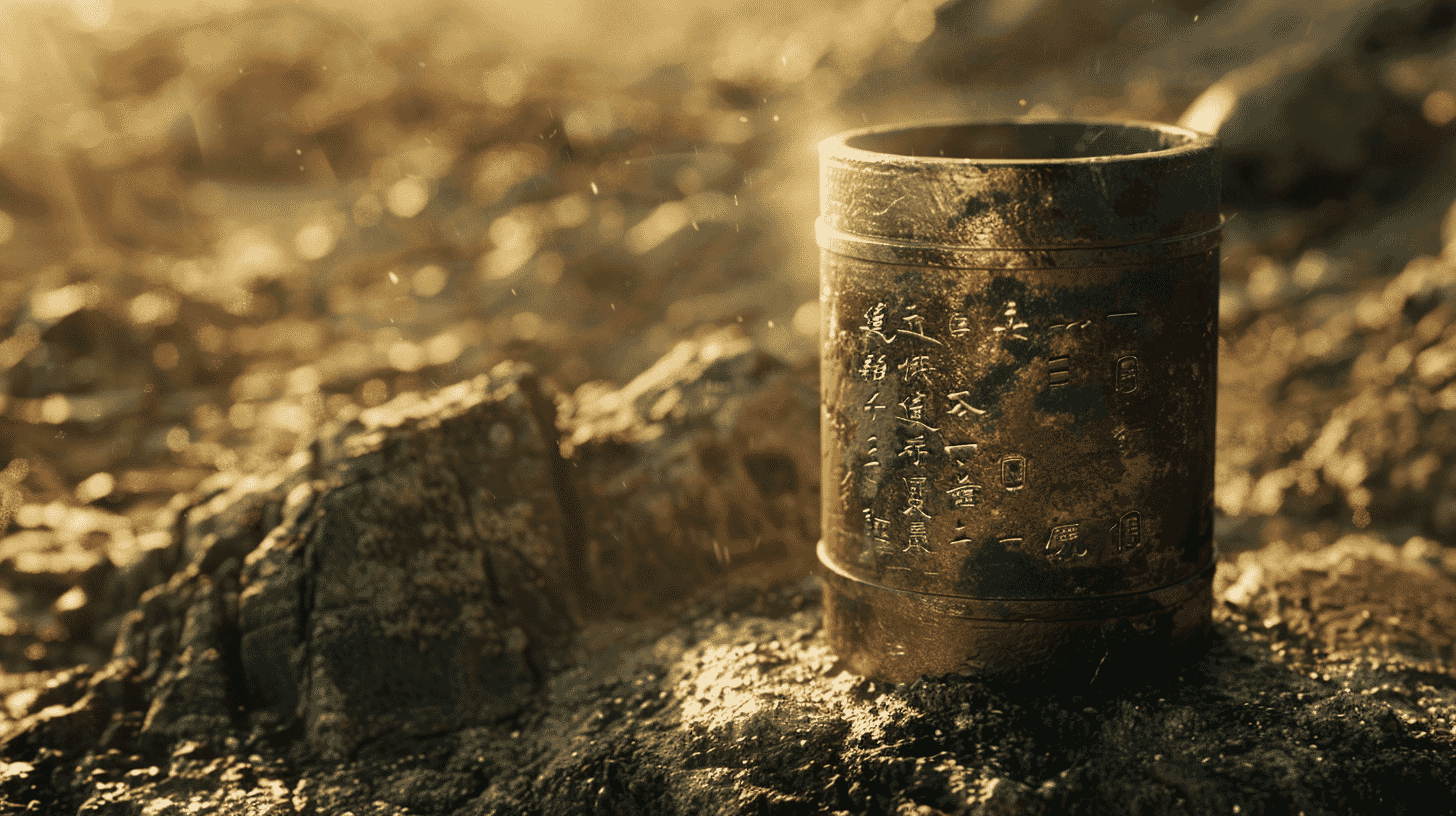
Tottori Prefecture records that the inscription on the sutra container among the finds shows the mound to have been raised in 1103 by the monk Kyoson, in preparation for the appearance of Maitreya and in prayer for the enlightenment of himself and others. Who raised it, why, and in what year are all in the inscription.
A sutra mound is a deposit made in anticipation of a future age, in which scriptures are buried. This one was raised for that purpose.
Sealed in a Stone Chamber
The prefectural record describes the structure in detail.
The mound is 16 metres across and about 1.6 metres high. In 1915 a stone chamber was found at its centre. The chamber was walled with flat slabs of pyroxene andesite and covered with a capstone, measuring 1.2 metres long, 0.9 metres wide and 0.5 metres high, with coarse sand spread over its floor.
Against a mound 16 metres across, the chamber runs 1.2 metres. Most of the mound is fill; the space holding the objects is a small part at its centre.
Walled in stone, capped, and floored with sand: the structure keeps water and soil away from what it holds. The care taken to preserve the deposit sits at the middle of the mound.
The Mound Carries Its Own Designation
Mound and finds are designated separately.
The finds are a National Treasure in the archaeological materials category, designated in 1953. The mound itself is a national Historic Site, designated on 24 December 1935. The site designation came eighteen years earlier.
The mound was opened in 1915, the site designated twenty years after that, and the finds made an Important Cultural Property sixteen years later again. Thirty-eight years passed between the discovery and the National Treasure designation.
The mound stands on the ridge southeast of Shitori Shrine, on the eastern shore of Lake Togo. Shitori Shrine is the first-ranked shrine of Hoki province, and the name Hoki Ichinomiya comes from it.
Designated as a Single Lot
The quantity is recorded as a single lot. Rather than counting individual pieces, the designation covers the finds as a whole.
The finds from Okinoshima are treated the same way. A group of objects from a sutra mound or a ritual site tends to be designated in this form, because their meaning lies in the group.
The one object the prefectural record singles out is the sutra container. Carrying an inscription, it is the piece that conveys the year and the purpose.
The Agency's commentary is a single line, material of the Heian period, with no words of assessment. The low designation number, 00013, marks an early entry among archaeological materials.
Seeing Them
The Agency's database leaves both the location field and the holding institution field blank. The present place of keeping cannot be read from the official record.
The finds are understood to be deposited at the Tokyo National Museum. To see them, check that museum's information for any planned display.
The mound itself stands on the ridge southeast of Shitori Shrine at Miyauchi in Yurihama Town, and Tottori Prefecture records it as open. Objects and mound are in different places.
The mound is about ten minutes by taxi from Matsuzaki Station on the JR Sanin Main Line, then about five minutes on foot.
Q&A
- When were the finds designated?
- They became an Important Cultural Property on 9 June 1951 and a National Treasure in 1953, on 31 March. The quantity is a single lot, the category archaeological materials, under designation number 00013, with the period given as Heian, 1103.
- Who raised the mound, and why?
- Tottori Prefecture records that the inscription on the sutra container shows it was raised in 1103 by the monk Kyoson, in preparation for the appearance of Maitreya and in prayer for the enlightenment of himself and others. Who, why and when are all in the inscription.
- How is the mound built?
- It is 16 metres across and about 1.6 metres high. A stone chamber was found at its centre in 1915, walled with flat slabs of pyroxene andesite and covered with a capstone, 1.2 metres long, 0.9 metres wide and 0.5 metres high, with coarse sand spread over its floor.
- Is the mound itself designated?
- Yes, separately. The mound is a national Historic Site designated on 24 December 1935, while the finds became a National Treasure in 1953, so the site designation came eighteen years earlier. The mound stands on the ridge southeast of Shitori Shrine on the eastern shore of Lake Togo.
- Can the finds and the mound be seen?
- The Agency's database leaves the location and holding institution fields blank, so the present place of keeping cannot be read from the official record. The finds are understood to be deposited at the Tokyo National Museum. The mound at Yurihama Town is recorded by the prefecture as open.
Basic Information
| Name | Artifacts Excavated from the Hoki Ichinomiya Sutra Mound (伯耆一宮経塚出土品) |
|---|---|
| Location | Tottori Prefecture (the Agency's location field is blank); the mound is at Miyauchi, Yurihama Town, Tohaku County |
| Designation | National Treasure (archaeological materials), designation no. 00013; the mound itself is a separate national Historic Site |
| Year Designated | 1951 (9 June), Important Cultural Property; 1953 (31 March), National Treasure |
| Quantity | A single lot |
| Dimensions | The mound is 16 metres across and about 1.6 metres high. The stone chamber at its centre is walled with flat slabs of pyroxene andesite under a capstone, 1.2 metres long, 0.9 metres wide, 0.5 metres high, floored with coarse sand. Made 1103 |
| Owner | The Agency's owner field is blank |
| Public Access | The finds are understood to be deposited at the Tokyo National Museum. The mound itself is recorded by Tottori Prefecture as open |
References
- Agency for Cultural Affairs, National Cultural Properties Database: the Hoki Ichinomiya sutra mound finds
- https://kunishitei.bunka.go.jp/heritage/detail/201/845
- Tottori cultural properties navigator: the Hoki Ichinomiya sutra mound
- https://db.pref.tottori.jp/bunkazainavi.nsf/bunkazai_web_view/7A2EE5BD877C25074925796F0007FCE1
- Shitori Shrine official site
- https://www.sitorijinja.com/about
- Tokyo National Museum official site
- https://www.tnm.jp/
Last verified: 2026.09.04