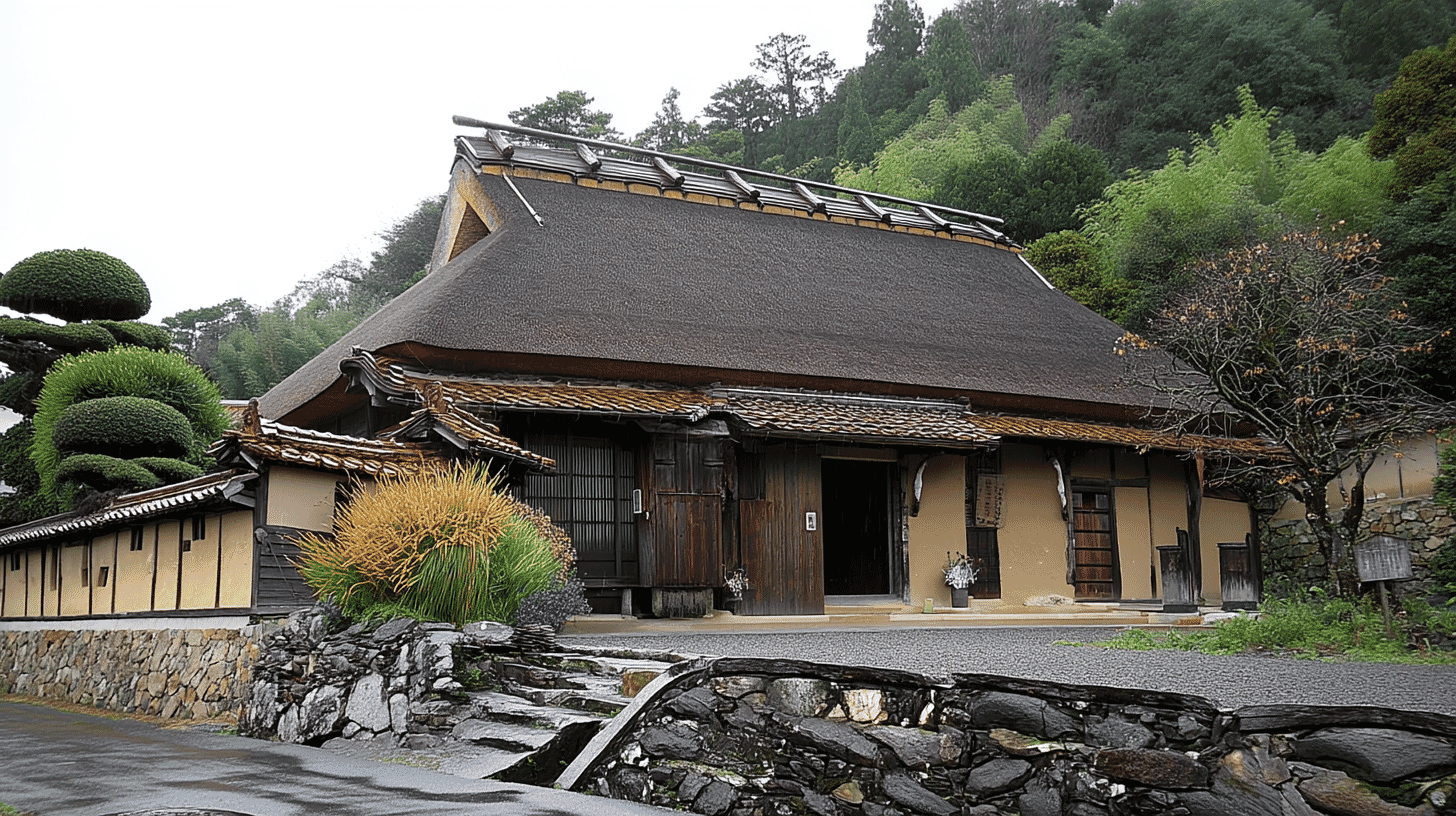
Fukuda Family Residence: Tottori's Oldest Farmhouse with 400 Years of History | Important Cultural Property

Discover Fukuda Family Residence in Tottori, a National Important Cultural Property dating back to the early 17th century. Explore the main house and two historic storehouses with traditional namako-wall decoration, representing the finest example of an Edo-period village headman's estate.

Fukuda Family Residence: A Journey Through 400 Years of Japanese Rural History

Hidden in the quiet valley of Kagodani in Tottori City lies one of Japan's most remarkable architectural treasures. The Fukuda Family Residence, designated as a National Important Cultural Property, offers visitors an authentic glimpse into the life of Edo-period village headmen and represents the oldest surviving residential architecture in Tottori Prefecture. Dating back to the late 16th to early 17th century, this historic estate comprises a magnificent main house and two beautifully preserved storehouses that together tell the story of Japan's rural elite.

The Legacy of the Fukuda Family

The Fukuda family traces its lineage to medieval local warriors, and during the Edo period, they served as village headmen for Tsunoivillage and religious affairs headmen for Hōmi District. This prestigious position placed them among the rural elite, with authority and social standing comparable to that of samurai warriors. Their residence reflects not only their wealth but also their important role as community leaders, document keepers, and representatives between the common people and feudal authorities.

The family's influence extended throughout the region, and their home served as an administrative center where village matters were discussed, official documents were prepared, and community decisions were made. The architectural grandeur of their estate speaks to the respect they commanded and the responsibilities they bore.

The Main House: Tottori's Oldest Residential Architecture

The main house is estimated to have been built between the late 16th and early 17th century, making it the oldest residential building in Tottori Prefecture. This remarkable structure features an irimoya-style roof with traditional thatched roofing and showcases the sankendon hiroma-gata layout—a three-room wide-floor plan that was typical of upper-class farmhouses of the period.

The original structure measured 7.5 ken in length and 4 ken in width, demonstrating the substantial scale befitting a village headman's residence. The building's construction employed roughly hewn, curved timber posts finished with hand axes, a technique that required tremendous skill and resulted in exceptional structural stability. One of the most distinctive features is the column arrangement that faithfully reflects the building's structural needs, with pillars that are notably thicker than the framework beams, creating an impression of solid permanence.

While the house has undergone some modifications over the centuries, it retains its essential character and continues to exemplify the architectural principles and craftsmanship of early Edo-period rural construction. The use of natural materials and traditional joinery techniques without metal fasteners demonstrates the sophisticated woodworking knowledge of the era.

The Two Historic Storehouses: Kami-no-Kura and Shimo-no-Kura

Complementing the main house are two impressive storehouses built during the Bunsei era. The Kami-no-Kura (Upper Storehouse) was constructed in 1818 (Bunsei 1), while the Shimo-no-Kura (Lower Storehouse) dates to around 1823 (Bunsei 6). These buildings are positioned strategically within the estate—the Upper Storehouse to the south of the main house and the Lower Storehouse to its western rear.

Both storehouses feature exquisite decorative elements befitting the Fukuda family's high social status. The walls are adorned with namako-kabe, a distinctive plastering technique where white mortar joints create a grid pattern over black tiles, resembling sea cucumbers. Additionally, kote-e decorative reliefs created with troweled plaster add artistic flair to key locations on the buildings.

These storehouses served practical purposes for storing rice, valuable documents, and family heirlooms while also demonstrating the family's wealth and refinement. The clever utilization of limited estate space to accommodate these structures reflects the sophisticated planning of upper-class agricultural compounds of the period.

Why Fukuda Family Residence Earned National Important Cultural Property Status

The Fukuda Family Residence received its initial designation as an Important Cultural Property on February 5, 1974, with the main house being recognized. On September 30, 2019, this designation was expanded to include the two storehouses, the estate land, and various other elements including walls, gates, stone walls, and a well.

This comprehensive designation recognizes several critical aspects of the property's cultural significance. First, the main house represents the oldest surviving example of residential architecture in Tottori Prefecture and preserves architectural features from the early Edo period that are increasingly rare throughout Japan. The building's structural integrity, use of traditional materials, and authentic construction methods provide invaluable insights into 17th-century building techniques.

Second, the complete estate layout, including the main house, two storehouses, gates, walls, and landscape features, illustrates the characteristic compound structure of an Edo-period village headman's residence. This integrated preservation allows visitors and researchers to understand not just individual buildings but the entire spatial organization and social hierarchy expressed through architecture.

Third, the property demonstrates the ingenious use of limited space typical of upper-class agricultural estates. The positioning of buildings, the integration of functional and decorative elements, and the overall site planning reflect centuries of accumulated wisdom in traditional Japanese residential design.

Highlights and What Makes This Site Special

Visiting the Fukuda Family Residence offers several unique experiences. The thatched roof of the main house, maintained using traditional methods, creates a striking silhouette against the surrounding valley landscape. Inside, visitors can observe the remarkable timber construction, including the hand-hewn posts and sophisticated joinery that has endured for over 400 years without the use of nails or metal fasteners.

The decorative elements of the two storehouses provide excellent examples of Edo-period architectural ornamentation. The namako-wall technique creates beautiful geometric patterns that are both functional (providing weather protection) and aesthetic. The kote-e reliefs demonstrate the artistic skills of traditional plasterers who could create three-dimensional decorative motifs using only trowels and plaster.

The estate's stone walls, gates, and overall compound layout offer insights into the daily life and social status of Edo-period village leaders. The scale and quality of construction reflect the Fukuda family's importance in regional administration and their role as intermediaries between the common people and feudal authorities.

Perhaps most significantly, the Fukuda Family Residence provides an authentic connection to Japan's agricultural past. Unlike reconstructed or heavily restored sites, this property maintains its historical integrity, allowing visitors to experience genuine Edo-period architecture in its original landscape context.

Exploring the Surrounding Area

The Fukuda Family Residence is located in Kagodani, in the southern part of the Tottori Plain, approximately 20 minutes by bus from Tottori Station. This rural valley setting provides a peaceful contrast to the more famous tourist destinations in Tottori City, offering visitors a chance to experience authentic countryside scenery.

While in the area, consider visiting other cultural properties and attractions in Tottori City. The famous Tottori Sand Dunes, Japan's largest sand dune system, is located about 30 minutes away and provides a striking natural landscape unique in Japan. The Sand Museum, featuring impressive sand sculptures, is adjacent to the dunes.

For those interested in more traditional architecture, the Ishitani Family Residence in nearby Chizu Town is another National Important Cultural Property featuring Edo to early Showa period buildings with beautiful Japanese gardens. Tottori Castle Ruins and the adjacent Jinpukaku, a French Renaissance-style mansion designated as an Important Cultural Property, offer insights into different aspects of regional history.

The Hakuto Shrine, associated with the ancient legend of the White Rabbit of Inaba, and Tottori Toshogu Shrine, with its Important Cultural Property shrine buildings, are both accessible from Tottori City center. For culinary experiences, the Karoichi Market offers fresh seafood from the Sea of Japan, including the region's famous matsuba crab and white squid.

📍 Plan Your Visit to Tottori
Find tours, activities & transport passes near Fukuda Family Residence (Kamikodani, Tottori City, Tottori
[ Tottori Sand Dunes & Camel Riding Experience ]

Q&A

QCan visitors enter the Fukuda Family Residence buildings?
AThe Fukuda Family Residence is a private property and a living Important Cultural Property. Access to the interior is typically not available to general visitors. However, the exterior can be viewed from public areas, and the architectural features of the main house, storehouses, and compound layout can be appreciated from outside. For special access or research purposes, it's recommended to contact the Tottori City Board of Education Cultural Properties Division in advance.
QWhat is the best season to visit the Fukuda Family Residence?
AEach season offers its own appeal when visiting this historic property. Spring brings fresh greenery and mountain flowers to the surrounding valley. Summer showcases the lush landscape typical of rural Tottori. Autumn provides stunning foliage colors that complement the traditional architecture beautifully. Winter offers a serene atmosphere with occasional snow creating picturesque scenes against the thatched roof. The mild climate of spring and autumn (April-May and September-November) is particularly comfortable for exploring the area.
QHow does the Fukuda Family Residence differ from other Important Cultural Property farmhouses?
AThe Fukuda Family Residence stands out as Tottori Prefecture's oldest residential building, with construction dating to the late 16th to early 17th century. Its comprehensive designation includes not only the main house but also two Edo-period storehouses with exceptional decorative elements, as well as the entire estate layout including stone walls, gates, and grounds. This integrated preservation of the complete village headman's compound is relatively rare and provides unusual insights into the spatial organization and daily operations of Edo-period rural elite residences.
QIs English information available at the site?
AAs the Fukuda Family Residence is not a public museum facility, on-site English interpretation is limited. International visitors interested in learning more about the property should consider contacting the Tottori City Board of Education Cultural Properties Division in advance or visiting the Tottori Prefectural Cultural Heritage Navigation website (available in Japanese) to gather information before visiting. Hiring a local guide or using translation apps can enhance the experience for non-Japanese speakers.
QAre there other similar historic residences to visit in Tottori?
AYes, Tottori Prefecture offers several other opportunities to experience historic architecture. The Ishitani Family Residence in Chizu Town is another National Important Cultural Property featuring a beautifully preserved merchant's house and gardens. In Tottori City itself, visitors can explore Jinpukaku, a Western-style mansion from the Meiji period, and the nearby Tottori Castle Ruins area includes restored samurai residences. These various properties together provide a comprehensive view of different social classes and architectural styles from Japan's past.

Basic Information

Property Name Fukuda Family Residence (福田家住宅)
Designation National Important Cultural Property
Initial Designation Date February 5, 1974
Additional Designation Date September 30, 2019
Designated Components Main House (1 building), Kami-no-Kura/Upper Storehouse (1 building), Shimo-no-Kura/Lower Storehouse (1 building), Attached New Rice Storehouse (1 building), Estate land, fields and forest (including walls, garden gate, main gate, stone walls, and well)
Construction Period Main House: Late 16th to early 17th century; Upper Storehouse: 1818; Lower Storehouse: circa 1823
Architectural Style Main House: Irimoya-style thatched roof, sankendon hiroma-gata layout
Location Kagodani, Tottori City, Tottori Prefecture
Access Approximately 20 minutes by bus from JR Tottori Station
Contact Tottori City Board of Education Cultural Properties Division
Visitor Information Private property; exterior viewing only from public areas. For special access inquiries, contact the Cultural Properties Division in advance.

References

Tottori Prefecture Cultural Heritage Navigation - Fukuda Family Residence
https://db.pref.tottori.jp/bunkazainavi.nsf/bunkazai_web_view/6802B9572BA9812D4925796F0007FCBF?OpenDocument
Cultural Heritage Online - Fukuda Family Residence Upper Storehouse
https://bunka.nii.ac.jp/heritages/detail/377587
Cultural Heritage Online - Fukuda Family Residence Lower Storehouse
https://bunka.nii.ac.jp/heritages/detail/400278
Tottori City Official Tourism Website
https://www.torican.jp/

Last verified: 2025.11.13

Nearby heritages