
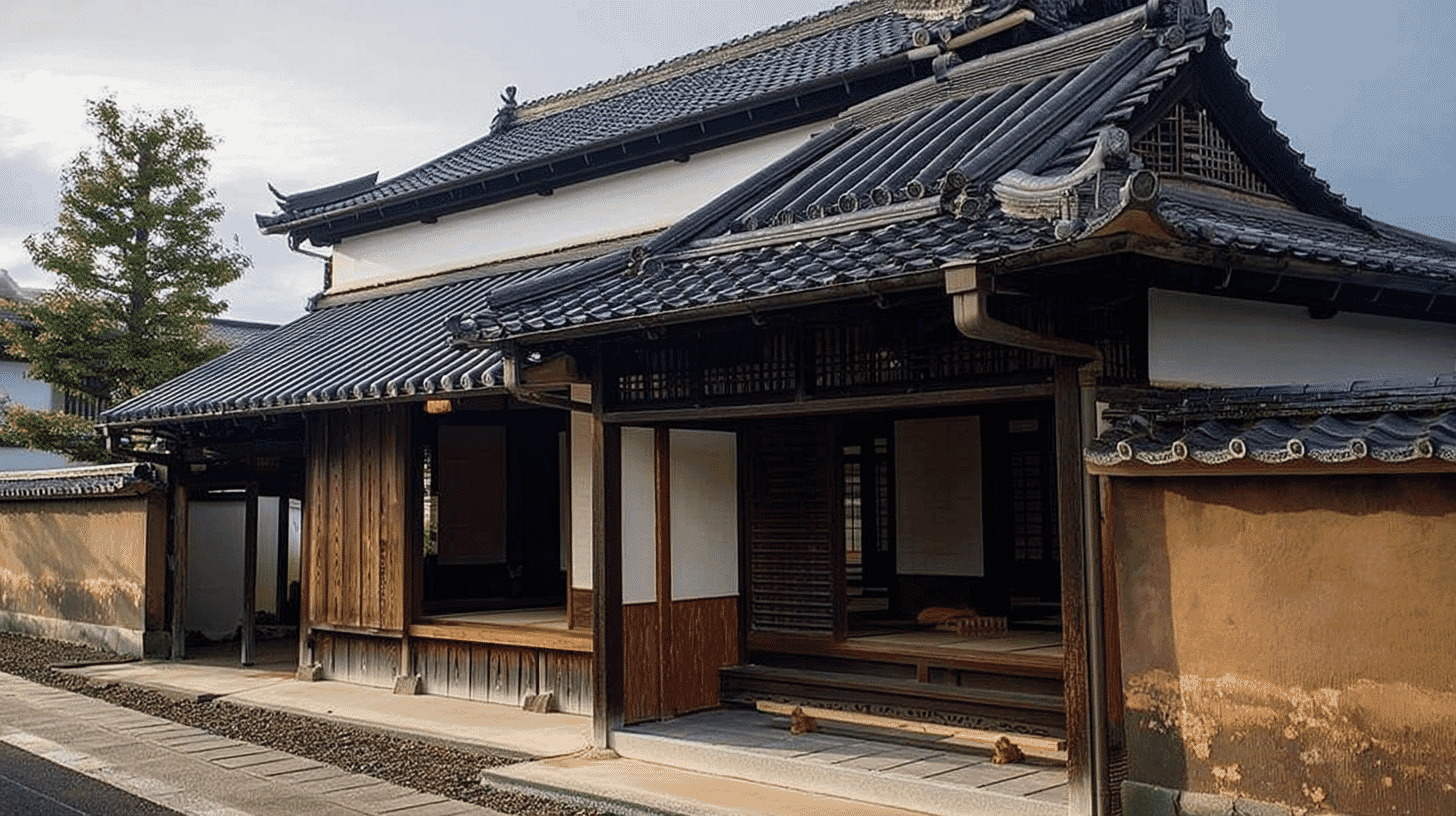
Three Buildings, an Important Cultural Property since 1969
Former Nate Honjin Imose Family Residence (旧名手本陣妹背家住宅) stands at 641 Nate Ichiba, Kinokawa City, Wakayama Prefecture, a building of the middle Edo period listed as an Important Cultural Property on 12 March 1969. The listing is as an Important Cultural Property, not a National Treasure.
Wakayama Prefecture gives the quantity as three buildings and the owner as Kinokawa City. This site's record leaves the owner field empty.
The place name Nate is read with two syllables, and the reading field carries the word for former as well.
The Bracketed Place Name Is the Older One
The location added to the name and the address field disagree.
The name ends with a bracketed place: a town and district that no longer exist.
The address field, meanwhile, gives 641 Nate Ichiba, Kinokawa City. The town named in brackets became part of Kinokawa City through amalgamation.
At the Chikugo lift bridge, the address field used the newer name while the owner field kept the older. That disagreement lies between address and owner.
Here it lies between the bracketed name and the address field. The name preserves the place as it stood at the time of listing.
At the Raigoji main hall, no location was added to the name, leaving it confusable with a hall of the same name elsewhere. Here a location is added, but it is out of date.
Twenty-Seven Years Between Two Parts of One Main House
Two parts of the same building went up in different years.
Wakayama Prefecture records that the main house as it stands consists of a living section and a reception section.
It continues that after the house burned in a fire that swept the village in 1714, the living section was built anew in 1718 and the reception section later, in 1745.
Twenty-seven years between them. The word for later marks the gap.
At the Ishitani residence, the main house was Showa and the storehouses Taisho, the eras themselves differing by building. At the former Konishi residence, nine years separated the main house from a storehouse.
Both of those concern separate buildings. Here the division falls within one main house.
The Reason for Building Is Recorded as a Fire
Why the house was rebuilt survives in the record.
It burned when a fire swept the village in 1714: the flames spread from nearby.
At Ochidani Shrine, the buildings went up to receive a Toshogu shrine. At Kitaguchi Hongu Fuji Sengen Shrine, ruined halls were rebuilt from donations. At the former Gakushuin hall, the building was sold off when a new one was needed for the crown prince.
Here it is rebuilding after fire. The house went up because what stood before was gone.
The assessment turns on the dating as well: because the years of the main house are known, it holds high value as a surviving example of a post station's official inn on the Yamato highway.
That the dates are certain is given among the reasons. The Kuwanomidera and Raigoji main halls were dated only by ranges. Here the years can be fixed.
Visiting
The house stands at 641 Nate Ichiba, Kinokawa City, Wakayama Prefecture, recorded by the prefecture as owned by the city.
The layout is described: the house occupies a wide plot facing the Yamato highway, with two Edo-period storehouses standing side by side to the west.
The main house and those two storehouses appear to make up the three buildings of the count.
An honjin was the establishment where a daimyo or court noble lodged on a highway. Nate was a post station on the Yamato road.
The building belongs to a local authority, so opening and hours follow the city's own arrangements. Check before travelling.
Q&A
- When was the residence listed?
- On 12 March 1969, as an Important Cultural Property rather than a National Treasure. Wakayama Prefecture gives the quantity as three buildings.
- Why does the bracketed place name differ from the address?
- Because the town named in brackets became part of Kinokawa City through amalgamation. The name preserves the place as it stood at the time of listing.
- When was it built?
- The living section in 1718 and the reception section in 1745, twenty-seven years apart, within one main house.
- Why was it rebuilt?
- Wakayama Prefecture records that the house burned in a fire that swept the village in 1714, and the new work followed.
- What is valued in it?
- That the years of the main house are known, and that it survives as an example of a post station's official inn on the Yamato highway.
Basic Information
| Name | Former Nate Honjin Imose Family Residence (旧名手本陣妹背家住宅); the place in brackets is the name as it stood at the time of listing |
|---|---|
| Location | 641 Nate Ichiba, Kinokawa City, Wakayama Prefecture |
| Designation | Important Cultural Property (structures, domestic architecture); not a National Treasure |
| Year Designated | 1969 (12 March), Important Cultural Property |
| Quantity | Wakayama Prefecture gives 3 buildings |
| Dimensions | The house occupies a wide plot facing the Yamato highway. The main house consists of 2 parts, a living section built in 1718 and a reception section built in 1745. 2 Edo-period storehouses stand side by side to the west, making 3 buildings in all. The period is the middle Edo |
| Owner | Wakayama Prefecture records Kinokawa City; this site's owner field is empty |
| Public Access | Owned by a local authority; opening and hours follow the city's own arrangements |
References
- Cultural Properties of Wakayama: the Imose residence
- https://wakayama-bunkazai.jp/bunkazai/bunkazai_195/
- Cultural Heritage Online: the former Nate post station inn
- https://bunka.nii.ac.jp/heritages/detail/163441
- Kinokawa City tourism association
- https://www.kanko-kinokawa.jp/
- Agency for Cultural Affairs, National Cultural Properties Database
- https://kunishitei.bunka.go.jp/
Last verified: 2026.09.07
Cultural Treasures in the Same Area
All are within walking distance in the same area, so we recommend visiting them together.
- Former Master Honjin Imose Family Residence (Naka Town, Naka Minamikura 0.00 km
- Former Master Honjin Imose Family Residence (Naka Town, Naka Main house 0.02 km
- Former Master Honjin Imose Family Residence (Naka Town, Naka rice storehouse 0.02 km