
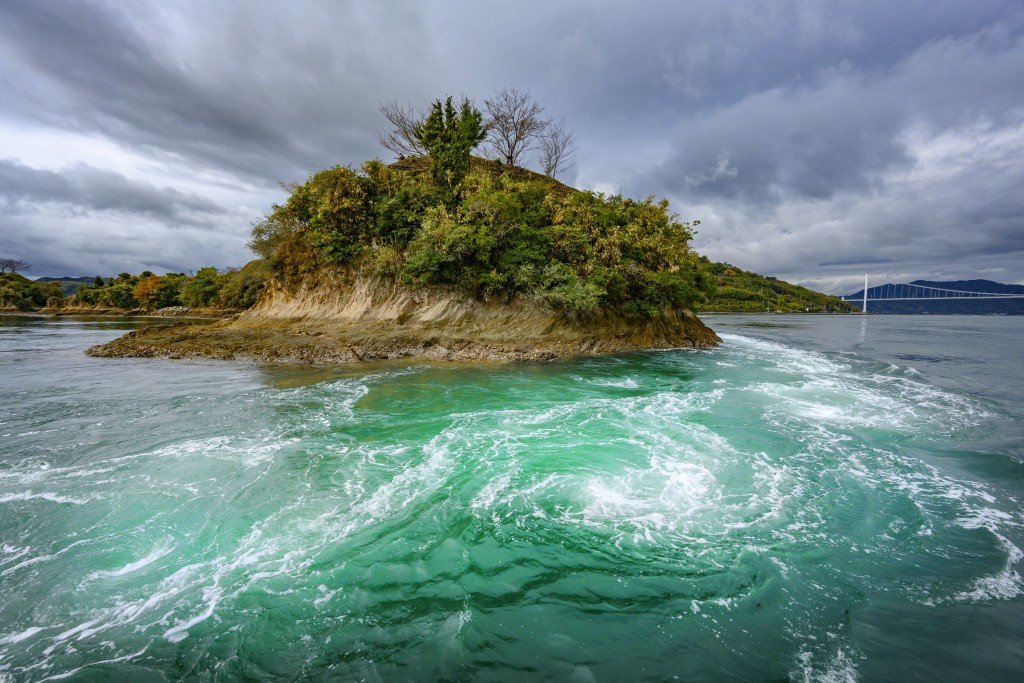
Noshima Castle Ruins: A Sea Fortress of Japan's Greatest Pirates
Few castles in Japan tell a story quite like Noshima Castle Ruins (Noshima-jō ato), perched on a tiny uninhabited island in the heart of the Seto Inland Sea. This is no mountain stronghold or moated lowland keep — it is a "sea castle," with the entire island transformed into a fortress, ringed by tidal currents that surge at speeds of up to 10 knots (about 18 km/h). For roughly 170 years, this was the home of the Noshima Murakami clan, the leading family of the Murakami Kaizoku — pirates whom the Portuguese missionary Luís Fróis described as the most powerful in all of Japan.
Today, Noshima Castle is the only sea castle of the medieval Murakami pirates designated as a national historic site, and stepping ashore is a rare chance to walk among the actual ramparts, terraces, and pier postholes of one of the most evocative castle sites in the country.
Where History Meets the Tide: The Setting
Noshima Castle Ruins occupy two small uninhabited islands — Noshima (about 720 meters in circumference) and the smaller Taizaki-jima just to the south — floating in the narrow Miyakubo Strait between Oshima and Hakata-jima in the Geiyo archipelago. The waters here form one of the most treacherous stretches of the entire Seto Inland Sea: every tide change sends powerful currents and whirlpools tearing through the channel, creating a natural moat no enemy fleet could easily cross.
It was precisely this hazard that gave the castle its strength, and that gave the Murakami clan their livelihood. In peacetime, they served as expert pilots, guiding merchant ships safely through the straits in exchange for a toll. In wartime, those same currents kept invaders at bay.
The History of the Castle and the Murakami Pirates
According to local tradition, Noshima Castle was first built in 1419 (Ōei 26) by Murakami Yoshiaki, a descendant of the Iyo naval commander Murakami Yoshihiro. Over the following century and a half, the castle became the headquarters of the Noshima branch of the Murakami clan, one of three allied pirate families based in the Geiyo islands — the others being the Kurushima Murakami and the Innoshima Murakami. Together they controlled the central Seto Inland Sea routes.
The clan reached its zenith under Murakami Takeyoshi (1533–1604) and his sons Motoyoshi and Kagechika in the late 16th century. From Noshima they commanded an extensive maritime network, issued safe-conduct flags known as kasho-ki to passing ships, and at times allied with major warlords such as the Mōri and Kōno clans. They were not simply marauders: they served as maritime police, navigators, transporters, and even cultivated tea, incense, and renga poetry as cultured warriors.
Their independence ended in 1588, when Toyotomi Hideyoshi issued his nationwide Pirate Suppression Edict (Kaizoku Teishi-rei), which forbade the collection of sea tolls and dismantled the autonomous power of the coastal sea-warrior houses. Noshima Castle was abandoned, and the Murakami families were absorbed into the retainer corps of larger lords. Because the island was left uninhabited from the Edo period onward, the castle's earthworks survived in remarkably original condition.
Why It Was Designated a National Historic Site
Noshima Castle Ruins was designated a National Historic Site of Japan in 1953 (Shōwa 28), and it holds a unique distinction: it is the only sea castle of the medieval Murakami pirates to receive such recognition. The reasons given by the cultural authorities highlight several layers of value.
First, the castle preserves an exceptionally rare type of medieval Japanese fortification — the kaijō, or sea castle — in which the natural geography of an island, including its surrounding tidal currents, was integrated into the defensive design. Second, the absence of later development means the original earthworks, terraced baileys, and pier remains are unusually well preserved. Third, the site is historically significant as the headquarters of one of the most powerful maritime forces of the Sengoku period. Finally, the surrounding waters fall within the special zone of Setonaikai National Park, adding a layer of natural heritage protection. Excavations conducted by the Imabari City Board of Education have uncovered the foundations of nine pillared buildings on the second bailey alone, along with everyday ceramics, weapons, and trade goods, confirming that the island was not merely a watchtower but a fully functioning residential headquarters.
The site was further selected as one of the Continued Top 100 Castles of Japan (Zoku Nihon Hyaku-meijō, No. 178) in April 2017, and the broader story of the Murakami pirates was certified as part of Japan Heritage in 2016.
Highlights to See on the Island
Visitors who join an official landing tour can walk the same paths once trod by Murakami warriors. The summit of the island was leveled to form the honmaru, or main bailey, with a panoramic view of the surrounding straits. Surrounding it on three sides, several meters lower, is the second bailey (ni-no-maru), which yielded the post holes of nine medieval pillared buildings during excavations and is believed to have served as the principal residential zone. To the west, the third bailey (san-no-maru) descends in three terraces, and a small inlet nearby was used as a sheltered ship-mooring.
Two outworks command the approaches: the Yabitsu projecting to the northeast, and the Mehitotsu-no-hana to the south, facing the small Taizaki-jima outwork. Most striking of all are the more than 400 circular postholes carved into the rocky shoreline. These once held wooden piers and defensive boom structures used to moor ships and block enemy approach — a form of evidence virtually unique to this site in all of Japan.
Since 2022, much of the once-famous cherry-blossom planting on the island has been cleared to protect the archaeological remains, and the resulting open ground now allows visitors to read the layout of the baileys and earthworks with unusual clarity.
Visitor Information and Access
Because Noshima is uninhabited and surrounded by powerful currents, the only way to set foot on the castle is via the official Noshima Landing & Tidal Current Cruise. The boats depart from the pier in front of the Murakami Kaizoku Museum (Imabari City Murakami Pirates Museum) on Oshima island, at 1293-2 Miyakubo, Miyakubo-cho, Imabari City, Ehime Prefecture. Tours operate primarily on Saturdays, Sundays, and public holidays, with three departures per day (typically 9:45, 11:45, and 13:45), each lasting about 75 minutes. Advance reservation is essential, and on rough-weather days the tour may be cancelled or limited to a tidal cruise without landing.
For visitors who cannot join a landing tour, the museum's third-floor observation deck offers a clear view of Noshima across the strait, and the Karei-yama Observatory Park, about 4 kilometers from the museum, provides a magnificent aerial-style overlook of the island and its swirling currents.
Access by car: about 5 minutes from Oshima-kita IC (from the Honshu side via the Shimanami Kaido) or about 15 minutes from Oshima-minami IC (from the Shikoku/Imabari side). By public transport, take an express bus along the Shimanami Kaido and transfer to the local Oshima island bus to the "Murakami Suigun Hakubutsukan" stop.
Things to Do Nearby
The Murakami Kaizoku Museum itself is essential viewing — it houses excavated artifacts from Noshima, scale models of the castle in its prime, and exhibits on the daily life, naval tactics, and cultural pursuits of the pirates. Just across the road, the Noshima Suigun complex serves fresh seafood from the surrounding waters. Further afield, Oyamazumi Shrine on Mishima island is one of Japan's most important shrines for warriors and seafarers, holding a vast collection of armor and weapons donated over the centuries. The wider Shimanami Kaido cycling route, which links Onomichi in Hiroshima with Imabari in Ehime via a series of dramatic suspension bridges, provides one of the finest two-wheeled experiences in Japan and passes within easy reach of Noshima.
Q&A
- Can I visit Noshima Castle Ruins on any day of the week?
- Landing tours run primarily on Saturdays, Sundays, and public holidays, with three scheduled departures per day. Tours generally do not operate on weekdays unless arranged in advance for a group of ten or more, and reservations are essential. Operations may be suspended in poor weather.
- Why is Noshima Castle considered so important among Japanese castles?
- It is one of the very few medieval sea castles in Japan and the only Murakami-pirate sea castle designated as a national historic site. Because the island was uninhabited after 1588, the original earthworks, baileys, and pier postholes have been preserved in unusually intact condition.
- What can I actually see on the island during a tour?
- Guided visitors typically walk the main bailey, second bailey, and third bailey, view the postholes carved into the rocky shoreline, and look across to the Taizaki-jima outwork. The tour also includes a tidal current cruise around the island.
- Were the Murakami really pirates in the Western sense?
- Modern Japanese historians often emphasize their role as maritime regulators rather than raiders. They issued safe-conduct flags, piloted ships through dangerous waters, and collected tolls for protection. They were also accomplished warriors, traders, and patrons of poetry and tea culture.
- Are there facilities on the island itself?
- No. There are no toilets, shops, or shelters on Noshima. Visitors are advised to use the facilities at the Murakami Kaizoku Museum before boarding, wear comfortable walking shoes, and bring weather-appropriate clothing.
Basic Information
| Name | Noshima Castle Ruins (Noshima-jō ato) |
|---|---|
| Location | Miyakubo-cho, Imabari City, Ehime Prefecture, Japan |
| Designation | National Historic Site (designated 1953) |
| Other recognition | Continued Top 100 Castles of Japan No. 178 (2017); part of Japan Heritage "Murakami Kaizoku" story (2016); within Setonaikai National Park Special Zone |
| Period | Built ca. 1419 (early Muromachi period); abandoned 1588 |
| Built by | Murakami Yoshiaki, ancestor of the Noshima Murakami clan (traditional account) |
| Composition | Noshima island (circumference approx. 720 m) and Taizaki-jima outwork; main bailey, second bailey, third bailey, Yabitsu and Mehitotsu-no-hana outworks, more than 400 pier postholes |
| Access | From Murakami Kaizoku Museum, Oshima (Shimanami Kaido). Landing tour operated by Setouchi Shimanami Leading Co., Ltd. (advance reservation required). |
| Tour times | Approx. 9:45 / 11:45 / 13:45, Saturdays, Sundays, and holidays (subject to weather and seasonal changes; about 75 minutes per tour) |
References
- Cultural Heritage Online — Noshima Castle Ruins
- https://bunka.nii.ac.jp/heritages/detail/191872
- Japan Heritage Portal Site (Agency for Cultural Affairs) — Noshima Castle Ruins
- https://japan-heritage.bunka.go.jp/ja/culturalproperties/result/2501/
- Setouchi Shimanami Leading — Noshima Landing & Tidal Current Cruise
- https://s-leading.co.jp/kanko_noshima
- Imabari Tourism Association — Noshima Castle Ruins
- https://www.oideya.gr.jp/spot-c/noshima/
- Ehime Official Tourism Site (Iyokannet) — Noshima Castle Ruins
- https://www.iyokannet.jp/spot/211
- Wikipedia — Noshima (Island)
- https://ja.wikipedia.org/wiki/%E8%83%BD%E5%B3%B6
Last verified: 2026.04.27