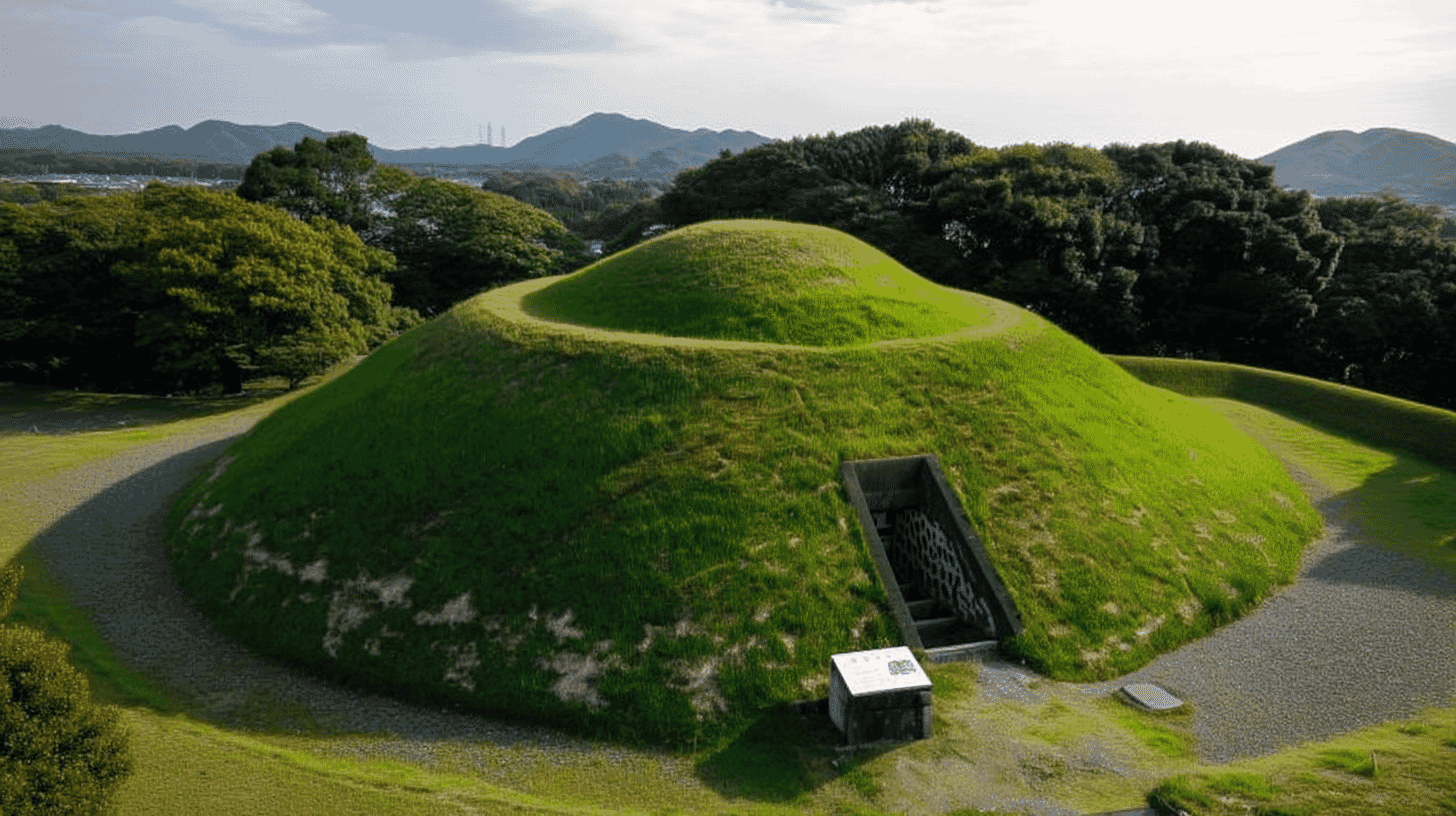
Yame Kofun Group: Ancient Burial Mounds of a Legendary Kyushu Warrior King

Explore the Yame Kofun Group in Fukuoka, Japan - home to 300 ancient burial mounds including the tomb of the legendary warrior Tsukushi no Kimi Iwai. Discover decorated tombs, stone warriors, and 1,500 years of history.

Yame Kofun Group: Tracing the Legacy of Ancient Kyushu's Warrior King

In the gentle hills of southern Fukuoka Prefecture lies one of Japan's most remarkable archaeological treasures: the Yame Kofun Group. This extraordinary collection of approximately 300 burial mounds spans the 4th to 7th centuries and represents the final resting places of the powerful Tsukushi clan, including the legendary warrior Tsukushi no Kimi Iwai. Unlike the crowded tourist destinations of Kyoto or Tokyo, these ancient tombs offer visitors an intimate encounter with Japan's mysterious Kofun period, complete with stone warriors, painted burial chambers, and a dramatic tale of rebellion against the ancient Yamato court.

What is the Yame Kofun Group?

The Yame Kofun Group (八女古墳群) is a nationally designated Historic Site comprising eight principal burial mounds spread across the Yame hills in Fukuoka Prefecture. These include the keyhole-shaped (zenpo-koen-fun) tombs of Iwatoyama, Noriba, Sekijinzan, and Zenzozuka, along with circular mounds such as Kokadani, Maruyamazuka, Maruyama, and Chausuzuka. The tombs stretch across approximately 10 kilometers of ridgeline, creating a landscape that has remained virtually unchanged for 1,500 years.

What makes this site particularly significant is its connection to documented historical events. The Iwatoyama Kofun, the largest keyhole-shaped tomb in northern Kyushu at 135 meters in length, is widely believed to be the burial place of Tsukushi no Kimi Iwai, the powerful regional lord who led the famous Iwai Rebellion against the Yamato court in 527 CE. This makes the Yame Kofun Group one of the rare ancient tomb complexes in Japan where we can connect archaeological remains to specific historical figures and events.

Historical Significance: The Iwai Rebellion

The story of the Yame Kofun Group is inextricably linked to one of ancient Japan's most dramatic conflicts. In 527 CE, Tsukushi no Kimi Iwai controlled much of northern Kyushu, maintaining independent trade relationships with the Korean kingdoms, particularly Silla. When the Yamato court attempted to send an army through his territory to intervene in Korean affairs, Iwai blocked their passage.

According to the Nihon Shoki (Chronicles of Japan), the resulting conflict lasted over a year before Iwai was defeated by the Yamato general Mononobe no Arakahi. However, local records in the Chikugo Fudoki tell a different story, suggesting Iwai escaped to the mountains of Buzen Province. Either way, the rebellion marked a turning point in Japanese history, leading to the establishment of direct Yamato control over Kyushu through the miyake administrative system.

Rather than viewing Iwai as a rebel, locals have long celebrated him as a defender of Kyushu's independence. The Iwatoyama History and Culture Exchange Center presents him as a "local hero" who stood against imperial expansion, offering visitors a nuanced perspective on this pivotal moment in Japanese history.

Key Sites Within the Yame Kofun Group

Iwatoyama Kofun - The Tomb of the Warrior King

The crown jewel of the Yame Kofun Group, Iwatoyama Kofun is a massive keyhole-shaped burial mound measuring 135 meters in length with a rear circular portion 72 meters in diameter. What distinguishes this tomb from all others in Japan is its "Bekku" (別区) or "separate precinct" – a 43-meter square ceremonial area on the northeast corner where stone figures depicting a court scene were arranged. According to the Chikugo Fudoki, this area represented a judicial tribunal, suggesting Iwai's role as a lawgiver and administrator.

The tomb has yielded remarkable artifacts including sekijin (stone human figures), sekiba (stone horses), stone shields, and stone quivers, many of which are now designated Important Cultural Properties. Two stone warriors are housed at the Tokyo National Museum, while the majority of finds can be viewed at the adjacent Iwatoyama History and Culture Exchange Center.

Sekijinzan Kofun - The Grandfather's Tomb

Located in Hirokawa Town, Sekijinzan (Stone Person Mountain) Kofun takes its name from the imposing armored stone warrior that has stood guard over the tomb for 1,500 years. This 107-meter keyhole-shaped tomb dates to the early 5th century, making it the oldest large burial mound in the Yame region and possibly the tomb of Iwai's grandfather.

The burial chamber contains a house-shaped stone sarcophagus decorated with chokkomon (direct arc patterns) and concentric circles, representing one of the earliest decorated tombs in Japan. Visitors can peer into the stone chamber through a protective covering to view the remarkable carved sarcophagus lid.

Noriba Kofun - Painted Splendor

Located just 300 meters east of Iwatoyama Kofun, Noriba Kofun is a 70-meter keyhole-shaped tomb renowned for its stunning painted burial chamber. The walls feature vivid geometric patterns in red, yellow, and blue, including continuous triangular patterns, concentric circles, and bracken-hand (warabi-te) motifs. Dating to the mid-6th century, this decorated tomb represents the artistic sophistication of the Tsukushi clan at the height of their power.

Kokadani Kofun - Circle of Color

This impressive circular tomb measures 39 meters in diameter and features a horizontal stone chamber with exceptional painted decoration. The rear wall displays the rare "bipedal ring pattern" (sofuku rinjo-mon) painted in red, green, and yellow – a design found in only three other tombs in Japan, all in the same region. The burial chamber is opened for public viewing twice yearly in spring and autumn, while a full-scale replica can be seen at the Kofunpia Hirokawa museum.

Maruyamazuka and Chausuzuka Kofun

These additional circular burial mounds complete the designated historic site, representing the continuation of elite burial practices into the late 6th century. Maruyamazuka features colorful wall paintings with triangular and circular patterns similar to Noriba Kofun.

The Stone People: Sekijin and Sekiba

Perhaps the most distinctive feature of the Yame Kofun Group is the presence of sekijin (stone human figures) and sekiba (stone horses) carved from Aso volcanic tuff. Unlike the terracotta haniwa figures found in Yamato region tombs, these stone sculptures represent a unique Kyushu tradition that flourished from the 5th to early 6th centuries.

The stone warriors stand up to 1.8 meters tall, depicted wearing triangular plate armor and carrying swords. Their faces, once finely carved, have been worn smooth over centuries – local legend holds that touching the statues could cure ailments, leading generations of pilgrims to rub the stone for healing. Interestingly, the production of sekijin appears to have ceased abruptly after the Iwai Rebellion, leading scholars to speculate that the Yamato court may have prohibited their creation.

More than 130 stone figures and fragments have been recovered from the Yame region, with the finest examples now preserved in museums. The contrast between these solemn stone guardians and the colorful haniwa of the Kinki region illustrates the regional diversity of Kofun period Japan.

Why the Yame Kofun Group Became a National Historic Site

The Yame Kofun Group received its national designation through a gradual process reflecting its expanding recognized significance. Noriba Kofun was first designated in 1922, followed by individual designations for Iwatoyama (1955), Sekijinzan (1938), and others. In 1978, these separate designations were consolidated into the unified "Yame Kofun Group" with the addition of previously undesignated tombs.

The designation recognizes several unique cultural values. First, the site preserves the only tomb in Japan with a documented connection to a specific historical figure and event. Second, the decorated burial chambers represent exceptional examples of Kofun period art. Third, the stone figures constitute a regionally distinctive burial tradition found nowhere else in Japan at this scale. Finally, the tomb cluster illustrates three centuries of elite burial practices by a single powerful clan, offering unparalleled insights into regional power structures during Japan's formative period.

Visitor Experience: Museums and Facilities

Iwatoyama History and Culture Exchange Center "Iwai no Sato"

Adjacent to Iwatoyama Kofun, this modern museum opened in 2015 and offers free admission. The permanent exhibition showcases original stone figures, artifacts, and an excellent video presentation explaining the Iwai Rebellion from the local perspective. The museum's mission is to present Iwai not as a rebel but as a defender of Kyushu, offering visitors a thought-provoking alternative to standard textbook narratives. Staff provide English-language pamphlets and are happy to guide visitors despite language barriers.

Kofunpia Hirokawa

This compact museum in the Sekijinzan-Kokadani Ancient Tomb Park provides essential context for understanding the decorated tombs. Highlights include a full-scale replica of the Kokadani burial chamber with its vivid wall paintings, artifacts from local excavations, and informative displays about ancient Kyushu life. The surrounding park connects Sekijinzan and Kokadani kofun via pleasant walking paths, making it perfect for a leisurely exploration.

Surrounding Attractions

The Yame region offers much more than ancient tombs. As one of Japan's premier tea-producing areas, Yame is famous for its high-grade gyokuro green tea. Visitors can tour tea plantations, participate in tea tastings, and purchase exceptional tea directly from producers. The Yame Central Tea Garden offers sweeping views of terraced tea fields stretching to the horizon.

The historic Fukushima district in central Yame preserves traditional merchant houses and samurai residences, many converted to cafes and craft shops. Yame is also renowned for traditional crafts including hand-woven kurume kasuri textiles, bamboo baskets, and handmade washi paper.

For those seeking additional archaeological sites, the Donanzan burial mounds (with an accessible stone chamber), Tsurumiyama Kofun, and the massive Donaiyama Kofun with its impressive megalithic stone chamber all merit visits. The Kyushu Olle Yame Course hiking trail connects many of these sites for active travelers.

Best Time to Visit

The Yame Kofun Group can be visited year-round, but certain seasons offer special opportunities. Spring (late March to early April) brings cherry blossoms to the tomb parks, while the new tea season in late April to early May allows visitors to experience tea harvesting. The Kokadani Kofun burial chamber is opened for special public viewing in spring and autumn – check with local tourism offices for exact dates.

The annual Kofun Festival at Kofunpia Hirokawa takes place on the second Sunday of November, featuring special tomb openings, local products, and cultural events. Summer can be hot and humid but offers lush green landscapes, while autumn brings comfortable temperatures and occasional special exhibitions.

📍 Plan Your Visit to Fukuoka
Find tours, activities & transport passes near Yame Kofun Group (Noriba Kofun / Sekijinyama Kofun /
[ Dazaifu Tenmangu Shrine & Hakata Food Tours ]

Q&A

QIs there English support available at the museums?
AThe Iwatoyama History and Culture Exchange Center provides English-language pamphlets and the staff are helpful despite language barriers. The exhibits are primarily in Japanese, but the visual displays and artifacts are self-explanatory. A smartphone translation app can help with detailed information panels.
QCan I enter the burial chambers?
AThe decorated burial chambers at Noriba, Kokadani, and Maruyamazuka are generally closed for preservation but are opened for special public viewing in spring and autumn. The Sekijinzan stone chamber can be viewed through protective glass year-round. The nearby Iwatoyama No. 4 Kofun (Shimochaya Kofun) allows visitors to actually enter its stone chamber.
QHow much time should I allow for visiting?
AFor a comprehensive visit including Iwatoyama Kofun with its museum and the Sekijinzan-Kokadani park with Kofunpia Hirokawa, allow at least 4-5 hours. Adding tea plantation visits or the historic Fukushima district makes for a full day excursion.
QIs the site accessible for visitors with mobility limitations?
AThe museums are wheelchair accessible with barrier-free facilities. However, the tomb mounds themselves involve uneven terrain and stairs. Kofunpia Hirokawa offers wheelchair rentals and can accommodate visitors who call ahead for assistance.
QWhat is the admission fee?
AThe Iwatoyama History and Culture Exchange Center offers free admission, making it an exceptional value for the quality of exhibits. Kofunpia Hirokawa is also free. The tomb sites themselves are open public spaces with no admission charge.

Basic Information

Official Name Yame Kofun Group (八女古墳群)
Designation National Historic Site (designated 1978 as consolidated site)
Location Yame City, Hirokawa Town, and Chikugo City, Fukuoka Prefecture
Period 4th to 7th century CE (Kofun Period)
Principal Tombs Iwatoyama, Noriba, Sekijinzan, Zenzozuka, Kokadani, Maruyamazuka, Maruyama, Chausuzuka
Iwatoyama Museum Hours 9:00 - 17:00 (last entry 16:30), Closed Mondays
Kofunpia Hirokawa Hours 9:00 - 17:00 (last entry 16:30), Closed Mondays
Access From Nishitetsu Kurume Station: Bus to "Fukushima Koko-mae" stop (35 min), then 5 min walk. By car: 6 km from Yame IC or 10 min from Hirokawa IC on Kyushu Expressway
Contact Iwatoyama History and Culture Exchange Center: 0943-24-3200

References

Cultural Heritage Online - Yame Kofun Group
https://bunka.nii.ac.jp/heritages/detail/163941
Yame City Official - Yame Kofun Group Information
https://www.city.yame.fukuoka.jp/iwatoyama/index.html
Yame City - History of Tsukushi no Kimi Iwai
https://www.city.yame.fukuoka.jp/iwatoyama/iwaiwoshiru/11761.html
Wikipedia - Iwatoyama Kofun
https://ja.wikipedia.org/wiki/岩戸山古墳
Wikipedia - Yame Kofun Cluster (English)
https://en.wikipedia.org/wiki/Yame_Kofun_Cluster
Hirokawa Town - Sekijinzan and Kokadani Ancient Tomb Park
https://www.town.hirokawa.fukuoka.jp/soshiki/kyoikuiinkai_jimukyoku/5/3/6/1/1148.html
Crossroad Fukuoka - Iwatoyama Tombs
https://www.crossroadfukuoka.jp/en/spot/12682
Fukuoka Prefecture Cultural Properties
https://www.fukuoka-bunkazai.jp/frmDetail.aspx?db=4&id=78

Last verified: 2026.01.14

Nearby heritages