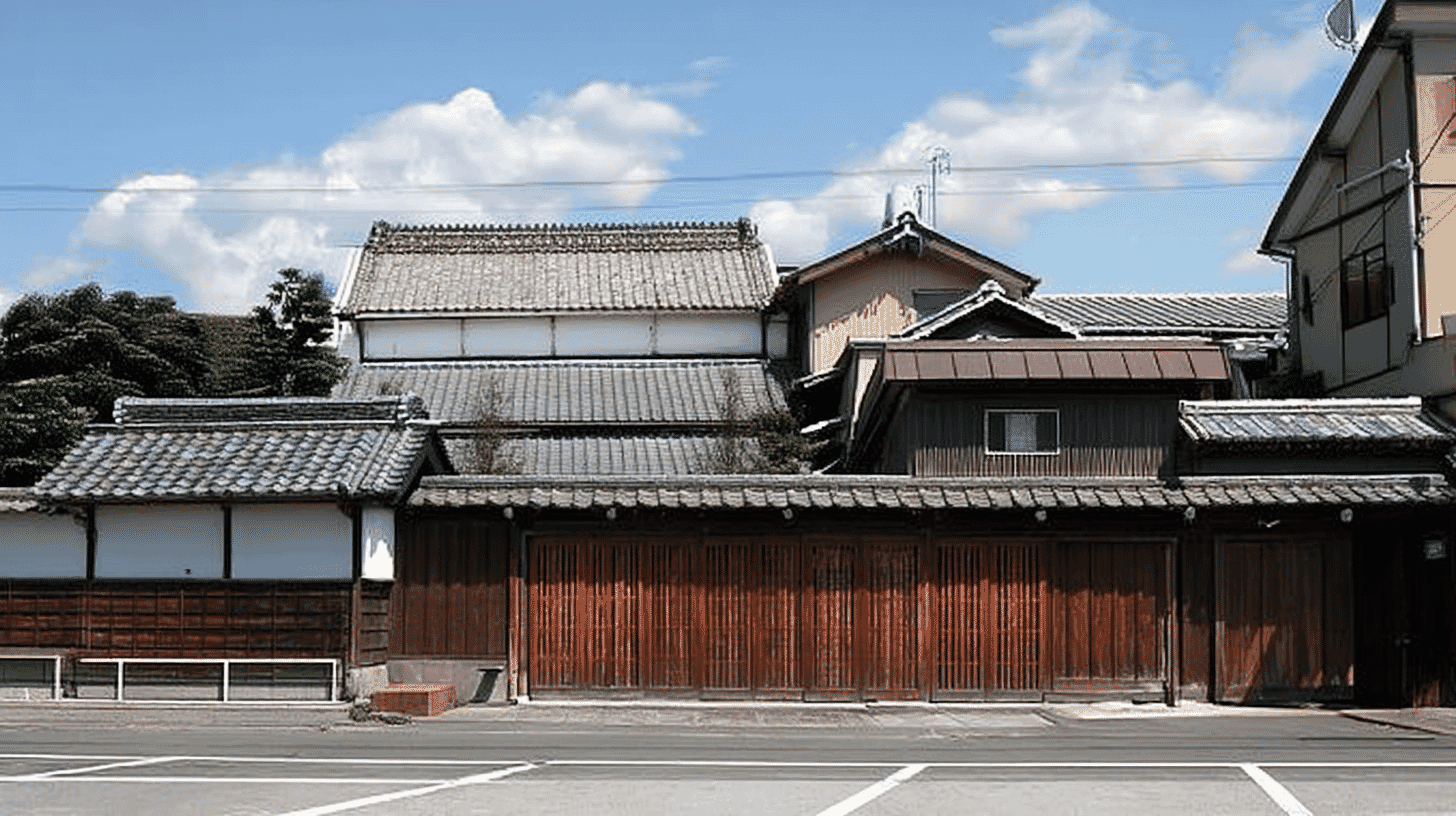
Ogiwara Family Residence: A Registered Cultural Property Preserving Kiryu's Textile Heritage in Gunma Prefecture

Discover the Ogiwara Family Residence, a nationally registered cultural property in Kiryu City, Gunma. This Meiji-era merchant home with its traditional storehouse, gate, and walls offers a rare glimpse into Japan's thriving silk textile industry history.

Ogiwara Family Residence: A Window into Kiryu's Golden Age of Textiles

Nestled along a quiet alley off Shinjuku-dori Street in Kiryu City, Gunma Prefecture, the Ogiwara Family Residence stands as an eloquent testament to the prosperity of Japan's textile industry during the Meiji era. This collection of buildings—comprising the main house, an earthen storehouse, and a traditional gate with plastered walls—was registered as a nationally important cultural property in May 2007, preserving the authentic atmosphere of a hataya (textile merchant's home) from when Kiryu was known as the "Weaving Capital" of Japan.

A Legacy Woven in Silk: The History of the Ogiwara Family

The Ogiwara family has deep roots in Kiryu's textile tradition. According to the 1904 "Gunma Prefecture Business Directory," the family operated under the name "Ogiwara Bunzaburo" as manufacturers of women's obi sash fabric. Historical records suggest that while the family had been involved in weaving since the Edo period, their business truly flourished around 1877—the year the storehouse was constructed.

The Shinjuku district where the residence is located sits on the left bank of the Watarase River, which historically served as a vital waterway for the textile industry. While the actual weaving factories were situated in the nearby Sakaino district, this property served as the family's living quarters, reflecting the common practice of separating residential and industrial spaces among successful textile merchants of the era.

Why This Property Earned Cultural Heritage Status

The Ogiwara Family Residence received national registration as an Important Cultural Property for several compelling reasons. The property represents an exceptionally well-preserved example of a Meiji-era textile merchant's compound, maintaining its original layout and architectural integrity for nearly 150 years.

The complex demonstrates the distinctive spatial organization characteristic of Kiryu's successful hataya families: a formal gate facing a narrow lane, plastered walls providing privacy and security, an L-shaped main house with carefully arranged reception rooms, and a fireproof storehouse directly connected to the living quarters. The meticulous craftsmanship visible throughout the buildings testifies to the prosperity and refined tastes of Kiryu's textile elite during the industry's peak years.

Architectural Highlights: The Main House (Shuoku)

The main house is a single-story wooden structure with a total floor area of 59 square meters, featuring a distinctive L-shaped layout. The building consists of two primary sections: a gabled entrance wing containing a 2-tatami reception area and an 8-tatami room, and a mono-pitched roof extension housing two 6-tatami formal sitting rooms—the kurazamae-zashiki (ante-storehouse parlor) and the oku-zashiki (inner parlor).

Corridors wrap around both the north and south sides of the structure, creating a harmonious flow between spaces while enclosing a private garden in the southwest corner. The interior woodwork and fittings display exceptional craftsmanship that has been carefully maintained in excellent condition, offering visitors an authentic glimpse into the refined living standards of Meiji-era merchants.

The Earthen Storehouse (Dozo): A Fireproof Treasure House

Adjacent to the main house on its north side stands the magnificent dozo, a two-story earthen storehouse built in 1877. This structure measures approximately 35 square meters in floor area, with dimensions of four ken (approximately 7.2 meters) in length and two and a half ken (approximately 4.5 meters) in depth.

The storehouse features classic dozo construction with thick earthen walls finished in pristine white shikkui plaster, while the lower portion is protected by iron sheeting. The entrance, located on the eastern side of the first floor, opens directly into the kurazamae-zashiki of the main house through a pair of plastered doors—a practical arrangement that allowed family members to access stored valuables without going outside.

The small windows on the western gable end of both floors serve as distinctive visual accents, creating an elegant focal point when viewed from the alley. These windows, designed to provide ventilation while maintaining security, are characteristic features of merchant storehouses from this period.

The Gate and Walls (Mon oyobi Hei): Guardians of Privacy

The property's entrance is marked by a substantial munemon-style gate facing the narrow lane on the south side of the plot. This impressive structure spans 3.4 meters in width, with the actual gate opening measuring 1.7 meters. The gate features a gabled roof covered with traditional pantiles and is equipped with double-leaf wooden doors, with an additional smaller pedestrian door (kugurido) set into the eastern side.

Extending 19 meters westward from the gate is a beautiful plastered wall that defines the southern boundary of the property. The wall is finished in white shikkui plaster above, with the lower portion clad in elegant sasarako weatherboard siding—a refined detail that demonstrates the family's attention to aesthetic presentation.

Together, the gate and walls create a dignified barrier between the public lane and the private residential compound, while the glimpses of the storehouse and main house rooflines visible above the wall hint at the prosperity within.

Kiryu: The Eastern Capital of Japanese Textiles

To fully appreciate the Ogiwara Family Residence, one must understand Kiryu's remarkable textile heritage. The city's weaving tradition stretches back over 1,300 years, with records in the 8th-century historical text "Shoku Nihongi" documenting silk offerings to the imperial court. Legend holds that a beautiful princess named Shirataki taught the local people the arts of sericulture and weaving during the reign of Emperor Kanmu.

Kiryu's reputation soared after 1600, when silk from the region was used to create the victory banners for Tokugawa Ieyasu at the Battle of Sekigahara. The association with triumph made Kiryu textiles highly sought after, and the saying "Nishijin in the west, Kiryu in the east" emerged to describe Japan's two greatest weaving centers.

The Meiji era brought dramatic modernization to Kiryu. The city pioneered the adoption of sawtooth-roofed factories and electrical power, transforming into one of Japan's leading industrial textile centers. The prosperity of this golden age is embodied in the fine craftsmanship of residences like the Ogiwara home.

Visiting the Ogiwara Family Residence

The Ogiwara Family Residence is a private property and is not regularly open to public tours. However, the exterior—including the impressive gate, plastered walls, and the rooflines of the storehouse and main house—can be appreciated from the public lane. The property offers a valuable opportunity to experience the authentic atmosphere of Kiryu's historic textile district.

Photography enthusiasts will find the play of light on the white plastered walls and the elegant proportions of the traditional architecture particularly rewarding, especially during the soft light of early morning or late afternoon.

Nearby Attractions

The Ogiwara Family Residence is situated within Kiryu's rich network of cultural heritage sites, making it an ideal starting point for exploring the city's textile history.

  • Kiryu Textile Memorial Hall - A 1934 Art Deco building housing exhibitions on Kiryu's weaving history and offering hands-on weaving experiences
  • Kiryu Shinmachi Traditional Buildings Preservation District - A designated historic district featuring merchant townhouses and sawtooth factory buildings
  • Morishu Textile Museum - An authentic sawtooth factory still producing high-quality "omeshi" silk fabrics
  • Yurinkan - A complex of historic warehouses converted into cultural venues
  • Kennen Memorial Hall (Silk Twisting Museum) - A preserved model silk factory showcasing industrial heritage
  • Kiryu Tenmangu Shrine - Historic shrine famous for its monthly antique market

Getting There

Kiryu City is accessible from Tokyo via several convenient routes. From Tokyo Station, take the JR Joetsu or Hokuriku Shinkansen to Takasaki Station (approximately 50 minutes), then transfer to the JR Ryomo Line for Kiryu Station (approximately 50 minutes). Alternatively, the Tobu Railway Limited Express "Ryomo" connects Asakusa to Shin-Kiryu Station in about 100 minutes.

From Kiryu Station, the Shinjuku district where the Ogiwara residence is located can be reached on foot in approximately 15-20 minutes, or by taxi in about 5 minutes. Free rental bicycles are available at the Kiryu Citizens Activity Center "Yui" inside the station.

📍 Plan Your Visit to Gunma
Find tours, activities & transport passes near Ogiwara Family Residence Main Building
[ Kusatsu Onsen & Tomioka Silk Mill Heritage Tours ]

Q&A

QCan visitors enter the Ogiwara Family Residence?
AThe Ogiwara Family Residence is a private property and is not regularly open to the public. However, the gate, walls, and exterior can be viewed and photographed from the public lane. The rooflines of the storehouse and main house visible above the walls provide a sense of the property's historic character.
QWhat makes the Ogiwara residence significant compared to other cultural properties in Kiryu?
AThe Ogiwara Family Residence is notable for preserving the complete compound of a Meiji-era textile merchant—including the main house, storehouse, gate, and walls—in excellent condition. This allows visitors to understand the full residential layout of hataya families during Kiryu's textile golden age.
QWhen is the best time to visit Kiryu for textile heritage tourism?
AKiryu can be visited year-round. Spring and autumn offer pleasant weather for walking tours. The first Saturday of each month features an antique market at Kiryu Tenmangu Shrine. For weaving experiences and museum visits, weekdays are less crowded.
QAre there English language resources available for exploring Kiryu's cultural heritage?
AThe Kiryu Tourist Information Center at JR Kiryu Station provides English maps and pamphlets. Some major attractions like the Textile Memorial Hall have English signage. Consider arranging a volunteer guide through the tourist association for more detailed explanations.

Basic Information

Name Ogiwara Family Residence (Main House, Storehouse, Gate and Walls)
Japanese Name 荻原家住宅(主屋・土蔵・門及び塀)
Cultural Property Status Nationally Registered Tangible Cultural Property (Buildings)
Registration Date May 15, 2007
Construction Year 1877 (Meiji 10)
Location 2-9-7 Shinjuku, Kiryu City, Gunma Prefecture, Japan
Main House Structure Single-story wooden construction, tile roof, 59 m² floor area
Storehouse Structure Two-story dozo (earthen wall) construction, tile roof, 35 m² floor area
Gate Structure Wooden munemon gate, 3.4 m width, with 19 m plastered wall
Access Approximately 15-20 minutes on foot from JR Kiryu Station
Public Access Private residence; exterior viewing only from public lane

References

Ogiwara Family Residence Main House - Cultural Heritage Online (Agency for Cultural Affairs)
https://bunka.nii.ac.jp/heritages/detail/182296
Ogiwara Family Residence Storehouse - Cultural Heritage Online (Agency for Cultural Affairs)
https://bunka.nii.ac.jp/heritages/detail/190870
Ogiwara Family Residence Gate and Walls - Cultural Heritage Online (Agency for Cultural Affairs)
https://bunka.nii.ac.jp/heritages/detail/143411
Ogiwara Family Residence - Kiryu City Official Website
https://www.city.kiryu.lg.jp/kankou/bunkazai/1010700/kunitouroku/1001992.html
Kiryu Textile Memorial Hall Official Website
https://kiryuorimonokinenkan.com/
Kiryu Textile - Tradition and History
https://kiryutextile.com/tradition-history/

Last verified: 2026.01.02

Nearby heritages
