
Important Cultural Property of Hokkaido
北 海 道 の 重 要 文 化 財Hokkaido’s Important Cultural Properties — designated for their value to the nation’s cultural history.
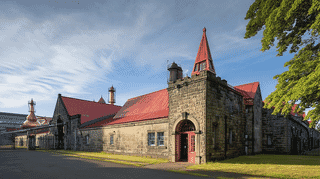
Ten Showa-period distillery buildings in Hokkaido. Their own dates differ from one building to the next, and each one of them is approximate here now.

Preserved at Museum Abashiri Prison in Hokkaido, the Former Abashiri Prison Chapel and Administration Building are nationally designated Important Cultural Properties rebuilt in 1912. Their unique Japanese-Western hybrid design tells the story of Meiji-era penal architecture and Hokkaido's pioneer past.
Established in 1896 on a forested hillside west of Abashiri City, the Futamigaoka Branch is one of Japan's only agricultural prison complexes and the oldest surviving wooden prison architecture in the country. Four buildings—the kitchen, the chapel and dining hall, the key and chain attachment office, and the inmate quarters—are designated as Important Cultural Properties, spanning the Meiji, Taisho, and early Showa eras. Relocated to the Abashiri Prison Museum in 1999, the complex offers a rare and vivid window onto the evolution of Japanese penal architecture.
This 1877 wooden office shows how the Hokkaido Development Commission's builders copied American pattern books, visible in its ridge ornament and porch gable.
On Hokkaido's Sea of Japan coast, the Sasanami house is the island's oldest surviving folk dwelling, raised in the early 1800s by a family of herring net owners.
This 1926 former court of appeals is the largest surviving public building of Sapporo soft stone. An Important Cultural Property, it now houses a free city museum.
The former Hanada family bansho on Hokkaido's coast is a herring fishery from around 1905. The largest surviving bansho in Hokkaido, it once lodged some 200 crews.
The Former Shimo-Yoichi Unjoya in Yoichi, Hokkaido, is the sole surviving example of an unjoya — a trading post once established across Hokkaido by the Matsumae Domain for commerce with the Ainu people. Designated as an Important Cultural Property, this imposing timber structure rebuilt in 1853 features a distinctive stone-weighted roof and Hokuriku-style fishing village architecture. Discover this irreplaceable monument to Hokkaido's frontier trade history.
Discover Shōgyōji Main Hall in Akkeshi, Hokkaido — an Important Cultural Property originally built in 1799 in Niigata and relocated by sea to eastern Hokkaido. Explore its elaborate carvings, polychrome decorations, and the fascinating story of frontier-era architectural heritage.
The Main Hall of Jōkokuji Temple in Kaminokuni, Hokkaido, built in 1758, is the oldest surviving temple building in Hokkaido and a designated Important Cultural Property of Japan. Featuring a fully developed Jōdo Buddhist architectural form with unique cold-climate adaptations, it stands as a precious testament to the history of northern frontier settlement and faith.
Built in 1901 by prosperous rice merchant Zenkichi Tachikawa, this two-story brick warehouse-style store in Hakodate masterfully blends Western arched facades with traditional Japanese upper-story design. Designated as a national Important Cultural Property in 1971—the first private residence in Hokkaido to receive this honor—the building survived the devastating 1907 Hakodate Great Fire and stands as an outstanding example of Meiji-era treaty port merchant architecture.
Completed in 1906 and designated as a nationally Important Cultural Property, this two-story stone building in the Early Modern European Revival style features exquisite interiors adorned with kinkarakawakami gold-tooled leather paper, ornate plaster ceilings, and marble fireplaces. It served as the venue for the historic Japan-Russia Karafuto Border Demarcation Conference and reopened in April 2025 following extensive restoration.
Completed in 1916 and designated in 1983, this brick church in Motomachi, Hakodate carries six cupolas and a bell tower ranked among Japan's 100 Soundscapes.
An Edo tea room attributed to Kobori Enshu, carried from Omi to Sapporo in the 1920s. Its eight windows and red pine central pillar survive in Nakajima Park.
A turret gate of 1853 and the only building left from Fukuyama Castle, the last in the Japanese style. Free to view year-round inside Matsumae Park, Hokkaido.
This 1922 timber kindergarten in Obihiro, Hokkaido, sets an octagonal domed playroom at the centre of a square plan. An Important Cultural Property since 2017.
A mid-Edo four-legged gate with a hand-split shingle roof at a Soto Zen temple in Matsumae, among Hokkaido's oldest temple buildings. Designated in 1993.
Built by the Kaitakushi in 1880 and opened as Emperor Meiji's lodging, this white clapboard hotel in Sapporo's Nakajima Park keeps its ultramarine trim.
Nine Meiji farm buildings on the Hokkaido University campus, built on Clark's plan for large-scale stock farming. Free entry, three barns open inside each summer.
A thatched settler farmhouse in Date City left by the Watari Date migration. Two rooms and an earth floor, heavily framed, with a plan echoed by later militia huts.
More from Hokkaido
Hokkaido’s registered properties across designations, with featured heritage and travel notes.
The complete kokuhō catalogue — browse by prefecture, period, and category.
Nationwide jūyō bunkazai — architecture, sculpture, painting, crafts, and documents.