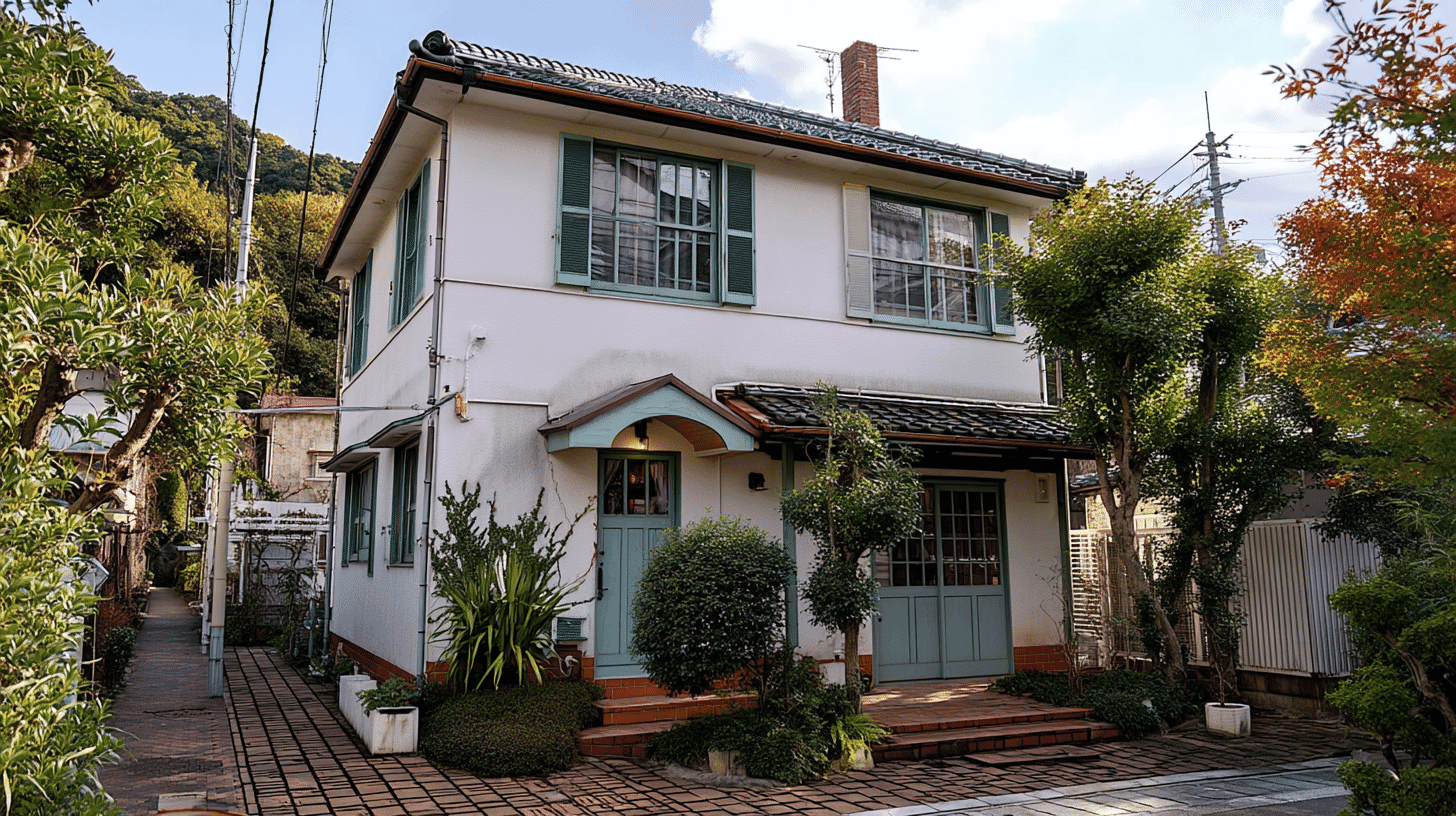
American House (Former Hamway Residence): A Hidden Gem of Early Showa Western Architecture in Kobe's Kitano District
Nestled among the famous ijinkan (Western-style residences) of Kobe's historic Kitano district, the American House, formerly known as the Hamway Residence, stands as an exquisite example of early Showa period residential architecture. While many visitors flock to the more famous Wind Vane House or Moegi-no-Yakata, this charming registered tangible cultural property offers a glimpse into the sophisticated Western lifestyle that flourished in Kobe during the early 20th century.
History and Background
The American House was constructed during the early Showa period (around 1926-1930), a time when Western architectural influences were deeply embedded in Kobe's cultural landscape. The building was originally built as a private residence for the Hamway family, one of many foreign residents who made their home in the scenic hillside neighborhood of Kitano-cho.
Kobe's Kitano district has a rich history dating back to the opening of Kobe Port in 1868. As foreign merchants, diplomats, and professionals arrived in increasing numbers, the established foreign settlement became overcrowded. The Japanese government designated the Kitano area as a "mixed residence zone" where foreigners and Japanese could live together. The hillside location, offering stunning views of Kobe Port and the Seto Inland Sea, became particularly popular among Western residents who found the scenery reminiscent of their homelands.
During this golden era, over 200 Western-style residences were constructed in the Kitano area. The American House represents the later period of this development, reflecting the mature architectural sensibilities that had evolved through decades of cultural exchange between East and West.
Cultural Property Designation
On July 1, 2003, the American House was officially registered as a National Registered Tangible Cultural Property by the Japanese government. This designation recognizes buildings and structures that contribute to the understanding of Japan's cultural heritage and deserve preservation for future generations.
The building received this prestigious designation primarily because it serves as an excellent example of early Showa period Western-style residential architecture. According to cultural heritage authorities, the American House demonstrates exemplary design principles that define the standards for residential architecture of its era. The structure represents a model of formative design, showcasing how Western architectural elements were thoughtfully adapted to the Japanese context during this transformative period in Japan's architectural history.
Architectural Features
The American House is a two-story wooden structure with a distinctive hipped roof covered in traditional Japanese tiles. The building covers a floor area of approximately 100 square meters, featuring an elongated rectangular floor plan that extends from east to west, with the southeast corner slightly protruding to create visual interest.
The interior layout reflects the practical yet elegant lifestyle of early Showa period foreign residents. The ground floor's southern section features three continuous rooms serving as living and dining spaces, with a fireplace positioned on the western side creating a warm focal point for the home. The kitchen is conveniently located on the northern side of the ground floor. The second floor houses the private bedrooms, following the typical Western residential arrangement of public spaces below and private quarters above.
The architectural style embodies the refined taste of the era, combining Western construction techniques with materials suited to Japan's climate. The hip roof design, known as yosemune-zukuri in Japanese, demonstrates the successful integration of Japanese roofing traditions with Western building forms.
Current Status and Visiting Information
Today, the American House operates as Studio Hellos, a professional photography studio. While this means the interior is not open for general public viewing, visitors can still appreciate the beautiful exterior architecture from the street. The building's well-preserved facade offers excellent opportunities for photography enthusiasts interested in capturing the unique atmosphere of Kitano's historic streetscape.
The building is located directly adjacent to the Kobayashi Residence (Former Sharp Residence), also known as Moegi-no-Yakata (the Pale Green Mansion), which is designated as a National Important Cultural Property. This proximity makes it convenient to view the American House while visiting this more famous neighboring attraction, allowing visitors to compare and appreciate the evolution of Western architectural styles in Kobe from the Meiji period through the early Showa era.
Exploring the Surrounding Area
The American House's location in the heart of Kitano-cho places it within easy walking distance of numerous other historic and cultural attractions. The area was designated as an Important Preservation District for Groups of Traditional Buildings in 1980, recognizing its outstanding historical value as Japan's first such designation in the "port town" category.
Nearby attractions include the iconic Weathercock House (Kazamidori-no-Yakata), with its distinctive red brick exterior and famous wind vane, and the Moegi-no-Yakata, whose pale green walls have become one of Kitano's most photographed sights. The Uroko-no-Ie (Fish Scale House), named for its exterior walls covered with approximately 4,000 natural slate tiles resembling fish scales, offers museum-quality displays of antique furniture and fine art.
For a unique experience, visitors can enjoy afternoon tea at the Former Moore Residence or explore the Starbucks Coffee Kobe Kitano Ijinkan Store, which operates out of a registered tangible cultural property building. The entire district invites leisurely strolling, with charming cafes, boutiques, and galleries tucked along its winding hillside streets.
Access Information
The American House is easily accessible from central Kobe. From Shin-Kobe Station (Shinkansen), the walk takes approximately 10-15 minutes heading west along the Kitano-dori street. From Sannomiya Station, visitors can walk north for about 15-20 minutes, following signs toward the Ijinkan-gai (Western-style residence district). The scenic uphill walk offers increasingly beautiful views of the historic architecture as you approach the heart of the district.
For those preferring public transportation, the City Loop sightseeing bus provides convenient access to the area with stops near the main cluster of ijinkan. The Kitano-cho area is pedestrian-friendly, though visitors should be prepared for the hilly terrain, particularly when exploring the upper reaches of the district where some of the most distinctive residences are located.
- 📍 Plan Your Visit to Hyogo
- Find tours, activities & transport passes near American House (former Hamway Residence)
- [ Himeji Castle & Kobe Night View Cruise ]
Q&A
- Can I enter and view the interior of American House?
- The American House currently operates as Studio Hellos, a professional photography studio, and is not open for general public viewing. However, visitors can appreciate the beautiful exterior architecture from the street and photograph the building's well-preserved facade.
- What makes the American House historically significant?
- The American House was registered as a National Registered Tangible Cultural Property in 2003 because it represents an excellent example of early Showa period Western-style residential architecture. The building demonstrates exemplary design principles that serve as a model for residential architecture of its era.
- What other attractions are nearby?
- The American House is located directly next to Moegi-no-Yakata (Former Sharp Residence), a National Important Cultural Property. Other nearby attractions include the famous Weathercock House (Kazamidori-no-Yakata), Uroko-no-Ie (Fish Scale House), and numerous cafes and shops within the historic Kitano Ijinkan district.
- How do I get to the American House from Shin-Kobe Station?
- From Shin-Kobe Station, walk west along Kitano-dori street for approximately 10-15 minutes. Alternatively, from Sannomiya Station, walk north for about 15-20 minutes, following signs toward the Ijinkan-gai. The City Loop sightseeing bus also provides convenient access to the Kitano area.
- What is the best time to visit the Kitano Ijinkan district?
- The Kitano district can be enjoyed year-round. Spring and autumn offer pleasant weather for walking the hilly streets. Weekday mornings tend to be less crowded than weekends. The area is particularly atmospheric in the early morning light or at dusk when the historic buildings are beautifully illuminated.
Basic Information
| Official Name | American House (Former Hamway Residence) / アメリカンハウス(旧ハムウェイ邸) |
|---|---|
| Cultural Property Status | National Registered Tangible Cultural Property (Building) |
| Registration Date | July 1, 2003 |
| Construction Period | Early Showa Period (c. 1926-1930) |
| Structure | Wooden 2-story building with hipped tile roof |
| Building Area | Approximately 100 square meters |
| Address | 3-57 Kitano-cho, Chuo-ku, Kobe City, Hyogo Prefecture, Japan |
| Current Use | Studio Hellos (Photography Studio) |
| Public Access | Exterior viewing only (interior not open to general public) |
| Owner | Hamada Shoji Co., Ltd. |
| Nearest Station | Shin-Kobe Station (10-15 min walk) / Sannomiya Station (15-20 min walk) |
References
- American House (Former Hamway Residence) - Cultural Heritage Online (Agency for Cultural Affairs)
- https://bunka.nii.ac.jp/heritages/detail/179686
- Registered Tangible Cultural Property: American House (Former Hamway Residence) - Cultural Heritage Sightseeing Guide
- https://bunkaisan.exblog.jp/29402027/
- Kobe Kitano-cho: American House and Others - Townscape Walk and Modern Architecture
- http://blog.livedoor.jp/hydrangea_serrata/archives/35652537.html
- About Ijinkan - Kobe Kitano Ijinkan Uroko Group Official Site
- https://kobe-ijinkan.net/md/about/
- Kobe Kitano History - Kobe Kitano Ijinkan Street Official Site
- https://www.kobeijinkan.com/history
- Moegi-no-Yakata (Former Sharp Residence) - Kobe City
- https://www.city.kobe.lg.jp/a21651/kanko/bunka/bunkashisetsu/foreigner/sub3.html
Last verified: 2026.01.28
Nearby heritages
- Kobayashi Family Residence (formerly Sharp Residence, Kitano
- 77-2 Kitanocho 3-chome, Chuo-ku, Kobe City, Hyogo Prefecture
- Former Thomas House (Kitano Cho, Ikuta Ku, Kobe City, Hyogo
- 3-13-3 Kitanocho, Chuo-ku, Kobe City, Hyogo Prefecture
- Yamamoto-Dori, Kitano-Cho, Kobe City
- Kobe City, Hyogo Prefecture
- Kitano Story Museum (former M.J. Shea House)
- 3-1-31 Kitanocho, Chuo Ward, Kobe City, Hyogo Prefecture
- Masuda Family Residence (formerly Morozov Family Residence)
- 4-85-1 Kitano-cho, Chuo-ku, Kobe City, Hyogo Prefecture, and other locations
- Masuda Family Residence (Former Morozov Family Residence)
- 4-85-1 Kitano-cho, Chuo-ku, Kobe City, Hyogo Prefecture, and other locations
- Uroko House (formerly Harrier House) Main Building
- 2-20-4 Kitanocho, Chuo Ward, Kobe City, Hyogo Prefecture
- Asaki Family Main Building
- 1-5-7 Kitanocho, Chuo Ward, Kobe City, Hyogo Prefecture
- South Wall of the Sakai Family Residence
- 3-1-7 Yamamotodori, Chuo-ku, Kobe City, Hyogo Prefecture, and other locations
- Sakai Family Main House
- 3-1-7 Yamamotodori, Chuo-ku, Kobe City, Hyogo Prefecture, and other locations