
Registered Tangible Cultural Properties of Ishikawa
石 川 県 の 登 録 有 形 文 化 財Ishikawa · Registered Tangible Cultural Properties
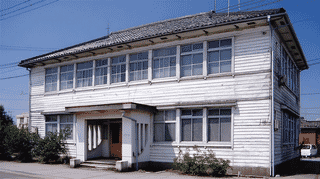
Discover Toita Hall, a beautifully preserved 1940s wooden village office building in Kanazawa, designated as a Registered Tangible Cultural Property. Explore its unique architectural features blending Japanese and Western styles along the historic Kanaishi Road.

Discover the Akakura Family Residence Main House, a Registered Tangible Cultural Property in the historic Uomachi fish merchant district of Nanao, Ishikawa Prefecture. Learn about its architectural heritage and the castle town legacy of the Noto Peninsula.
Discover Akatsukiya, a 1933 Kanazawa machiya townhouse designated as a Registered Tangible Cultural Property and now operating as a charming guesthouse near Kenrokuen Garden.
The Asanaga Family Residence, a registered late-Edo farmhouse on the edge of old Kanazawa, keeps its earthen work floor and heavy timber frame. A private home.
On the edge of old Kanazawa near the Asano River, this late-Edo storehouse pairs a stone-look plastered base with white-plaster upper walls and a floating roof.
Discover Asanogawa Ohashi, a 1922 reinforced concrete arch bridge in Kanazawa, Ishikawa Prefecture. This Registered Tangible Cultural Property links the Higashi and Kazuemachi tea districts with its elegant triple-arch silhouette.
The Asanogawa Ohashi-zume Fire Watchtower, standing at the northern foot of the Asanogawa Ohashi bridge in Kanazawa's Higashiyama district, is the oldest surviving fire watchtower in the city. Built in 1924 with a distinctive triangular steel-frame design reaching approximately 11 meters, it is designated as a nationally Registered Tangible Cultural Property. The sole survivor of Kanazawa's historic Three Watchtowers, it preserves the memory of Taisho-era fire prevention at the gateway to the Higashi Chaya District.
Discover the Awazu Enbujo, a Registered Tangible Cultural Property in Komatsu, Ishikawa. Built in 1933, this beautifully restored theater in Awazu Onsen showcases traditional Japanese stage architecture and the cultural legacy of the Kaga hot spring region.
On Kanazawa's Kodatsuno plateau, a 1928 home for biochemist Suto Kenzo: a half-timbered front, Japanese sides under one red-tiled roof, a central-corridor plan.
A 57-metre wall in Kanazawa that grows a hedge between twin concrete runs, built in 1928 for a German-trained doctor and now a registered cultural property.
Built in 1931 and modeled on a Kyoto National Treasure, this cypress Noh stage was moved into Japan's first public Noh theater, beside Kenrokuen in Kanazawa.
Built in 1922 as an army commander's villa by Kenrokuen, this Kanazawa house shows a different face on each side and opens free beside a conservation studio.
In central Kanazawa, Ishiguro Shoten's store and house is a 1936 art dealer's machiya, red-ochre timber set against black plaster walls, registered in 2015.
North of Kanazawa Castle, the Izumi Residence is the rare late-Edo home of a lower-ranking samurai, its plaster-and-timber gable facade registered in 2004.
A two-story earthen storehouse built in late-Edo Kanazawa for a middle-rank samurai family. Plain but finely made, it was registered as a cultural property in 2004.
A registered Meiji folk house on Kanazawa's wooded northern edge, the Itō Residence raises an azumadachi gable of stacked beams and white-plastered ties above a vast 42-mat earthen hall.
Built in 1916 in Kanazawa's Ishibiki quarter, this small former clinic is a timber building disguised as Western stone, with a scored mortar front and pilasters.
In Kanazawa, a 1916 wooden townhouse stands behind a former clinic, its plan separating patient and family routes, an early mark of modern urban living in Japan.
In Kanazawa's Ishibiki, the Ueno Family Storehouse is a small 1916 dozo with white-plastered walls and a placed tiled roof, a cultural property near Kenrokuen.
Standing in the wooded precincts of Enuma Shrine in Kaga City, Ishikawa Prefecture, the Chikkeikan is a graceful two-story timber residence built in 1900 as the country home of Maeda Toshika, the fourteenth and last lord of the Daishōji Domain. Registered as a Tangible Cultural Property of Japan in 2008, it preserves the formal reception spaces of an upper-rank samurai household—an upper chamber with a tokonoma alcove, a great hall, tatami corridors and a wide veranda—rendered in the refined craftsmanship of late-Meiji carpentry. Together with the neighboring Chōryūtei pavilion (an Important Cultural Property) and the city-designated stroll garden, it offers visitors a quietly atmospheric introduction to the heritage of Kaga's former castle town.
More from Ishikawa
Ishikawa’s registered properties across designations, with featured heritage and travel notes.
The complete kokuhō catalogue — browse by prefecture, period, and category.
Nationwide jūyō bunkazai — architecture, sculpture, painting, crafts, and documents.