
Meiji
Kanagawa · 明治Browse Kanagawa’s cultural heritage from the Meiji period (1868 – 1912). Filter by type and keyword, with concise stories, maps, and travel tips.
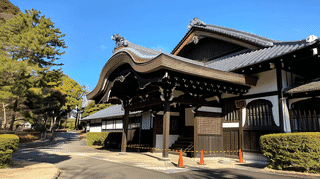
Built in 1911 as Sojiji moved from Noto, the Sojiji Karishinden enshrined the founder's tablets and links by stair and corridor to other halls. Registered 2023.
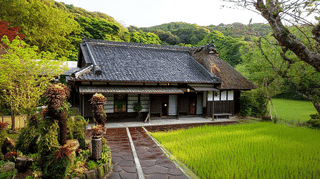
A timber main house in Hiratsuka, Kanagawa Prefecture, Japan. Classed as Edo, its own year field over there nonetheless still reads Meiji even so now.

The former head office of the Yokohama Specie Bank, a stone bank of 1904 in Naka, Yokohama, is a leading work of its era, its restored dome crowning a museum.
The main hall of Oyamadera, halfway up Mount Oyama in Kanagawa, is a grand Shingon hall of 1885 whose dragon-carved porch recalls the heyday of the Oyama pilgrimage.
Dated 1899 and moved in 1933, this 17-square-metre plastered storehouse is the oldest building on its Yokohama plot, kept when the main house was rebuilt.
The 1895 first-class isolation lodge of the Nagahama Quarantine Station, registered in 2018 and relocated in 2025 to Umi-no-Koen in Yokohama.
The first ward of the Nankoin sanatorium in Chigasaki, Kanagawa, built in 1899, is a weatherboarded ward with pedimented sash windows, seen from a memorial garden.
Shogenji Hondo in Hakone began around 1904 as banker Imamura Shigezo's villa, was moved here in 1932, and became a Registered Tangible Cultural Property in 2002.
Ugajinja, in the far north of the Yugyo-ji precinct, is a shrine of just 3.6 square metres yet dense with carving, the smallest of the temple's ten registered structures.
Reached by a corridor behind the Obankata, Yugyo-ji's Small Shoin served official duties and guest receptions, its two rows of rooms ending in alcove-fitted inner rooms.
Yugyo-ji's Somon is a large black gate about 7.2 metres tall, the local Kuromon, facing the old Tokaido at Fujisawa-juku. Registered with its walls for landscape value.
The pavilion before Yugyo-ji's Main Hall is a single open bay dense with carving, from openwork beam-ends to animals among the brackets. It is early Meiji work.
A village headman's silk-rearing farmhouse of 1875, moved to Hakone in 1953 and registered in 2001, Hakone Kowakien Geihinkan keeps its raised sericulture roofline.
Made in England in 1888 for the Tōkaidō line and re-erected over a Hakone gorge in 1917, this lattice truss still carries trains 43 metres above the river.
The Airy of the Fujiya Hotel in Hakone, built in 1884 and moved to its present site in 1935, is one of the few surviving buildings of Japan's first resort hotels.
Built in 1897 so Yokohama could stop pumping, this Doshi River intake pairs a 4.6-metre cobble-packed iron grille with two Glasgow-made pipes. Registered 1998.
A 34.2-metre concrete square above the Doshi River, this 1897 basin let silt drop out before water reached the Kawai and Nogeyama plants. Registered 1998.
Built in 1881 and moved to Ryukoji in 1969, this open bell tower has inward-leaning round posts, packed Zen-style brackets and a bell any visitor may ring by day.
A National Treasure at Yokohama's Kanazawa Bunko: 16,692 Buddhist scriptures and 4,149 medieval documents from the Kanazawa Hojo library and the temple of Shomyoji.
Filmed in November 1899 behind Tokyo's Kabuki-za theatre, Momijigari is the oldest surviving film made by a Japanese cinematographer and the only moving record of two of the Meiji era's greatest kabuki actors, Ichikawa Danjūrō IX and Onoe Kikugorō V. In 2009 it became the first film of any kind to be designated a Japanese Important Cultural Property. This guide explains how the film came to be made, why it matters, and how international visitors can engage with it today through the National Film Archive of Japan in Kyobashi, Tokyo.