
Meiji
Kanagawa · 明治Browse Kanagawa’s cultural heritage from the Meiji period (1868 – 1912). Filter by type and keyword, with concise stories, maps, and travel tips.
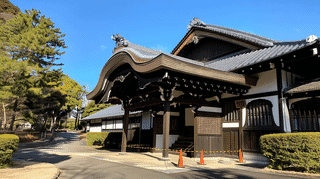
Discover Sojiji Temple in Yokohama, home to 18 magnificent Registered Tangible Cultural Properties from the Taisho and early Showa periods. Explore authentic Zen architecture, the 152-meter Hyakken Corridor, and traditional training halls at one of Japan's two head temples of Soto Zen Buddhism, just 7 minutes from Tsurumi Station.
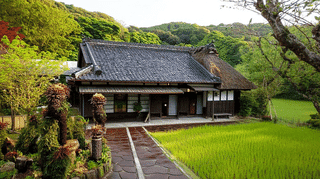
Explore the Hara Family Residence, a National Registered Tangible Cultural Property in Hiratsuka City. This exceptional compound of four historic buildings—main house, tea room, storehouse, and Edo-period gatehouse—preserves the traditional lifestyle of prosperous Meiji-era farming families in Kanagawa Prefecture.

Standing at the heart of Yokohama's historic Bashamichi district, the Former Yokohama Specie Bank Head Office Main Building is a magnificent Neo-Baroque masterpiece completed in 1904 by architect Tsumaki Yorinaka. Crowned by the iconic octagonal copper dome known as 'Ace's Dome,' clad in giant Corinthian orders and rusticated stonework, this stately building has survived the Great Kanto Earthquake and wartime fires. Designated a National Important Cultural Property in 1969 and a National Historic Site in 1995, it serves today as the Kanagawa Prefectural Museum of Cultural History.
The Main Hall of Oyamadera, perched on the slopes of Mount Oyama in Isehara, Kanagawa, is a majestic esoteric Buddhist hall rebuilt in 1885 through nationwide donations. Registered as a National Tangible Cultural Property in 2024, it features impressive dragon carvings, a traditional five-bay layout, and over 1,200 years of pilgrimage history.
Dated 1899 and moved in 1933, this 17-square-metre plastered storehouse is the oldest building on its Yokohama plot, kept when the main house was rebuilt.
Discover the Former Nagahama Quarantine Station Detention House No. 1 in Yokohama's Umi-no-Kōen Park—a Registered Tangible Cultural Property dating from 1895 with ties to Dr. Hideyo Noguchi, now relocated and preserved as a cultural landmark.
The Former Nankoin First Ward in Chigasaki, Kanagawa Prefecture, is a Meiji-era wooden building constructed in 1899 as the inaugural ward of Nankoin, a tuberculosis sanatorium once hailed as the greatest in East Asia. Now a National Registered Tangible Cultural Property, this historic structure connected to literary figures such as Kunikida Doppo can be viewed within the Nankoin Memorial Taiyo-no-Sato Garden.
Shogenji Hondo in Hakone began around 1904 as banker Imamura Shigezo's villa, was moved here in 1932, and became a Registered Tangible Cultural Property in 2002.
Ugajinja, in the far north of the Yugyo-ji precinct, is a shrine of just 3.6 square metres yet dense with carving, the smallest of the temple's ten registered structures.
Reached by a corridor behind the Obankata, Yugyo-ji's Small Shoin served official duties and guest receptions, its two rows of rooms ending in alcove-fitted inner rooms.
Yugyo-ji's Somon is a large black gate about 7.2 metres tall, the local Kuromon, facing the old Tokaido at Fujisawa-juku. Registered with its walls for landscape value.
The pavilion before Yugyo-ji's Main Hall is a single open bay dense with carving, from openwork beam-ends to animals among the brackets. It is early Meiji work.
A village headman's silk-rearing farmhouse of 1875, moved to Hakone in 1953 and registered in 2001, Hakone Kowakien Geihinkan keeps its raised sericulture roofline.
Made in England in 1888 for the Tōkaidō line and re-erected over a Hakone gorge in 1917, this lattice truss still carries trains 43 metres above the river.
Tucked behind the Hanagoten wing of the Fujiya Hotel in Hakone-Miyanoshita, the Aerie is the oldest surviving building on the property. Built in 1884 as the first reconstruction after the great Miyanoshita fire of 1883, it already shows the signature Fujiya design of symmetrical corner projections and a central karahafu porch — the prototype for the later Main Building and Western Annexes. Registered as a Tangible Cultural Property of Japan in 1997, it stands as one of the very few surviving examples of Japan's earliest resort-hotel architecture.
Built in 1897 so Yokohama could stop pumping, this Doshi River intake pairs a 4.6-metre cobble-packed iron grille with two Glasgow-made pipes. Registered 1998.
A 34.2-metre concrete square above the Doshi River, this 1897 basin let silt drop out before water reached the Kawai and Nogeyama plants. Registered 1998.
A National Treasure at Yokohama's Kanazawa Bunko: 16,692 Buddhist scriptures and 4,149 medieval documents from the Kanazawa Hojo library and the temple of Shomyoji.
Filmed in November 1899 behind Tokyo's Kabuki-za theatre, Momijigari is the oldest surviving film made by a Japanese cinematographer and the only moving record of two of the Meiji era's greatest kabuki actors, Ichikawa Danjūrō IX and Onoe Kikugorō V. In 2009 it became the first film of any kind to be designated a Japanese Important Cultural Property. This guide explains how the film came to be made, why it matters, and how international visitors can engage with it today through the National Film Archive of Japan in Kyobashi, Tokyo.