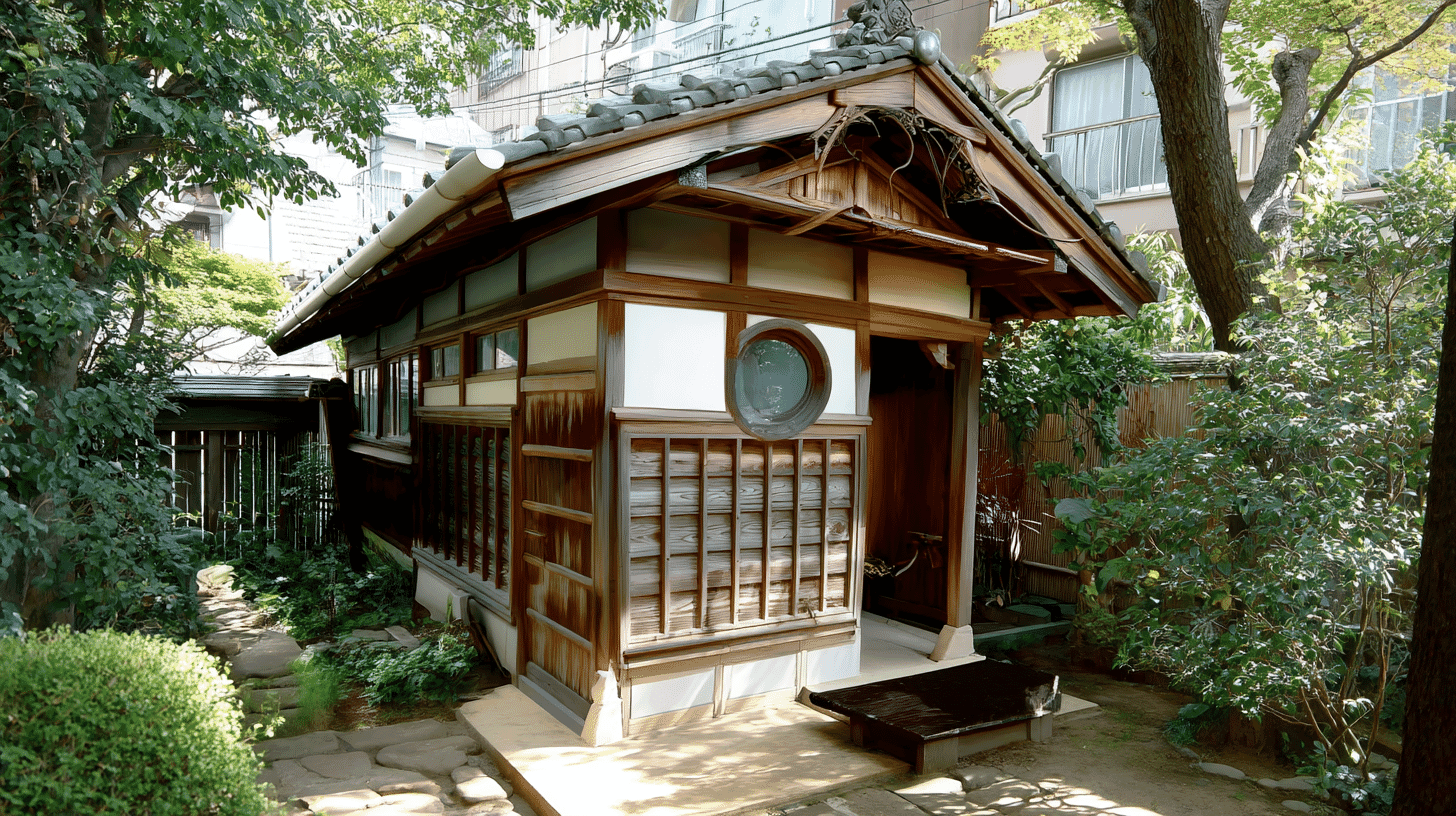
A Hidden Gem of Japanese Architectural Aesthetics
In the small town of Tano-cho, nestled in the eastern region of Kochi Prefecture, stands an extraordinary example of Japanese architectural refinement that might surprise visitors: a toilet building designated as a nationally registered tangible cultural property. The Tanitoyoke Residence Toilet (谷豊家住宅便所) represents a fascinating aspect of Japanese culture—the belief that beauty and craftsmanship should extend to every corner of daily life, including the most utilitarian of spaces.
This early Showa-period structure demonstrates how Japanese aesthetics transcend mere function, transforming an ordinary building into an elegant expression of the sukiya architectural tradition that evolved from tea ceremony culture.
What is the Tanitoyoke Residence Toilet?
The Tanitoyoke Residence Toilet is a small wooden structure built during the early Showa period (approximately 1926-1940s) as part of the larger Tanitoyoke family estate in Tano-cho, Kochi Prefecture. It was officially registered as a nationally registered tangible cultural property on December 1, 2003, alongside the residence's detached building (hanare).
The building is positioned north of the main house and south of the detached building, along the eastern edge of the estate grounds. A covered walkway (watarō-rōka) elegantly connects it to the detached building, creating a harmonious flow within the residential compound.
Architectural Features and Design Elements
Despite its modest 7.0 square meter footprint, this single-story wooden structure showcases remarkable architectural sophistication. The building features an irimoya-zukuri (hipped-gable) roof covered with traditional sangi-buki (interlocking) tiles, oriented along an east-west axis. Its dimensions of approximately 1.5 ken by 1.5 ken (roughly 2.7 by 2.7 meters) create an intimate yet refined space.
The exterior wall treatment exemplifies the sukiya aesthetic tradition. The lower portion features sasarako-shitami, a distinctive horizontal bamboo lattice siding technique that adds texture and visual interest. Above this, plastered shin-kabe (exposed frame) walls finished with traditional shikkui (lime plaster) create an elegant contrast that speaks to the refined taste of its original owners.
Perhaps most striking are the sukiya-style design elements that elevate this building far beyond ordinary utility structures. Round windows (marumado), a hallmark of tea house architecture, punctuate the façade, while carefully crafted fittings and joinery throughout demonstrate the skilled craftsmanship invested in this seemingly humble building.
Why Was It Designated as a Cultural Property?
The Tanitoyoke Residence Toilet received its registration as a tangible cultural property under the criterion of serving as "a model of architectural design" (zōkei no kihan to natte iru mono). This designation recognizes buildings that exemplify outstanding design principles worthy of preservation and study.
Several factors contributed to this recognition. First, the building demonstrates exceptional craftsmanship in applying sukiya aesthetic principles to a utilitarian structure, showing how Japanese architectural philosophy extended beauty to all aspects of domestic life. Second, it stands as a well-preserved example of early Showa-period residential architecture in rural Kochi, a region whose traditional buildings are increasingly rare. Third, the harmonious integration with the larger residential compound, including its connection via covered walkway, illustrates the thoughtful spatial planning characteristic of traditional Japanese estates.
Understanding the Sukiya Tradition
To fully appreciate this building's significance, one must understand the sukiya architectural tradition from which it draws inspiration. Sukiya-zukuri originated from tea ceremony culture during the Azuchi-Momoyama period (1568-1600), pioneered by tea masters like Sen no Rikyū. The style rejected the formal grandeur of shoin architecture in favor of refined simplicity, natural materials, and subtle beauty.
Key characteristics of sukiya design include the use of natural materials like unfinished wood, bamboo, and plaster; asymmetrical compositions that avoid rigid formality; integration with surrounding gardens and nature; and meticulous attention to craftsmanship in every detail. The round windows seen on the Tanitoyoke toilet building are particularly emblematic of this tradition, serving both functional purposes of ventilation and light while adding a distinctly artistic element.
That these principles were applied to a toilet building reflects a broader Japanese cultural value—the idea that every space we inhabit deserves consideration and care, and that beauty enhances our daily experience regardless of a room's function.
The Tanitoyoke Residence Complex
The toilet building is part of a larger registered cultural property complex that includes the detached building (hanare). Together, these structures represent the refined lifestyle of a prosperous family in Tano-cho during the early 20th century.
Tano-cho itself has a rich history as an administrative and cultural center for the Aki region of Kochi Prefecture since the Edo period. The town served as the location for the Aki-gun (district) magistrate's office and the domain school Tano Gakkan, making it a hub of political, economic, and educational activity. Wealthy merchant families like the Tanitoyoke built residences that reflected both their prosperity and their cultural sophistication.
Visiting the Area: What to See in Tano-cho
While the Tanitoyoke Residence is a private property, visitors to Tano-cho can explore numerous other cultural and historical attractions in this compact yet charming town—the smallest municipality in Shikoku by area.
The Oka Goten mansion offers a glimpse into the life of wealthy merchants who served as official purveyors to the Tosa domain. Historical sites related to the Twenty-Three Martyrs (Nijūsan-shi), samurai loyalists who were executed here during the Bakumatsu period, tell compelling stories of Japan's tumultuous path to modernization. The former residence of Prime Minister Hamaguchi Osachi, Kochi's first prime minister who was known as the "Lion Premier," provides insight into modern Japanese political history.
The Michi-no-Eki Tano Ekiya (roadside station) offers local products, fresh vegetables from nearby farms, and regional specialties. From the Ōno Plateau, visitors can enjoy panoramic views stretching from Cape Muroto to Cape Ashizuri on clear days, along with the phenomenon of "Daruma sunset" visible in winter months.
Exploring Kochi's Registered Cultural Properties
Tano-cho is home to multiple clusters of registered tangible cultural properties. The nearby towns of Nahari and Yasuda feature dozens of registered historic buildings from merchant families and religious institutions. These areas can be explored on foot, offering visitors an authentic journey through traditional Japanese townscapes largely unchanged since the Meiji and Taishō eras.
The Gomen-Nahari Line, operated by Tosa Kuroshio Railway, provides scenic coastal access to this region. The journey itself is a delight, with views of the Pacific Ocean and charming local stations, each featuring unique mascot characters designed to represent their communities.
Why This Matters: Japanese Aesthetics in Everyday Life
The designation of a toilet building as a cultural property might seem unusual to visitors from other countries, but it speaks to something profound in Japanese culture—the integration of aesthetics into every aspect of daily existence. This philosophy manifests in the careful arrangement of a bento lunch box, the choice of seasonal motifs on everyday tableware, and yes, the design of buildings we might otherwise overlook.
The Tanitoyoke Residence Toilet reminds us that in Japanese tradition, there is no mundane space unworthy of beauty. The sukiya aesthetic, born from the tea ceremony's embrace of rustic simplicity and natural materials, found its way from teahouses to residential buildings of all types. This cultural heritage continues to influence Japanese architecture and design today, from luxury ryokan to contemporary homes.
- 📍 Plan Your Visit to Kochi
- Find tours, activities & transport passes near Tanitoyo Family Residence Toilet
- [ Katsurahama Beach & Kochi Castle Ryoma Tour ]
Q&A
- Can visitors enter and tour the Tanitoyoke Residence Toilet?
- The Tanitoyoke Residence is a private property, so interior tours are generally not available to the public. However, visitors can appreciate the exterior architecture and the surrounding streetscape of Tano-cho, which features other historically significant buildings and registered cultural properties.
- What makes sukiya-style architecture distinctive?
- Sukiya-style architecture originated from tea ceremony culture and emphasizes refined simplicity, natural materials, and subtle beauty. Key features include the use of unfinished wood and bamboo, round windows (marumado), exposed-frame walls with plaster finish, and careful attention to craftsmanship. Unlike the formal shoin style favored by samurai, sukiya embraces asymmetry and rustic elegance.
- How do I get to Tano-cho in Kochi Prefecture?
- From Kochi City, take the Tosa Kuroshio Railway's Gomen-Nahari Line to Tano Station. The journey takes approximately 76 minutes from Kochi Station. Alternatively, highway buses from Kochi City Bus Terminal reach Tano in about 90 minutes. The nearest airport is Kochi Ryoma Airport (Nankoku City).
- What other cultural properties can I visit in Tano-cho?
- Tano-cho has numerous registered tangible cultural properties, including several traditional merchant residences and the Nagahō-ji Temple. Nearby Nahari-cho and Yasuda-cho offer extensive collections of registered buildings from the Meiji and Taishō eras, creating excellent walking courses for those interested in traditional Japanese architecture.
- Why was a toilet building designated as a cultural property?
- In Japanese culture, aesthetic consideration extends to all aspects of daily life, including utilitarian spaces. The Tanitoyoke Residence Toilet was designated because it exemplifies outstanding sukiya-style design applied to a humble building type, demonstrating the craftsman's skill and the owner's refined taste. It serves as a model of architectural design worthy of preservation and study.
Basic Information
| Name | Tanitoyoke Residence Toilet (谷豊家住宅便所 / Tanitoyoke Jutaku Benjo) |
|---|---|
| Registration Number | 39-0097 |
| Location | 1933, Tano-cho, Aki-gun, Kochi Prefecture, Japan |
| Structure | Wooden construction, single-story, tile roof (sangi-buki) |
| Building Area | 7.0 square meters |
| Period | Early Showa era (approximately 1926-1940s) |
| Designation Date | December 1, 2003 |
| Designation Criteria | Serves as a model of architectural design |
| Access | Approximately 5 minutes walk from Tano Station (Tosa Kuroshio Railway) |
| Note | Private property; exterior viewing only |
References
- Cultural Heritage Online - Tanitoyoke Residence Toilet
- https://bunka.nii.ac.jp/heritages/detail/188470
- Weblio Dictionary - Tanitoyoke Residence Toilet
- https://www.weblio.jp/content/谷豊家住宅便所
- Kochi Prefecture - Nationally Registered Tangible Cultural Properties (Buildings)
- https://www.pref.kochi.lg.jp/doc/2023062200186/
- Tano-cho Official Website - Town Introduction
- https://tanocho.jp/about
- Tano-cho Tourism Information
- https://tanocho.jp/tourism
