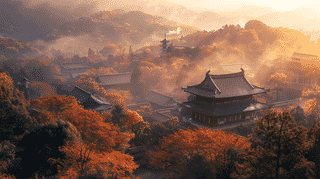
Daitoku-ji Karamon Gate: A National Treasure from Hideyoshi's Golden Age

Hidden within the normally closed compound of Daitoku-ji Temple in northern Kyoto stands one of Japan's most breathtaking architectural masterpieces — the Karamon Gate. Designated a National Treasure, this ornate gate is believed to be one of the last surviving structures from Toyotomi Hideyoshi's legendary Jurakudai palace, a symbol of the unifier's supreme power during the Azuchi-Momoyama period (1568–1600). With its dazzling polychrome carvings, gilded fittings, and an astonishing array of mythical creatures, the Daitoku-ji Karamon stands as a vivid testament to an era when art and authority were inseparable.

A Gate Fit for a Ruler: The History of Daitoku-ji Karamon

Daitoku-ji Temple was founded in 1315 by the Zen monk Daito Kokushi (Shuho Myocho) and has served as the head temple of the Rinzai sect's Daitoku-ji branch for over seven centuries. After suffering extensive damage during the Onin War (1467–1477), the temple was revived by the legendary Ikkyu Sojun — the beloved monk popularly known as "Ikkyu-san" — and later flourished under the patronage of Toyotomi Hideyoshi and powerful feudal lords of the Momoyama period.

The Karamon Gate is dated to the Momoyama period (late 16th century) and is widely held to be a surviving structure from Hideyoshi's Jurakudai — a magnificent palace-fortress built in 1587 near the Imperial Palace in Kyoto. Jurakudai was demolished in 1595, but several of its architectural elements were reportedly relocated to temples and shrines across Kyoto. Metal fittings on the Daitoku-ji Karamon bear inscriptions from the Tensho era (1573–1592), and a ridgepole tag dates to 1603 (Keicho 8), lending further credibility to its Jurakudai provenance. Among all buildings claiming such a connection, this gate is considered the most likely genuine remnant.

Originally, the Karamon stood facing east beside the Chokushimon (Imperial Messenger Gate), west of the famous Sanmon (main gate). It was moved to its current position — fronting the south garden of the Hojo (Abbot's Quarters) — during the Meiji era (1880s), replacing an earlier "Akechi Gate" that was transferred to Nanzen-ji Temple's Konchi-in sub-temple.

Why the Karamon Is a National Treasure

The Daitoku-ji Karamon was designated a National Treasure on March 29, 1952. It is one of only three karamon gates in Japan to hold this highest cultural designation, alongside those at Nishi Hongan-ji Temple and Toyokuni Shrine — together known as the "Three Great Karamon Gates of the Momoyama Period" (Momoyama no San-Karamon).

The gate's exceptional value lies in the extraordinary density and variety of its sculptural ornamentation. The carvings encompass dragons, peacocks, lions (shishi), kirin, baku (dream-eating creatures), shin (shape-shifting dragons), cranes, carp, grapevines, peonies, and many more motifs — over thirty animal sculptures in total. No other gate in Japan is believed to display such a rich concentration of Momoyama-era carved decoration. The vivid polychrome painting and lavish gilded metalwork further distinguish it as a pinnacle of the era's artistic ambition.

Architectural Features and Highlights

The Karamon is a four-legged gate (shikyaku-mon) with a gabled cypress-bark roof (kirizuma-zukuri, hiwadabuki) and dramatic karahafu (undulating bargeboards) on both the front and rear. Every surface is laden with sculptural detail and vibrant color.

The Peacocks and Pine

At the center of the gate's lintel, a pair of peacocks face each other across a pine tree. The right peacock's beak is slightly open (representing "a," the first sound), while the left is closed ("un," the last sound) — forming the "a-un" (alpha-omega) pairing also seen on temple guardian figures. The peacocks' multi-layered tail feathers are carved with astonishing three-dimensional depth.

The Twin Dragons

Where traditional gates use bracket complexes (tokyo) atop the main pillars to support the eaves, the Karamon instead features massive carved dragons. In a deliberate gesture of incompleteness — a common practice at Japanese temples to ensure the structure's "eternal youth" — one dragon's body has a small section left unpainted, exposing the bare wood beneath.

Mythical Creatures: Baku and Shin

On the end beams (koryobana) of each gable, white-faced creatures exhale swirling clouds — these are the shin (or shen), mythical shape-shifting dragons from Chinese legend, whose breath produces mirages (shinkirou). Nearby lurk the baku, elephant-like dream-eaters, and gilded shishi (guardian lions) stand watch at the gate's flanks.

The Toyotomi Paulownia Crest

Under the sweeping karahafu eaves, the gold "go-shichi no kiri" (five-seven paulownia) crest of the Toyotomi clan appears repeatedly on decorative metalwork, a vivid reminder that this gate was born in the era of Hideyoshi's dominance.

Pillar Carvings That Deceive the Eye

At the top and bottom of each pillar, what appears to be decorative lacquerwork and metal fittings is actually carved from the same single piece of wood as the pillar itself — an astonishing feat of craftsmanship that visitors often discover only when told by a guide.

The "Higurashi Gate" — A Gate You Could Gaze at All Day

So rich is its decoration that the Karamon has earned the nickname "Higurashi-mon" (Sunset Gate), meaning a gate so captivating that one could gaze at it from dawn to dusk without growing weary. This same epithet is famously applied to the Yomeimon Gate at Nikko Toshogu — and it is said that the Daitoku-ji Karamon actually served as the inspiration and model for that celebrated Tokugawa-era gate.

Visiting the Karamon: Practical Information

The Daitoku-ji Karamon is located within the Honbo (main compound) of the temple, which is normally closed to the public. However, the gate can be viewed during periodic special openings organized by the Kyoto Shunju organization or through programs such as "Kyo no Natsu no Tabi" (Kyoto Summer Trip) and "Kyo no Fuyu no Tabi" (Kyoto Winter Trip). These special viewings are typically guided tours held in spring or autumn, and may include the Hojo (National Treasure), the Hatto (Dharma Hall) with its famous ceiling dragon painting by Kano Tan'yu, and the Sanmon (the storied three-gate associated with Sen no Rikyu).

During special openings, guided tours are usually held at set intervals (approximately every 20–30 minutes), with limited capacity per group. Advance reservation may or may not be available depending on the event; arriving early is recommended. Photography policies vary by event — some allow still photography at the Karamon while restricting it in the garden. Admission fees for special viewings have typically ranged from ¥1,000 to ¥3,000 per person.

While the Honbo is not regularly open, the broader Daitoku-ji complex invites leisurely exploration year-round. Several sub-temples — including Daisen-in, Ryogen-in, and Zuiho-in — welcome visitors daily and offer magnificent Zen gardens and historic architecture.

Nearby Attractions

Daitoku-ji sits in Kyoto's atmospheric Murasakino neighborhood, surrounded by a wealth of cultural sites. Nearby highlights include:

  • Imamiya Shrine — a lively Shinto shrine known for its "aburi-mochi" (grilled rice cakes) sold at centuries-old teahouses flanking the approach.
  • Kinkaku-ji (Golden Pavilion) — approximately 15 minutes by bus to the west.
  • Kitano Tenmangu Shrine — the great shrine of scholarship, famous for its plum blossoms in spring.
  • Kyoto Botanical Gardens — a peaceful green oasis about 15 minutes east by bus.
  • Funaoka Onsen — a beautifully renovated traditional bathhouse just a short walk away, popular with locals and travelers alike.
📍 Plan Your Visit to Kyoto
Find tours, activities & transport passes near Daitokuji Karamon Gate
[ Kinkakuji Fushimi Inari & Kimono Rental ]

Q&A

QCan I visit the Daitoku-ji Karamon at any time?
ANo. The Karamon is located within the Honbo (main compound), which is normally closed to the public. It can be viewed only during periodic special openings, usually held in spring or autumn. Check the Kyoto Shunju website or Kyoto tourism resources for upcoming dates.
QIs there English-language guidance available during special openings?
AGuided tours during special openings are typically conducted in Japanese. However, printed guides or audio guides in English may occasionally be available. It is advisable to research current offerings before visiting or to bring a Japanese-speaking companion.
QIs photography allowed at the Karamon?
APhotography policies vary by event. During some special openings, still photography of the Karamon has been permitted, while photography of the Hojo garden is often prohibited. Always follow the instructions given by guides and staff on the day of your visit.
QWhat makes this gate different from the other two National Treasure karamon gates in Kyoto?
AWhile all three Momoyama-era National Treasure karamon gates (Daitoku-ji, Nishi Hongan-ji, and Toyokuni Shrine) share lavish sculptural ornamentation from Hideyoshi's era, the Daitoku-ji Karamon is distinguished by its extraordinary density of carved creatures — over 30 animal sculptures — and its rare setting within a Zen temple's dry landscape garden, creating a striking contrast between Momoyama opulence and Zen austerity.
QHow do I get to Daitoku-ji Temple?
AFrom Kyoto Station, take the Karasuma Subway Line to Kitaoji Station, then transfer to a city bus (routes 1, 204, 205, 206, or M1) and alight at the Daitokuji-mae stop. The journey takes approximately 35 minutes. Alternatively, take city bus No. 206 directly from Kyoto Station (approximately 45 minutes).

Basic Information

Name Daitoku-ji Karamon Gate (大徳寺唐門)
Cultural Designation National Treasure (designated March 29, 1952)
Period Momoyama period (late 16th century)
Architectural Style Shikyaku-mon (four-legged gate), kirizuma-zukuri (gabled roof), cypress bark thatching (hiwadabuki), with karahafu (cusped gables) front and rear
Owner Daitoku-ji Temple
Address 53 Murasakino Daitokuji-cho, Kita-ku, Kyoto 603-8231, Japan
Access Kyoto City Bus to "Daitokuji-mae" stop; or Karasuma Subway Line to Kitaoji Station, then bus
Viewing Special openings only (typically spring/autumn); check Kyoto Shunju or Kyoto tourism sites for schedules
Admission Varies by event (approximately ¥1,000–¥3,000 for special viewings)
Parking Available near Daitoku-ji (approximately 50 spaces)

References

Daitoku-ji Temple — Kyoto City Official Travel Guide
https://ja.kyoto.travel/tourism/single01.php?category_id=7&tourism_id=410
A Special Viewing of National Treasures at Kyoto's Daitokuji — Nippon.com
https://www.nippon.com/en/guide-to-japan/gu900056/
WANDER 国宝 — 大徳寺 唐門
https://wanderkokuho.com/102-01533/
大徳寺唐門 — japan-geographic.tv
https://japan-geographic.tv/kyoto/kyoto-daitokuji-karamon.html
Three Karamon Gates Reflect Hideyoshi's Authority — jhistories
https://jhistories.com/karamon/
大徳寺 本坊 特別公開 — 京都春秋
https://kyotoshunju.com/temple/daitokuji-honbo/
方丈修復前、最後の特別公開!「大徳寺 本坊」— そうだ 京都、行こう。
https://souda-kyoto.jp/blog/00915.html

Last verified: 2026.03.20