
Forty-Seven Items, National Treasure since 2001
Materials Related to the Keicho Embassy to Europe (慶長遣欧使節関係資料) is a group of Edo-period materials held at the Sendai City Museum, 26 Kawauchi, Aoba Ward, Sendai City, Miyagi Prefecture, designated a National Treasure on 22 June 2001. The quantity is forty-seven items and the owner is Sendai City.
The classification runs across three fields: historical materials, calligraphy and books, and archival documents. One group of materials spans several categories at once.
The Agency for Cultural Affairs leaves the field for designation as an Important Cultural Property blank. The materials went to National Treasure without that earlier step, unlike most of the properties covered here, which passed through it.
Kept by the Office That Suppressed the Faith
What stands out most in the Agency's account is how the materials came down.
After Hasekura's death they were kept by the Sendai domain's office for the investigation of Christians, and so survive to this day.
That office existed to suppress Christian belief. Into its keeping went materials that included Christian liturgical objects.
The body charged with suppression held the very things it was to suppress. As a result the materials were never dispersed.
The Agency gives no reason. Whether they were confiscated or came there some other way cannot be told from the record. Only the route by which they survived is set down.
From Parchment to Liturgical Objects
The Agency lists what the group contains.
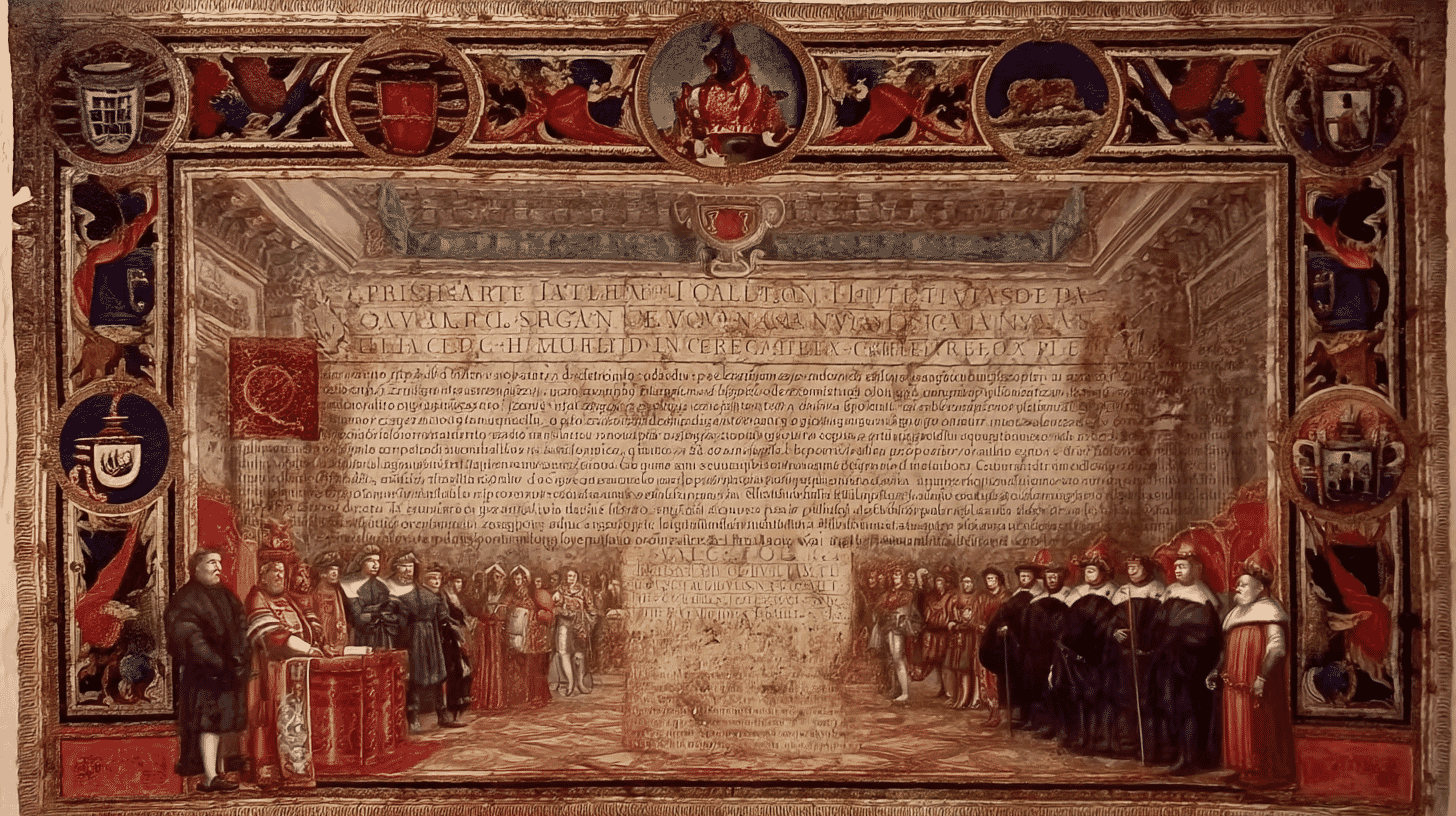
A certificate of Roman citizenship on parchment, granted to Hasekura at Rome; a portrait in oils; a portrait of the pope of the day; and Christian liturgical objects.
The materials and kinds vary widely. Parchment is prepared animal skin, a writing support not used in Japan. Oil painting is a Western technique. Items made with materials and methods unknown in Japan are among them.
That is also why three fields appear in the classification. A certificate is a document, a portrait a painting, a liturgical object a piece of applied art; no single field holds them all.
Accounts elsewhere call the portrait the oldest oil painting of its kind in Japan. The Agency says only a portrait in oils, and makes no comparison of dates.
Evidence of Contact
The Agency's assessment reads: these materials show what contact between Japan and Europe in the early Edo period actually amounted to.
What is valued is not the artistic merit of the individual pieces but their showing that contact. Their standing as historical evidence is what comes first.
The circumstances are recorded too. They are the objects brought back from Europe by Hasekura Tsunenaga, sent as envoy to Spain and Rome by Date Masamune, lord of the Sendai domain.
Brought back means received abroad and carried home to Japan.
The certificate of citizenship was granted to Hasekura at Rome. It is among the few items for which the record shows both where it was received and from whom.
Seeing Them
Sendai City owns the materials and the Sendai City Museum keeps them. All forty-seven are not necessarily on display at once.
Parchment and oil painting are vulnerable to light, and periods on view are often kept short. Confirm what is on show if particular items are the purpose of the visit.
The museum is at 26 Kawauchi, Aoba Ward, Sendai City, Miyagi Prefecture. Hours and admission may change, so check before travelling.
What repays looking at is the certificate of citizenship and the portraits. The parchment itself, as a material, says much about the character of this group.
- 📍 Plan Your Visit to Miyagi
- Find tours, activities & transport passes near Materials Related to the Keicho Embassy to Europe
- [ Matsushima Bay Cruise & Sendai Food Tours ]
Q&A
- When were these materials designated?
- On 22 June 2001, as a National Treasure. The quantity is forty-seven items, owned by Sendai City and held at the Sendai City Museum. The field for designation as an Important Cultural Property is blank, so they went to National Treasure without that earlier step.
- What do they consist of?
- The Agency records them as objects brought back from Europe by Hasekura Tsunenaga, sent as envoy to Spain and Rome by Date Masamune, and lists a certificate of Roman citizenship on parchment, a portrait in oils, a portrait of the pope of the day, and Christian liturgical objects.
- How did they survive?
- The Agency records that after Hasekura's death they were kept by the Sendai domain's office for the investigation of Christians and so survive to this day. That office existed to suppress Christian belief. No reason is recorded.
- Why are three classifications given?
- Historical materials, calligraphy and books, and archival documents are all listed. A certificate is a document, a portrait a painting, a liturgical object a piece of applied art, so one group spans several fields.
- Where can they be seen?
- At the Sendai City Museum, though all forty-seven are not necessarily on display at once. Parchment and oil painting are vulnerable to light and periods on view are often short, so confirm what is on show before travelling.
Basic Information
| Name | Materials Related to the Keicho Embassy to Europe (慶長遣欧使節関係資料) |
|---|---|
| Location | 26 Kawauchi, Aoba Ward, Sendai City, Miyagi Prefecture (Sendai City Museum) |
| Designation | National Treasure (historical materials, calligraphy and books, archival documents); designated without an earlier listing as an Important Cultural Property |
| Year Designated | 2001 (22 June), National Treasure |
| Quantity | 47 items |
| Dimensions | Objects brought back from Europe by Hasekura Tsunenaga, comprising a certificate of Roman citizenship on parchment granted to him at Rome, a portrait in oils, a portrait of the pope of the day, and Christian liturgical objects. After his death they were kept by the Sendai domain's office for the investigation of Christians. Edo period |
| Owner | Sendai City |
| Public Access | Held at the Sendai City Museum; all 47 are not necessarily on display at once |
References
- Cultural Heritage Online: Materials Related to the Keicho Embassy to Europe
- https://bunka.nii.ac.jp/heritages/detail/158158
- Sendai City Museum official site
- https://www.city.sendai.jp/museum/
- UNESCO Memory of the World
- https://www.unesco.org/en/memory-world/materials-related-keicho-era-mission-europe-japan-and-spain
- Agency for Cultural Affairs, National Cultural Properties Database
- https://kunishitei.bunka.go.jp/
Last verified: 2026.09.05