
Shōwa
Nagano · 昭和Browse Nagano’s cultural heritage from the Shōwa period (1926 – 1989). Filter by type and keyword, with concise stories, maps, and travel tips.
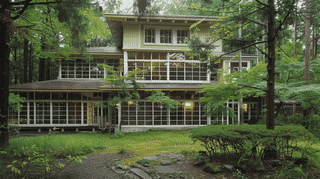
Discover the Former Kato Family Villa, a registered tangible cultural property representing Japan's pre-war wooden modernist architecture. Built in 1929, this Karuizawa villa features innovative sun rooms, billiard room, and stone fireplace - a must-see for architecture enthusiasts visiting Japan.
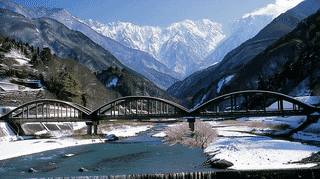
Discover Koshibu Bridge, a registered tangible cultural property in Oshika Village, Nagano. This elegant 1957 Lohse girder arch bridge offers stunning views of the Southern Alps and represents the pinnacle of mid-century Japanese bridge engineering.
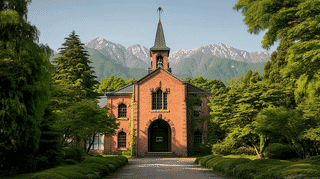
Discover Rokuzan Museum Rokuzan Hall, a registered tangible cultural property in Azumino, Nagano. Explore Japan's pioneering modern sculptor Ogihara Moriei's masterpieces in a stunning church-inspired building designed by architect Imai Kenji, set against the backdrop of the Northern Japanese Alps.

Antonin Raymond built this 1933 Karuizawa villa with log framing and a butterfly roof. An Important Cultural Property since 2023, it now houses the Musee Peynet.
Sakado Bridge in Nakagawa Village, Nagano, is a 1933 reinforced concrete arch bridge designated a National Important Cultural Property in 2020. With a record 70-meter span and stunning cherry blossom views, it stands as a masterpiece of early Showa civil engineering.
The Ueda St. Michael and All Angels Church in Ueda City, Nagano Prefecture, is a wooden Christian chapel built in 1932 in the style of a Japanese Buddhist temple. With its distinctive tiled hip-and-gable roof crowned by a cross and a three-aisle interior crafted from Kiso cypress, the church was registered as a national Tangible Cultural Property in 2021 — one of only two temple-style churches in Japan.
East of the Ozawa main house in Matsumoto's Hofukuji town, this early-Showa annex sets stained glass and coved plaster below tatami rooms, listed as a model of design.
A 17-metre steel fire lookout tower raised in 1955 beside the old Ina highway in Tatsuno, Nagano, with an alarm bell under its pointed roof and scrolled eaves.
The Former Karuizawa House (Former Matsukata Family Villa) is a nationally registered tangible cultural property in Karuizawa, Nagano Prefecture. Built around 1927, this elegant red-clad wooden villa once belonged to Matsukata Haruko — granddaughter of former Prime Minister Matsukata Masayoshi and wife of US Ambassador Edwin O. Reischauer. With its gable roof, central-corridor plan, and signature Asama-stone fireplace, it now welcomes visitors as Café Suzunone, offering a rare chance to step inside a heritage villa.
Built in 1936, the Former Suzuki Dental Clinic (Kataoka Sanso) is a nationally Registered Tangible Cultural Property in Karuizawa, Nagano Prefecture. This Western-style wooden building features striking bengara red clapboard siding with white window frames, preserving the historic resort landscape of Japan's premier highland retreat.
Discover the Former Dai-Ichi Kangyo Bank Matsumoto Branch in Nagano Prefecture, a 1937 reinforced concrete landmark with distinctive arched windows, now operating as HARMONIE BIEN restaurant and wedding venue. A Registered Tangible Cultural Property saved by a 20,000-signature preservation campaign.
Tucked into the wooded slopes of Aigatashiyama in Old Karuizawa, the Former Hamilton and Hard Karuizawa Cottage is a small two-story wooden retreat built around 1932 by missionary-architect William Merrell Vories. Originally owned by two Canadian Methodist missionaries — including the principal of Toyo Eiwa Jogakuin — this hidden gem was rediscovered, faithfully restored, and registered as a National Tangible Cultural Property in 2015. Though privately held, it stands as a rare witness to the origins of Karuizawa as Japan's first international resort.
A two-storey timber summer house of about 1930 in old Karuizawa, Nagano, with a wide sunroom facing south and rooms set around a hearth of undressed river stones.
A small 1940 munamon gate in Matsushiro, Nagano City, 1.9 metres across, built as the entrance to a stele honouring the Matsushiro domain scholar Yamadera Jozan.
Registered in 2005, this 1949 timber schoolhouse in Iida, Nagano, runs 64 metres under a tiled gable, its hipped porch fronting a building villagers raised by hand.
Registered in 2005, the north wing of Iida's Kinehara school holds seven 1949 classrooms behind ranma-topped sliding sashes, and a 2.25-metre rear corridor.
Standing in the Shimadachi district of Matsumoto City in Nagano Prefecture, the Former Yokouchi Clinic is a single-story wooden combined clinic-and-residence built in 1932 and registered as a National Tangible Cultural Property in December 2024. Its elegant fusion of a Western-style clinic wing and a traditional Japanese residence offers a rare window into early Showa-era regional medicine and architectural culture.
Tucked away in Uematsu, Nagano City, Kinshi Kaikan is a graceful two-story wooden schoolhouse built in 1939 as the main hall of Nagano Prefectural Middle School. With its tile-clad central tower crowned by a pyramidal roof and symmetrical wings extending outward, the building is said to evoke the flight of the legendary golden kite (kinshi). Registered as a National Tangible Cultural Property of Japan, it preserves the elegance of early Showa-era school architecture.
Built in 1933 over the dramatic Kumeji Gorge along the Sai River in Nagano City, Kumejibashi is an elegant reinforced concrete arch bridge clad in local teppei stone. Celebrated in the Nagano prefectural anthem and steeped in folklore, it was registered as a National Tangible Cultural Property in 2021.
An early-Showa fermentation storehouse at Sakai Meijo brewery in Chikuma, Nagano, pairing a mud-walled body with a Western king-post roof truss. Registered 2003.