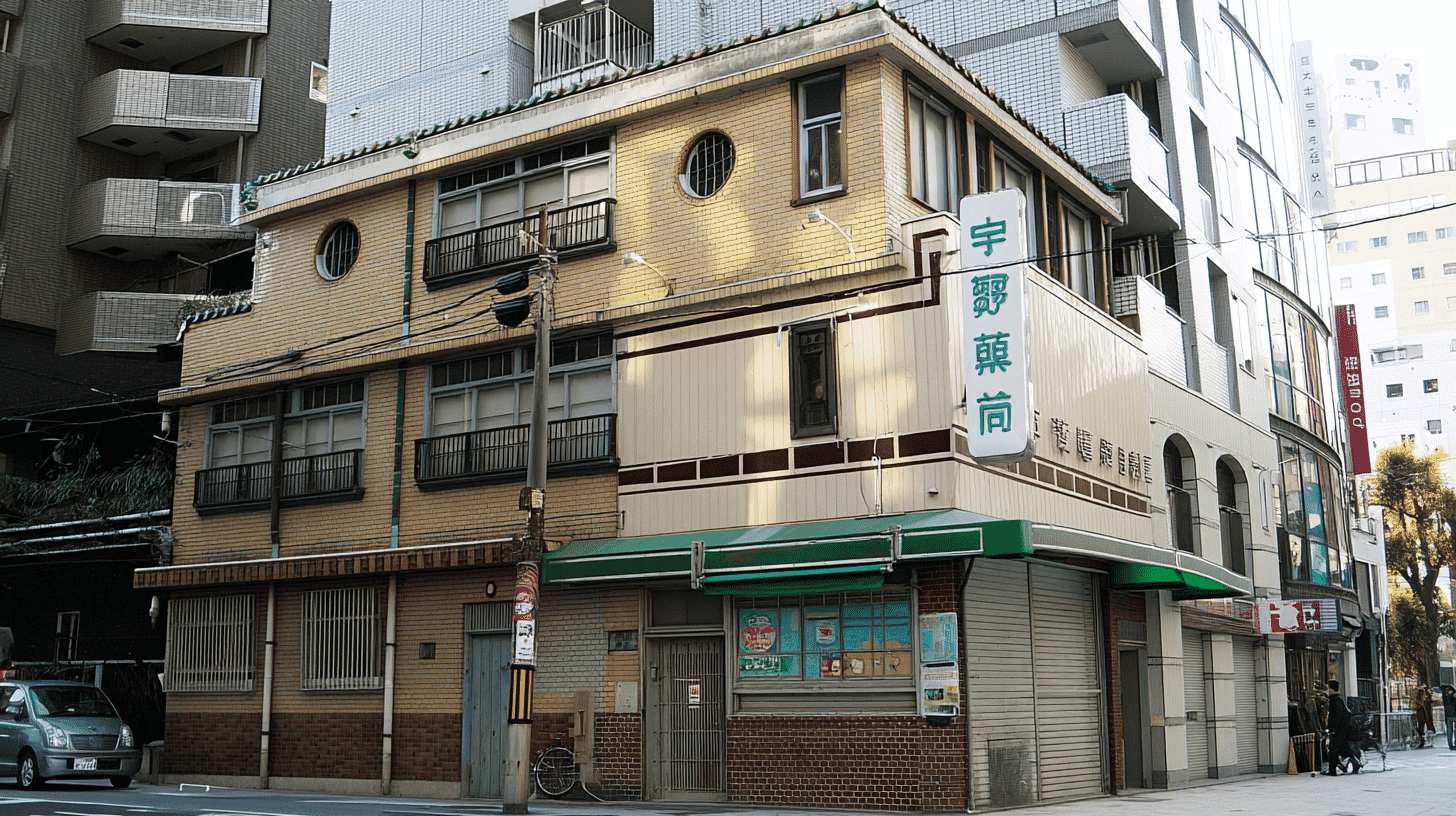
Uno Pharmacy: Discover a Hidden Gem of 1933 Signboard Architecture in Osaka

Explore Uno Pharmacy, a nationally registered tangible cultural property in Osaka. This 1933 wooden building showcases rare "Kanban-Kenchiku" (signboard architecture) with Spanish-style tiles, Art Deco elements, and distinctive porthole windows—a unique survivor of prewar Japanese commercial design.

Uno Pharmacy: A Rare Survivor of Early Showa Commercial Architecture

Standing quietly on a corner of Matsuyamachi-suji street in the heart of Osaka, Uno Pharmacy (宇野薬局) represents one of the most remarkable surviving examples of early Showa period commercial architecture in the Kansai region. Built in 1933, this three-story wooden building has witnessed nearly a century of urban transformation while maintaining its distinctive character as a registered tangible cultural property of Japan.

While the surrounding neighborhood has been dramatically redeveloped over the decades, Uno Pharmacy remains as a precious time capsule, offering visitors a glimpse into the architectural aesthetics and commercial culture of prewar Japan. For travelers seeking authentic historical experiences beyond the typical tourist routes, this hidden gem provides a fascinating window into Osaka's rich architectural heritage.

What is Kanban-Kenchiku (Signboard Architecture)?

To fully appreciate Uno Pharmacy, it is essential to understand the unique architectural style it exemplifies: Kanban-Kenchiku, or "signboard architecture." This distinctive Japanese building style emerged during the reconstruction period following the devastating Great Kanto Earthquake of 1923, which destroyed much of Tokyo and influenced architectural trends throughout Japan.

Kanban-Kenchiku refers to wooden commercial buildings whose front facades were designed to appear flat and billboard-like, concealing the traditional sloped roofs behind. The facades were typically covered with fire-resistant materials such as copper sheets, mortar, or tiles, serving both practical fire-prevention purposes and aesthetic aspirations toward modernity.

These buildings represented the dreams and ambitions of small business owners who could not afford reinforced concrete structures but wished to project an image of prosperity and Western sophistication. The style blended Japanese wooden construction techniques with Western decorative elements, creating a uniquely hybrid aesthetic that defined the streetscapes of commercial districts throughout Japan during the late 1920s and 1930s.

Architectural Features and Significance

Uno Pharmacy exemplifies the finest characteristics of Kanban-Kenchiku while incorporating several distinctive design elements that earned it recognition as a nationally registered tangible cultural property in April 2000.

The building's tile-clad facade creates a modern appearance that belies its wooden construction. The horizontal cornice lines at each floor level emphasize the building's verticality and create a rhythmic visual pattern that was characteristic of early Showa design sensibilities.

Perhaps the most charming feature is the circular porthole window on the third-floor side elevation. This maritime-inspired design element reflects the widespread influence of Art Deco and Streamline Moderne aesthetics that were fashionable during the 1930s. Such round windows were often associated with luxury ocean liners, and their inclusion in commercial buildings added a touch of glamour and cosmopolitan sophistication.

The green Spanish-style roof tiles crowning the parapet represent another notable feature. Unlike traditional Japanese kawara tiles, these curved Mediterranean-influenced tiles add an exotic flair that speaks to the era's fascination with European design. This Spanish Colonial Revival influence was popular throughout the world during the 1920s and 1930s, and its presence in Osaka demonstrates how global architectural trends reached even neighborhood pharmacies in Japan.

Historical Context: Osaka's Matsuyamachi District

The location of Uno Pharmacy adds another layer to its historical significance. Matsuyamachi-suji is a storied commercial street with roots extending back to the reconstruction of Osaka following the Summer War of Osaka in the early 17th century. According to local tradition, roof tile craftsmen who gathered in this area during the city's reconstruction began making small terracotta dolls as a sideline, eventually establishing the district's reputation as a center for doll and toy wholesaling.

By the time Uno Pharmacy was built in 1933, Matsuyamachi had developed into one of Japan's premier wholesale districts for traditional dolls, including the elaborate Hina dolls displayed during the Girls' Day festival and the warrior helmets and figures associated with Boys' Day. This commercial heritage continues today, with over 100 specialty shops still operating along the approximately one-kilometer stretch of the shopping street.

The fact that this area escaped the devastating air raids of World War II makes it particularly significant for architectural preservation. While the Uno Pharmacy is reportedly the only building from this prewar era that remains standing in this particular section, its survival offers invaluable evidence of how commercial districts appeared before the war transformed Japan's urban landscape.

Design and Construction

According to historical records, Uno Pharmacy was designed by Sakamoto Architecture Office and constructed by Nagaoka Eikichi, a builder from the Nishinari district of Osaka. The building demonstrates the professional craftsmanship that characterized even modest commercial structures during this period.

The three-story wooden structure covers a building footprint of approximately 58 square meters, facing west onto the main street. The western orientation would have maximized afternoon light for the pharmacy's retail operations while the building's prominent corner position enhanced its visibility to passing pedestrians and traffic.

The combination of Western facade treatment with traditional Japanese interior spaces was typical of Kanban-Kenchiku buildings. While the ground floor served as the pharmacy's retail space, the upper floors likely contained living quarters for the family, following the traditional Japanese pattern of combining business and residence in a single structure.

Why Visit Uno Pharmacy

For architecture enthusiasts and cultural heritage travelers, Uno Pharmacy offers several compelling reasons to include it in an Osaka itinerary. As a surviving example of prewar commercial architecture, it provides tangible evidence of how Japanese merchants adapted Western architectural ideas to local conditions and tastes during a period of rapid modernization.

The building's continued use as an actual pharmacy (though visitors should verify current operating status) adds authenticity to the experience. Unlike museum exhibits or reconstructed heritage buildings, Uno Pharmacy represents living history—a structure that has served its original purpose across nearly a century of dramatic social and economic change.

Photography enthusiasts will appreciate the building's photogenic qualities. The interplay of tile textures, the distinctive porthole window, and the Mediterranean-influenced roofline create visually interesting compositions at various times of day. The corner location allows for capturing the building from multiple angles.

The surrounding Matsuyamachi shopping district itself merits exploration. The traditional wholesale shops selling dolls, toys, fireworks, and seasonal decorations offer a shopping experience quite different from modern department stores or tourist-oriented souvenir shops. Visitors can observe a style of Japanese commercial life that has largely disappeared from other urban centers.

Nearby Attractions

Uno Pharmacy's central Osaka location makes it easy to combine with visits to other attractions. Osaka Castle, one of Japan's most famous landmarks, lies approximately 1.3 kilometers to the east and can be reached with a pleasant walk through the city's business district.

The Karahori Shopping Street (空堀商店街), another historically atmospheric commercial district with preserved machiya townhouses and trendy cafes, is located within walking distance to the south. This area has gained popularity among younger Japanese visitors seeking nostalgic atmosphere combined with contemporary dining and shopping options.

For those interested in continuing their exploration of modern architecture, the nearby Nakanoshima district features several notable buildings including the Osaka City Central Public Hall (重要文化財 大阪市中央公会堂), a stunning example of Neo-Renaissance architecture completed in 1918.

📍 Plan Your Visit to Osaka
Find tours, activities & transport passes near Uno Pharmacy
[ USJ Tickets Osaka Castle & Dotonbori Food Tours ]

Q&A

QCan visitors enter the Uno Pharmacy building?
AUno Pharmacy is a privately owned building that continues to operate as a business. The exterior can be freely viewed and photographed from the public street, but interior access would depend on whether the pharmacy is open for business and is not typically available for tourism purposes. Please be respectful of the property and its owners when visiting.
QWhat is the best time to visit for photography?
ASince the building faces west, afternoon light illuminates the main facade most dramatically. Late afternoon provides warm golden light that enhances the tile textures and Spanish roof tiles. Early morning offers soft light for the side elevation featuring the distinctive porthole window.
QIs this building related to the Matsuyamachi doll district?
AWhile Uno Pharmacy is not directly involved in the doll trade, it is located on Matsuyamachi-suji, famous as a wholesale district for dolls and toys since the Edo period. Visiting the pharmacy can easily be combined with exploring the many traditional doll and toy shops that line this historic street.
QAre there English information signs or guides available?
AAs a small privately-owned property, Uno Pharmacy does not have dedicated English signage or guided tours. However, the Osaka Cultural Heritage Navi website provides multilingual information about the building. Visitors can research before visiting or use smartphone translation apps on-site.
QHow does Uno Pharmacy compare to Kanban-Kenchiku buildings in Tokyo?
AWhile Kanban-Kenchiku originated in Tokyo after the 1923 earthquake, the style spread throughout Japan. Uno Pharmacy demonstrates how Osaka builders adapted the style with local characteristics, including the Spanish tile accents and the three-story height that was less common in Tokyo examples. Both cities have seen dramatic losses of these buildings to redevelopment.

Basic Information

Name Uno Pharmacy (宇野薬局 / Uno Yakkyoku)
Address 2-3-3 Tokui-cho, Chuo-ku, Osaka City, Osaka Prefecture
Year Built 1933 (Showa 8)
Structure Three-story wooden building, tile roof, approximately 58㎡ building area
Cultural Property Status Nationally Registered Tangible Cultural Property (Registered April 28, 2000)
Architect Sakamoto Architecture Office
Builder Nagaoka Eikichi (Nishinari, Osaka)
Access Approximately 5 minutes walk from Tanimachi-yonchome Station (Osaka Metro Tanimachi Line / Chuo Line); Approximately 10 minutes walk from Matsuyamachi Station (Osaka Metro Nagahori Tsurumi-ryokuchi Line)
Viewing Exterior only (private property)

References

Cultural Heritage Online - Uno Pharmacy (Agency for Cultural Affairs)
https://bunka.nii.ac.jp/heritages/detail/186360
Osaka Cultural Heritage Navi - Uno Pharmacy
https://osaka-bunkazainavi.org/bunkazai/宇野薬局
Matsuyamachi-suji Shopping Street - Osaka Info
https://osaka-info.jp/spot/matsuyamachisuji-shopping-street/
Kanban-Kenchiku - Wikipedia (Japanese)
https://ja.wikipedia.org/wiki/看板建築
Tokui-cho (Osaka City) - Wikipedia (Japanese)
https://ja.wikipedia.org/wiki/徳井町_(大阪市)

Last verified: 2026.01.02

Nearby heritages