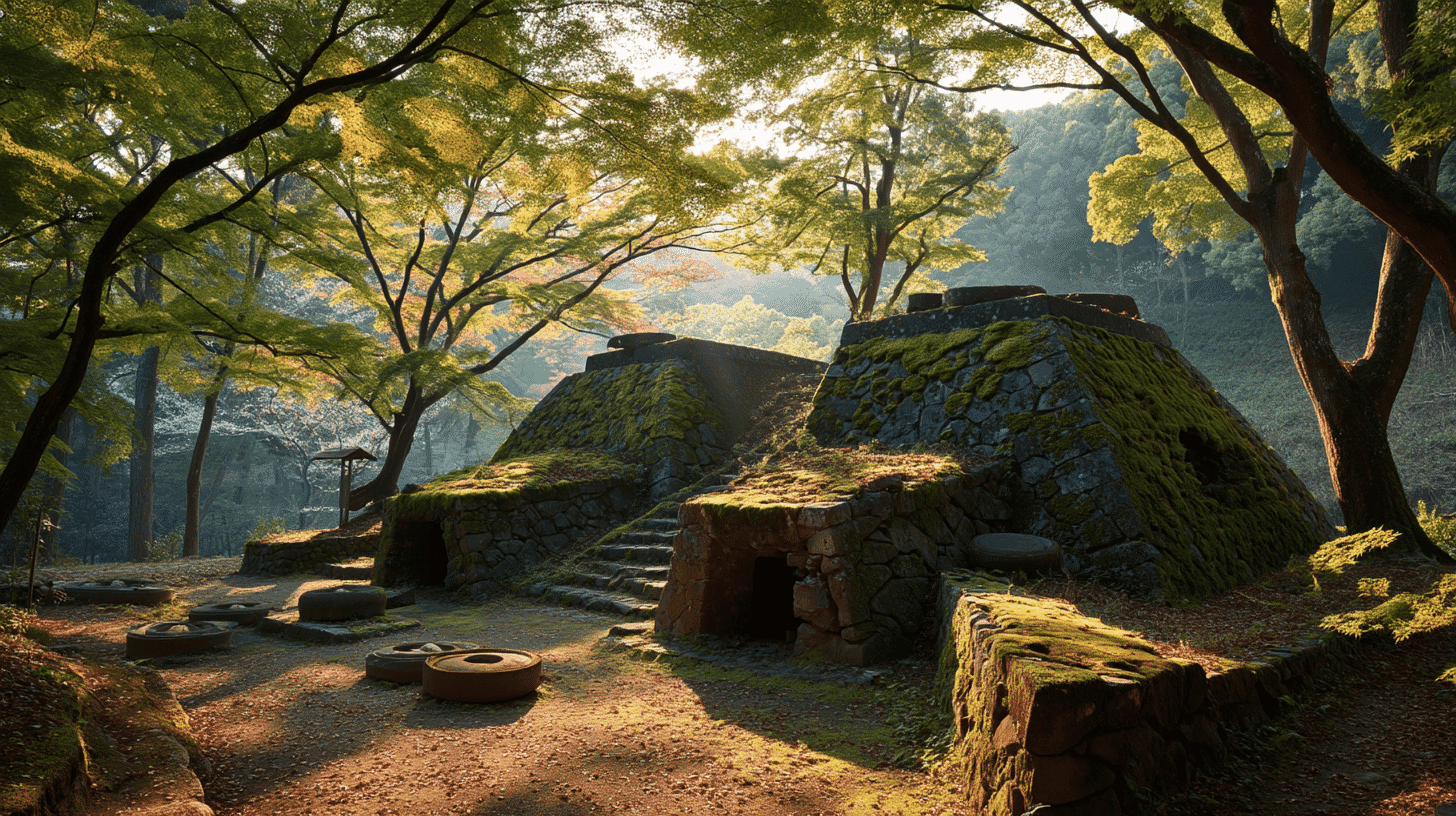
Kishibe Tile Kiln Site: The Imperial Tile Factory That Built Kyoto's First Palaces

Discover the Kishibe Tile Kiln Site, Japan's only known kiln that supplied tiles for the original Heian Palace construction in 794. Explore ancient green-glazed tile production and imperial craftsmanship in Suita, Osaka.

Kishibe Tile Kiln Site: The Imperial Tile Factory That Built Kyoto's First Palaces

Hidden within the forested hills of Shikinzan Park in Suita City lies one of Japan's most significant archaeological treasures. The Kishibe Tile Kiln Site represents the very birthplace of Kyoto's imperial splendor, where skilled artisans fired the elegant tiles that crowned the original Heian Palace over 1,200 years ago.

Unlike many historical sites that require imagination to envision their past glory, Kishibe offers visitors a remarkably preserved window into ancient Japanese industrial craftsmanship. The site stands as the only confirmed kiln complex that supplied roof tiles for Emperor Kanmu's groundbreaking construction of Heian-kyo, the capital that would define Japanese culture for a millennium.

Historical Significance and National Heritage Designation

The Kishibe Tile Kiln Site earned its designation as a National Historic Site on June 23, 1971, recognizing its irreplaceable value in understanding Japan's ancient architectural heritage. The site's importance stems from its direct connection to the founding of Heian-kyo in 794 CE, when Emperor Kanmu initiated one of the most ambitious construction projects in Japanese history.

What makes Kishibe exceptional is its status as the sole identified official kiln that produced tiles bearing identical patterns to those found at the original Heian Palace construction. The discovery of tiles with matching molds provided definitive archaeological evidence linking this site to imperial patronage, suggesting it operated as a state-sponsored facility rather than a private enterprise.

Beyond standard roof tiles, the kilns at Kishibe produced the rare and prestigious green-glazed tiles that adorned the most important palace buildings. These ryokuyū-gawara represented the pinnacle of ceramic technology in early Heian Japan, and Kishibe's kilns reveal the sophisticated two-stage firing process required to create them.

Understanding the Kiln Complex

The Kishibe kiln complex demonstrates remarkable organizational sophistication. Archaeological investigations revealed more than fifteen flat kilns and four climbing kilns arranged systematically across the southern slope of Shikinzan Hill. This strategic positioning utilized the natural hillside gradient while providing access to essential resources: quality clay deposits, abundant water, and proximity to transportation routes along the Yodo River.

The flat kilns, measuring approximately five meters in length, feature a semi-underground construction with exceptionally well-preserved combustion and firing chambers. Visitors can observe the ingenious layering system where half-round tiles and clay were alternately stacked to create optimal firing conditions. These kilns handled the initial high-temperature firing of standard tiles.

The climbing kilns, roughly six meters long and 1.3 meters wide, served a specialized purpose in the green-glazed tile production process. Their floors were entirely paved with flat tiles, and excavations uncovered distinctive three-pronged kiln furniture used to separate tiles during the glazing phase. This dual-kiln system represents one of the earliest documented examples of controlled multi-stage ceramic firing in Japan.

The Art of Green-Glazed Tiles

Perhaps the most fascinating aspect of Kishibe is its role in producing ryokuyū-gawara, the lustrous green-glazed tiles that symbolized imperial authority and Buddhist spiritual significance. The distinctive emerald sheen came from lead-based glazes applied after an initial firing, requiring precise temperature control during the second firing in the climbing kilns.

The production of green-glazed tiles demanded exceptional technical skill. Artisans first shaped and fired the tiles in flat kilns at high temperatures to achieve structural integrity. After cooling, a lead-copper glaze mixture was applied by hand, and the tiles underwent a second, lower-temperature firing in the climbing kilns. The discovery of green-glazed kiln tools and pottery fragments confirms that Kishibe operated as a combined tile and ceramic production facility.

Six varieties of decorative lotus-patterned round eave tiles and five types of arabesque-design flat eave tiles have been identified from Kishibe production. These elegant designs adorned not only the Heian Palace but also spread to temples and shrines throughout the region, with Kishibe-made tiles discovered at locations across the Yodo River basin.

Exploring the Workshop Area

South of the main kiln complex, archaeologists uncovered the remains of the tile-making workshop. This area contains evidence of clay extraction pits, post-hole buildings, well remains, and rotating tables used for shaping round tiles. The workshop site received separate designation as an Osaka Prefectural Historic Site, acknowledging its importance in understanding the complete tile production process.

The manufacturing workflow becomes clear when walking through the site. Workers extracted clay from nearby deposits, processed it in the workshop buildings, shaped tiles on specialized turntables, then transported them uphill to the kilns for firing. This integrated production system allowed for efficient large-scale output necessary to meet imperial construction demands.

The circular marks found on workshop floors indicate where potters' wheels once stood, used to create the cylindrical forms that would be cut in half to produce rounded roof tiles. Such detailed preservation of production evidence is exceptionally rare among ancient kiln sites in Japan.

Suita City Museum: Gateway to Understanding

The Suita City Museum, located within Shikinzan Park adjacent to the kiln site, provides essential context for visitors. The museum's second exhibition hall focuses specifically on ancient ceramic production in the Senri Hills, featuring life-size kiln reconstructions and authentic artifacts excavated from Kishibe.

Visitors can examine actual green-glazed tiles, kiln tools, and pottery fragments while learning about the sophisticated firing techniques employed over a millennium ago. The museum also displays items from the nearby Nanao Tile Kiln Site, which produced tiles for the Later Naniwa Palace approximately seventy years before Kishibe, offering a broader perspective on the region's ceramic heritage.

The hands-on exhibition area allows visitors to touch replica artifacts, making the museum particularly engaging for families with children. Interactive displays explain the technical aspects of tile production in accessible terms, bridging the gap between academic archaeology and public understanding.

Seasonal Highlights and Nature

Shikinzan Park offers different experiences throughout the year. Early April brings spectacular displays of Kobano-mitsuba-tsutsuji azaleas that paint the hillsides in purple hues. The satoyama forest landscape preserves the kind of environment that would have surrounded the kiln workers, with mixed deciduous and evergreen trees creating pleasant shaded walking paths.

The park's natural setting provides welcome respite from urban Osaka, with trails meandering through woodlands that support diverse bird populations. Shakaike Pond, located behind the adjacent Kishibe Shrine, once served as a duck hunting ground and now offers tranquil scenery for visitors. The combination of archaeological significance and natural beauty makes this an ideal destination for travelers seeking authentic cultural experiences away from tourist crowds.

Autumn brings rich foliage colors to the hillside, while the cooler temperatures make extended exploration comfortable. Winter visitors enjoy clear views through the bare branches, and the site's modest elevation provides occasional glimpses of the surrounding cityscape.

Kishibe Shrine and Surrounding Heritage

The Kishibe Tile Kiln Site sits within the precincts of Kishibe Shrine, a venerable Shinto sanctuary with roots potentially extending to the Heian period. The shrine's reconstructed main hall, originally built in 1610 and featuring a rare seven-bay flowing style architecture, was devastated by arson in 2008 but has been faithfully restored based on preserved documentation and careful research.

The autumn festival at Kishibe Shrine features "Donji," a unique ritual designated as an Intangible Folk Cultural Property by Suita City. The ceremony involves large snake effigies and preserves traditions connected to local legends about the serpent deity of Shakaike Pond. For visitors interested in living Japanese folk traditions, timing a visit to coincide with this festival offers unforgettable cultural immersion.

Nearby attractions include the Former Nakanishi Residence, a registered tangible cultural property showcasing traditional Japanese domestic architecture, and the Nanao Tile Kiln Site, another nationally designated historic site that complements the Kishibe story with its connection to the earlier Naniwa Palace.

Practical Information for Visitors

The Kishibe Tile Kiln Site and Shikinzan Park are freely accessible throughout the year, making them ideal for budget-conscious travelers. The outdoor archaeological remains can be viewed at any time, though the Suita City Museum requires an admission fee of 200 yen for adults, with discounts available for students and seniors.

Allow approximately two to three hours to thoroughly explore the kiln site, workshop area, Kishibe Shrine, and museum. Comfortable walking shoes are recommended, as paths include some slopes and uneven surfaces. The site is wheelchair accessible in most areas, with the museum providing barrier-free facilities.

Photography is permitted throughout the outdoor site and in designated museum areas. Multilingual information panels at key locations provide English explanations, though bringing a translation app can enhance understanding of detailed Japanese signage.

Getting There

From JR Kishibe Station on the JR Kyoto Line, walk approximately 20 minutes northwest through quiet residential streets. Alternatively, from JR Suita Station or Hankyu Suita Station, take the Hankyu Bus toward Yamada or Senri-Chuo and alight at the Kishibe or Shikinzan-Koen-mae stop, followed by a 10-minute walk.

For visitors driving from central Osaka, the Suita Interchange on the Meishin Expressway provides convenient access, with the site located about 20 minutes away. Limited parking is available at the museum and shrine.

The location makes an excellent day trip from Kyoto, Osaka, or Kobe, or can be combined with visits to the nearby Expo '70 Commemorative Park and National Museum of Ethnology for a full day of cultural exploration in the northern Osaka area.

📍 Plan Your Visit to Osaka
Find tours, activities & transport passes near Yoshibe Tile Kiln Site
[ USJ Tickets Osaka Castle & Dotonbori Food Tours ]

Q&A

QWhat makes the Kishibe Tile Kiln Site historically unique?
AKishibe is the only confirmed kiln site that supplied tiles for the original construction of Heian Palace in 794 CE. The discovery of tiles with molds identical to those found at the palace proved this direct imperial connection. Additionally, the site reveals the sophisticated two-stage firing process used to create prestigious green-glazed tiles, providing invaluable insights into ancient Japanese ceramic technology.
QIs the site accessible for visitors with limited mobility?
AThe Suita City Museum offers barrier-free facilities including wheelchair-accessible restrooms, ramps, and elevator access. While the outdoor archaeological site includes some hillside paths with uneven terrain, the main viewing areas and workshop site reconstruction are accessible via paved walkways. The park's southern entrance near the playground provides the easiest access.
QWhat are the museum opening hours and admission fees?
AThe Suita City Museum is open from 9:30 AM to 5:15 PM. It is closed on Mondays (or Tuesday if Monday is a holiday), the day after national holidays, and December 29 through January 3. Admission is 200 yen for adults, 100 yen for high school and university students, and 50 yen for elementary and junior high school students. Seniors aged 65 and over receive half-price admission.
QCan I see actual green-glazed tiles from the Heian period?
AYes, the Suita City Museum displays authentic green-glazed tiles, kiln tools, and pottery fragments excavated from the Kishibe site. The museum's second exhibition hall features these artifacts alongside life-size kiln reconstructions that help visitors understand how these precious tiles were manufactured over 1,200 years ago.
QWhat other attractions are nearby?
AWithin Shikinzan Park, visitors can explore Kishibe Shrine with its reconstructed historic main hall and the Nanao Tile Kiln Site. The Former Nakanishi Residence, a registered cultural property, is within walking distance. For a full day trip, the Expo '70 Commemorative Park with its iconic Tower of the Sun and the National Museum of Ethnology are about 15 minutes away by bus.

Basic Information

Official Name Kishibe Tile Kiln Site (吉志部瓦窯跡)
Alternative Names Shikinzan Tile Kiln, Kishibe-gayo-ato
Cultural Property Designation National Historic Site (designated June 23, 1971)
Historical Period Early to Late Heian Period (794-1185 CE)
Location 4 Kishibe-kita, Suita City, Osaka Prefecture 564-0001
Site Features 9 flat kilns, 4 climbing kilns, workshop remains
Kiln Dimensions Flat kilns: approx. 5m length; Climbing kilns: approx. 6m length × 1.3m width
Museum Suita City Museum (within Shikinzan Park)
Museum Hours 9:30 AM - 5:15 PM
Museum Closed Mondays, day after holidays, Dec 29 - Jan 3
Admission (Museum) Adults: 200 yen, Students: 50-100 yen
Site Access Free, open year-round
Nearest Station JR Kishibe Station (20-minute walk)
Contact Suita City Museum: 06-6338-5500

References

吉志部瓦窯跡 - 文化遺産オンライン
https://bunka.nii.ac.jp/heritages/detail/138824
吉志部瓦窯跡 - Wikipedia
https://ja.wikipedia.org/wiki/吉志部瓦窯跡
府内の史跡公園等の紹介【史跡吉志部瓦窯跡(紫金山公園)・大阪府史跡吉志部瓦窯跡工房跡】- 大阪府
https://www.pref.osaka.lg.jp/o180150/bunkazaihogo/bunkazai/kishibegayouatokouen.html
吉志部瓦窯跡(きしべかわらがまあと) - コトバンク
https://kotobank.jp/word/吉志部瓦窯跡-1443709
宮殿の瓦を焼く - 吹田市公式ウェブサイト
https://www.city.suita.osaka.jp/museum/jyosetsu/1031002/1031004.html
吹田市立博物館 - Wikipedia
https://ja.wikipedia.org/wiki/吹田市立博物館
吉志部神社 - Wikipedia
https://ja.wikipedia.org/wiki/吉志部神社
吉志部神社 - 大阪観光局公式サイト
https://osaka-info.jp/spot/kishibejinja/

Last verified: 2026.01.02

Nearby heritages