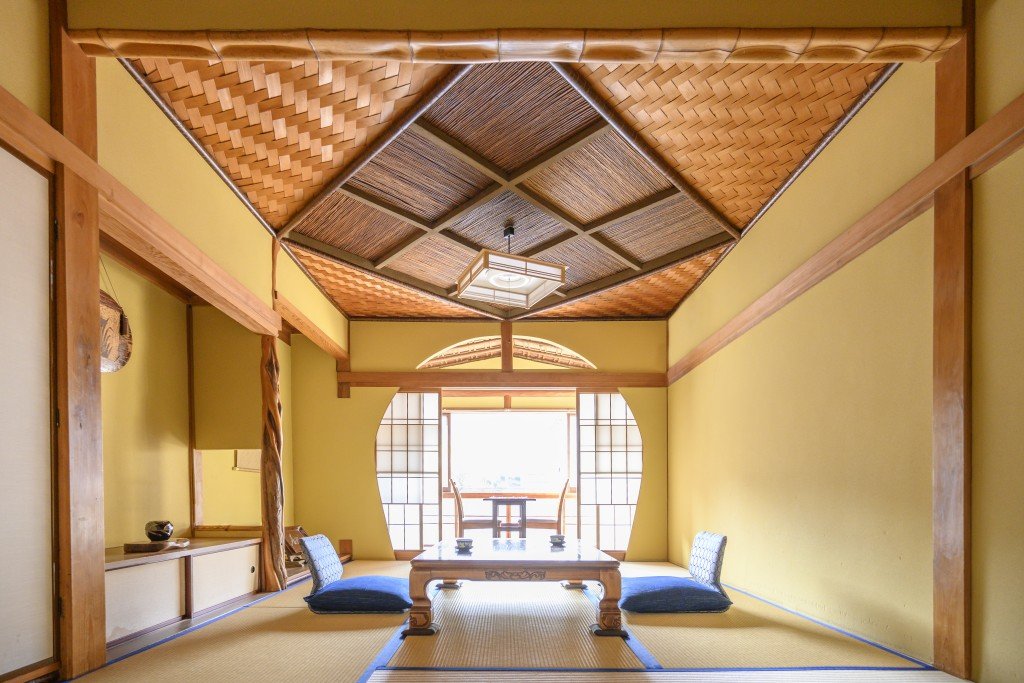
Kiya Ryokan: A Meiji-Era Wooden Inn at Misasa Onsen
Tucked along the banks of the Mitoku River in the mountain-ringed spa town of Misasa, Kiya Ryokan is a three-story wooden inn whose entire premises have been registered as a National Tangible Cultural Property of Japan. Founded in 1868 — the first year of the Meiji era — it offers visitors something increasingly rare: the chance to sleep inside a working piece of Japanese architectural history while bathing in one of the world's most radon-rich hot springs, which bubbles up directly beneath the bathhouse floor.
An Inn Born from the Hills of Tottori
Before it was a ryokan, the Kiya was a shōya — the residence of a village headman during the Edo period. Entrusted by the Tottori domain with the handling of mountain products such as timber, the family adopted the trade name "Kiya," meaning "House of Wood." When the feudal system ended in the early Meiji years, the family turned the residence into a full-time inn, retaining the old name and, with it, a deep affinity for woodcraft that is still visible in every beam, corridor, and staircase of the building.
Over the following century, the building grew alongside the hot spring town itself. Wings were added in the Meiji, Taisho, and Showa periods to meet the changing needs of guests, each extension following the gentle curve of Misasa's main street. The result is a labyrinthine structure in which no two rooms are quite alike, and in which traces of three successive eras remain visible side by side.
Why It Was Recognized as a Cultural Property
In 2010, the Agency for Cultural Affairs registered the entire building of Kiya Ryokan as a National Tangible Cultural Property. The inn occupies a central position along the Misasa riverside and covers a built area of approximately 516 square meters. It is a timber-frame structure — mostly two stories with a three-story section — roofed in pantile and sheet metal, with bathhouses placed in the basement to take advantage of the natural spring beneath.
The designation recognizes several qualities that set Kiya apart. Its exterior carries eaves at every level and window railings in the old style, while its additions, piled up over generations, produced a complex silhouette that embodies the development of the Misasa spa town from a medicinal bathing village into a modern resort. Its interior preserves the original form of a Taisho-period bathing facility, and it retains an ondoru — a Korean-style heated-floor room — that speaks to the full breadth of Showa-era hot spring culture. Kiya has also been designated the number-one lodging of Japan Heritage Story 012, "The Land of Six-Root Purification and Six-Sense Healing," celebrating Misasa's blend of spiritual pilgrimage and radium-spring therapy.
Highlights of a Stay
The most talked-about feature of Kiya Ryokan is a bathing tradition known as ashimoto-yūshutsu — hot spring water that rises directly from the gravel beneath the bathtub, rather than being piped in from elsewhere. The inn's historic "Rakusen-no-yu" bath has been producing this foot-emerging water for more than 150 years, predating the inn itself. Visitors slip into the tub, close their eyes, and feel the warm mineral water bubble gently around their ankles from below.
Beyond the main bath, the inn offers a vapor bath tucked into a cave-like stone chamber, a radon mist sauna, and the aforementioned ondoru room, where guests lie fully clothed on a gently warmed floor and feel the radon-rich steam radiate through the body. All baths are available for 24-hour use, turning an overnight stay into what one reviewer described as a personal hot-spring wonderland.
Away from the baths, the inn's fourteen guest rooms each carry their own character, linked by polished wooden corridors and staircases assembled from carefully chosen timbers. Seasonal kaiseki cuisine is served in private dining rooms, featuring Tottori wagyu beef, seafood from the Sea of Japan, vegetables from contracted local farms, and the prized local rice known as "Misasa-mai." A small irori hearth lounge offers a quiet place to rest between excursions.
Exploring the Surrounding Area
Kiya Ryokan makes an ideal base for exploring central Tottori. A short drive inland leads to Mount Mitoku, home to the Nageiredō Hall of Sanbutsu-ji — a small wooden temple lodged impossibly into a cliff face and often called "the most dangerous National Treasure in Japan" because of the steep hands-and-feet climb required to reach it. The inn itself maintains guides who lead visitors safely on the ascent.
Within easy reach are the preserved white-walled warehouse streets of Kurayoshi, the Sakyū sand dunes of Tottori, the atmospheric port of Sakaiminato, and the Hakuto coastline. For those who prefer to linger in Misasa itself, the riverside town offers an open-air public bath, a small handful of cafes, a shrine approach lined with stone steps, and the gentle ritual of strolling in a yukata between evening bathing sessions.
Practical Notes for Visitors
Misasa is reached most commonly from JR Kurayoshi Station, roughly fifteen to twenty minutes away by bus or taxi. Rail travelers can transfer to Kurayoshi via the Super Hakuto limited express from Himeji or Osaka, while flyers may use Tottori Airport with a direct bus connection. The inn accepts reservations in English, Chinese, and Korean on its official website. Check-in is typically 15:00 and check-out 10:00. Because the building is historic, guests should expect some characterful quirks — narrow staircases, sloping floors, and corridors that turn in unexpected directions — all part of the charm of sleeping inside a registered cultural property.
- 📍 Plan Your Visit to Tottori
- Find tours, activities & transport passes near Kiya Ryokan
- [ Tottori Sand Dunes & Camel Riding Experience ]
Q&A
- What exactly is registered as a Cultural Property at Kiya Ryokan?
- The entire inn — the main building and all its later wings — was registered as a National Tangible Cultural Property by the Agency for Cultural Affairs in 2010. It is a timber building of approximately 516 square meters, mostly two stories with a three-story section.
- What makes the hot spring here unusual?
- The water rises directly from the gravel beneath the bathtub itself, a style known as ashimoto-yūshutsu, or foot-emerging hot spring. Misasa's water is also one of the most radon-rich in the world, long valued for its reputed therapeutic effects.
- Can non-Japanese guests stay comfortably?
- Yes. The inn publishes information in English, Chinese, Korean, and Russian, and welcomes overseas visitors. Basic onsen etiquette — washing before entering the bath, no swimwear, small towel for modesty — applies as at any traditional ryokan.
- How many rooms does the inn have, and are meals included?
- Kiya has fourteen guest rooms of varying layouts. Standard plans include a seasonal kaiseki dinner and a Japanese-style breakfast served in private dining rooms.
- Is it possible to visit Mount Mitoku's Nageiredō from the inn?
- Yes. Kiya offers guided tours to the Nageiredō of Sanbutsu-ji, one of Japan's most remote National Treasure halls. The climb is physically demanding, and the inn's guides help ensure visitors attempt it safely.
Basic Information
| Name | Kiya Ryokan (木屋旅館) |
|---|---|
| Location | 895 Misasa, Misasa-chō, Tōhaku-gun, Tottori Prefecture 682-0123 |
| Founded | 1868 (Meiji 1) |
| Designation | National Tangible Cultural Property (registered 2010) |
| Structure | Wooden construction, mostly two stories with a three-story section; pantile and sheet-metal roofing; approximately 516 m² built area; basement bathhouse |
| Guest Rooms | 14 rooms |
| Check-in / Check-out | 15:00 / 10:00 |
| Access | Approx. 15–20 minutes by bus or taxi from JR Kurayoshi Station; direct bus from Tottori Airport |
| Related Heritage | Part of Japan Heritage Story 012: Misasa Onsen — Land of Six-Root Purification and Six-Sense Healing |
References
- Kiya Ryokan Official Website — Cultural Property Charms
- https://www.misasa.co.jp/about/cultural/
- Kiya Ryokan Official Website (Top)
- https://www.misasa.co.jp/
- Japan Heritage Portal — Kiya Ryokan (Misasa Onsen)
- https://japan-heritage.bunka.go.jp/ja/culturalproperties/result/1040/
- Rakuten Travel — Kiya Ryokan
- https://travel.rakuten.co.jp/HOTEL/20014/20014.html
- JTB — Kiya Ryokan (Misasa Onsen)
- https://www.jtb.co.jp/kokunai-hotel/htl/7310011/
Last verified: 2026.04.20