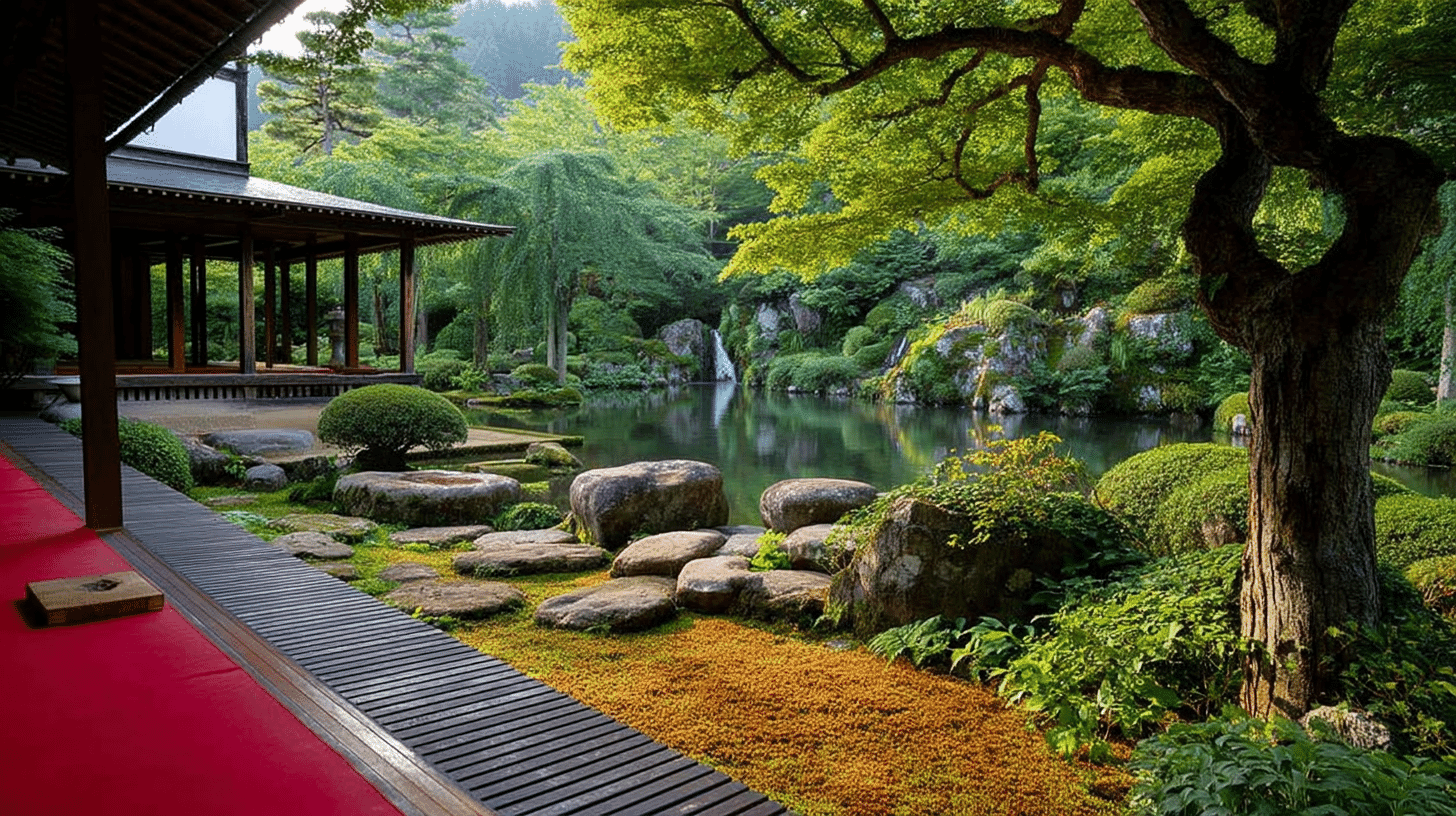
Gyokusenji Temple Garden: A Hidden Gem of Muromachi-Era Zen Beauty in Yamagata Prefecture

Discover Gyokusenji Temple Garden, a nationally designated Place of Scenic Beauty in Tsuruoka City, Yamagata. This 570-year-old Zen garden features a stunning pond-stroll design with natural waterfalls, rare Japanese primrose, and the serene atmosphere of one of Japan's oldest Soto Zen temples near sacred Mt. Haguro.

Gyokusenji Temple Garden: A Timeless Masterpiece of Japanese Landscape Art

Nestled at the foot of sacred Mt. Haguro in Tsuruoka City, Yamagata Prefecture, Gyokusenji Temple Garden (玉川寺庭園) stands as one of the Tohoku region's most treasured cultural landscapes. Designated as a National Place of Scenic Beauty in 1987, this remarkable pond-strolling garden has captivated visitors for over five centuries with its harmonious blend of natural beauty and refined Zen aesthetics. Often called the "Temple of Flowers" (Hana no Tera), Gyokusenji offers a unique opportunity to experience authentic Muromachi-period garden design in a serene setting far from the crowds of more famous destinations.

The Rich History of Gyokusenji Temple

Gyokusenji Temple was founded in 1251 during the Kamakura period by Zen Master Ryonen Homyo (了然法明禅師), a distinguished disciple of Dogen Zenji, the founder of the Soto Zen school in Japan. Born in the Goryeo Kingdom (present-day Korea), Master Ryonen trained at the prestigious Jingshan Temple in China before traveling to Japan to spread Zen Buddhism. His choice of this location, in the shadow of Mt. Haguro—one of the sacred Three Mountains of Dewa—was no coincidence; the area had been a center of spiritual practice for centuries.

The temple fell into decline over the following two centuries, but was magnificently restored in 1453 by Zen Master Nanei Kenso from Koun-ji Temple in Niigata. Under his guidance, the temple flourished once more, and it was during this period that the garden we see today began to take shape. This makes Gyokusenji one of the oldest continuously operating Soto Zen temples in the Tohoku region, carrying forward nearly 800 years of contemplative tradition.

Why Gyokusenji Garden Was Designated a National Place of Scenic Beauty

Japan's Agency for Cultural Affairs designated Gyokusenji Garden as a National Place of Scenic Beauty (国指定名勝) on August 1, 1987, recognizing its exceptional historical and artistic value. Several factors contributed to this prestigious designation.

First, the garden represents a rare surviving example of Muromachi-period (1450s) garden design that has maintained its essential character through careful stewardship over more than five centuries. The original composition was created with remarkable sophistication, incorporating natural topography in ways that few gardens of its era achieved. Second, the renovation undertaken in the 1650s during the Edo period enhanced the garden without destroying its medieval essence, creating a layered historical significance. Third, the garden's integration of a natural mountain waterfall—drawing water directly from the slopes behind the temple—represents an exceptional approach to garden design that harmonizes architecture with the living landscape. For these reasons, the garden is considered one of the finest examples of regional garden artistry in all of Japan.

Garden Design and Highlights

Gyokusenji Garden is designed in the pond-strolling (chisen kaiyushiki) style with Horai composition—a design philosophy that represents the mythical paradise of Taoist immortals. Covering approximately 1,650 square meters (500 tsubo), the garden centers on a large pond fed by a waterfall that cascades directly from the forested mountainside behind the temple.

The stone arrangements throughout the garden are particularly noteworthy. Described by garden experts as "sharp" and "dynamic," these carefully placed rocks create visual drama while maintaining the overall sense of tranquility essential to Zen aesthetics. The stones guide the visitor's eye across the water, up to the falls, and into the borrowed scenery of the surrounding mountains.

What makes Gyokusenji special is that visitors can appreciate the garden in two distinct ways. From within the temple's shoin (study hall) and main hall, the garden presents itself as a living painting framed by wooden pillars—the classic "framed garden" (gaku-en) experience beloved in Japanese culture. But visitors may also descend into the garden itself via stepping stones, allowing for an immersive stroll that reveals new perspectives at every turn.

The Temple of Flowers: Seasonal Blooms

Gyokusenji has earned its beloved nickname "Hana no Tera" (Temple of Flowers) through its spectacular display of seasonal plantings. Most famous is the temple's pure colony of Japanese primrose (Kurinso/九輪草, Primula japonica), which blooms from mid-May through early June. This tiered flower—named for its resemblance to the decorative finials atop pagodas—carpets areas of the garden in shades of pink, white, and deep rose. Such extensive pure colonies of Kurinso are extremely rare throughout Japan, making this seasonal display a particular draw for botanists and flower enthusiasts.

Throughout the year, the garden offers changing views: weeping cherry blossoms in spring, azaleas and irises in early summer, bush clover and Japanese anemones in autumn, and the fiery colors of maple leaves as winter approaches. Even in the quiet winter months, the garden's strong structural bones—its stones, its venerable trees, its architectural elements—provide contemplative beauty.

Visitor Experience: Tea and Contemplation

A visit to Gyokusenji offers more than visual appreciation. The temple welcomes visitors to enjoy matcha green tea with seasonal wagashi sweets while gazing at the garden from the temple's veranda—an experience that connects you to centuries of Japanese aesthetic tradition. The temple also houses a charming "Zen café" called Suigetsu-an (水月庵), where visitors can enjoy coffee, light meals, and desserts in a contemplative atmosphere. Advance reservations allow for a full lunch experience.

For those seeking deeper engagement, the temple offers regular zazen (seated meditation) sessions, providing an opportunity to practice the contemplative discipline that has shaped this space for nearly eight centuries. The temple's resident cats have also become beloved fixtures, adding warmth and life to the historic grounds.

Nearby Attractions: Gateway to the Sacred Mountains

Gyokusenji's location makes it an ideal complement to visits to the Three Mountains of Dewa (Dewa Sanzan), one of Japan's most important centers of mountain worship and ascetic practice. Mt. Haguro, the most accessible of the three sacred peaks, lies just minutes away. Highlights include the National Treasure Five-Story Pagoda, the atmospheric 2,446-step stone stairway through ancient cedar forest, and the thatched-roof Sanjin Gosaiden shrine at the summit where all three mountain deities are enshrined.

In nearby Tsuruoka City, visitors can explore the Chido Museum (featuring the garden of the Sakai clan, also designated a National Place of Scenic Beauty), the former samurai district of Matsugaoka, and the historic castle town atmosphere around Tsuruoka Park. The region is also famous for its distinctive food culture—Tsuruoka was designated as Japan's first UNESCO Creative City of Gastronomy in 2014.

Best Time to Visit

While Gyokusenji Garden offers beauty in every season, certain periods stand out for first-time visitors. Late April to early May brings cherry blossoms, while mid-May through early June showcases the famous Kurinso primrose blooms. Autumn foliage typically peaks from late October through mid-November. Summer offers lush greenery and blooming water lilies on the pond, while winter's snow creates a austere beauty that resonates deeply with Zen aesthetics.

For the quietest experience, consider visiting on weekday mornings. The garden's relatively remote location means it never becomes overcrowded, but the early hours offer the most meditative atmosphere, often with morning mist rising from the pond.

Basic Information

Official Name Kunimiyama Gyokusenji (国見山玉川寺)
Cultural Designation National Place of Scenic Beauty (designated August 1, 1987)
Buddhist Denomination Soto Zen (曹洞宗)
Founded 1251 (Kamakura period)
Garden Created 1450s (Muromachi period), renovated 1650s (Edo period)
Garden Style Pond-strolling garden with Horai composition (池泉回遊式蓬莱庭園)
Garden Area Approximately 1,650 m² (500 tsubo)
Hours 9:00–17:00 (April–October) / 9:00–16:00 (November–March)
Closed Open year-round
Admission Adults ¥400, Children (elementary/junior high) ¥200
Address 35 Tamagawa, Haguro-machi, Tsuruoka City, Yamagata 997-0121
Phone 0235-62-2746
Access (Bus) From JR Tsuruoka Station, take Shonai Kotsu bus toward Haguro-sancho/Gassan-hachigome, alight at "Otorii" stop (approx. 30 min), then 15-minute walk
Access (Car) Approximately 15 minutes from Shonai-Asahi IC on Yamagata Expressway; 20 minutes from Tsuruoka Station; 30 minutes from Shonai Airport
Parking Available (free)
Official Website https://www.gyokusenji.or.jp/
📍 Plan Your Visit to Yamagata
Find tours, activities & transport passes near Gyokusenji Temple Garden
[ Yamadera Temple & Zao Onsen Hot Springs ]

Q&A

QCan I enter the garden itself, or is it viewing only?
AYou can do both! The temple provides sandals for visitors who wish to walk through the garden along the stepping stone paths. You can also appreciate the garden from the comfort of the temple buildings, enjoying the "framed view" perspective traditional to Japanese architecture.
QIs it possible to have tea while viewing the garden?
AYes, the temple offers matcha green tea with seasonal Japanese sweets, which you can enjoy while gazing at the garden. There is also a café called Suigetsu-an on the premises where you can have coffee and light meals. Lunch is available with advance reservation.
QWhen is the best time to see the famous Kurinso (Japanese primrose) flowers?
AThe Kurinso typically bloom from mid-May to early June. The exact timing varies slightly each year depending on weather conditions. Contact the temple directly for current bloom status during this period.
QCan I combine a visit to Gyokusenji with Mt. Haguro?
AAbsolutely! The temple is located at the foot of Mt. Haguro, making it a perfect addition to a day exploring the sacred Dewa Sanzan mountains. Many visitors tour Mt. Haguro's famous stone steps and Five-Story Pagoda in the morning, then stop at Gyokusenji for a peaceful garden viewing and tea in the afternoon.
QIs the garden accessible in winter?
AYes, the temple remains open year-round, though hours are shorter in winter (9:00–16:00 from November to March). The Yamagata region does receive heavy snowfall, so be prepared for winter conditions and check transportation schedules in advance.

References

Kunimiyama Gyokusenji Official Website - Garden Introduction
https://gyokusenji.or.jp/teien/
Kunimiyama Gyokusenji Official Website - Temple Overview
https://www.gyokusenji.or.jp/gaiyo/
Gyokusenji Temple Garden - Cultural Heritage Online (Agency for Cultural Affairs)
https://bunka.nii.ac.jp/heritages/detail/201096
Gyokusenji Temple - Tsuruoka Tourism Navi (DEGAM Tsuruoka Tourism Bureau)
https://www.tsuruokakanko.com/spot/833
Gyokusenji Temple - Yamagata Tourism Information (Official Yamagata Prefecture Tourism Site)
https://yamagatakanko.com/attractions/detail_1632.html
Gyokusenji Temple Garden - Oniwa-san Japanese Garden Media
https://oniwa.garden/gyokusenji-temple-garden-玉川寺庭園/
Flower Temple "Gyokusenji" - Mokkedano Shonai Tourism
https://mokkedano.net/spot/30271

Last verified: 2026.01.27

Nearby heritages