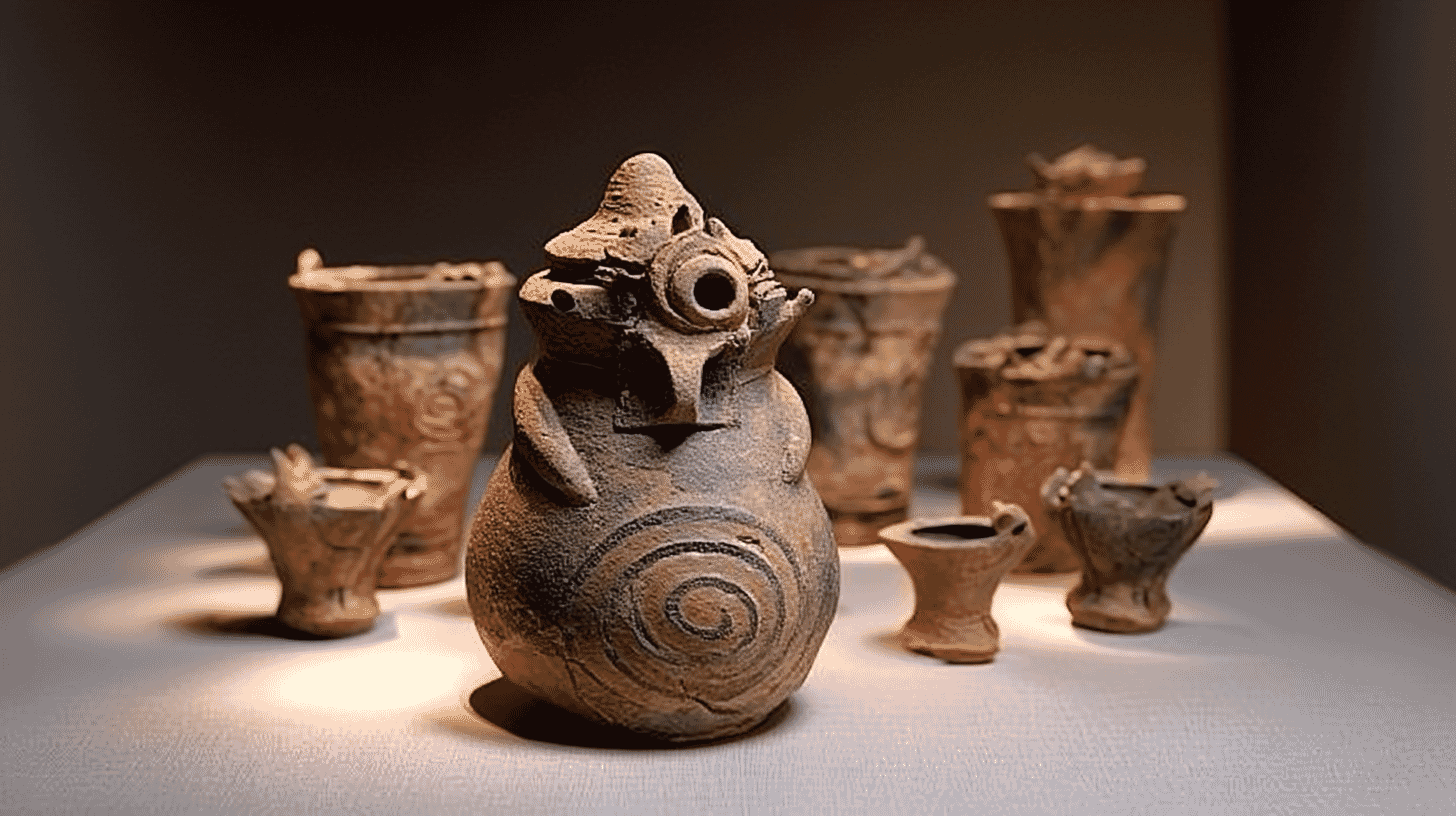
A 5,000-Year Journey: The Remarkable Jomon Treasures of the Imojiya Site
Buried beneath the earth for approximately 5,000 years, a collection of extraordinary Jomon period artifacts slumbered in the foothills of the Japanese Southern Alps, waiting to tell their ancient story. In 1992, during construction work for an industrial park in Minami-Alps City, Yamanashi Prefecture, archaeologists uncovered one of Japan's most significant Jomon archaeological sites—the Imojiya Site (鋳物師屋遺跡). What emerged from this excavation would go on to captivate audiences at the British Museum, the Louvre-affiliated Japan Cultural House in Paris, and museums across four continents.
What Makes These Artifacts So Special?
The Imojiya Site artifacts hold a unique place in Japanese archaeology for several remarkable reasons. Unlike most Jomon sites where artifacts are found as scattered fragments, a debris flow from the nearby mountains perfectly sealed this ancient village approximately 5,000 years ago, preserving artifacts in extraordinarily complete condition. This natural time capsule yielded 205 items that were collectively designated as National Important Cultural Property in 1995.
The excavation revealed the remains of a Jomon Middle Period village, with 27 pit dwellings arranged in a donut-shaped pattern around a central plaza—a typical settlement layout of the era. The exceptional preservation state means visitors today can witness complete pottery vessels, intact stone tools, and remarkably whole clay figurines that offer an unparalleled window into the spiritual world of Japan's prehistoric ancestors.
The Star Attractions: LAVIE and Peace
Among the 205 designated artifacts, two masterpieces have achieved international celebrity status and have become beloved symbols of Jomon culture worldwide.
The Goddess of Fertility "LAVIE" (子宝の女神ラヴィ)
Standing approximately 25.5 centimeters tall, this cone-shaped dogu (clay figurine) is one of the most complete and expressive examples of Jomon spiritual art ever discovered. The figurine depicts a pregnant woman with her left hand tenderly placed on her swollen belly while her right hand rests on her hip—a universal gesture of maternal protection that resonates across millennia and cultures.
The hollow, cone-shaped body allows the figurine to stand upright on its own, a remarkable technical achievement for its time. The loving care evident in the craftsmanship suggests this was no ordinary object, but a sacred vessel embodying prayers for safe childbirth and family prosperity in an era when the average life expectancy was only in the thirties.
In 2015, local residents voted to give this figurine the nickname "LAVIE," derived from the French word "la vie" meaning "life"—a fitting name that captures the figurine's essence as a celebration of fertility and the continuation of life. That same year, LAVIE won first place in the National Dogu Character Competition, cementing her status as one of Japan's most beloved archaeological treasures.
The Dancing Figure Pottery "Peace" (ぴーす)
The Human-Figure Decorated Perforated Rim Pottery (人体文様付有孔鍔付土器) stands 54.8 centimeters tall and features something extraordinarily rare—a complete human figure decoration attached to its surface. This figure appears to be dancing with joyful abandon, one arm raised high, mouth open as if singing, seemingly inviting viewers from across five millennia to join in celebration.
The pottery's distinctive rim features small holes arranged in a circle with a protruding flange, a design whose purpose archaeologists continue to debate. Some theories suggest it was used for brewing fruit wine from wild grapes or elderberries (evidence of which has been found at the site), with the holes serving as air vents during fermentation. Others propose it may have been a ceremonial drum, with animal hide stretched across the top.
The nickname "Peace" (ぴーす) was chosen because the figure's three-fingered hand gesture resembles a peace sign, and the word "peace" connects beautifully with LAVIE to form "LAVIE & Peace"—a message of life and harmony from the ancient past. This pottery graces the cover of current Japanese middle school history textbooks, introducing millions of students to Jomon culture each year.
A World Tour: From Yamanashi to Global Recognition
The cultural significance of the Imojiya artifacts extends far beyond Japan's borders. Since their designation as Important Cultural Property in 1995, these treasures have embarked on an impressive international journey:
- 1995: Rome City Exhibition Hall, Italy
- 1997: National Museum of Malaysia
- 2001: The British Museum, London, United Kingdom
- 2002: National Museum of Korea, Seoul
- 2006: Montreal Museum of Fine Arts, Canada
- 2009: The British Museum (second exhibition), United Kingdom
- 2018: Japan Cultural House, Paris, France (Japonismes 2018 "Jomon" Exhibition)
This extraordinary exhibition history speaks to the universal appeal of these artifacts and their importance in understanding not just Japanese prehistory, but human creativity and spirituality across all cultures.
New Discoveries: The Site That Keeps Giving
Recent scientific analysis using cutting-edge techniques has revealed fascinating new information about Jomon life at the Imojiya Site. Researchers examining impression marks on pottery fragments have discovered evidence of seeds from soybeans, azuki beans, perilla (egoma), and—for the first time in Yamanashi Prefecture—elderberries. These discoveries suggest the Jomon people at this site practiced more sophisticated plant cultivation and processing than previously understood, contributing to ongoing revisions of our understanding of prehistoric Japanese agriculture.
Planning Your Visit: Furusato Bunka Denshokan Museum
All 205 designated artifacts from the Imojiya Site are displayed at the Minami-Alps City Furusato Bunka Denshokan Museum (affectionately nicknamed "Mi-na-den"). This intimate museum offers a remarkably personal experience with these world-class treasures, with knowledgeable staff available to guide visitors through the collection.
The second floor is entirely dedicated to Jomon period artifacts, with LAVIE and Peace displayed in specially designed glass cases that allow visitors to appreciate every detail of their ancient artistry. Unlike crowded major museums, here you can take your time studying these masterpieces that once graced the halls of the British Museum.
The museum also offers hands-on experiences including pottery puzzles, fire-starting demonstrations, and dogu-making workshops (advance inquiry recommended for group activities). A charming gift shop sells LAVIE merchandise, from plush toys to traditional Yamanashi "inden" leather accessories featuring the goddess's likeness.
Explore the Surrounding Area
The museum is located within the "Yuka-ri no Sato" complex, which also features natural hot springs—perfect for relaxation after your archaeological exploration. The broader Minami-Alps City area offers additional attractions:
- Mt. Kitadake: Japan's second-highest peak at 3,193 meters, offering world-class mountain climbing
- Fruit Orchards: Minami-Alps City is Japan's top producer of plums, and offers seasonal fruit-picking experiences for cherries, peaches, grapes, and more
- Ando Family Residence: A 300-year-old Important Cultural Property farmhouse showcasing traditional architecture
- Southern Alps UNESCO Biosphere Reserve: Pristine mountain ecosystems recognized for their biodiversity
- Local Wineries: Sample wines made from the same varieties of grapes the Jomon people may have used for fermentation
- 📍 Plan Your Visit to Yamanashi
- Find tours, activities & transport passes near Excavated Items from the Imonoshiya Ruins in Yamanashi
- [ Mt. Fuji & Lake Kawaguchiko Day Tours ]
Q&A
- Is the museum accessible for English-speaking visitors?
- While most displays are in Japanese, the friendly staff can provide basic explanations in English, and the visual nature of the artifacts makes them accessible to all visitors. Consider downloading a translation app for detailed signage, or contact the museum in advance to inquire about guided tours.
- Are the original artifacts always on display?
- The museum displays all 205 designated Important Cultural Property items in rotation. However, LAVIE and Peace are occasionally loaned to special exhibitions at major museums in Japan and abroad. Check the museum's website or social media before visiting to confirm their availability.
- How much time should I plan for a visit?
- Most visitors spend 1-2 hours exploring the museum thoroughly. If you plan to participate in hands-on activities or browse the gift shop, allow additional time. The museum staff are generous with their knowledge and happy to answer questions, so don't hesitate to engage with them.
- Can I take photographs?
- Photography for personal use is generally permitted in the exhibition halls. However, flash photography is not allowed to protect the delicate ancient artifacts. Check with staff about any current restrictions during special exhibitions.
- Is this museum suitable for children?
- Absolutely! The museum is designed to be family-friendly with puzzle activities, coloring sheets, and the opportunity to touch replica pottery. Children often become fascinated by LAVIE and the dancing figure on the Peace pottery. The museum even has a cute character mascot based on LAVIE that kids adore.
Basic Information
| Official Name | Artifacts Excavated from the Imojiya Site, Yamanashi Prefecture (山梨県鋳物師屋遺跡出土品) |
|---|---|
| Cultural Designation | National Important Cultural Property (designated June 15, 1995) |
| Number of Items | 205 pieces (pottery, stone tools, dogu figurines, ear ornaments, clay discs) |
| Period | Jomon Middle Period (approximately 5,000 years ago / 3000-2000 BCE) |
| Museum Name | Minami-Alps City Furusato Bunka Denshokan (南アルプス市ふるさと文化伝承館 "Mi-na-den") |
| Address | 2727 Nogushijima, Minami-Alps City, Yamanashi Prefecture 400-0205, Japan (within Yuka-ri no Sato complex) |
| Hours | 9:30 AM - 4:30 PM |
| Closed | Thursdays (or following weekday if Thursday is a national holiday), Year-end/New Year holidays |
| Admission | Free |
| Phone | 055-282-7408 |
| Access | From JR Kofu Station: Take Yamanashi Kotsu bus toward Ashiyasu, get off at "Nogushijima" stop, 10-minute walk. By car: Chuo-Odan Expressway "Shirane IC", 5-minute drive. |
References
- Imojiya Site Artifacts - Minami-Alps City Official Website
- https://www.city.minami-alps.yamanashi.jp/docs/imojiya_iseki.html
- Imojiya Site Artifacts - Cultural Heritage Online (Agency for Cultural Affairs)
- https://bunka.nii.ac.jp/heritages/detail/159631
- Furusato Bunka Denshokan Museum - Minami-Alps City Official Website
- https://www.city.minami-alps.yamanashi.jp/sisetsu/shisetsu/bunkazai-densyokan/
- Imojiya Site - Bunkazai M-navi (Minami-Alps City Cultural Heritage Navigation)
- https://103.route11.jp/?ms=2&mc=36&mi=254
- Imojiya Site - Wikipedia (Japanese)
- https://ja.wikipedia.org/wiki/鋳物師屋遺跡
- Human-Figure Decorated Perforated Rim Pottery - Jomon Doki-Doki Association
- https://jomondoki.com/jomon-picturebook/jintaimonyou-yuukou-tsubatsuki-doki/
- The World of Dogu - Imojiya Site "Goddess of Fertility LAVIE" - Cultural Heritage World
- https://www.isan-no-sekai.jp/report/6196
Last verified: 2026.01.27
Nearby heritages
- Hasedera Temple Main Hall
- Enohara, Southern Alps City, Yamanashi Prefecture
- Koshoji Temple Yakushido Hall
- Iwamori, Kai City, Yamanashi Prefecture
- Former Midai River Levee (Shogi-Gashira and Stone Stacking)
- Nirasaki City, Tatsuoka Town, Minami Alps City
- Ashizawa Family Residence Zashiki-Gura
- 97-1 Nishino, Minami Alps City, Yamanashi Prefecture
- Main Building of the Ashizawa Family Residence
- 97-1 Nishino, Minami Alps City, Yamanashi Prefecture
- Former Iino Industrial Association Warehouse
- 2825-6 Iinomurahigashi, Minami Alps City, Yamanashi Prefecture
- Yamagata Shrine Chozuya
- 190-1 Shinohara, Kai City, Yamanashi Prefecture
- Yamagata Shrine Torii
- 190-1 Shinohara, Kai City, Yamanashi Prefecture
- Yamagata Shrine Worship Hall
- 190-1 Shinohara, Kai City, Yamanashi Prefecture
- Yamagata Shrine Main Hall
- 190-1 Shinohara, Kai City, Yamanashi Prefecture