
Kamakura
Chiba · 鎌倉Browse Chiba’s cultural heritage from the Kamakura period (1185 – 1333). Filter by type and keyword, with concise stories, maps, and travel tips.
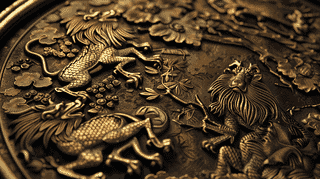
A mirror owned by Katori Jingu in Chiba Prefecture. Another one made from the very same mould is now among the Shosoin treasures over in Nara as well.
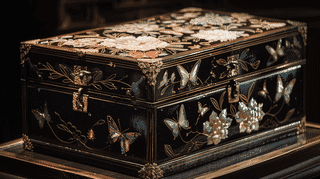
A Kamakura-period hand box kept in Tokyo. Three techniques answer to three colours in it: the gold of lacquer, the white of shell, the silver of inlay.

Discover the Katana, Unsigned (Yoshioka Ichimonji), an Important Cultural Property held in Chiba City. Forged in mid-Kamakura Bizen Province with a cutting edge of 72.8 cm and a deep curvature of 2.6 cm, this graceful blade was passed down through the legendary Uesugi clan and personally selected by warlord Uesugi Kagekatsu as one of his finest thirty-six swords. A small chip near the handguard reveals its use in actual combat. Explore the artistry of the Yoshioka Ichimonji school and museums where you can encounter related masterpieces.
A Kamakura-period Tale of Genji preserving 32 of its 54 chapters. No autograph survives, so early copies like this remain key witnesses. Privately held in Chiba.
The Important Cultural Property 'Sagoromo (Attributed to Fujiwara no Tameie)' is a Kamakura-period manuscript of the Heian court romance Sagoromo Monogatari, held in Chiba Prefecture. This four-volume work, traditionally attributed to the eminent poet Fujiwara no Tameie, son of Fujiwara no Teika, is an invaluable textual witness for the study of this celebrated tale's complex manuscript tradition.
Nichiren's autograph treatise of 1273, written in exile on Sado Island, survives at Hokekyoji Temple in Ichikawa, Chiba, designated a National Treasure in 1952.
At Jokoin near Hokekyo-ji in Ichikawa, Chiba, hangs the Water-Mirror Portrait, a strikingly lifelike Kamakura-period image of Nichiren reading the Lotus Sutra.
A late-Kamakura silk scroll at Chōtokuji in Sōsa, Chiba: a twenty-armed Fugen Enmei on four six-tusked white elephants, opened to the public one Sunday each January.
Rare amber-glazed ceramic guardian lion-dogs from medieval Seto, barely 18 cm tall, kept at Katori Jingu in Chiba and made an Important Cultural Property in 1953.
Designated in 2023, Koami-ji's 20 gilt-bronze esoteric ritual implements bear the engraved name of the monk Shinkai, linking Awa and Kanazawa across Tokyo Bay.
In 1278 a rumor of a planned debate reached Nichiren at Minobu. His 21-line autograph reply, held at Hondoji as an Important Cultural Property, captures his joy.
Naritasan Buddhist Library holds the oldest manuscript of the Sumiyoshi Monogatari, a Kamakura retelling of a lost Heian tale of a stepdaughter saved by the Kannon.
At Hondo-ji, Chiba's famed hydrangea temple, a 3.8-meter scroll holds a letter Nichiren wrote to Hiki Yoshimoto, sole survivor of his clan's massacre and the monk's devoted patron and scribe.
A gilt-bronze Jizō cast in 1309 as a memorial at Kanpuku-ji—one of four medieval Buddhas made for Katori Jingū, the earliest tied to the Mongol invasions.
Cast in gilt bronze in 1282 by the sculptor Rengan, this seated Buddha at Kanpukuji once served Katori Shrine and bears a prayer to repel the Mongol invaders.
This bronze Eleven-Headed Kannon at Kanpuku-ji in Chiba once served Katori Shrine. Cast in 1282, it carries a prayer to repel the invading Mongol fleet of 1281.
A 47-cm bronze Acala at Ketsuen-ji in Chiba, an Important Cultural Property dated to 1303. The hidden image is unveiled just one day a year, on 28 September.
This gilt-bronze Medicine Buddha at Kanpuku-ji once stood before the deity of Katori Jingu. Saved from melting in 1869, it is now an Important Cultural Property.
Newly designated in 2024, 839 documents trace one Nichiren temple across 620 years, from a monk's vow to guard his master's writings to letters from the Edo shogun's court.
Hokekyo-ji in Ichikawa, Chiba, holds over a hundred letters and treatises in the hand of the monk Nichiren, a rare survival named an Important Cultural Property.